Opening a Beauty Clinic in Israel: The Business Side
How to open a cosmetics clinic in Israel as a business, not just a profession: location, licensing, treatment prices, filling the calendar and year one.
Pricing Calculator
Try a few pricing methods and see what each one suggests. The goal is not a magic answer, but a price that protects your profit and can be explained to a client.
Pricing method
Total you need to bill per month before VAT
₪15,600
Effective hourly rate before VAT
₪195
Profit per month
₪3,600
- Rate you need, with your profit
- Rate that only covers costs
- Hours that cover costs
- Hours that make the profit
- Hours worked, not billed
At ₪195 an hour your costs are covered after 62 billable hours, 38% of your 160 working hours. Every hour you bill after that is profit. Bill a quarter fewer hours, 60 instead of 80, and the rate you need rises to ₪260. The price list follows how full the calendar is, not the other way round. All amounts before VAT.
How we calculated it
Costs ₪12,000 x profit on top 30% = profit ₪3,600.
Total to bill per month across all your clients, before VAT: ₪15,600. Hourly rate: ₪15,600 / 80 hours = ₪195.
Market-based pricing is intentionally not calculated here. It needs real competitor quotes or client budget data, so use the article checklist rather than inventing a number.
Want a pricing structure that holds up with real clients?
Book a free call+972 055-248-6151. Other ways to reach me
This is a simplified, illustrative tool meant to give you a quick feel for the numbers. It is not professional advice. Real business decisions depend on many factors it does not account for, and all results are estimates only. Mobius Business Solutions accepts no responsibility for decisions or actions taken based on this tool.
Cosmeticians open clinics with strong professional training and almost no business training. The treatments are excellent. The pricing, the location decision, and the money management are improvised. That is the gap that decides who is fully booked and profitable in two years and who quietly closes.
This is the business side of opening a beauty clinic in Israel, the part the certification courses skip.
Location: the decision that locks everything else
You have three realistic starting points, and they are not equal:
- A room at home. Lowest cost, fastest start, and for many treatment types perfectly workable. The limits are image, separation of home and work, and sometimes municipal rules.
- Renting a chair or room in an existing clinic. Moderate cost, built-in foot traffic, and a chance to learn the operational side on someone else's infrastructure.
- Your own leased space. Full control and full cost: rent, deposit, renovation, arnona (municipal business tax), utilities, signage. A lease signed before demand is proven is the single most common expensive mistake in this industry.
The honest sequence: start as small as your treatments allow, fill the calendar, then upgrade with evidence. The general framework for that discipline is in the step by step checklist for opening a business in Israel.
Registration, licensing, and insurance
The business registration itself is simple: most solo cosmeticians start as an osek patur (VAT-exempt small business), since private clients do not need VAT invoices. Watch the revenue ceiling, because a well-booked clinic can cross it, and the comparison in osek patur or osek murshe explains when to switch.
Licensing is treatment-specific. Some premises and activities require a municipal business license, and some treatment types carry health regulations. Check the requirements for your exact treatment list, with your municipality and the Ministry of Health where relevant, before you commit to a location. A space that cannot be licensed for your use is money burned.
Insurance is not optional in this profession: professional liability for the treatments and third-party coverage for clients on your premises. Skin treatment claims are real.
Business license for cosmetics
Beauty and cosmetic treatment, including pedicure and manicure, is a business that needs a license: item 1.4a of Israel's Business Licensing Order (Businesses Requiring a License), 2013. The license is issued by the local authority, it is valid for 10 years, and for premises up to 300 square meters it is granted on a shortened track, based on the owner's declaration.
The requirements themselves are in the local authority's lists. The Tel Aviv-Yafo municipality's checklist for beauty and cosmetics businesses, for example, asks about a toilet with a sink, an extra sink with hot water for washing tools, a treatment room, two sets of tools per worker, a waste disposal solution, fire extinguishing equipment, and materials that are all approved by the Ministry of Health.
Even when the clinic is a room at home, check with your local authority what is required before you invest in renovation or sign a lease. This is general information, not legal advice.
Pricing treatments: from costs up, not from competitors down
Most new cosmeticians price by copying the nearby clinic and subtracting a little. That is how full calendars lose money.
Price from the bottom up: materials per treatment, room time, equipment amortization (spreading the machine's cost over its treatments), taxes, no-shows, and the hours you spend that are not treatment hours. Then compare with the market and choose your positioning (where you stand against other clinics) deliberately.
The calculator at the top of this post works per month, not per treatment. Enter your monthly running costs without the materials each treatment uses, the hours you can actually treat in a month, and the profit you want on top of costs, and it returns your effective hourly rate. Multiply that rate by the length of each treatment in hours and add that treatment's materials: that is the lowest price that still covers your costs and your profit. Do it for your three most common treatments before printing a price list. For the wider method, read how to price your services.
Packages and series deserve special care. They stabilize income and improve retention, but a deeply discounted package at thin margins (the profit left after costs) locks in months of underpaid work.
The mistakes that quietly eat beauty businesses
In my work with cosmeticians and beauty businesses, the same patterns repeat.
Revenue is treated as personal income. A payment arrives and feels earned, but part of that money already belongs to the tax authorities, suppliers, the landlord, advertising platforms, and future equipment maintenance. An owner who spends everything that comes in discovers a few months later that there is nothing left for the tax payment and the supplier bills. Turnover is not profit, and the bank balance is not free money.
Competitor prices are copied without knowing their model. The clinic next door may buy materials cheaper, own its space, get supplier discounts, or run that exact treatment at a loss as an entry offer for selling other procedures. Copying their price without knowing your own economics can mean selling every treatment at minimal profit or below cost.
Client acquisition is treated as free. A new client arrives through ads, content, a discount on the first visit, or hours of consultations with people who never buy. If winning one paying client costs 150 shekels, that is your CAC (cost to win a customer), and those 150 shekels belong in the economics of that client's first purchase.
The supplier's offer is confused with a business necessity. Suppliers in this industry offer minimum annual volumes, expensive machines, obligatory courses, and marketing packages. Sometimes the same result is available for a fraction of the price. A famous brand is not automatically the right business decision, and the cheapest alternative is not automatically safe. Compare quality, regulation, warranty, service, and the actual economics.
The arithmetic that summarizes all of it: a treatment priced at 1,500 shekels can end up producing around 80 to 100 shekels per real hour of work once materials, VAT, rent, advertising, consultations, correspondence, preparation, cleanup, corrections, payment fees, cancellations, and administration are counted. A high price tag proves nothing by itself.
Filling the calendar, and keeping it full
New clinics need visibility. Established clinics live on retention. Plan both from day one:
- First clients come from warm circles: referrals, adjacent businesses (hair, nails, fitness), consistent before-and-after content, and directly asking satisfied clients to send friends. The playbook is in first 10 clients without ads.
- Retention is the economics of this industry. Booking the next appointment before the client leaves, series, reminders, and consistent quality are worth more than any campaign. A clinic that keeps clients needs far fewer new ones.
Only after price and offer are proven does paid advertising deserve budget.
Year one is a cash game
Equipment, materials, deposits, and slow months mean the first year is won by planning your cash flow (money moving in and out), not by optimism. Build the full first-year number with how much it costs to open a business in Israel, including your own living costs.
This is the stage where I work with cosmeticians. In business consulting for cosmeticians I help you work out the real cost of each treatment, set prices that leave a profit, build a routine that brings clients back, and check whether the numbers hold before you rent a room or open your own clinic. For the opening itself, business launch support covers checking the idea and the numbers, choosing the type of business, a first price and the order of the first moves. What owners I have worked with say about the work is on my profile page.
If you are opening a clinic and want the business side handled as professionally as the treatments, talk it through with me.
Sources
- Israel Tax Authority, opening an exempt dealer file online
- National Insurance Institute, opening a self-employed file
- Israel Ministry of the Interior, Business Licensing Order (Businesses Requiring a License), 2013, item 1.4a
- Tel Aviv-Yafo municipality, checklist for hair salons, beauty and cosmetics, pedicure and manicure businesses and tanning salons, July 2024
The content on this blog is general information only and is not a recommendation to act. It is not business, legal, tax, or financial advice. Before making any decision, consult a qualified professional, such as an accountant, a lawyer, or a business advisor, about your specific situation.

Speaking at Microsoft
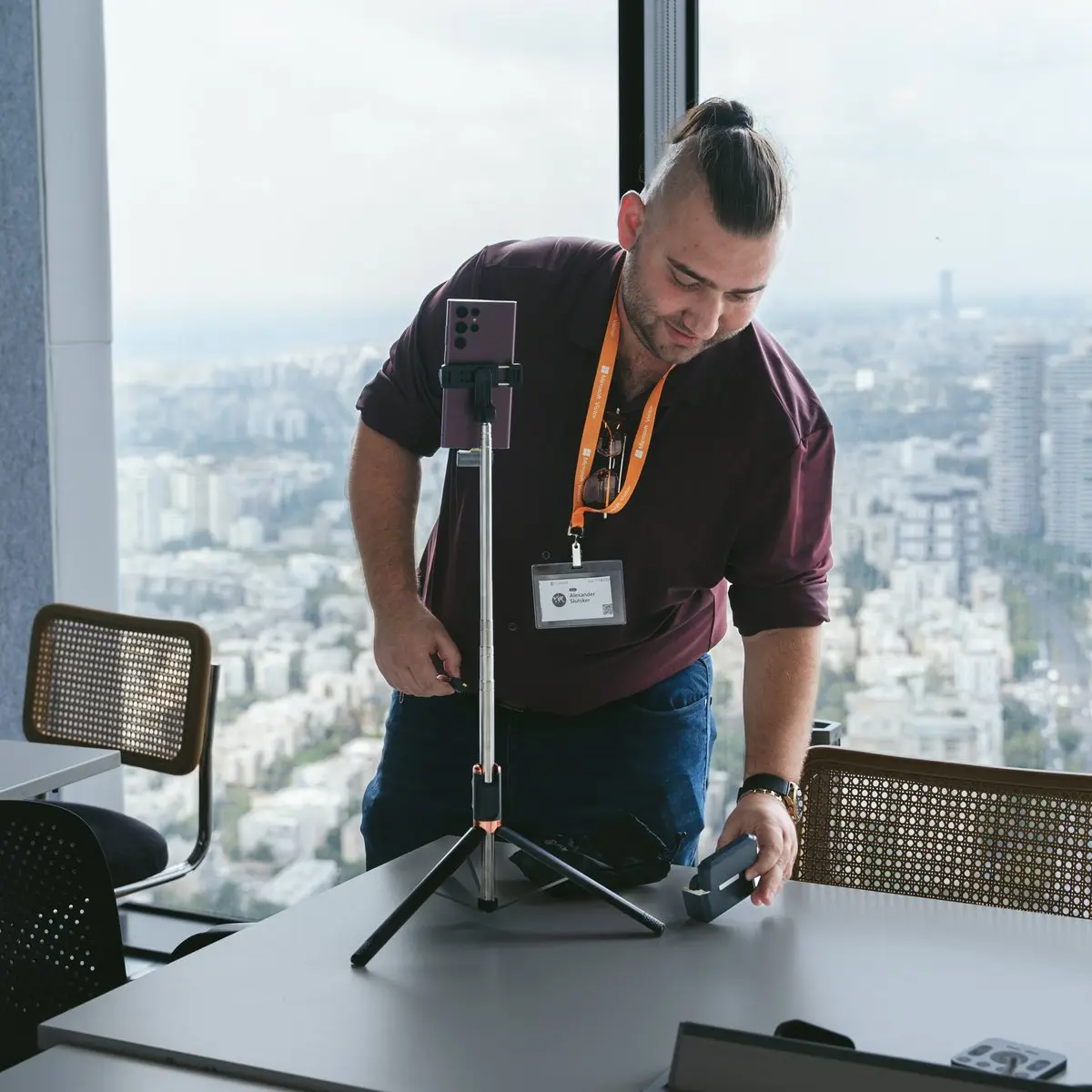
Meeting with international teams, as part of work with a startup
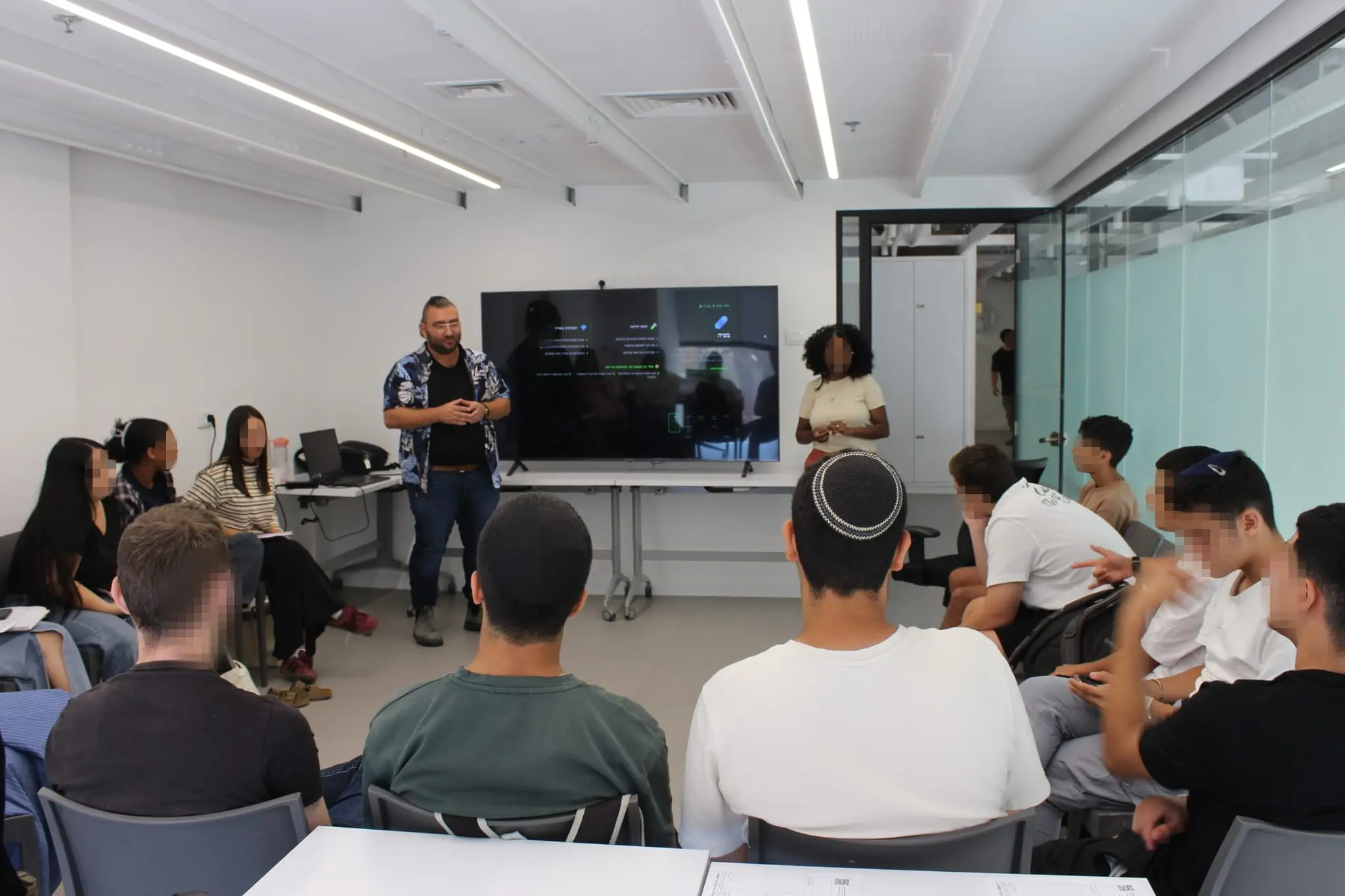
Teenovation, Meital centre Sderot

Entrepreneurs session, Sderot
I have worked with
- Google for Startups
- House of Business, Sderot Municipality
- Microsoft Reactor
- GameReady
- Eclipse Capital
- SderoTech
- IUCEL
- Resilience & Health Innovation Hub
- International Resilience Institute of Sderot


















- Google for Startups
- House of Business, Sderot Municipality
- Microsoft Reactor
- GameReady
- Eclipse Capital
- SderoTech
- IUCEL
- Resilience & Health Innovation Hub
- International Resilience Institute of Sderot
What Clients Say
From different fields, at different stages of business
Dan Manto
Eclipse Capital
Real Estate Investment and Finance, USA
Arty McLabin
GameReady
Game Development Education and Outsourcing, International

Anna
Beautician
After I finished a cosmetology course at a leading company, I was confused. I didn't know how to open a business, what to sell from home, or how to bring in clients. Since I reached out to Mobius, everything has changed. We built an organized plan with clear steps and no unnecessary risks. Today I see results, and I'm growing and developing every month.

Mark
Massage therapist, Gan Yavne
When I finished a massage course, I imagined a different world. I found out it's a hard field, and financial stability isn't easy to find. When I came to Mobius, something changed. We started an organized process and built a business plan. Without Mobius? I probably would have given up. Today I believe in myself and in my own path.
And the paperwork, for anyone who wants to see that too.

Certificate of appreciation, Sderot municipality

Certificate of honor, Teenovation 2026

Directors and officeholders course, SRI Campus

Acceleration program, MaofTech South

Business consultants course

Adaptive project management, INT college
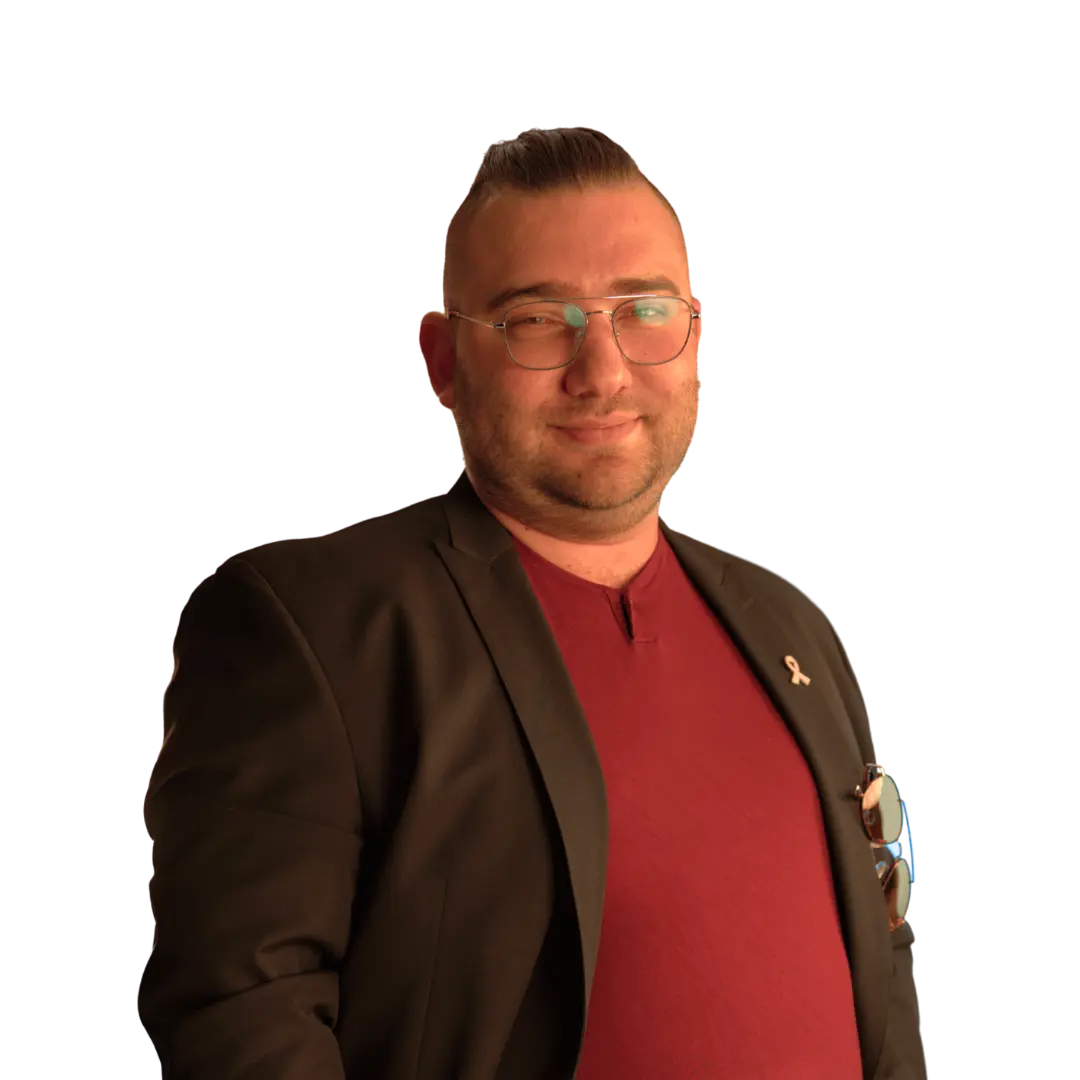
Business, Marketing, Operations & Financial Consultant
Mobius
Alexander Slutsker
9+Years of experience in business consulting
I help entrepreneurs, self-employed people, small businesses and startups understand their own numbers, choose what to do first and grow from there.
Book a Free Call+972 055-248-6151. Better on WhatsApp: I am in meetings most of the day and answer as soon as I am free. Other ways to reach me
We can talk in English, Hebrew or Russian.