Operations Consulting and Building Work Procedures
From everyday chaos to a business that runs steadily.
Operations consulting is work with owners and managers on the way the work gets done: I find where it jams, simplify it, build clear work procedures with you and train the team to follow them. The aim is a business that runs the same way every day, even when you are not in every step.
+972 055-248-6151. Better on WhatsApp: I am in meetings most of the day and answer as soon as I am free. Other ways to reach me
We can talk in English, Hebrew or Russian.
Does This Sound Familiar?
Everything runs through me, and when I am away things stop.
The same mistakes keep coming back, and the same questions reach me every day.
Every new employee learns the job a little differently.
My day goes on putting out fires instead of running the business.
Sound familiar? The first conversation is free.
Book a Free CallWhat Clients Say
From different fields, at different stages of business
Dan Manto
Eclipse Capital
Real Estate Investment and Finance, USA
Arty McLabin
GameReady
Game Development Education and Outsourcing, International

Anna
Beautician
After I finished a cosmetology course at a leading company, I was confused. I didn't know how to open a business, what to sell from home, or how to bring in clients. Since I reached out to Mobius, everything has changed. We built an organized plan with clear steps and no unnecessary risks. Today I see results, and I'm growing and developing every month.

Mark
Massage therapist, Gan Yavne
When I finished a massage course, I imagined a different world. I found out it's a hard field, and financial stability isn't easy to find. When I came to Mobius, something changed. We started an organized process and built a business plan. Without Mobius? I probably would have given up. Today I believe in myself and in my own path.
What you get
Work that does not wait for you
Work that repeats runs by a clear way the team knows, so you are not needed at every step.
One standard for everyone
Every employee, new or old, does the recurring work the same way, so the quality does not depend on who is on shift.
Your day back on the business
Less of your day goes on the same questions and the same fires, and more of it on running the business.
Along the way you get the supporting and guiding materials the work needs, with clear instructions.
Simplified illustration
Where the time goes in one process
- A new order
- A customer question
- A change to an order
- A missing detail
The order is taken
By whoever happens to answer
Waiting for the owner
Every question and every approval
The queue: this is where the time goes, not into the work itself
The work is done
Some of it twice, after a mistake
Delivery and the invoice
The customer has the order
One process that repeats, an order from the moment it comes in until the customer has it. In this example most of the time is not spent on the work itself but in one queue: every question and every approval that waits for the owner.
Simplified. The real work first watches how the process really runs, including the skipped steps and the work done twice, then simplifies it, writes the procedure with you and your managers, and trains the team on it.
mobiusbiz.co.il
I have worked with
- Google for Startups
- House of Business, Sderot Municipality
- Microsoft Reactor
- GameReady
- Eclipse Capital
- SderoTech
- IUCEL
- Resilience & Health Innovation Hub
- International Resilience Institute of Sderot


















- Google for Startups
- House of Business, Sderot Municipality
- Microsoft Reactor
- GameReady
- Eclipse Capital
- SderoTech
- IUCEL
- Resilience & Health Innovation Hub
- International Resilience Institute of Sderot
What the work can include
You do not need all of it. In the first conversation we choose together the parts your business needs.
- We pick together the one process that hurts most, and I watch how it really runs, including the skipped steps, the waiting and the questions that keep coming back to you.
- I simplify the process to the fewest steps that still give a reliable result, before anything is written down.
- I build the work procedures (the agreed way a task is done) with you and your managers, short and clear, so they set a standard instead of freezing a problem.
- I train your staff on the new way of working myself, so it does not stay on paper.
- We choose a few numbers worth watching (KPIs), which show whether a process improved, instead of a feeling.
- I look for where money is lost in the work, work done twice, waiting and repeated mistakes, and tie it to the cash that stays in the business.
- I choose with you the systems for tasks, schedules and team communication, to fit your field and your stage, not from a fixed list.
- When a second branch or shift opens, I help you set up the work so it runs the same way in both places.
Not sure which process to start with? We pick it together in the first conversation.
How the work goes
A free first conversation
We talk, see whether my work fits what your business needs, and I suggest the kind of work that suits you.
Finding the process that hurts most
Together we pick one painful process that repeats, and I watch how it really runs, including the skipped steps, the waiting and the questions that keep coming back to you.
Improving it, then writing it down
We simplify the process, build the procedure with you and your managers, and I train the team on it. Then we move to the next process.
The ongoing work
We meet as often as the business needs. Between meetings you can send me a short question on WhatsApp, and I reply as soon as I can.
Want to see how these steps would look for you? That is what the first conversation is for.
Book a Free Call9+ years of experience in business consulting
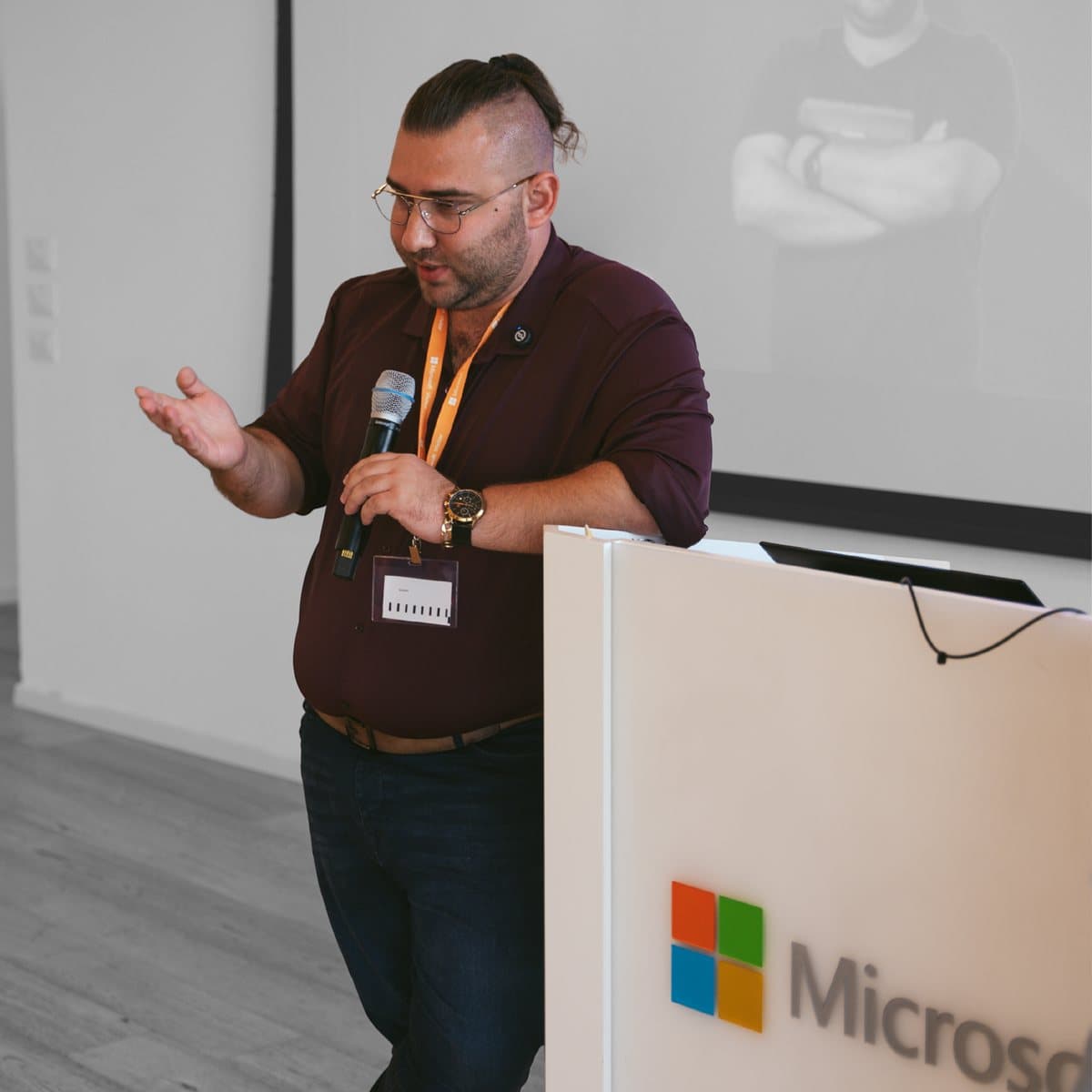
Speaking at Microsoft
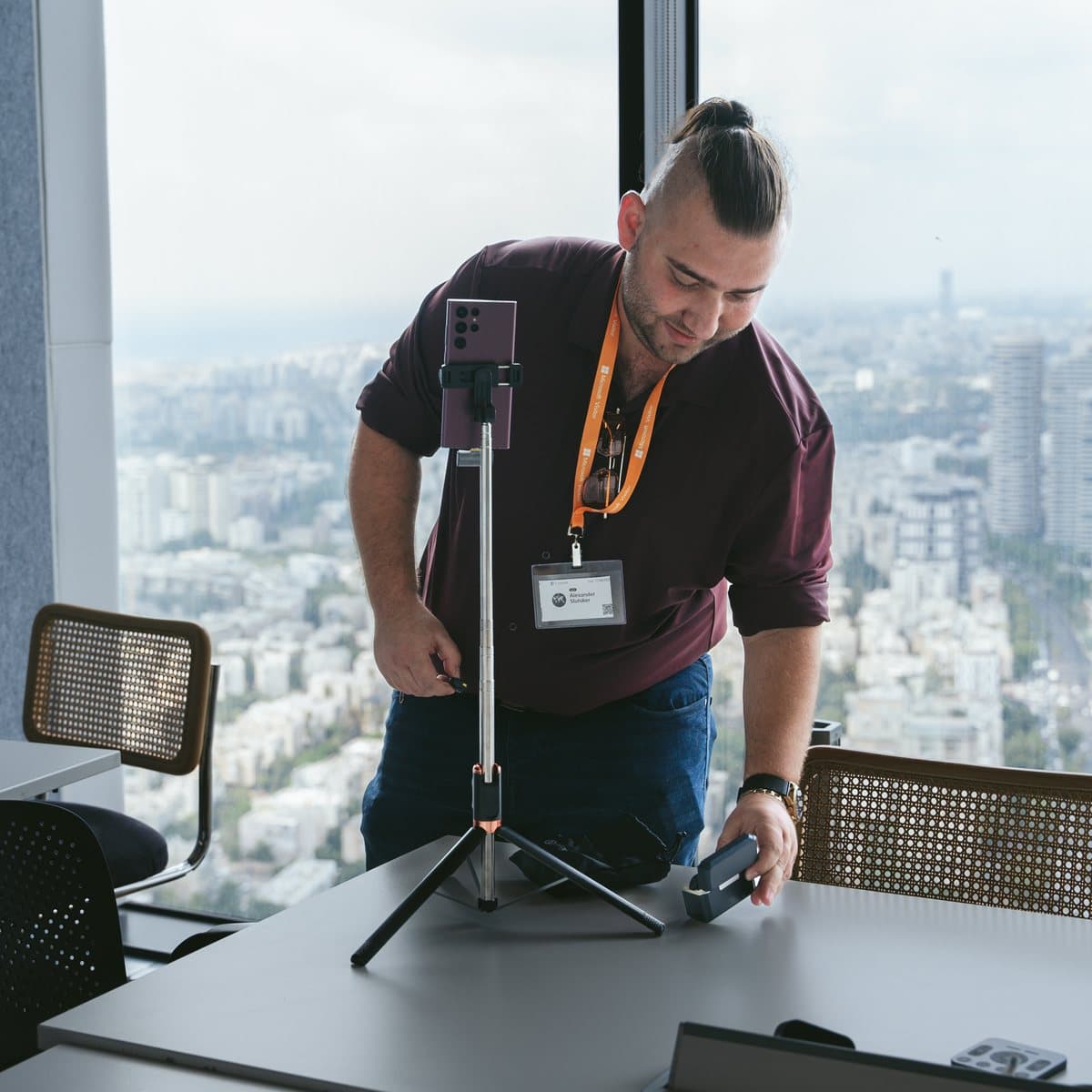
Meeting with international teams, as part of work with a startup
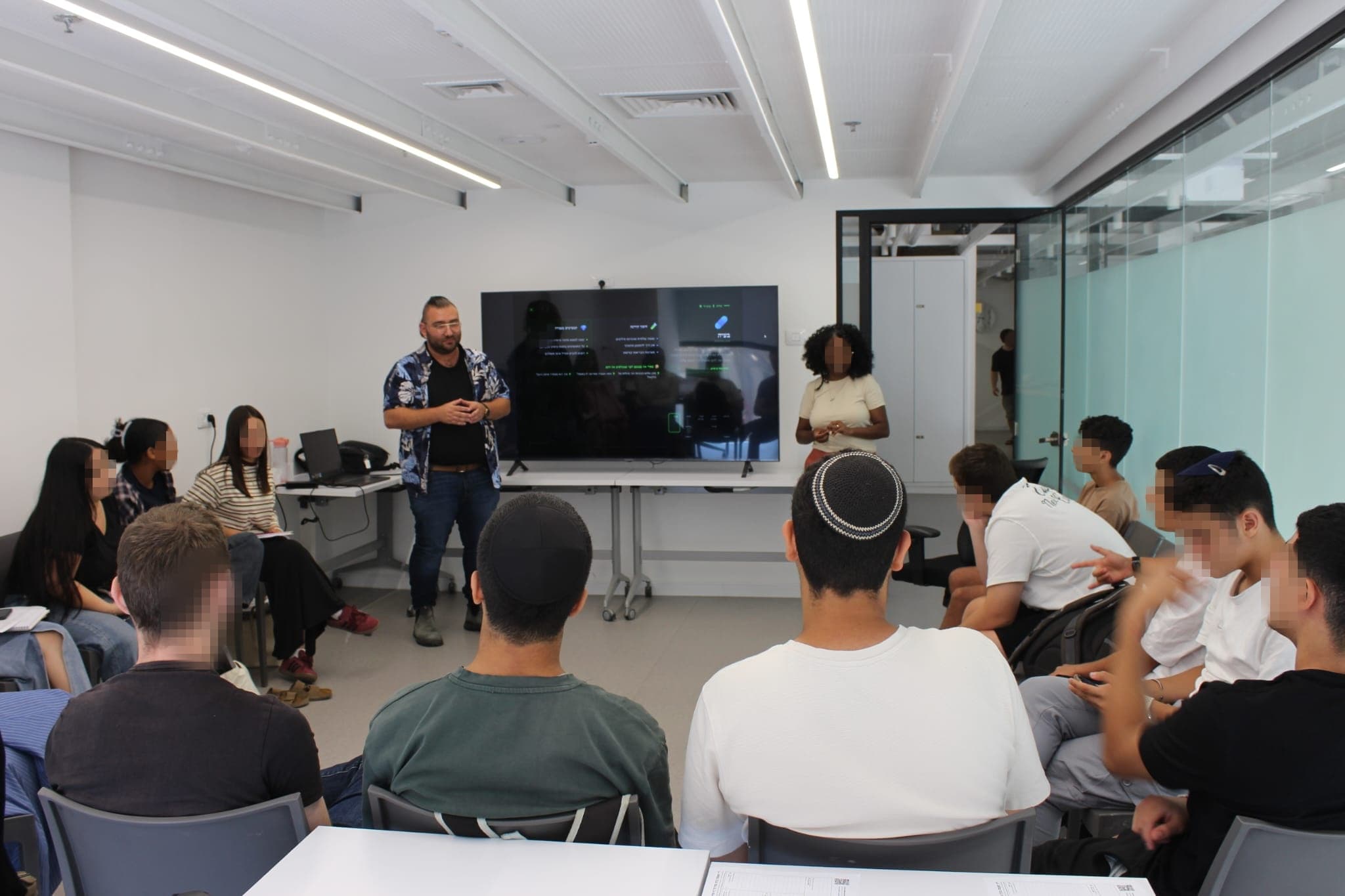
Teenovation, Meital centre Sderot
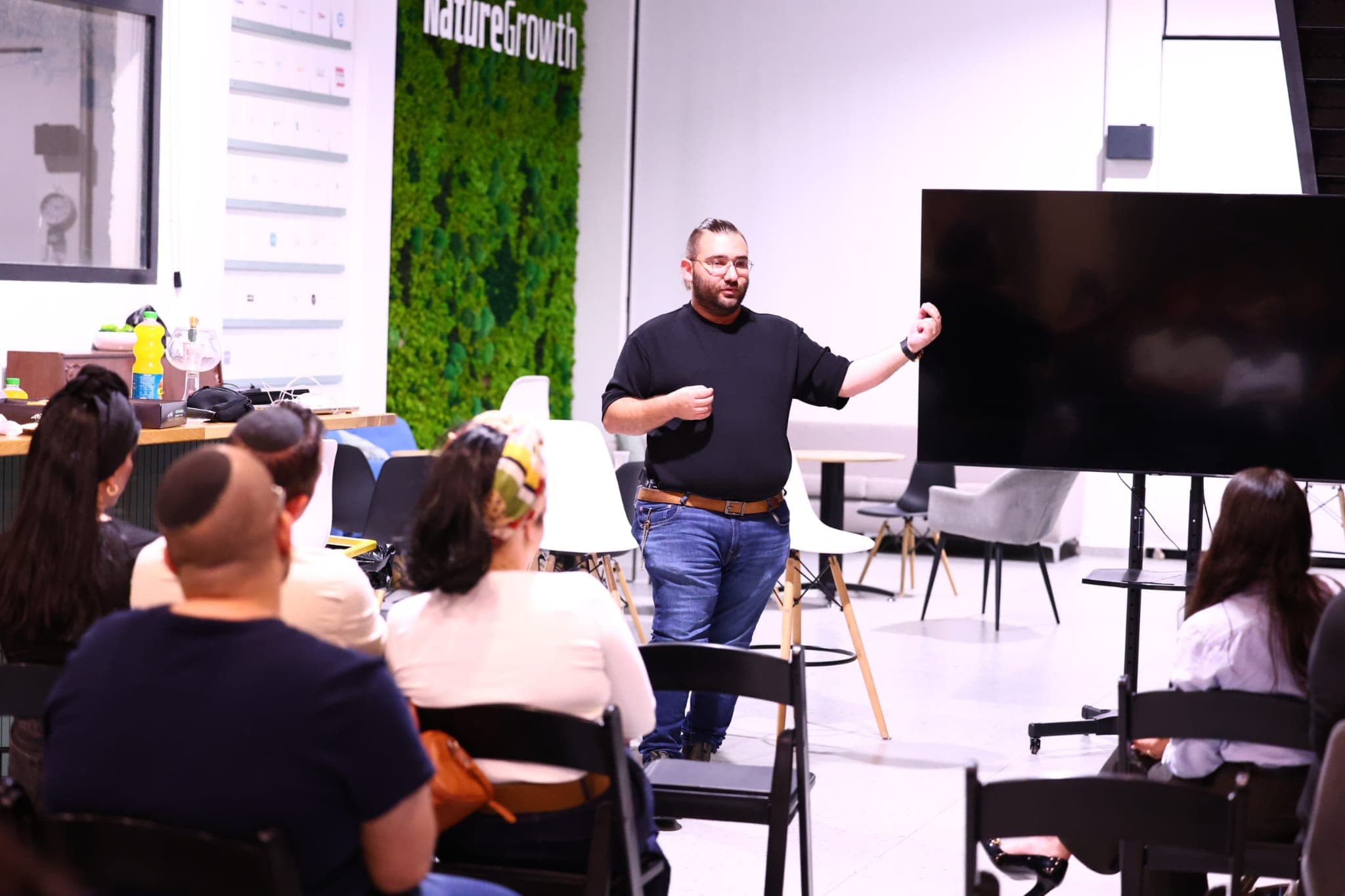
Entrepreneurs session, Sderot
Who does what
What I do
- Watch how the work really runs and find where it jams
- Build the procedures with you and your managers
- Train the staff on the new way of working
What you do
- Choose with me where to start
- Decide what becomes the standard
- Back the new way in front of the team
What to bring to the first conversation
Bring what you already have, even if it is incomplete. We can start without it too.
- The process that frustrates you most, in a few sentences
- The questions the team asks you again and again
Who it fits
- A business with a team, where everything still passes through the owner.
- A business that grew, and still works the way it did with three people.
- A business opening a second branch or shift, which needs the work to run the same way everywhere.
When is it better to start elsewhere?
If you work alone, without staff, and the question is where the business is heading.
In that case, start here: Strategic Consulting and Ongoing Business Guidance
And the paperwork, for anyone who wants to see that too.
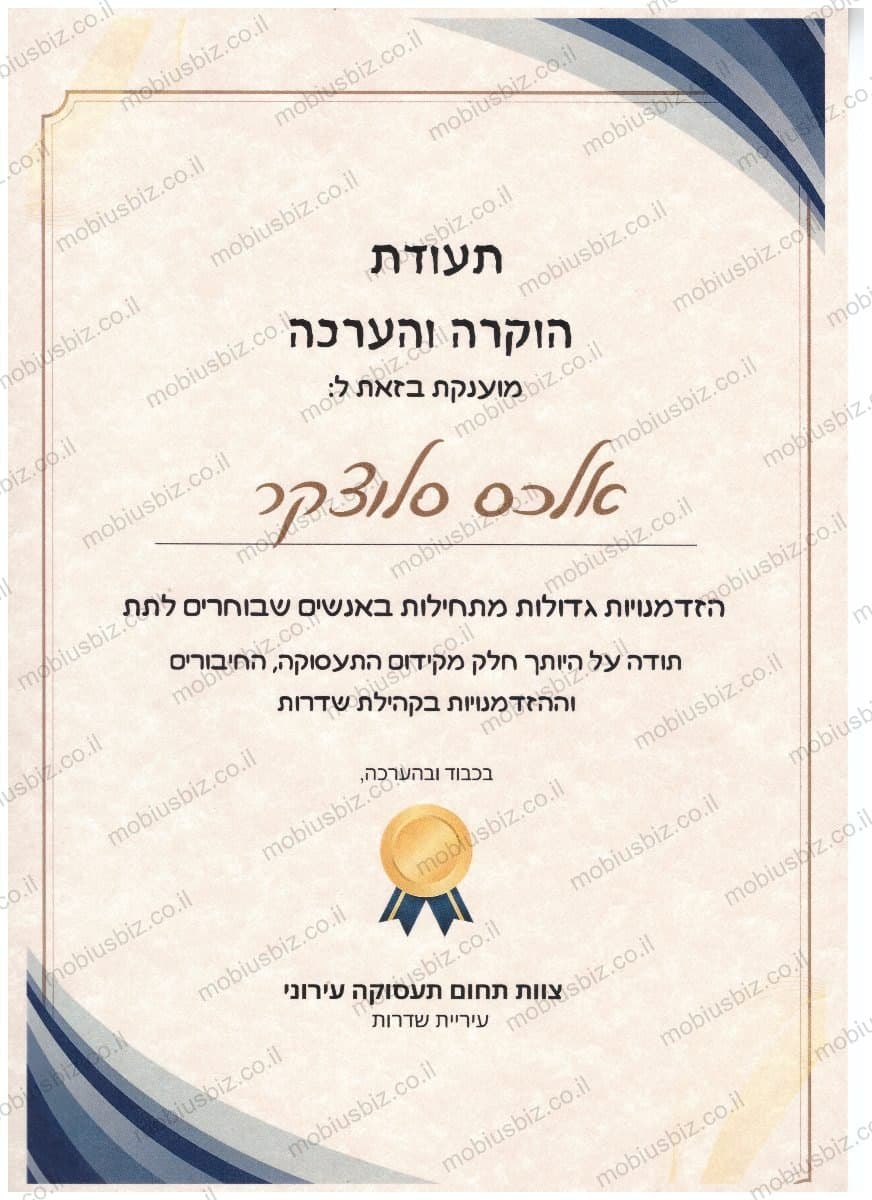
Certificate of appreciation, Sderot municipality
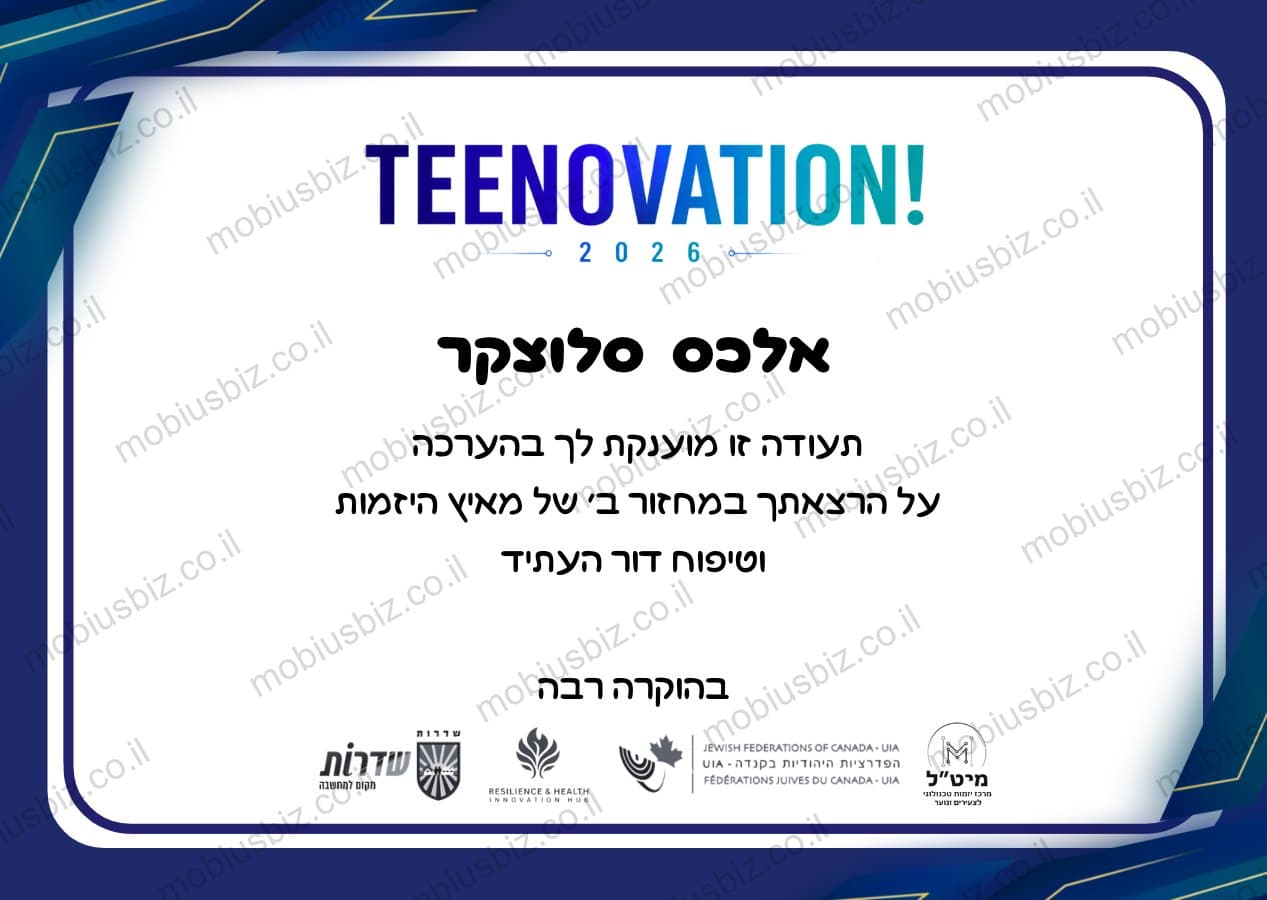
Certificate of honor, Teenovation 2026
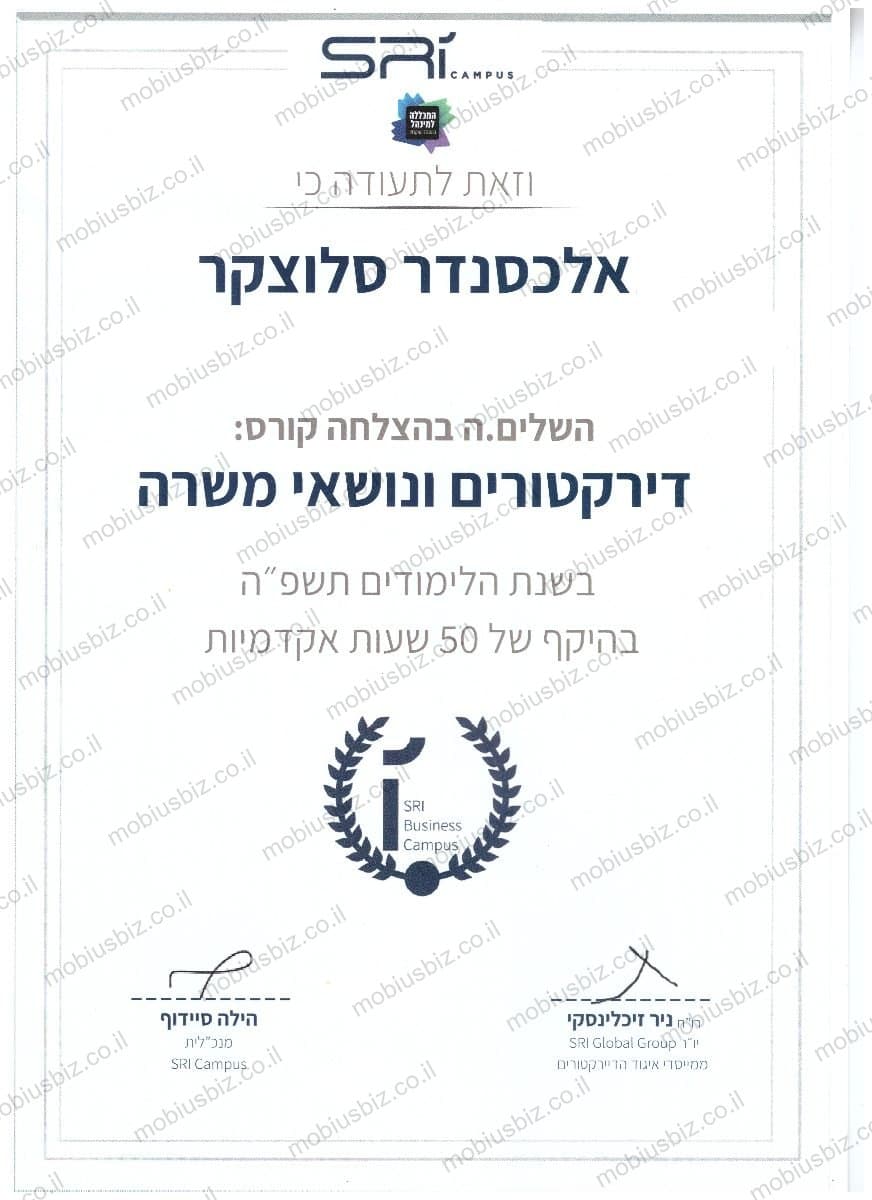
Directors and officeholders course, SRI Campus
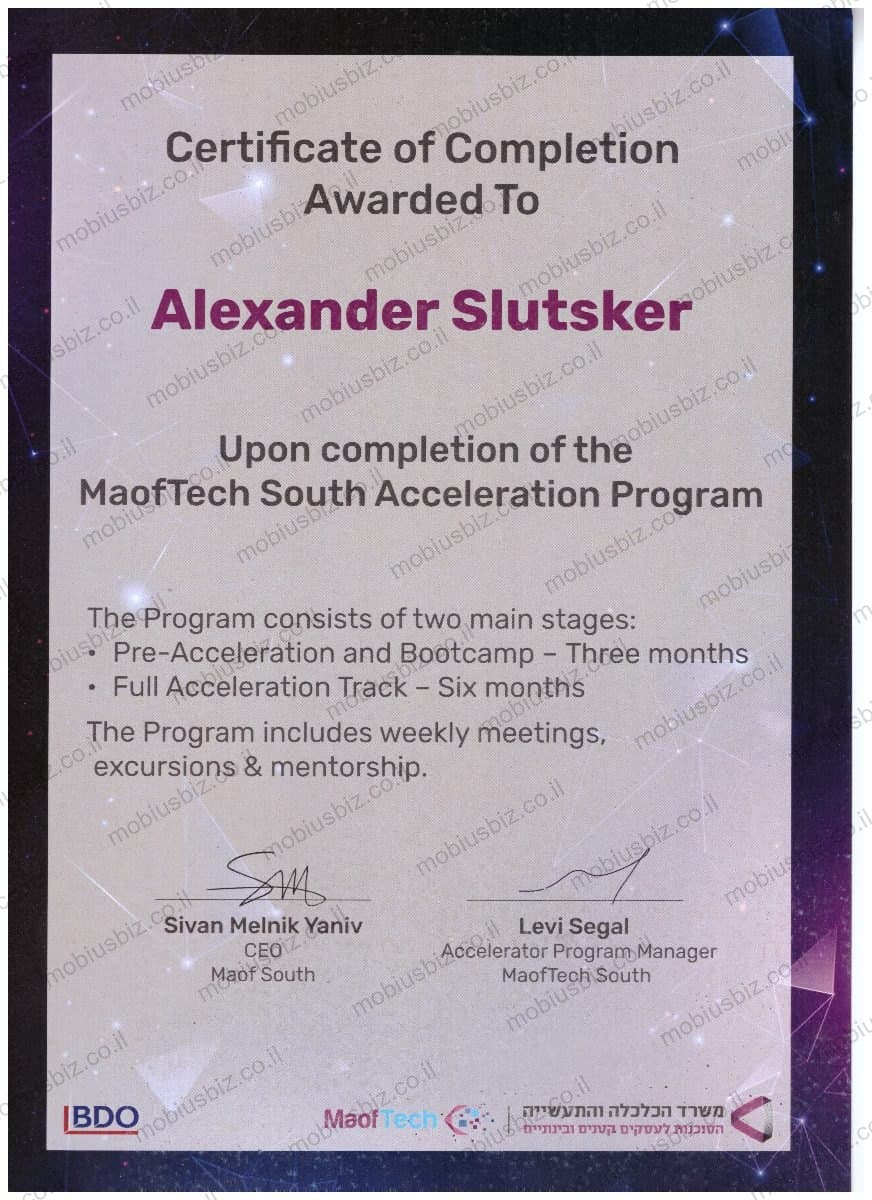
Acceleration program, MaofTech South
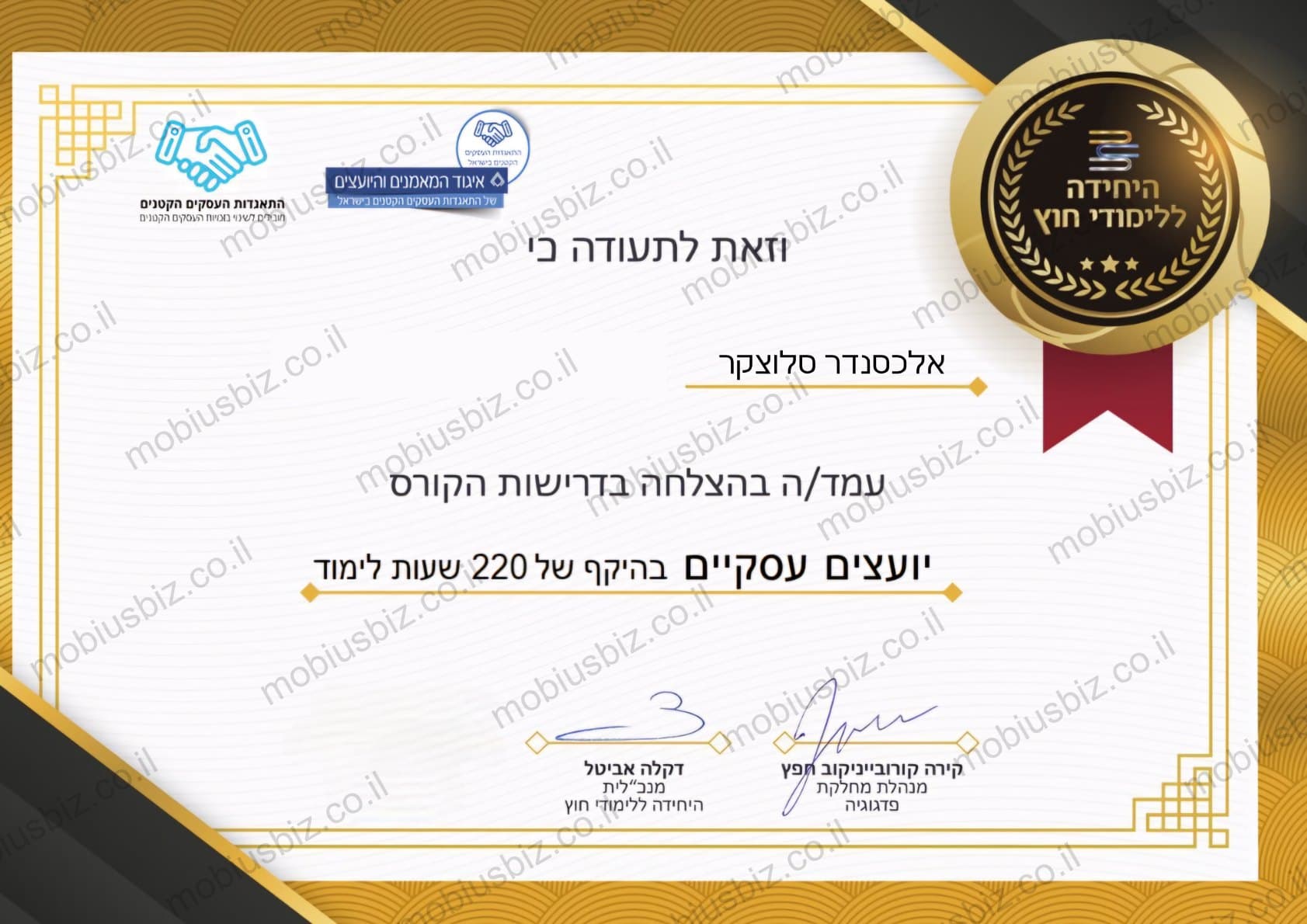
Business consultants course
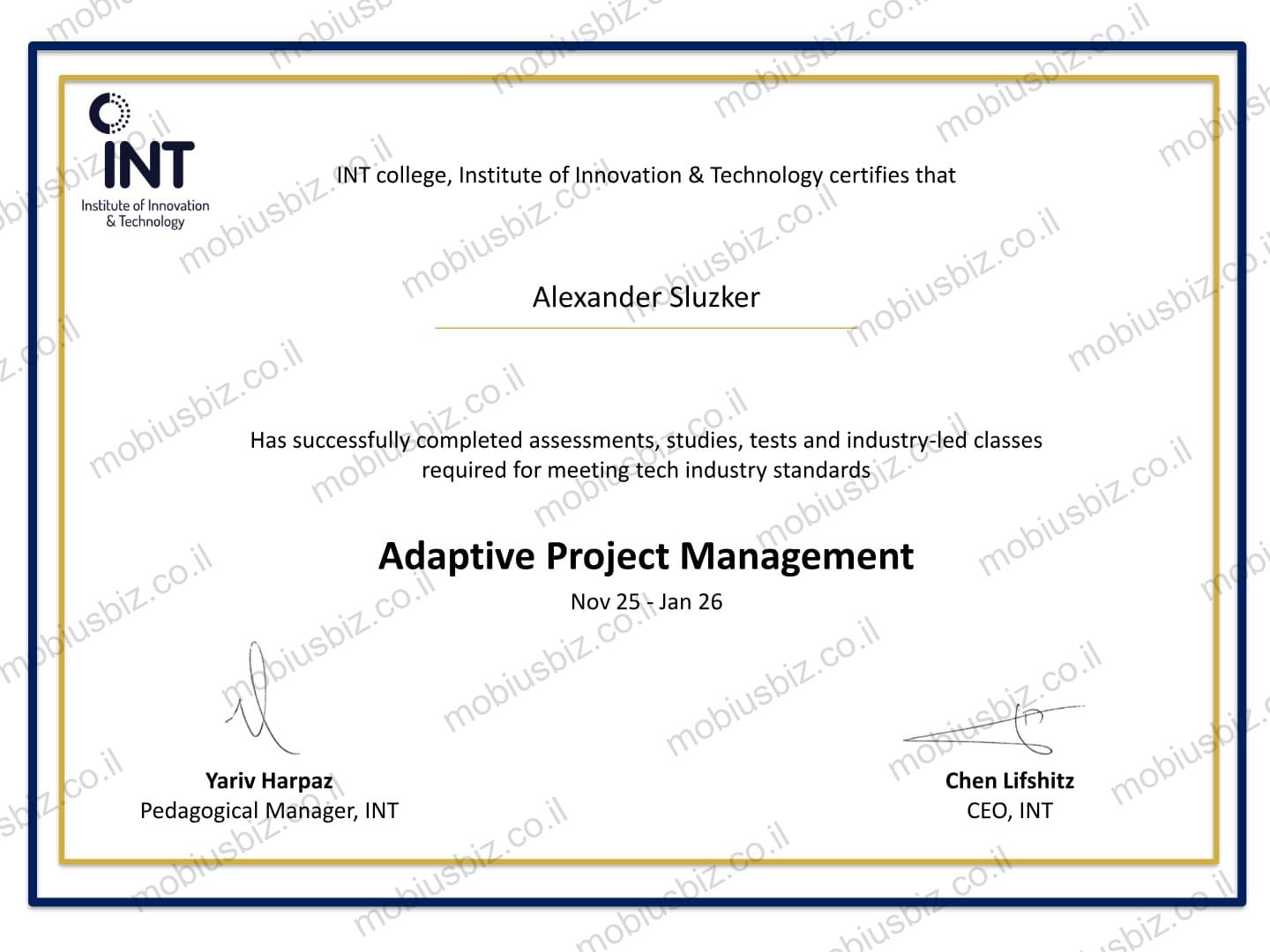
Adaptive project management, INT college
You work directly with me, and I stay your point of contact throughout the work.
- How does it start?
- With a free first conversation of 15 to 30 minutes, by phone or by video. In it we name the problem and shape the work around it. It is not where the answer is handed over. The answer comes out of the work that follows.
- How long before I see results?
- Not from the first meeting, and not from the first few. First we have to understand where the business really stands, so the effort goes only where it works and nothing that already works gets broken. When measurable, steady results come depends on the business and on the pace of the work. After a first conversation I can tell you what to expect in your field.
- How much of my time will it take?
- A meeting of about an hour, as often as the business needs, and a little more at the start while I learn the business. The rest is carrying out the plan, and that is work you would be doing in your business anyway, not time spent in meetings.
- Do my books have to be in order first?
- No. Paperwork is an important tool, but it is not a condition for starting. We begin from where things stand today and put the papers in order along the way, so the work never waits for them.
- What happens to the numbers I show you?
- Whatever you show me about your business stays between the two of us, exactly as it does for every other client of mine.
- What kinds of businesses do you work with?
- I have worked with self-employed professionals, small businesses and startups, in beauty and wellness, the trades, food, retail, manufacturing, education, hi-tech and real estate investment, in Israel and abroad. Your trade matters less than your stage. A bakery and a software company at the same stage are usually stuck on the same thing.
Frequently asked questions
Everything depends on me. Can operations consulting change that?
Yes. Dependence on the owner usually comes from decisions nobody wrote down, unclear handovers between people, vague roles, no shared standard and a habit of solving every problem yourself. I start with one painful process that repeats, such as taking on a new customer, delivering an order or answering customers, and look at how it really runs compared with how you think it runs. Unneeded steps go, and the team gets a simple way of working it can follow without you. Then the next process. Round by round, the aim is for more decisions to be made by the team without waiting for you.
Do you write procedures first, or improve the process first?
Improve first, then write. A procedure for a broken process only freezes the problem on paper. I start by watching the real work, including the steps people skip, the work done twice, the waiting and the questions that keep coming back to you. The process is simplified to the fewest steps that still give a reliable result, and only then written down, in a form the team will actually use, not a thick manual nobody opens.
Do you train the team yourself?
Yes. I build the procedures together with you, the founder or the manager, and then train the staff to work by them. A procedure nobody was trained on stays on paper, so training is part of the work, not an extra.
Which systems and tools do you bring in?
It depends on your field and on the stage of the business. A small workshop and a company with several branches need very different things. I choose the tools with you after I have seen how the work runs, so the tool serves the process and not the other way around.
What does operations have to do with money?
More than it seems. Work done twice, customers who wait, stock that sits and mistakes that repeat all cost money, and most of it never shows up as a line in the books. When the work runs smoothly, more of what the business earns stays in it. That is why I look at operations and cash together.
How is this different from project management and training managers?
Operations deals with the work that repeats every day: how an order is handled, how a customer is served, how a shift runs. Project management is for a one time effort with a start and an end, such as opening a branch. Training managers is about people and decisions: who decides what and how managers manage. The first conversation shows where your business is stuck.
Related services
- Training Managers and Building Your Management TeamWhen what jams is who decides, not how the work runs.
- Project Management ConsultingWhen it is a one time project with a start and an end.
- Financial Consulting for BusinessesWhen the question starts with cash or with profit.
New to consulting? Start with the map of what business consultants do
Ready to Get Started?
Book a Free Call+972 055-248-6151. Other ways to reach me
We can talk in English, Hebrew or Russian.