Opening a Business in Israel as a New Immigrant
A practical guide for olim starting a business in Israel: legal structures, the local market's unwritten rules, payment culture and common newcomer mistakes.
Moving to a new country and opening a business at the same time means learning two systems at once. The bureaucratic one is the easy part. The unwritten one is where newcomers pay tuition.
This guide covers both: the formal steps, which are genuinely simple, and the local market rules that no government website will tell you.
The formal part is easier than you expect
Israel does not put special barriers in front of immigrant entrepreneurs. The first structural decision is osek patur or osek murshe, a VAT-exempt small business with a revenue ceiling versus a VAT-registered business without one.
Then you open the same files as any Israeli: a VAT file and an income tax file at the Israel Tax Authority, and a self-employed file at the National Insurance Institute (Bituach Leumi). The full sequence (structure, files, bank, licensing, insurance) is in the step by step checklist for opening a business in Israel.
Support programs for new immigrants exist and change over time. Do not plan your budget around a benefit you read about in a forum post from three years ago. Check current conditions with official sources, such as the Ministry of Aliyah and Integration, before you count on that money.
The unwritten rules cost more than the fees
The formal registration will not sink your business. These things might:
- Payment culture. Israeli business clients commonly pay on delayed terms, shotef plus (payment 30 to 90 days after the invoice month). You deliver in January and see the money in April. In effect, you finance your clients, so planning your cash flow (money moving in and out) matters more here than in many countries. Start with financial management for startups.
- Directness. Negotiation is fast, blunt, and personal. A hard "no" today can become a deal next month. Do not read local communication style through your home country's filter.
- Referrals over advertising. A large share of the market moves on trust and personal introductions. Community, word of mouth, and asking directly for referrals outperform cold marketing for most small businesses. That is good news for newcomers with strong community ties.
- Regulation lives in Hebrew. Licensing, municipal requirements, and supplier contracts run in Hebrew. Even if your customers speak your language, budget for professional help on the Hebrew-facing side.
Reading the negotiation: tone, pressure, and real intent
Three patterns catch Russian-speaking newcomers most often.
A raised voice is not always a personal conflict. People interrupt, push, and speak loudly in Israeli negotiations. If you come from a more reserved business culture, it is easy to read this as hostility or a dead deal. Often it is just a communication style or a tactic to win better terms. Set boundaries against real disrespect, but do not treat every loud moment as an attack.
Emotional pressure can be a rational tactic. Sometimes the other side raises the temperature deliberately: to push a faster yes, to extract a discount, to make you justify yourself, or to test how easily you can be managed. The defense is to separate the tone from the content and ask: what exactly does the other side want, what is actually agreed, and what happens if the answer is no?
Not every interested party is a buyer. Long conversations can be market research, a way to extract free consulting, or price-checking for a competitor, business intelligence at your expense. A real buyer discusses specifics: scope, price, timelines, responsibility, the next step. Someone who only collects information will always find a new reason to delay the decision.
And one rule above all: move oral agreements into documents. Much in Israel starts with an informal conversation or a message, but serious financial obligations should never rest on an oral promise. Put the scope, the expected result, timelines, payment terms, responsibility, termination, and how changes are handled in writing. A vague agreement is not only a legal risk. It is room for interpretation, and an ordinary commercial disagreement can grow into a long, expensive conflict.
Your old business model is a hypothesis here
The most expensive pattern among immigrant entrepreneurs: transplanting a business model that worked at home and investing as if it already works here.
Prices are different. Competition is different. The customer's alternatives are different. What was premium at home may be standard here, and the other way around. Before committing serious money, run the model through a real validation: talk to potential customers, test prices, sell a small version first. The method is in how to validate your business idea.
The same warning applies to pricing in the opposite direction. Newcomers systematically underprice, out of uncertainty or converted-currency thinking, and underpricing attracts exactly the clients who will eat the business alive.
Savings buy time, not equipment
Most immigrant founders start with a fixed pool of savings and no local income. That pool has one job: buying runway (months of cash left), enough months for the business to learn the market. Every shekel spent on setup before demand is validated shortens the learning period.
Build the number honestly with how much it costs to open a business in Israel, and keep the fixed costs near zero until strangers are paying full price.
Learning the local market with a guide
Everything in the unwritten list above is learnable. The question is whether you learn it from your own expensive mistakes or with someone who has watched these mistakes being made.
I am a Russian-speaking business consultant myself. I understand the cultural logic of entrepreneurs from the former Soviet Union, and I work every day inside the Israeli business environment. In a negotiation that means more than translating words: lowering the emotional temperature, explaining what the other side is actually doing, returning the conversation to numbers, and drawing boundaries where information should stop flowing.
Business is also a lonely place. The owner pays salaries, answers to clients, and keeps up a confident face even when the next month is unclear. Having someone to call, describe the situation, and get an independent view is worth a lot in a competitive market, whether in a hard period or after a big win.
This is the work I do in business launch support with owners who are building a business in Israel and still learning the local market: checking the idea against local demand, choosing the type of business, setting a first price, and deciding the order of the first moves. I hold a BBA and an MBA, I have helped entrepreneurs, small businesses and startups open their businesses, and I work in Hebrew, English and Russian. What owners I have worked with say about the work is on my profile page.
If you are building your business in a market you are still learning, talk it through with me.
The content on this blog is general information only and is not a recommendation to act. It is not business, legal, tax, or financial advice. Before making any decision, consult a qualified professional, such as an accountant, a lawyer, or a business advisor, about your specific situation.
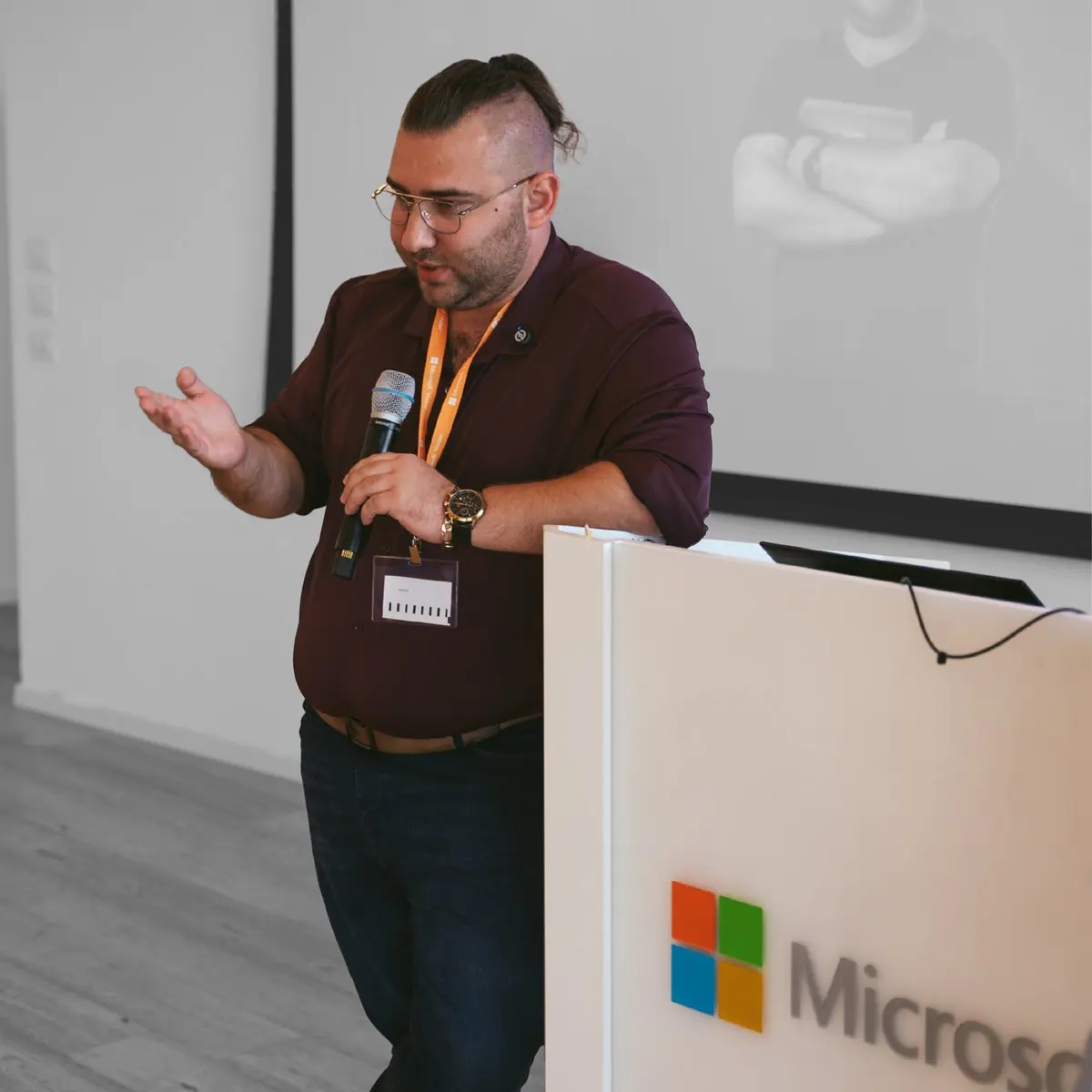
Speaking at Microsoft

Meeting with international teams, as part of work with a startup
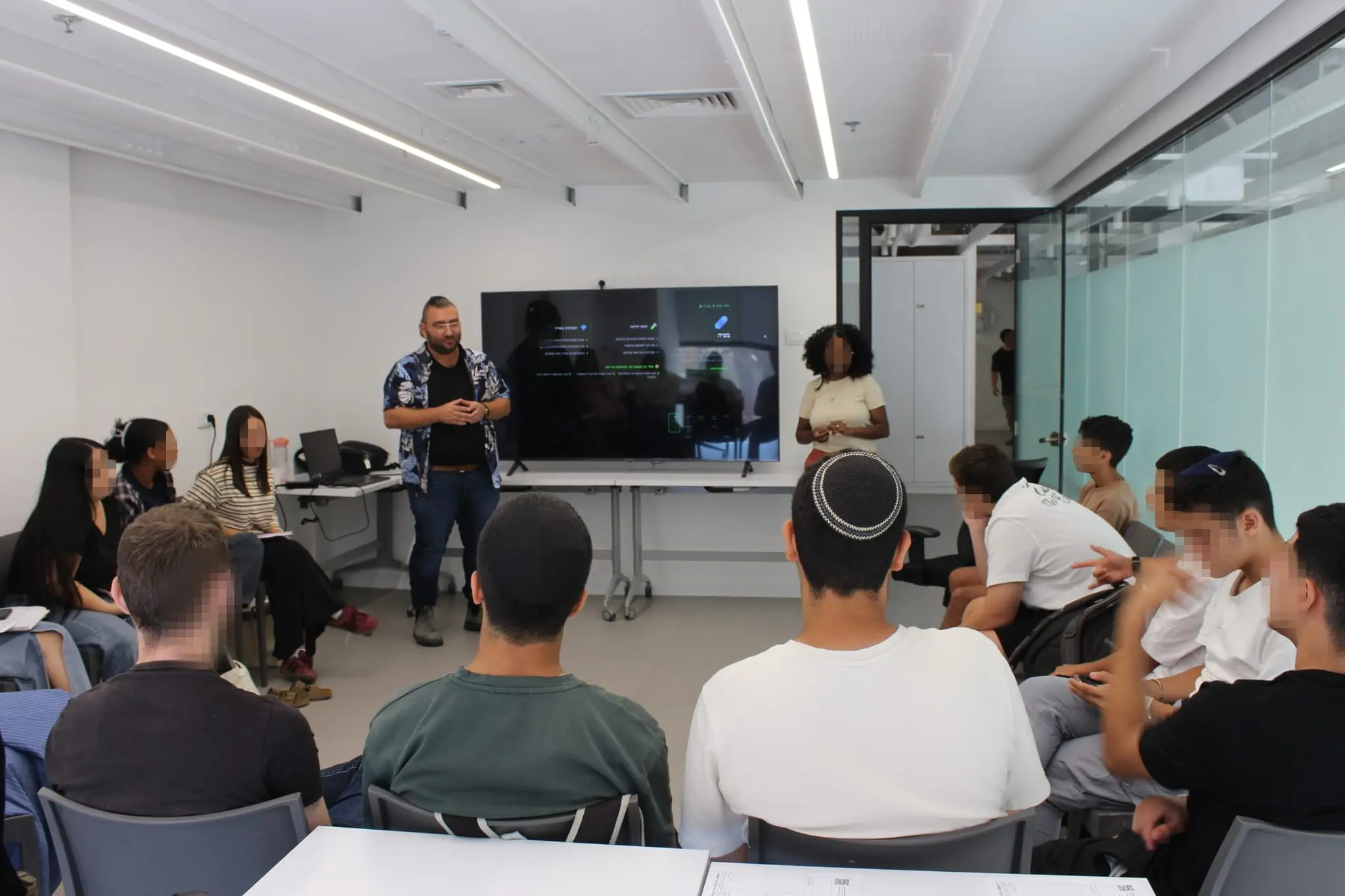
Teenovation, Meital centre Sderot

Entrepreneurs session, Sderot
I have worked with
- Google for Startups
- House of Business, Sderot Municipality
- Microsoft Reactor
- GameReady
- Eclipse Capital
- SderoTech
- IUCEL
- Resilience & Health Innovation Hub
- International Resilience Institute of Sderot


















- Google for Startups
- House of Business, Sderot Municipality
- Microsoft Reactor
- GameReady
- Eclipse Capital
- SderoTech
- IUCEL
- Resilience & Health Innovation Hub
- International Resilience Institute of Sderot
What Clients Say
From different fields, at different stages of business
Dan Manto
Eclipse Capital
Real Estate Investment and Finance, USA
Arty McLabin
GameReady
Game Development Education and Outsourcing, International

Anna
Beautician
After I finished a cosmetology course at a leading company, I was confused. I didn't know how to open a business, what to sell from home, or how to bring in clients. Since I reached out to Mobius, everything has changed. We built an organized plan with clear steps and no unnecessary risks. Today I see results, and I'm growing and developing every month.

Mark
Massage therapist, Gan Yavne
When I finished a massage course, I imagined a different world. I found out it's a hard field, and financial stability isn't easy to find. When I came to Mobius, something changed. We started an organized process and built a business plan. Without Mobius? I probably would have given up. Today I believe in myself and in my own path.
And the paperwork, for anyone who wants to see that too.

Certificate of appreciation, Sderot municipality

Certificate of honor, Teenovation 2026

Directors and officeholders course, SRI Campus
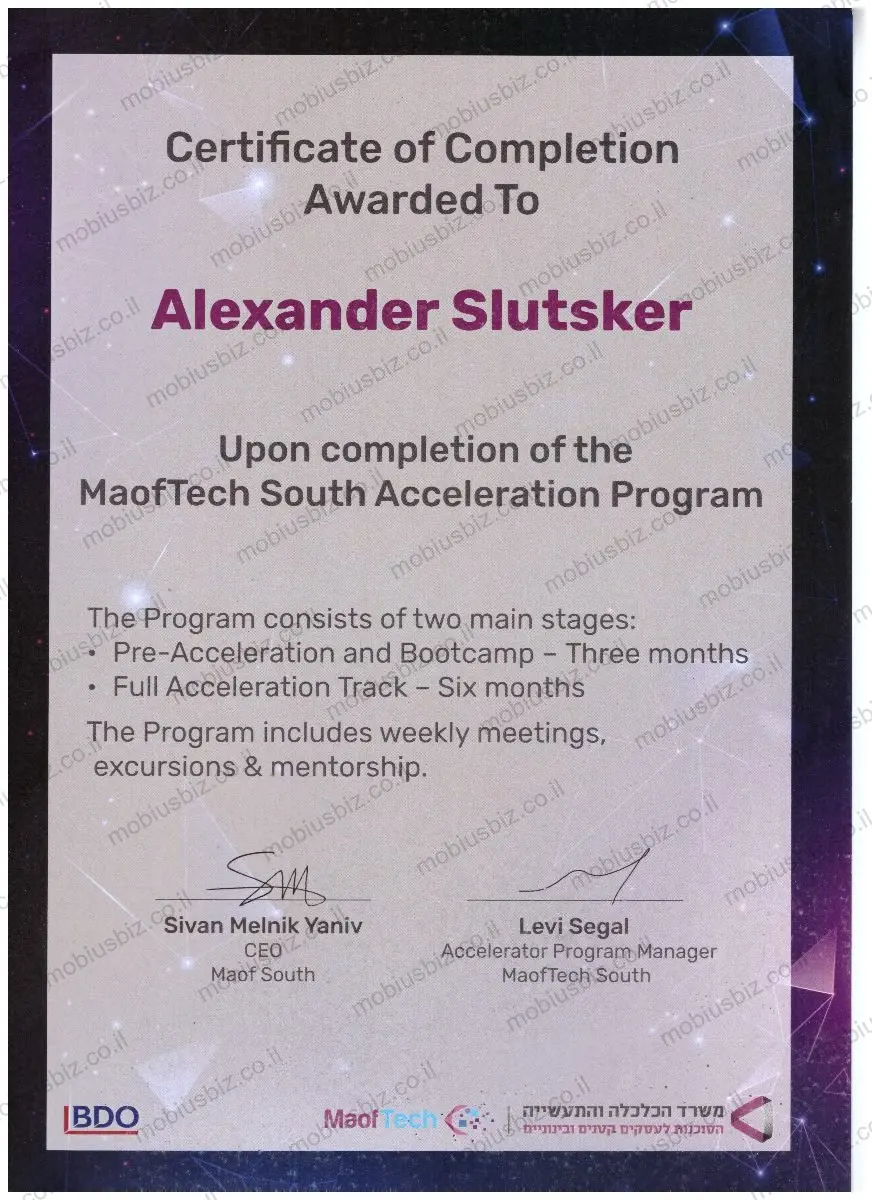
Acceleration program, MaofTech South

Business consultants course

Adaptive project management, INT college
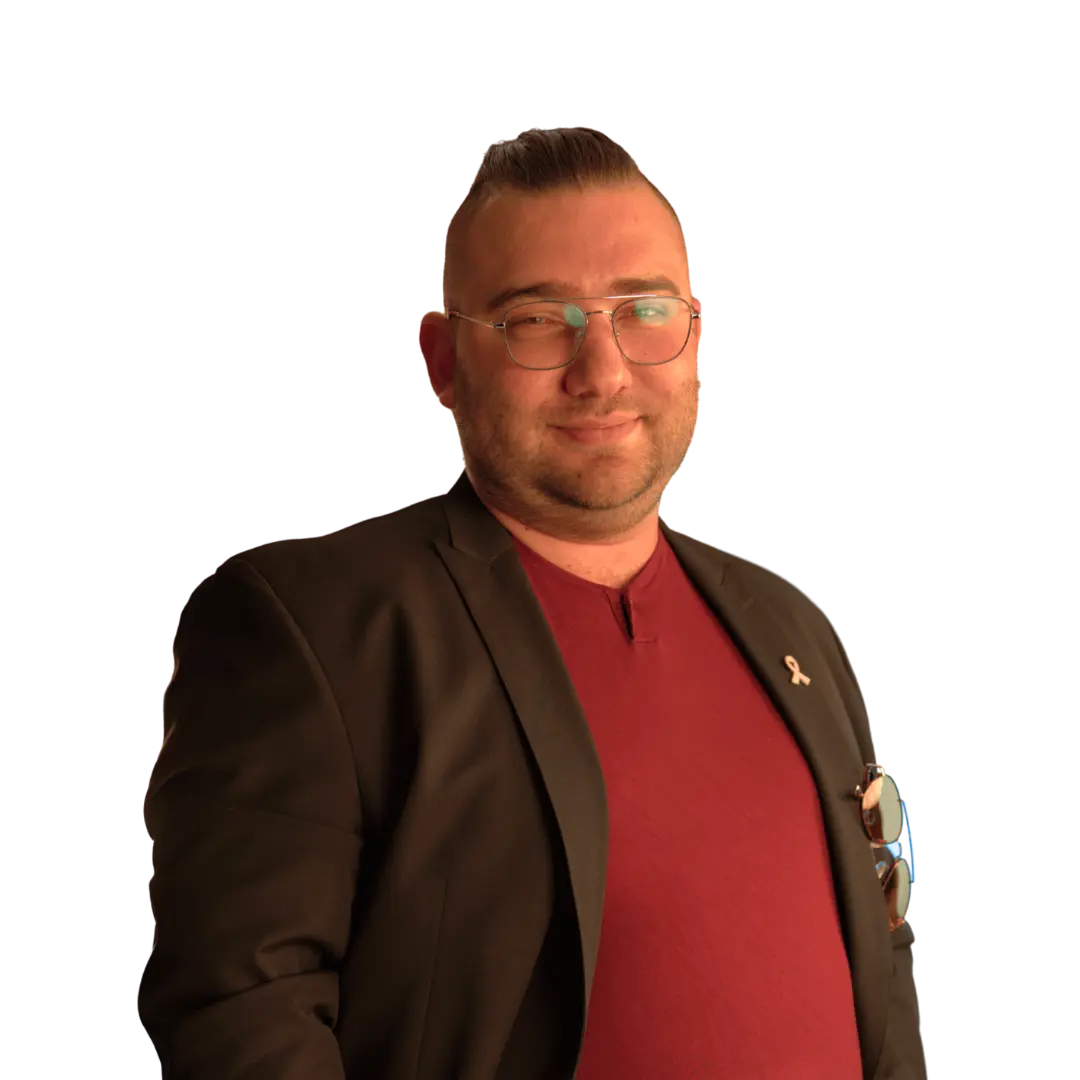
Business, Marketing, Operations & Financial Consultant
Mobius
Alexander Slutsker
9+Years of experience in business consulting
I help entrepreneurs, self-employed people, small businesses and startups understand their own numbers, choose what to do first and grow from there.
Book a Free Call+972 055-248-6151. Better on WhatsApp: I am in meetings most of the day and answer as soon as I am free. Other ways to reach me
We can talk in English, Hebrew or Russian.