Osek Patur or Osek Murshe: How to Choose the Right Status
The practical comparison for new Israeli businesses: VAT, revenue ceiling, reporting, image with clients, and when it pays to switch from patur to murshe.
If you are opening a small business in Israel, this is usually the first bureaucratic decision: osek patur or osek murshe?
The short answer: an osek patur (VAT-exempt small business) does not charge VAT and reports once a year, but has a yearly revenue ceiling of 122,833 shekels as of 2026. An osek murshe (VAT-registered business) adds VAT to every invoice, reclaims VAT on expenses, reports periodically, and has no ceiling.
The right choice depends on three things: how much you will earn, who your clients are, and how much VAT sits inside your expenses. Let us take them in order.
How much will you actually earn?
The ceiling is the hard constraint. It is updated every January, so verify the current figure with the Israel Tax Authority, but the logic stays the same: if your realistic first-year revenue is far below the ceiling, patur keeps your life simple. One annual declaration, no VAT bookkeeping, no periodic reports.
One more practical limit: an osek patur cannot issue a tax invoice (chshbonit mas). It issues transaction documents and receipts instead. If your clients are companies that need tax invoices, that alone can decide the question.
If your plan says you will cross the ceiling mid-year, do not start as patur just because it is easier. Crossing the ceiling forces a switch with VAT consequences on the excess, and mid-year status changes are exactly the kind of administrative noise a new business does not need.
Be honest with the forecast. Building one is part of how much it costs to open a business in Israel.
Who are your clients?
This is the factor most first-timers miss.
- Private customers do not care about your status. They see a final price. Here patur has a real advantage: an osek murshe must add VAT, currently 18 percent, which either raises the customer's price or comes out of your margin. A patur selling to private customers is effectively 18 percent cheaper, or 18 percent more profitable, at the same price point.
- Business clients reclaim the VAT you charge them, so VAT does not increase their real cost. Some companies simply prefer suppliers who issue VAT invoices. If your market is businesses, murshe rarely hurts you and often signals scale.
How much VAT is inside your costs?
An osek murshe reclaims the VAT paid on business expenses. An osek patur pays that VAT as a final, unrecoverable cost.
So look at your expense structure. A consultant whose main input is time has almost no VAT to reclaim, so patur loses nothing. A business buying equipment, materials, inventory, or renovation work carries a lot of VAT inside its costs, and murshe status returns that money.
A concrete example of the offset (kizuz maam, deducting input VAT): you collected 18,000 shekels of VAT from clients in a period and paid 7,000 shekels of VAT inside your business purchases. You transfer the difference, 11,000 shekels, to the Tax Authority. The deduction is not automatic for every purchase: the expense must belong to the business and be backed by proper documents.
A rough test: if your VAT-bearing expenses are a meaningful share of revenue, the reclaim can outweigh the simplicity of patur even below the ceiling.
The third track people forget: the micro-business regime
Alongside the two VAT statuses there is a separate income-tax track worth knowing: baal esek zair (micro-business regime). It is not a third VAT status. A business that meets the conditions can be an osek patur or an osek murshe for VAT and use the micro-business regime for income tax at the same time.
The idea: instead of reporting actual expenses, the regime grants a normative expense deduction of 30 percent of turnover, with simplified annual reporting, up to the same 122,833 shekel ceiling in 2026. A quick example: on a turnover of 100,000 shekels, 30,000 shekels of expenses are recognized automatically, and the income-tax calculation starts from 70,000 shekels before other applicable rules.
If your real deductible expenses are well below 30 percent of revenue, this can be simpler and cheaper. If they are higher, claiming actual expenses may win. Compare the numbers. Do not choose a track because of the word simplified. The regime also does not cancel your other obligations as a business owner.
The switch is not a one-way door, but plan it
Many owners start as patur, prove demand, and upgrade to murshe when revenue approaches the ceiling or when business clients start asking for VAT invoices. That path is sensible. The mistake is drifting into the switch unprepared: prices that never accounted for VAT, bookkeeping that cannot support periodic reporting, and a ceiling crossed by accident. When the business is already running, I plan that switch with you alongside prices and expenses, as part of small business consulting.
Note also what patur does not exempt you from: income tax and National Insurance apply in full. The exemption is only about VAT. And certain licensed professions (lawyers, accountants, doctors, and others on the regulated list) must register as murshe regardless of revenue. What to ask your accountant about all this is the subject of my lecture on tax basics for individuals and small businesses, one of my lectures and workshops.
Where this decision fits in the launch
The status choice is one step in a longer sequence (structure, files, banking, licensing, pricing, first clients) covered in the step by step checklist for opening a business in Israel. Once the status is chosen, the registration itself, when to file it and the advance payments that start right after, is in how to open an osek patur or osek murshe step by step.
My rule for this choice: do not start from the question of which status is easier to open. Start from what the business does, who pays, what turnover is realistic, how large the expenses are, whether major purchases are coming, how fast the business needs to grow, and what the profession legally requires. A small detail here can separate a profitable business model from an unprofitable one.
It is also exactly the kind of decision I work through with you in business launch support, alongside the first price and the order of the first moves, so the structure matches the business you are actually building. If you want the choice checked against your real numbers, talk it through with me.
This article is general guidance, not tax advice. For a binding answer on your specific case, consult an accountant or the Israel Tax Authority.
Sources
- Israel Tax Authority, VAT amounts and rates (the osek patur ceiling for 2026)
- Israel Tax Authority, questions and answers on the micro-business regime (baal esek zair)
- Israel Land Authority notice on gov.il, the VAT rate rising from 17 to 18 percent on 1.1.2025
- Israel Tax Authority, opening an exempt dealer file online
- Kol Zchut, the Israeli rights portal, osek patur and the professions that must register as osek murshe
- National Insurance Institute, opening a self-employed file
The content on this blog is general information only and is not a recommendation to act. It is not business, legal, tax, or financial advice. Before making any decision, consult a qualified professional, such as an accountant, a lawyer, or a business advisor, about your specific situation.
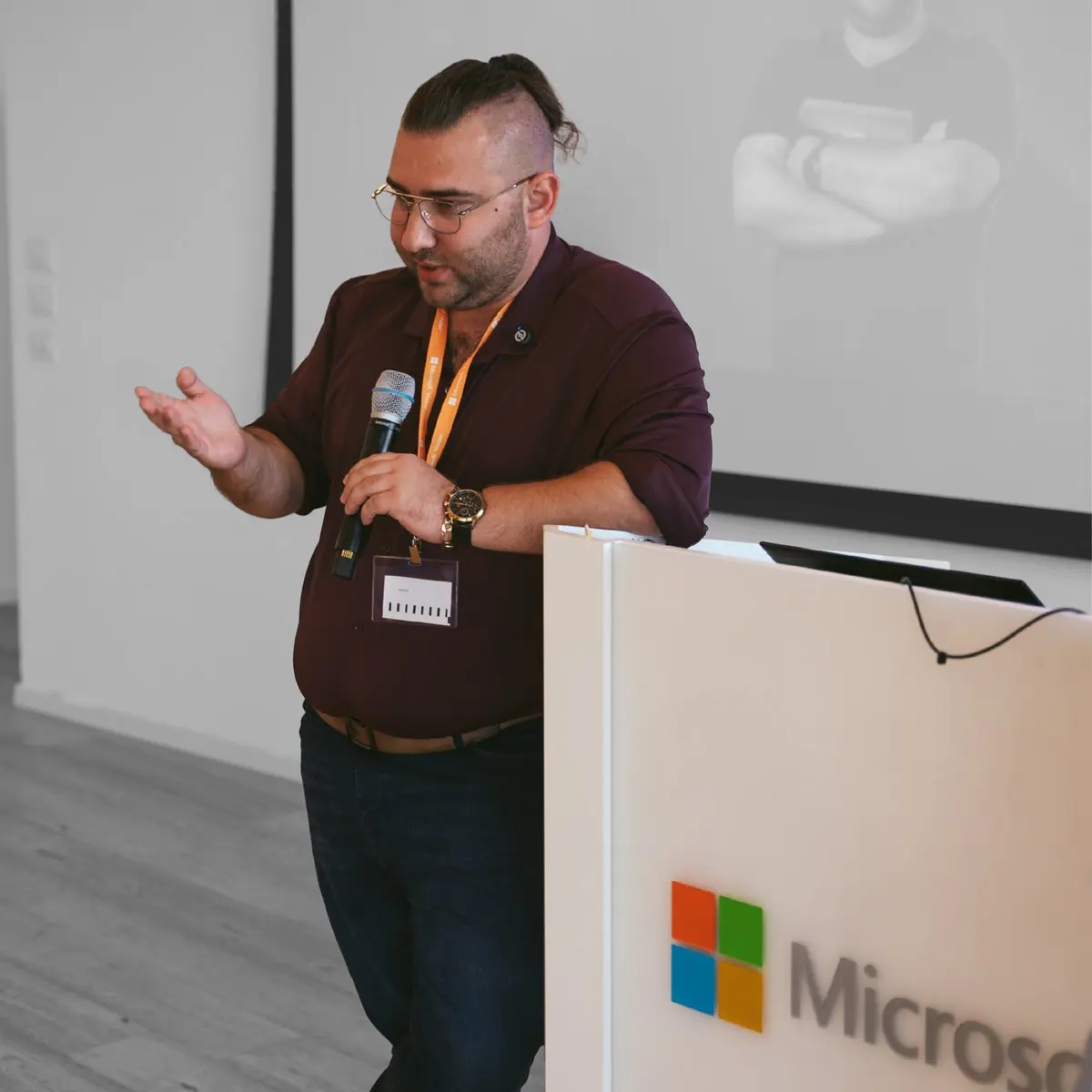
Speaking at Microsoft
Meeting with international teams, as part of work with a startup
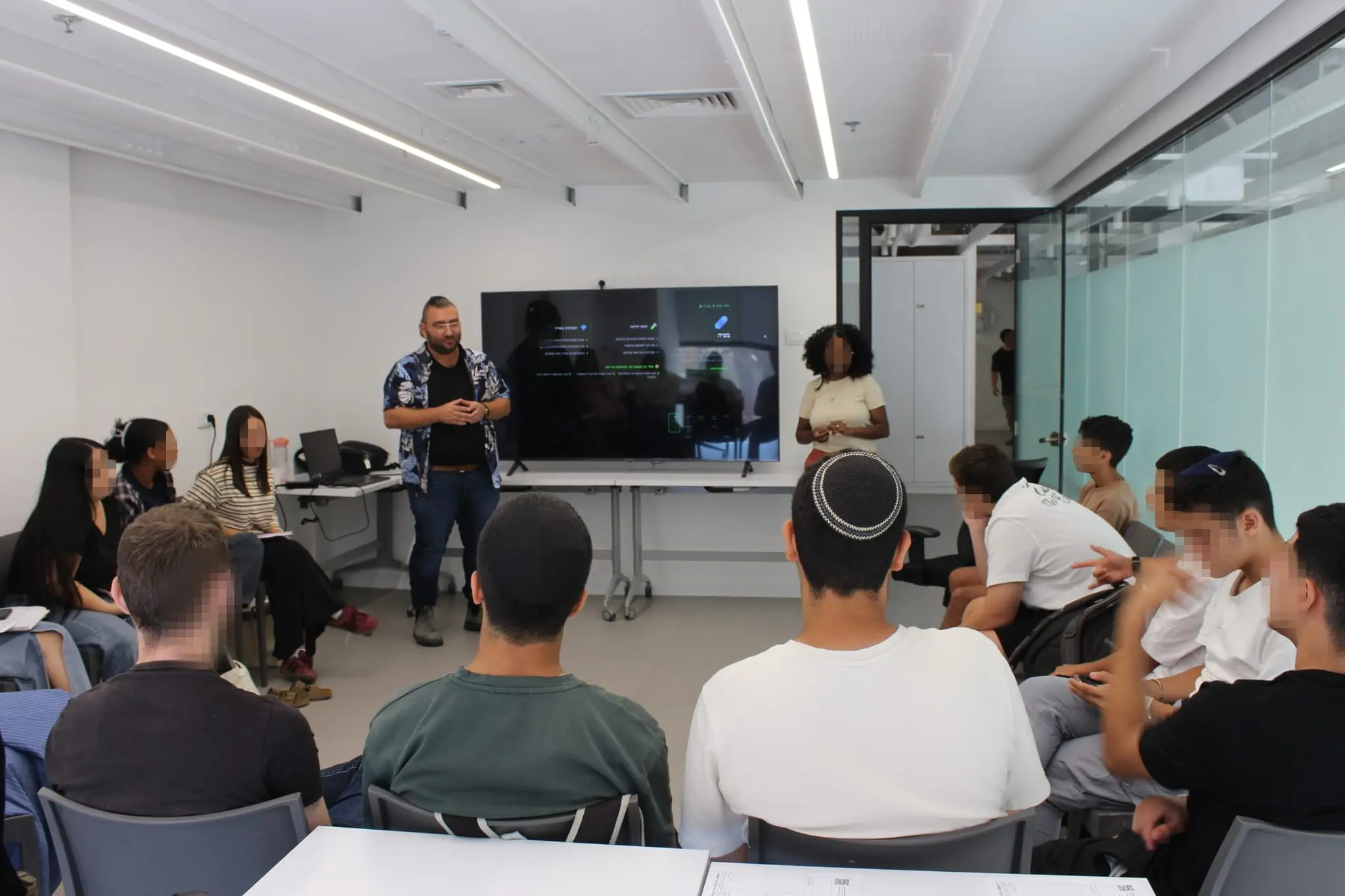
Teenovation, Meital centre Sderot
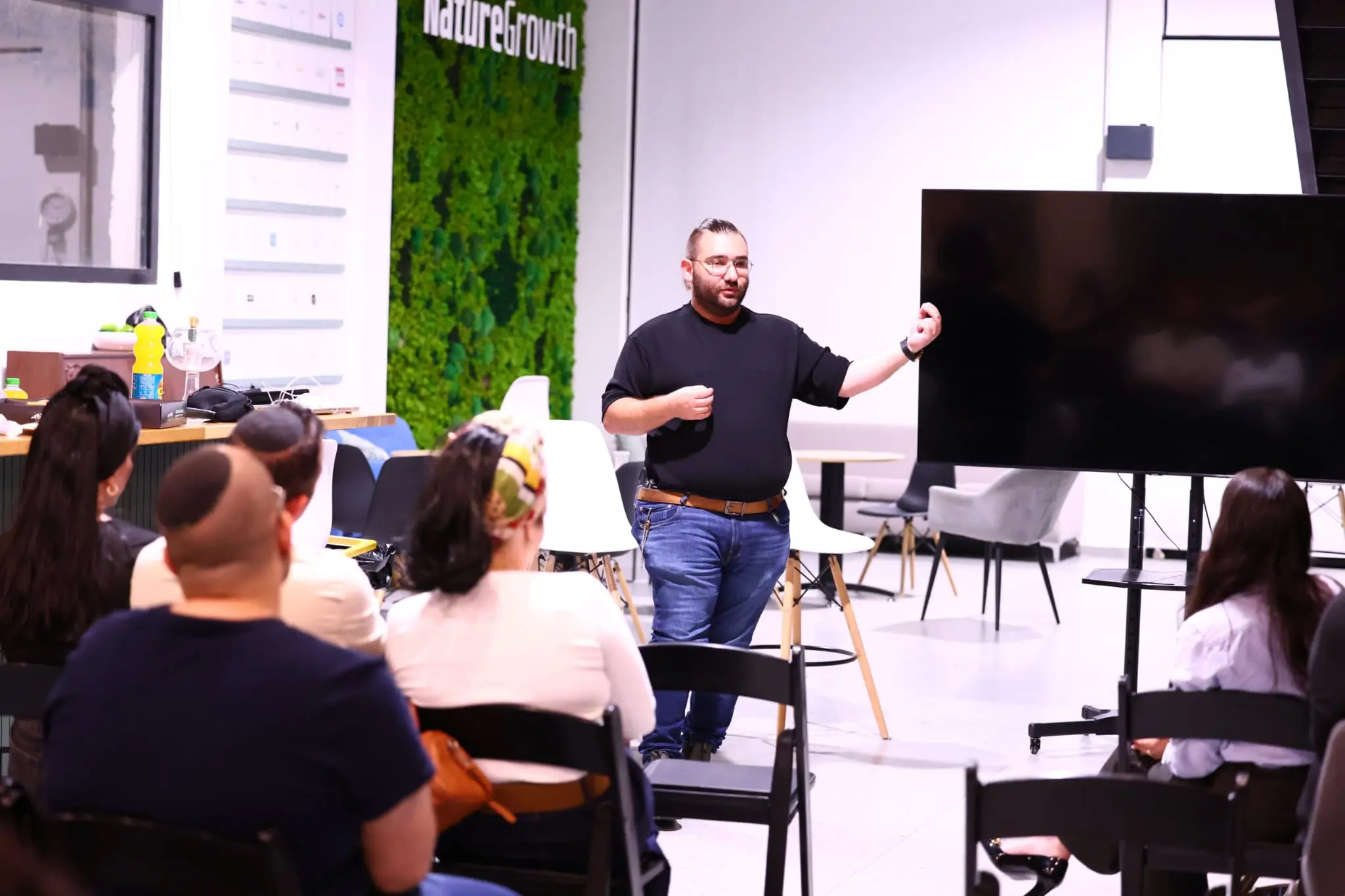
Entrepreneurs session, Sderot
I have worked with
- Google for Startups
- House of Business, Sderot Municipality
- Microsoft Reactor
- GameReady
- Eclipse Capital
- SderoTech
- IUCEL
- Resilience & Health Innovation Hub
- International Resilience Institute of Sderot













- Google for Startups
- House of Business, Sderot Municipality
- Microsoft Reactor
- GameReady
- Eclipse Capital
- SderoTech
- IUCEL
- Resilience & Health Innovation Hub
- International Resilience Institute of Sderot
What Clients Say
From different fields, at different stages of business
Dan Manto
Eclipse Capital
Real Estate Investment and Finance, USA
Arty McLabin
GameReady
Game Development Education and Outsourcing, International

Anna
Beautician
After I finished a cosmetology course at a leading company, I was confused. I didn't know how to open a business, what to sell from home, or how to bring in clients. Since I reached out to Mobius, everything has changed. We built an organized plan with clear steps and no unnecessary risks. Today I see results, and I'm growing and developing every month.

Mark
Massage therapist, Gan Yavne
When I finished a massage course, I imagined a different world. I found out it's a hard field, and financial stability isn't easy to find. When I came to Mobius, something changed. We started an organized process and built a business plan. Without Mobius? I probably would have given up. Today I believe in myself and in my own path.
And the paperwork, for anyone who wants to see that too.
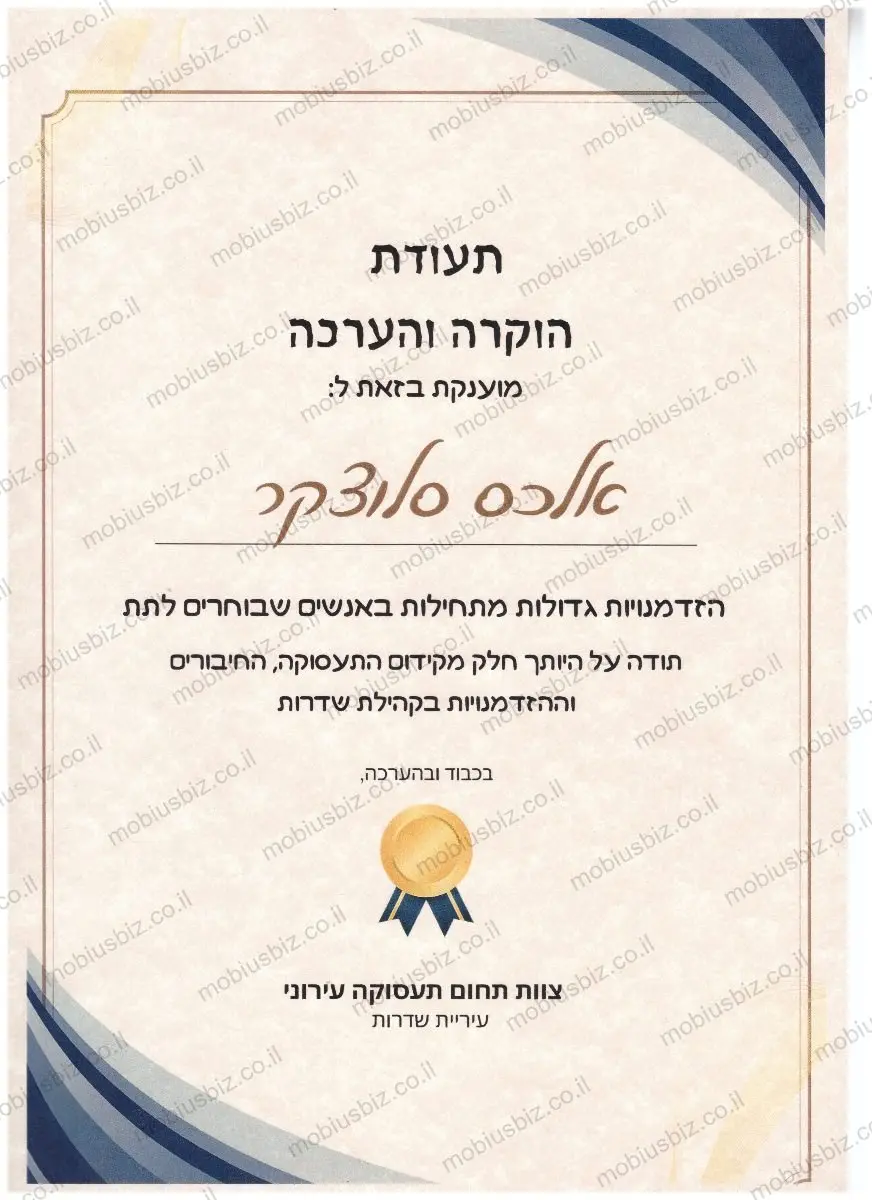
Certificate of appreciation, Sderot municipality

Certificate of honor, Teenovation 2026
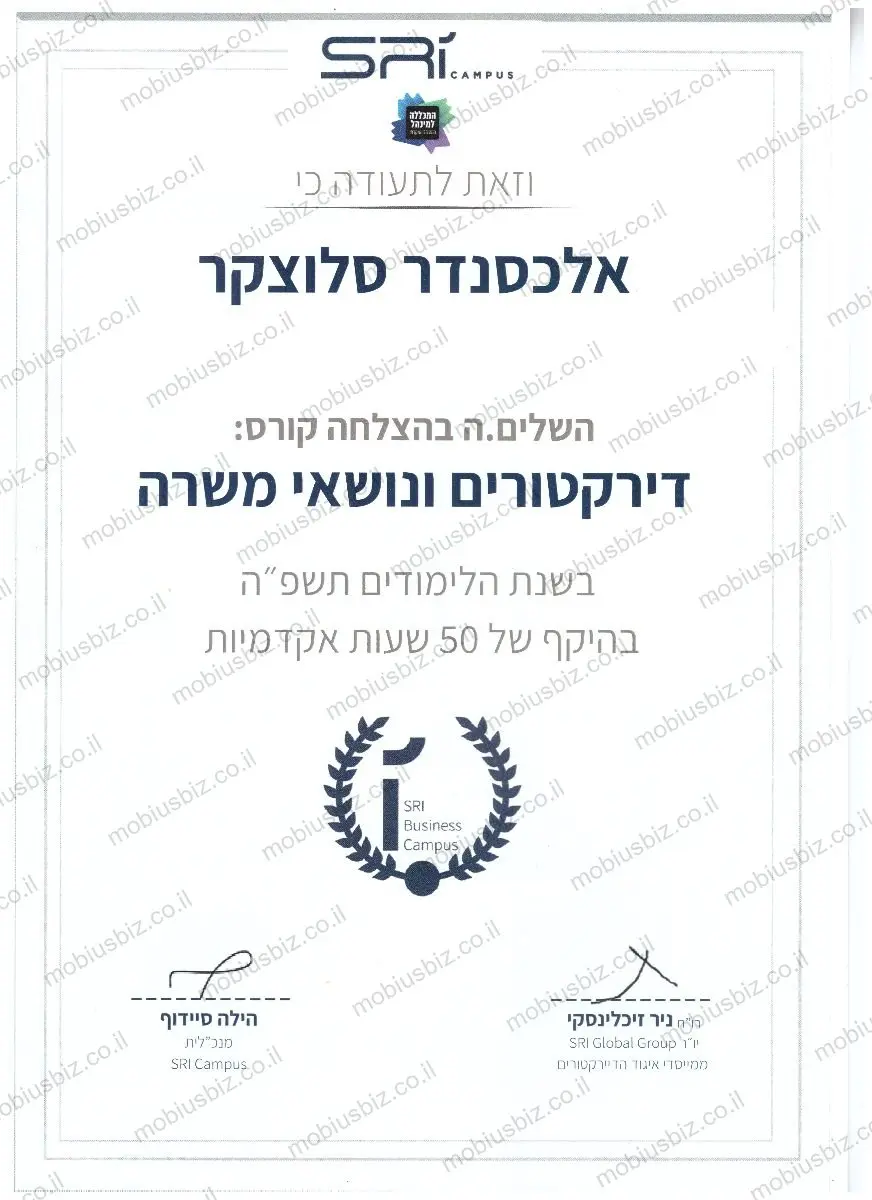
Directors and officeholders course, SRI Campus
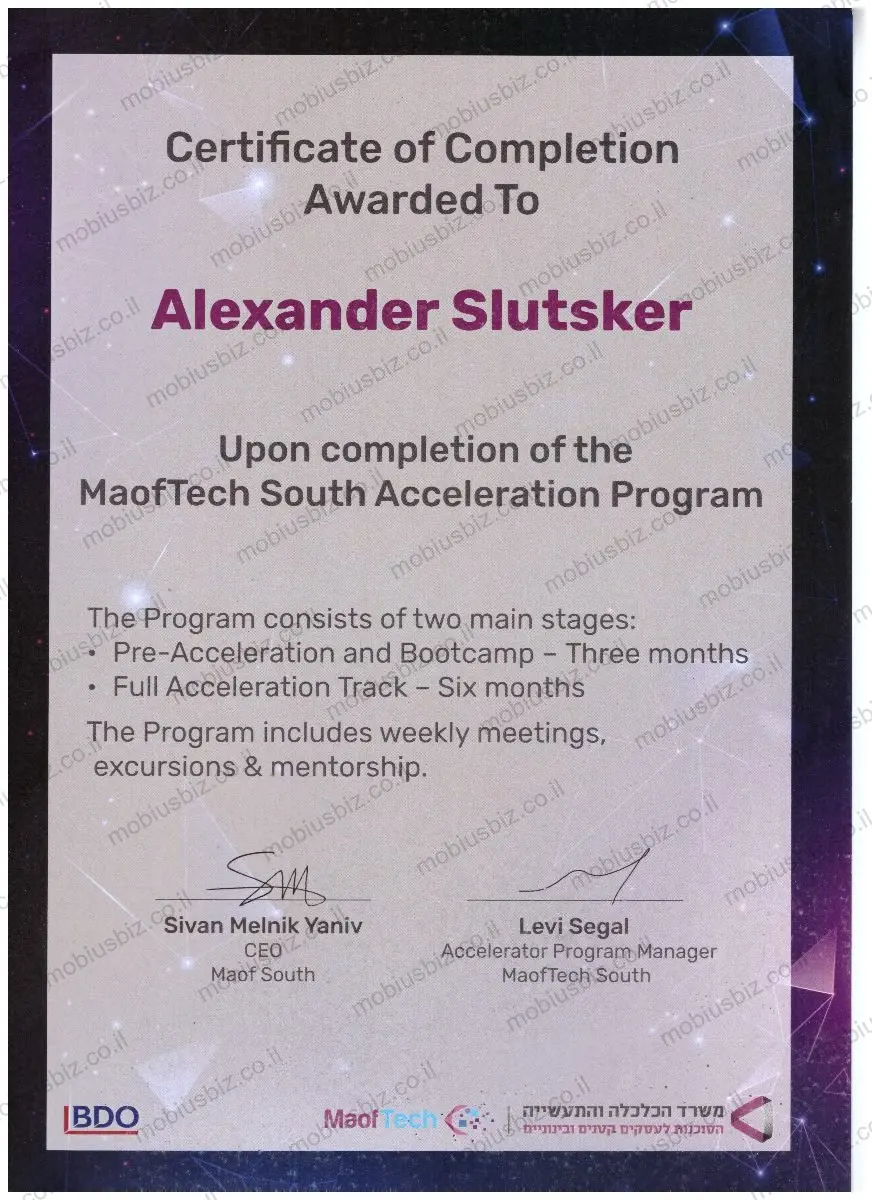
Acceleration program, MaofTech South
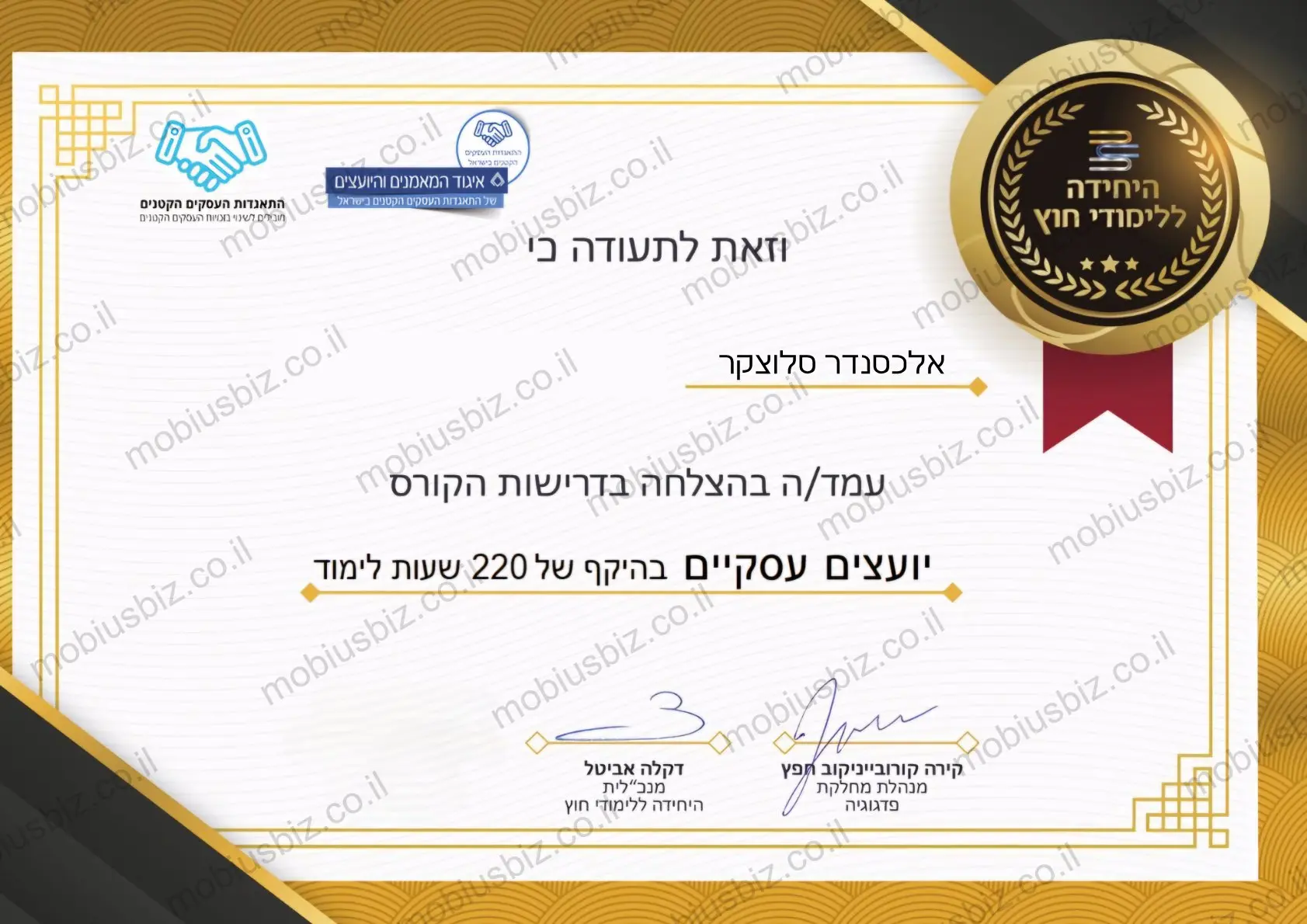
Business consultants course

Adaptive project management, INT college
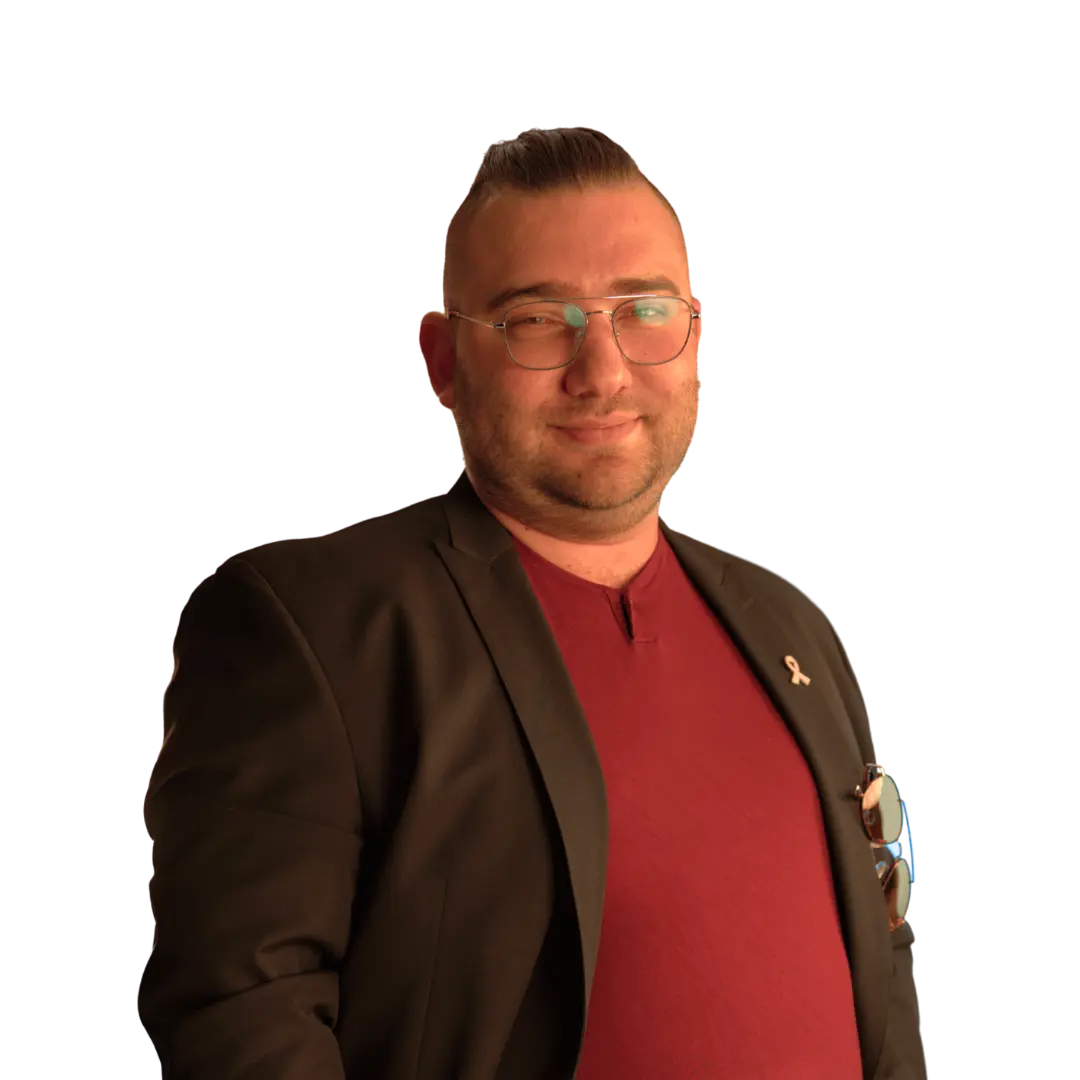
Business, Marketing, Operations & Financial Consultant
Mobius
Alexander Slutsker
9+Years of experience in business consulting
I help entrepreneurs, self-employed people, small businesses and startups understand their own numbers, choose what to do first and grow from there.
Book a Free Call+972 055-248-6151. Better on WhatsApp: I am in meetings most of the day and answer as soon as I am free. Other ways to reach me
We can talk in English, Hebrew or Russian.