Training Managers and Building Your Management Team
A management team that decides, measures and talks clearly, so not everything waits for you.
Training managers means I work with owners and managers on how to run the team: who decides what, how work is handed over and measured, and how the team talks inside and with customers. The aim is a management team that carries the load, while the big decisions stay yours.
+972 055-248-6151. Better on WhatsApp: I am in meetings most of the day and answer as soon as I am free. Other ways to reach me
We can talk in English, Hebrew or Russian.
Does This Sound Familiar?
Every question in the business still ends up with me.
I have managers, but the decisions keep coming back to my desk.
Nobody is quite sure who decides what, so things wait.
The team hears one thing from me and another from their manager.
Sound familiar? The first conversation is free.
Book a Free CallWhat Clients Say
From different fields, at different stages of business
Dan Manto
Eclipse Capital
Real Estate Investment and Finance, USA
Arty McLabin
GameReady
Game Development Education and Outsourcing, International

Anna
Beautician
After I finished a cosmetology course at a leading company, I was confused. I didn't know how to open a business, what to sell from home, or how to bring in clients. Since I reached out to Mobius, everything has changed. We built an organized plan with clear steps and no unnecessary risks. Today I see results, and I'm growing and developing every month.

Mark
Massage therapist, Gan Yavne
When I finished a massage course, I imagined a different world. I found out it's a hard field, and financial stability isn't easy to find. When I came to Mobius, something changed. We started an organized process and built a business plan. Without Mobius? I probably would have given up. Today I believe in myself and in my own path.
What you get
Your week for the big decisions
The aim is fewer questions landing on your desk, and more of your time for the work only you can do.
Managers who come with a proposal
A problem brought with a few options and a recommendation, instead of an open question that waits for you.
Management that does not live in your head
Who does what, by when, and what was agreed is clear to the whole team, not held only by you.
Along the way you get the supporting and guiding materials the work needs, with clear instructions.
Simplified illustration
From doing to managing
The week today
- Doing the work yourself
- Answering the same questions
- Leading the team
- Decisions wait on your desk
- The team asks instead of proposing
The week the work aims for
- Doing the work yourself
- Answering the same questions
- Leading the team
- Each role knows which decisions are its own
- Managers bring a problem with options and a recommendation
- A few numbers per role show where things stand
A manager's week in two pictures. Today most of it goes on doing the work and answering the same questions, and little on leading the team. The work aims to move the weight toward leading.
Simplified. The real work also sets which decisions belong to which role, builds simple procedures for how work is handed over and closed, and trains your managers on real situations from the business until the new way holds.
mobiusbiz.co.il
I have worked with
- Google for Startups
- House of Business, Sderot Municipality
- Microsoft Reactor
- GameReady
- Eclipse Capital
- SderoTech
- IUCEL
- Resilience & Health Innovation Hub
- International Resilience Institute of Sderot


















- Google for Startups
- House of Business, Sderot Municipality
- Microsoft Reactor
- GameReady
- Eclipse Capital
- SderoTech
- IUCEL
- Resilience & Health Innovation Hub
- International Resilience Institute of Sderot
What the work can include
You do not need all of it. In the first conversation we choose together the parts your business needs.
- I train your managers on real situations from the business: delegating, setting priorities and holding hard conversations.
- We set together which decisions belong to which role and which really need you, so work does not queue at your door.
- I shape with you the structure of the management team: who reports to whom and who is responsible for what, for the size your business has reached.
- I build with you simple management procedures: how work is handed over, followed up and closed.
- I choose with you three to five numbers per role, each with a clear action when it goes off track, without bureaucracy.
- I work with you on clear communication inside the team and with customers and suppliers, so everyone hears one message.
- I help choose technology that serves management, for tasks, schedules and team communication, fitted to your field and your stage.
- When the manager you need is not on the team yet, I find one with you through the executive hiring work. Executive Hiring for Your Business
How the work goes
A free first conversation
We talk, see whether my work fits what your business needs, and I suggest the kind of work that suits you.
Seeing how management works today
I look at who decides what, where decisions get stuck, how work passes from one person to the next and how the team talks, as it really happens.
Building the structure and training the managers
Together we set decision rights, simple management procedures and a few numbers per role. Then I work with your managers on their real situations until the new way holds.
The ongoing work
We meet as often as the business needs. Between meetings you can send me a short question on WhatsApp, and I reply as soon as I can.
Want to see how these steps would look for you? That is what the first conversation is for.
Book a Free Call9+ years of experience in business consulting
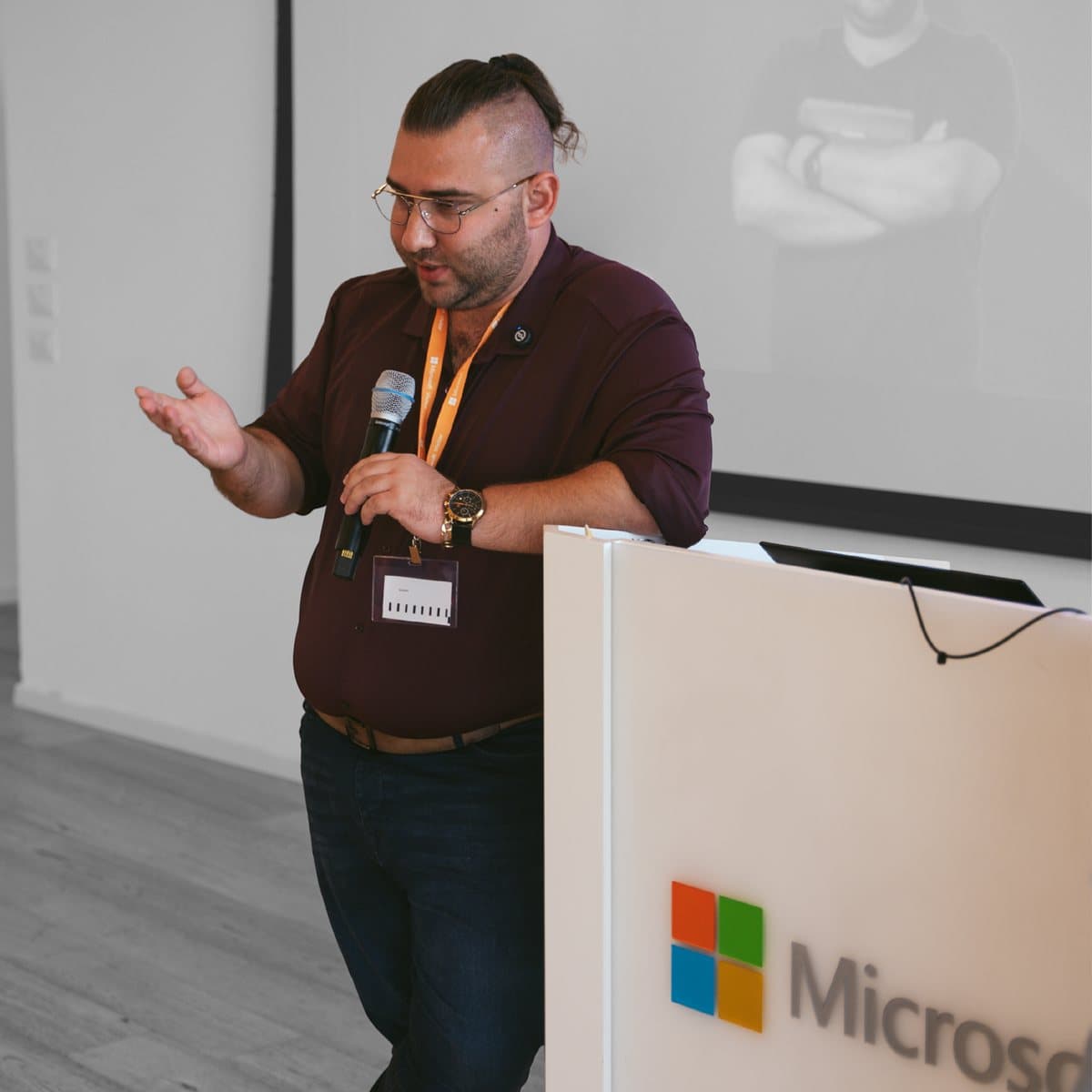
Speaking at Microsoft

Meeting with international teams, as part of work with a startup
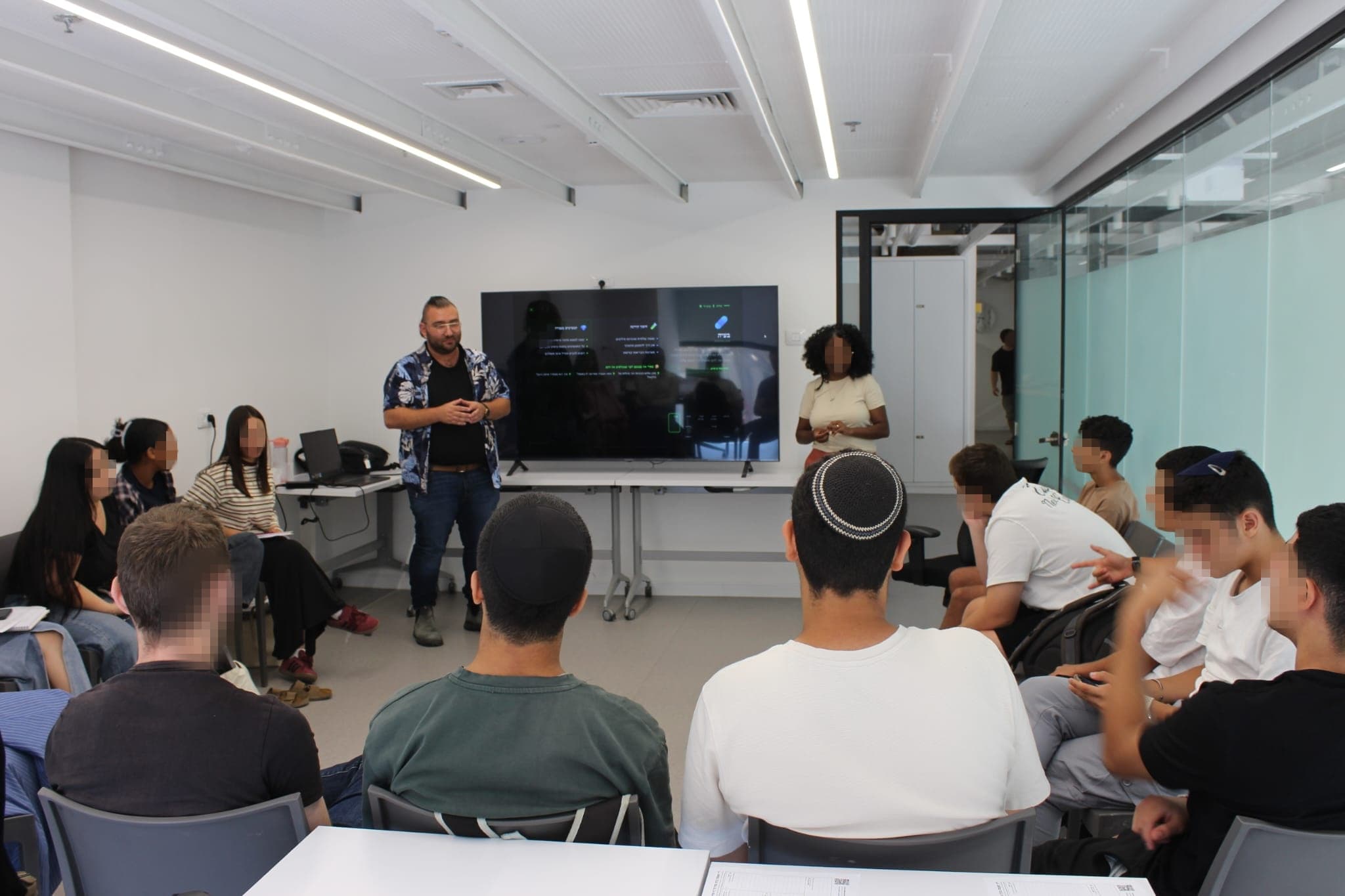
Teenovation, Meital centre Sderot
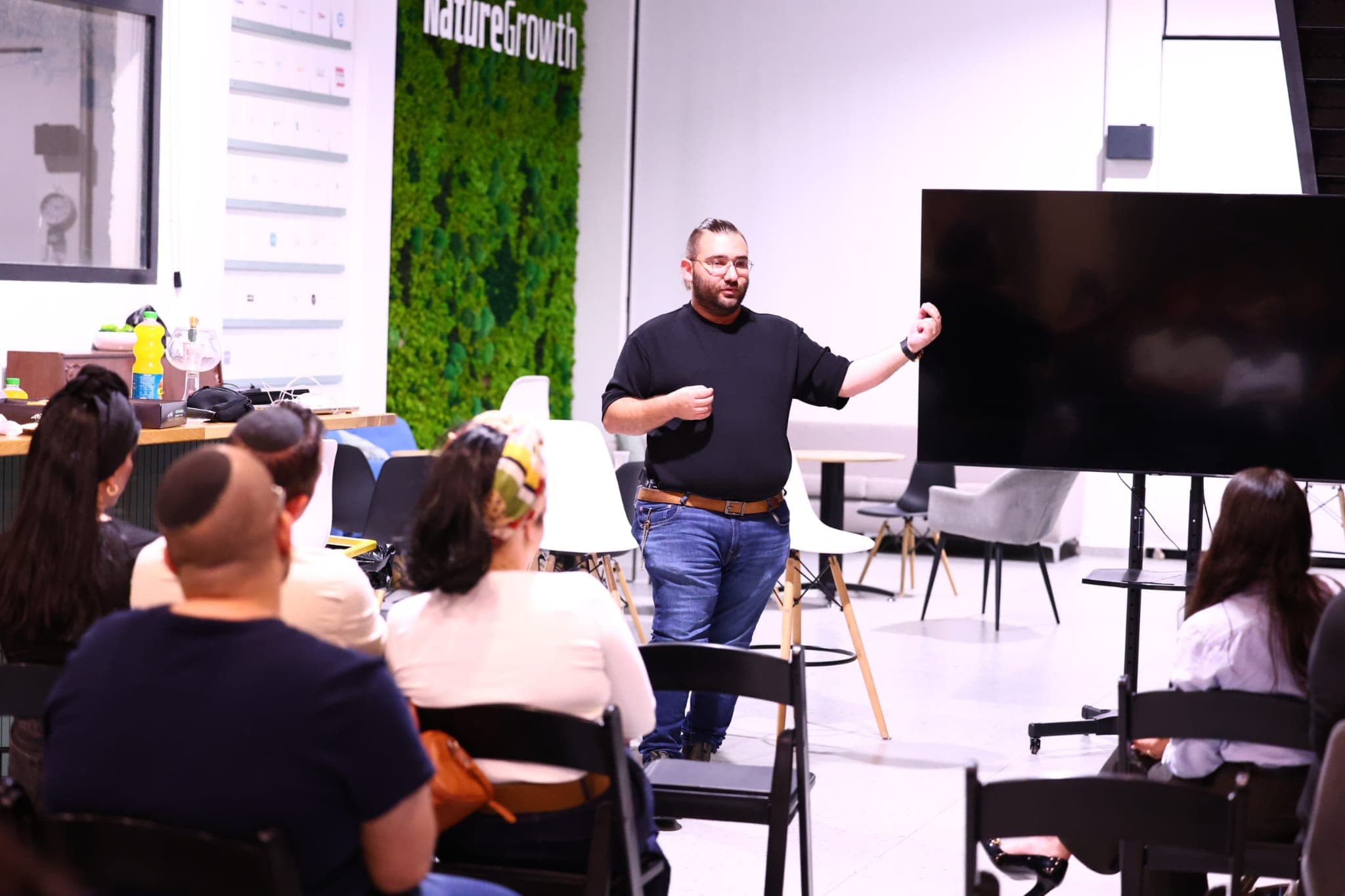
Entrepreneurs session, Sderot
Who does what
What I do
- Map how management runs today and where it jams
- Build the decision rights, procedures and measures with you
- Train you and your managers on real situations from the business
What you do
- Decide on the structure, the decisions stay yours
- Give your managers room to decide what is theirs
- Bring the situations that keep coming back to you
What to bring to the first conversation
Bring what you already have, even if it is incomplete. We can start without it too.
- Who is on the team and who reports to whom, even as a rough sketch
- The questions the team asks you again and again
Who it fits
- An owner with first employees, where every decision still passes through him.
- A business with a few managers who do not yet work as one management team.
- A founder or CEO whose company grew faster than its management structure.
When is it better to start elsewhere?
If the manager you need is not on your team yet.
In that case, start here: Executive Hiring for Your Business
And the paperwork, for anyone who wants to see that too.

Certificate of appreciation, Sderot municipality
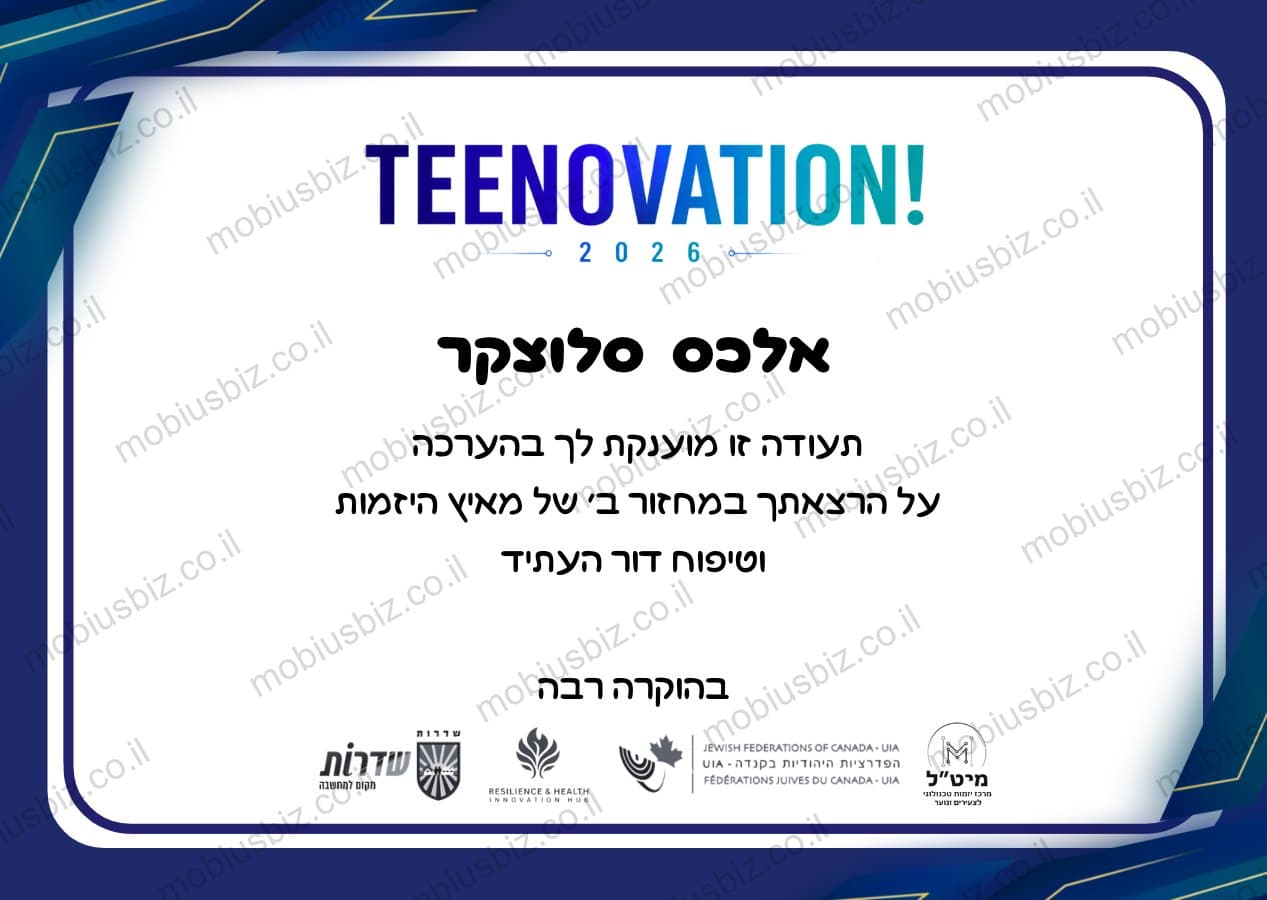
Certificate of honor, Teenovation 2026
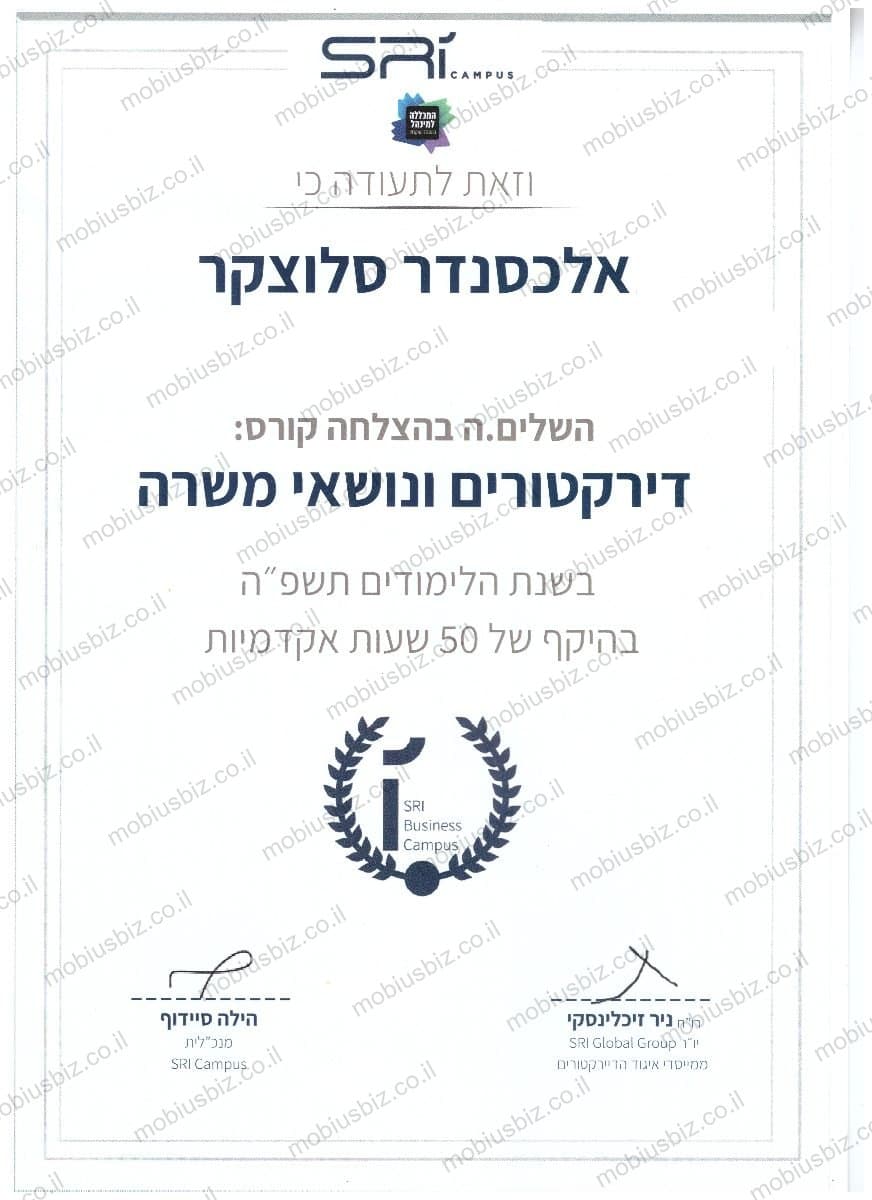
Directors and officeholders course, SRI Campus
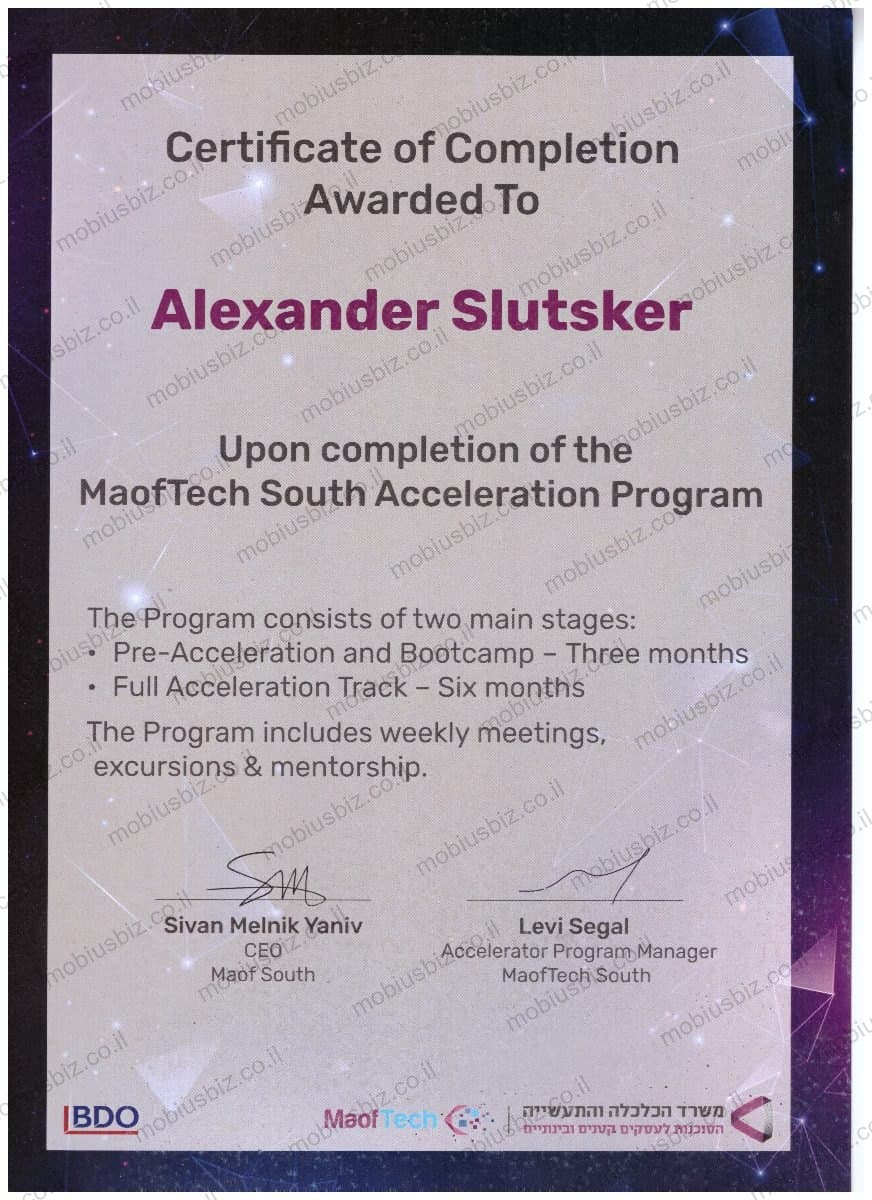
Acceleration program, MaofTech South
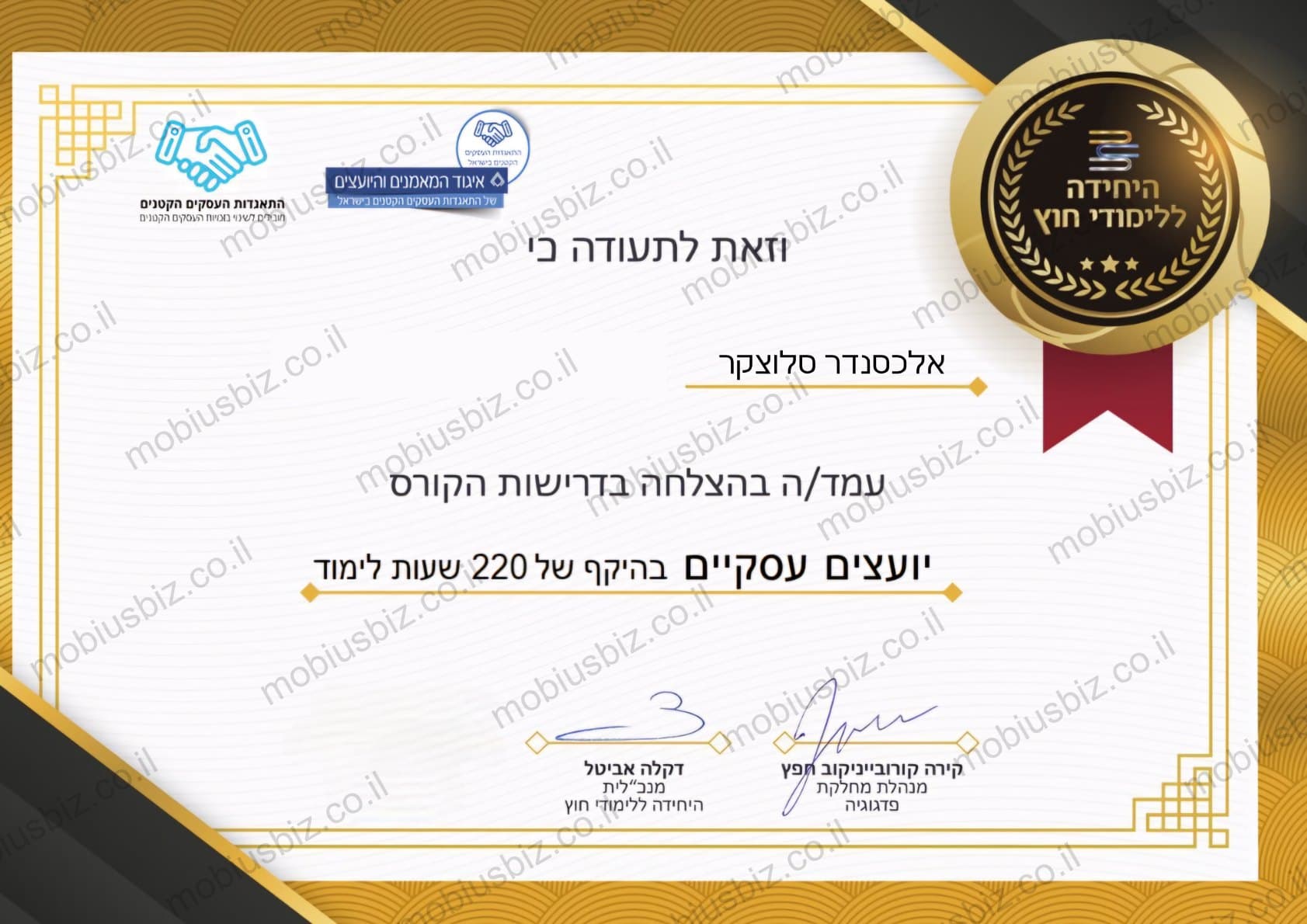
Business consultants course
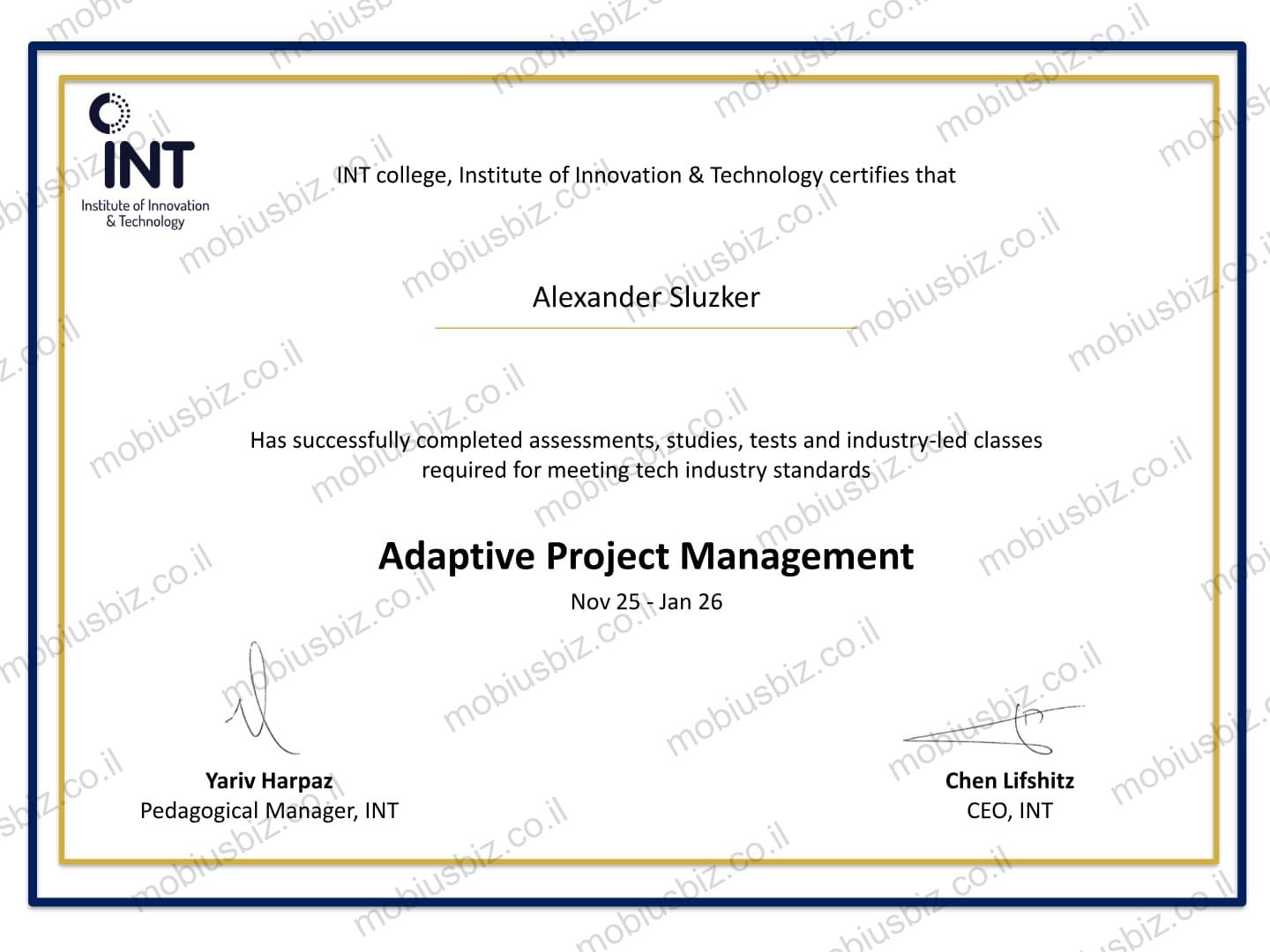
Adaptive project management, INT college
You work directly with me, and I stay your point of contact throughout the work.
- How does it start?
- With a free first conversation of 15 to 30 minutes, by phone or by video. In it we name the problem and shape the work around it. It is not where the answer is handed over. The answer comes out of the work that follows.
- How long before I see results?
- Not from the first meeting, and not from the first few. First we have to understand where the business really stands, so the effort goes only where it works and nothing that already works gets broken. When measurable, steady results come depends on the business and on the pace of the work. After a first conversation I can tell you what to expect in your field.
- How much of my time will it take?
- A meeting of about an hour, as often as the business needs, and a little more at the start while I learn the business. The rest is carrying out the plan, and that is work you would be doing in your business anyway, not time spent in meetings.
- Do my books have to be in order first?
- No. Paperwork is an important tool, but it is not a condition for starting. We begin from where things stand today and put the papers in order along the way, so the work never waits for them.
- What happens to the numbers I show you?
- Whatever you show me about your business stays between the two of us, exactly as it does for every other client of mine.
- What kinds of businesses do you work with?
- I have worked with self-employed professionals, small businesses and startups, in beauty and wellness, the trades, food, retail, manufacturing, education, hi-tech and real estate investment, in Israel and abroad. Your trade matters less than your stage. A bakery and a software company at the same stage are usually stuck on the same thing.
Frequently asked questions
My team keeps asking me everything. What do we fix first?
Three things, in this order. First, decision rights: write down which decisions belong to which role, and which really need you. Second, ready answers: list the questions that keep coming back to you and give the team the answers once, so nobody waits for the same reply. Third, a short regular slot where the team brings a problem with a few options and a recommendation, instead of an open question. The aim is fewer decisions coming back to you, a team that proposes instead of asking, and time for the work only you can do.
Will you manage the team for me?
My work is to help you and your managers manage well, so management lives inside your business and does not depend on anyone outside it. I build the structure with you, train the managers and stay beside you while the new way settles in. The decisions stay yours.
Can you help build KPIs without creating bureaucracy?
Yes. KPIs are the few numbers worth watching, and the test is whether a number changes a decision. A number that is tracked and never used to decide is bureaucracy, and it goes. I choose with you three to five numbers per role, tied to what that role is responsible for, written in plain words, each with an action for when it moves out of range. Each manager then looks at a handful of numbers he really uses, not a screen of forty that nobody trusts.
How do you train a new manager?
On real situations, not theory. First I get a clear picture of the team, the goals and the people problems already on the table, and of how the manager sees each one. The first stage is about listening, basic structure and visible decisions. Then come the harder parts: difficult conversations, priorities that pull in different directions, delegating without disappearing, and saying no to pressure from above. The aim is a manager who holds the role alone and asks for help when it matters, not for permission every day.
What does technology have to do with management?
A lot of management is information: who is doing what, by when, and what was agreed. When it lives in the owner's head or in scattered messages, every question comes back to him. I help choose simple tools for tasks, schedules and team communication, and fit them to the way your team works. Which tools depends on your field and your stage, so I choose them with you, not from a fixed list.
How is this different from executive hiring and board advisory?
Training managers means working with the team you already have: who decides what, how your managers manage and how the team talks. Executive hiring is for when the manager you need is not on the team yet, and I find, screen and interview candidates with you. Board advisory is an outside view on the few big decisions of the company, at board level. Many businesses need one of them first and another later, and the first conversation shows which fits you now.
Related services
- Executive Hiring for Your BusinessWhen you need to bring in a manager from outside.
- Board Advisory ServicesWhen the question is the few big decisions of the company, with an outside view at board level.
- Operations Consulting and Building Work ProceduresWhen what breaks is a process that repeats every day, not who decides.
New to consulting? Start with the map of what business consultants do
Ready to Get Started?
Book a Free Call+972 055-248-6151. Other ways to reach me
We can talk in English, Hebrew or Russian.