How to Open a Business in Israel: A Step-by-Step Checklist
The practical order for opening a business in Israel: legal structure, tax files, bank, licenses, insurance, pricing, and your first paying clients.
Opening a business in Israel is administratively simpler than most people expect. The real work is not the paperwork. It is the decisions you make around it.
Here is the practical order: choose a legal structure, open your files with the Israel Tax Authority and the National Insurance Institute, organize banking and bookkeeping, check licensing and insurance for your specific activity, then set your pricing and go get your first paying clients.
Here is each step, including the parts most checklists skip.
The steps of opening a business, in short
- Choose the legal structure: osek patur, osek murshe or a company.
- Open your files with the authorities: VAT and income tax with the Israel Tax Authority, and a self-employed file with National Insurance.
- Bank account and bookkeeping: a separate account or card for the business, and expenses recorded from day one.
- Licensing and insurance: check the licensing requirements for your activity before you sign a lease.
- Pricing and first clients: a price that covers costs, taxes and your time, then your first paying clients.
Step 1: Choose the legal structure
Israel has three common starting structures:
- Osek patur (VAT-exempt small business). You do not charge VAT and do not reclaim VAT on expenses. Reporting is a simple annual turnover declaration. Yearly revenue is capped at 122,833 shekels as of 2026. The ceiling is updated every January, so check the current figure with the Israel Tax Authority.
- Osek murshe (VAT-registered business). You charge VAT on every invoice, reclaim VAT on business expenses, and report periodically. There is no revenue ceiling.
- Company (חברה בע"מ). A separate legal entity with limited liability, more accounting overhead, and different tax logic. Usually relevant when there is meaningful risk, partners, or profit you want to keep inside the business.
Some professions must register as osek murshe regardless of revenue. There is also a separate income-tax track, the micro-business regime (baal esek zair) with a 30 percent normative expense deduction. If you are choosing between the statuses, the full comparison including that regime is in osek patur or osek murshe: how to choose.
Step 2: Open your files with the authorities
A self-employed person in Israel typically opens three files:
- VAT file at the Israel Tax Authority. For an osek patur this can be done online in a short process.
- Income tax file at the Israel Tax Authority.
- Self-employed file at the National Insurance Institute (Bituach Leumi), which determines your monthly social insurance payments.
If you are still employed, you can hold a salaried and self-employed status at the same time. The combination changes how your payments are calculated, so set it up correctly from the start rather than fixing it after the first annual report. The order of the registration, when to open the files relative to your first paid work and the advance payments that follow are in how to open an osek patur or osek murshe step by step.
Step 3: Bank account and bookkeeping
An osek patur can often operate through a personal bank account. Do it anyway: open a separate account, or at least a separate card, for the business. Mixing business and personal money is how new owners lose track of whether the business actually earns anything. The full argument is in separating personal and business money.
Set up bookkeeping on day one, even if it is a simple spreadsheet plus a folder of receipts. Reconstructing a year of expenses in April is misery, and missed expenses are missed tax deductions.
Step 4: Licensing and insurance
This is where businesses differ. A consultant working from home usually needs no special license. A food business, a beauty clinic, a kindergarten, or a manufacturing workshop faces specific licensing rules, sometimes at the municipal level and sometimes from a ministry.
Check the requirements for your exact activity before signing a lease or buying equipment. A location that cannot be licensed for your use is one of the most expensive mistakes available.
On insurance, the common starting pair is third-party liability (coverage if someone is hurt in connection with your business) and professional liability (coverage for damage caused by your professional work). What you need depends on whether clients visit you and what your contracts require.
Step 5: Pricing and first clients
Everything above is administration. This step is the business.
Set a price that covers your costs, your taxes, and your time and still leaves a margin (the profit left after costs), not a price copied from the cheapest competitor. What you can charge depends on your positioning (who you serve and why they choose you over the alternatives). Use how to price your services as a starting framework, and plan how much the whole first year will really cost with how much it costs to open a business in Israel.
Then get the first paying clients before perfecting anything else. A logo does not validate a business. A stranger paying full price does. If you want a plan for that stage, read first 10 clients without ads.
The paperwork is cheap. The decisions are not
Notice what this checklist really shows: registration itself is fast and inexpensive. The expensive parts are the decisions around it: what to sell, to whom, at what price, and with how much upfront investment.
Those decisions are what I work on with owners in business launch support, before the money goes in: checking the idea against real demand, choosing the type of business, setting a first price that holds, and the order of the first moves. I hold a BBA and an MBA and have helped entrepreneurs, small businesses and startups open their businesses. What owners I have worked with say about the work is on my profile page.
If you are preparing to open and want the first year to cost less in mistakes, talk it through with me.
Sources
- Israel Tax Authority, VAT amounts and rates (the osek patur ceiling for 2026)
- Israel Tax Authority, questions and answers on the micro-business regime (baal esek zair)
- Israel Tax Authority, opening an exempt dealer file online
- Kol Zchut, the Israeli rights portal, osek patur and the professions that must register as osek murshe
- National Insurance Institute, opening a self-employed file
The content on this blog is general information only and is not a recommendation to act. It is not business, legal, tax, or financial advice. Before making any decision, consult a qualified professional, such as an accountant, a lawyer, or a business advisor, about your specific situation.
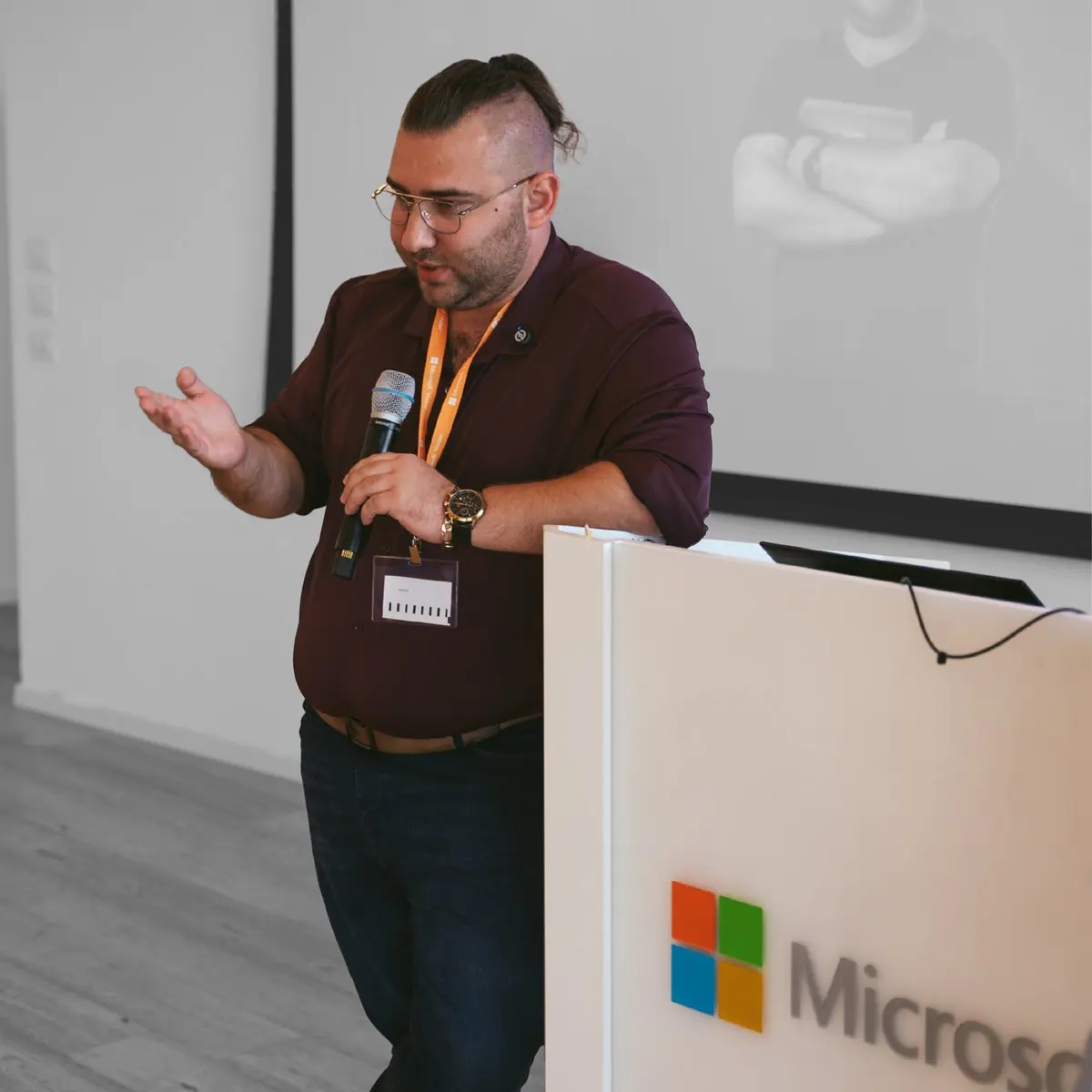
Speaking at Microsoft
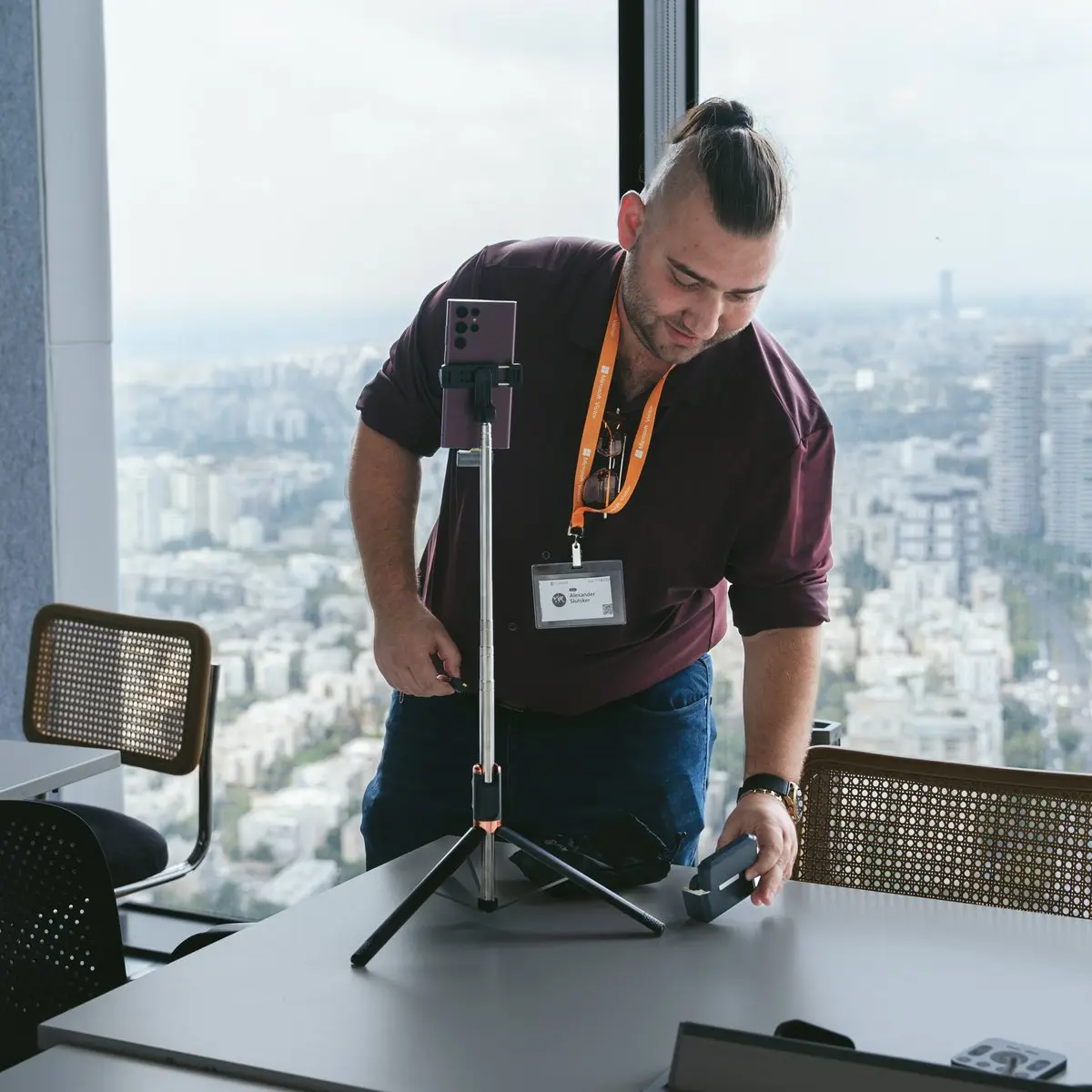
Meeting with international teams, as part of work with a startup
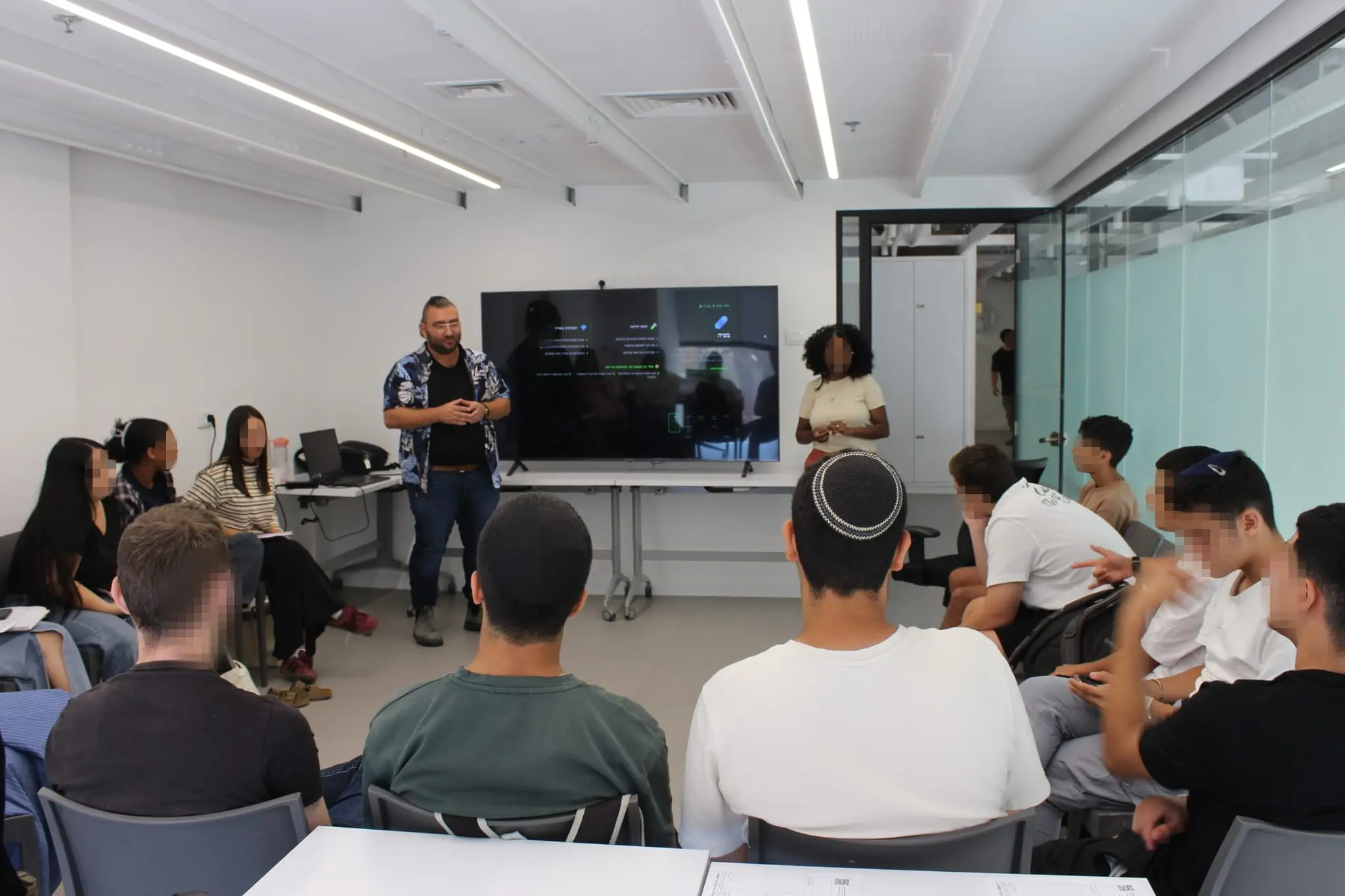
Teenovation, Meital centre Sderot
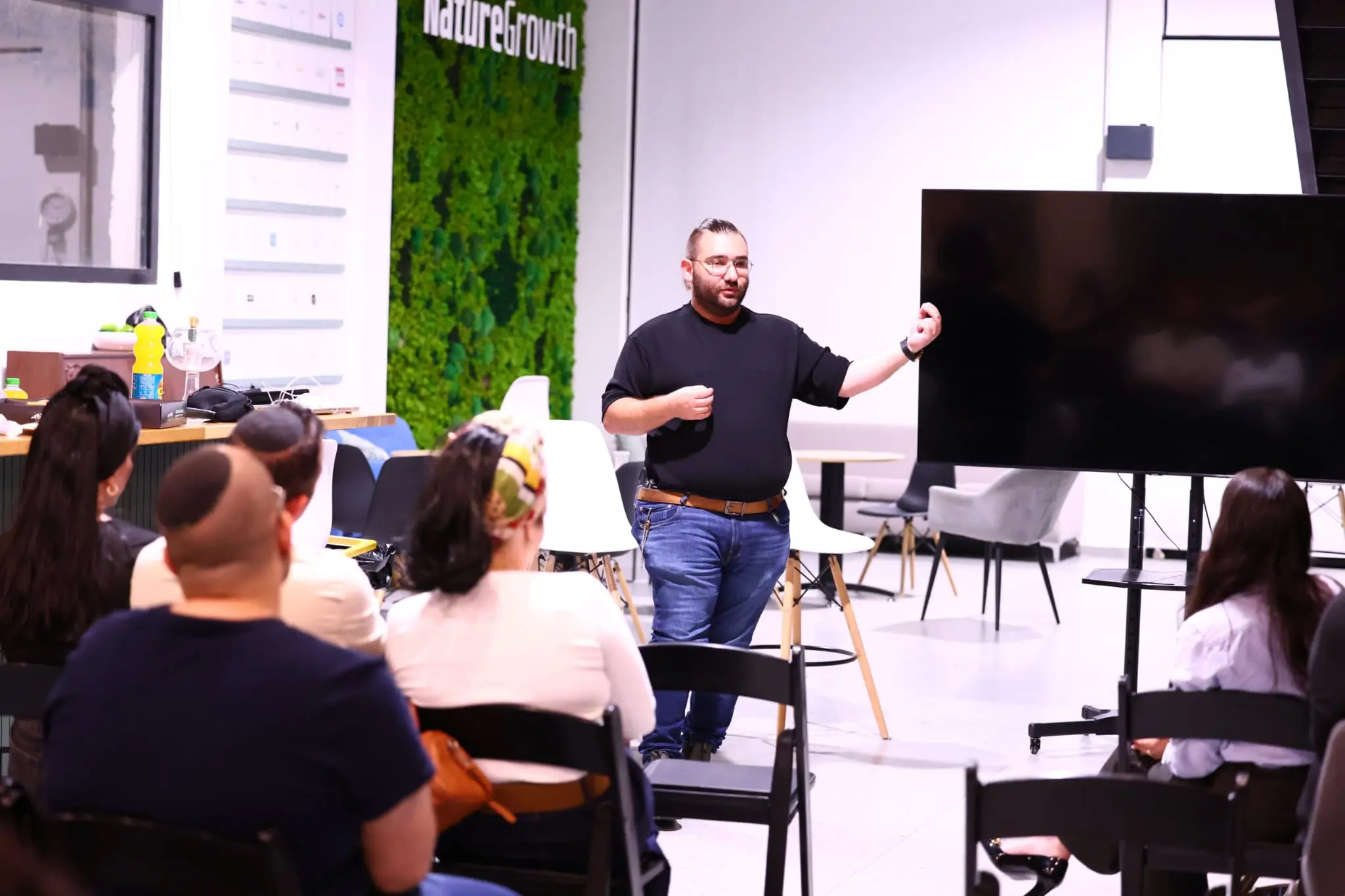
Entrepreneurs session, Sderot
I have worked with
- Google for Startups
- House of Business, Sderot Municipality
- Microsoft Reactor
- GameReady
- Eclipse Capital
- SderoTech
- IUCEL
- Resilience & Health Innovation Hub
- International Resilience Institute of Sderot


















- Google for Startups
- House of Business, Sderot Municipality
- Microsoft Reactor
- GameReady
- Eclipse Capital
- SderoTech
- IUCEL
- Resilience & Health Innovation Hub
- International Resilience Institute of Sderot
What Clients Say
From different fields, at different stages of business
Dan Manto
Eclipse Capital
Real Estate Investment and Finance, USA
Arty McLabin
GameReady
Game Development Education and Outsourcing, International

Anna
Beautician
After I finished a cosmetology course at a leading company, I was confused. I didn't know how to open a business, what to sell from home, or how to bring in clients. Since I reached out to Mobius, everything has changed. We built an organized plan with clear steps and no unnecessary risks. Today I see results, and I'm growing and developing every month.

Mark
Massage therapist, Gan Yavne
When I finished a massage course, I imagined a different world. I found out it's a hard field, and financial stability isn't easy to find. When I came to Mobius, something changed. We started an organized process and built a business plan. Without Mobius? I probably would have given up. Today I believe in myself and in my own path.
And the paperwork, for anyone who wants to see that too.
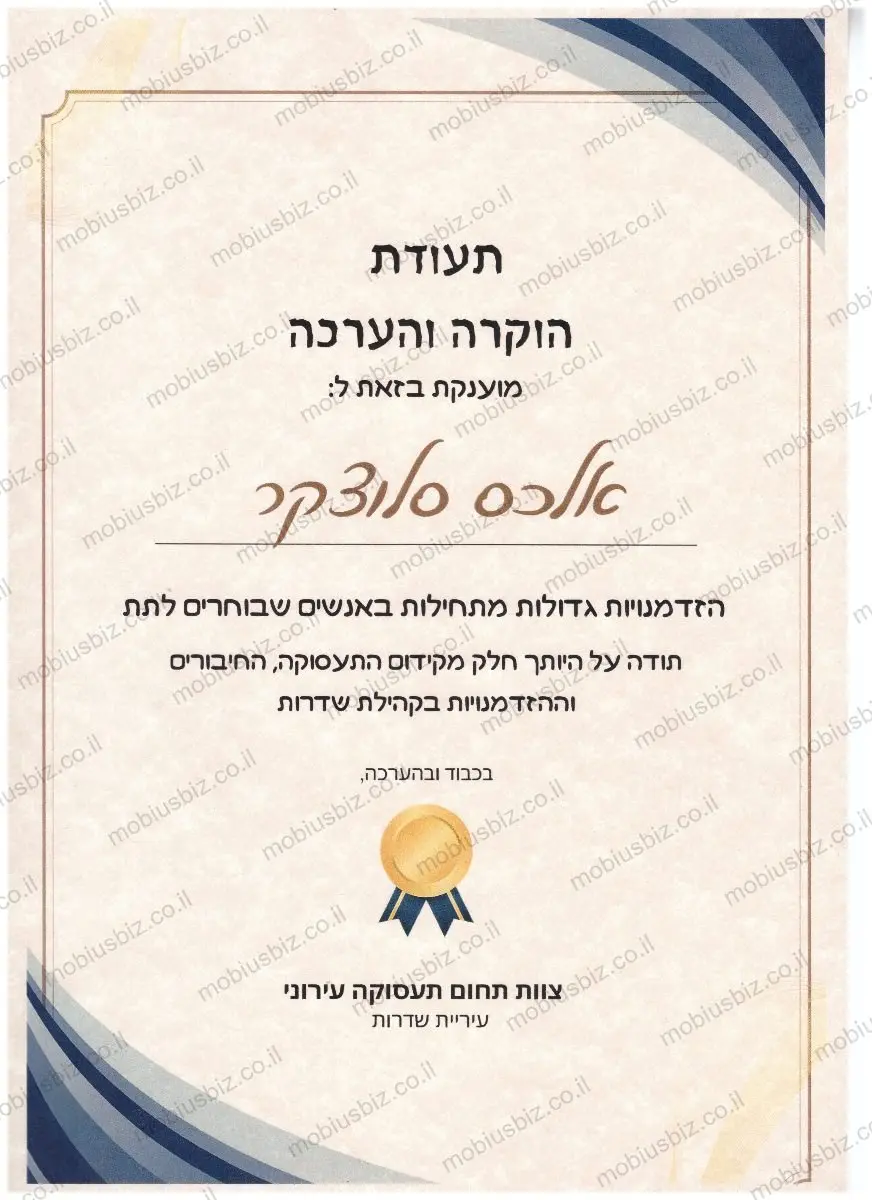
Certificate of appreciation, Sderot municipality
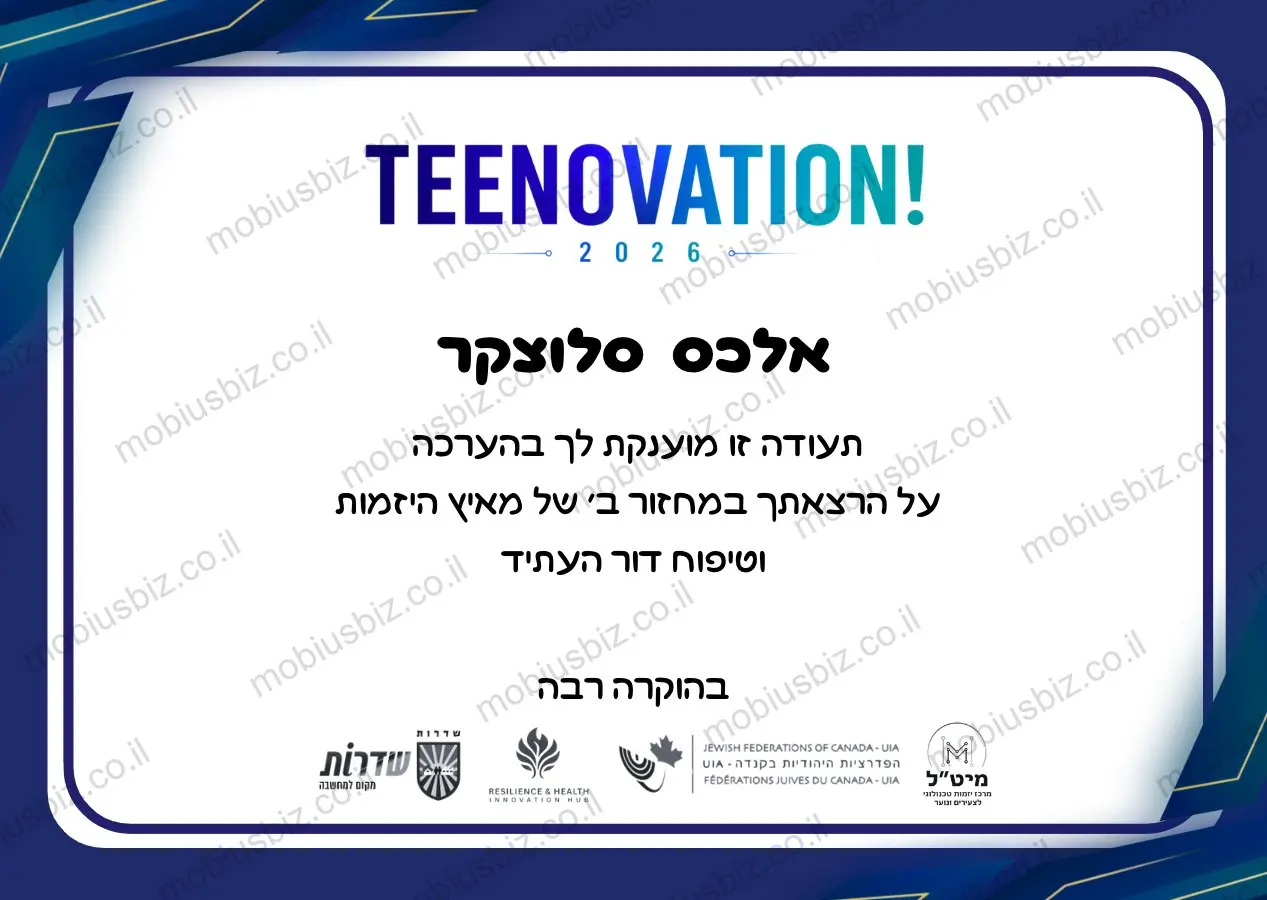
Certificate of honor, Teenovation 2026
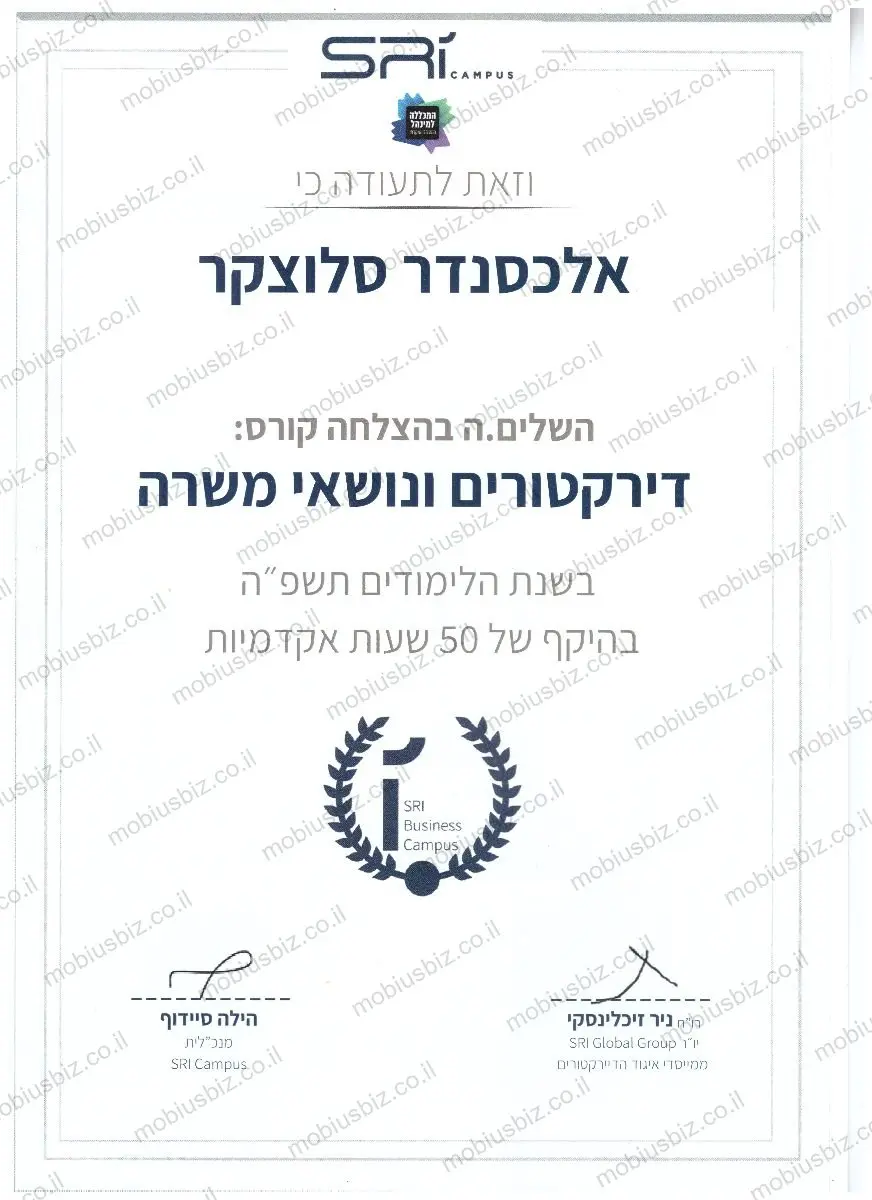
Directors and officeholders course, SRI Campus
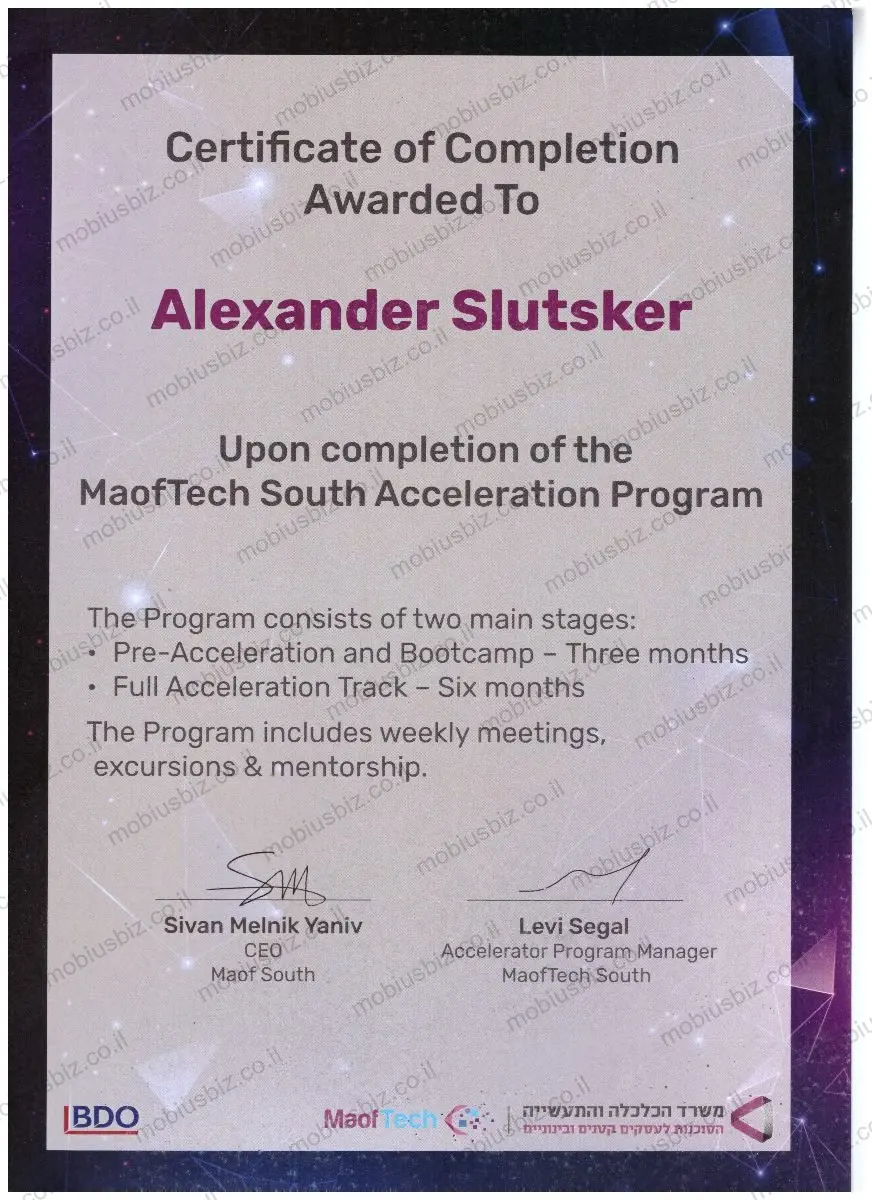
Acceleration program, MaofTech South
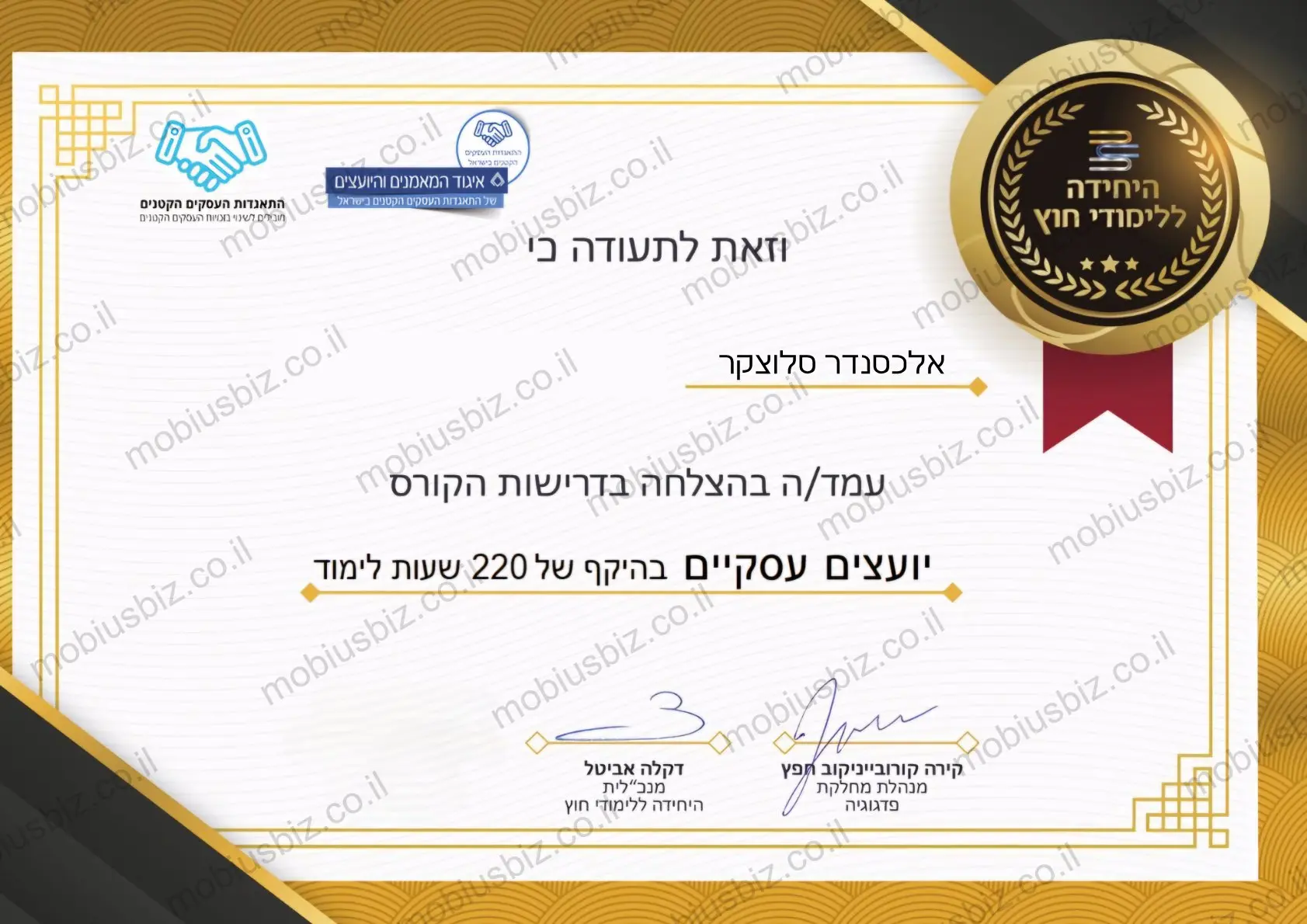
Business consultants course
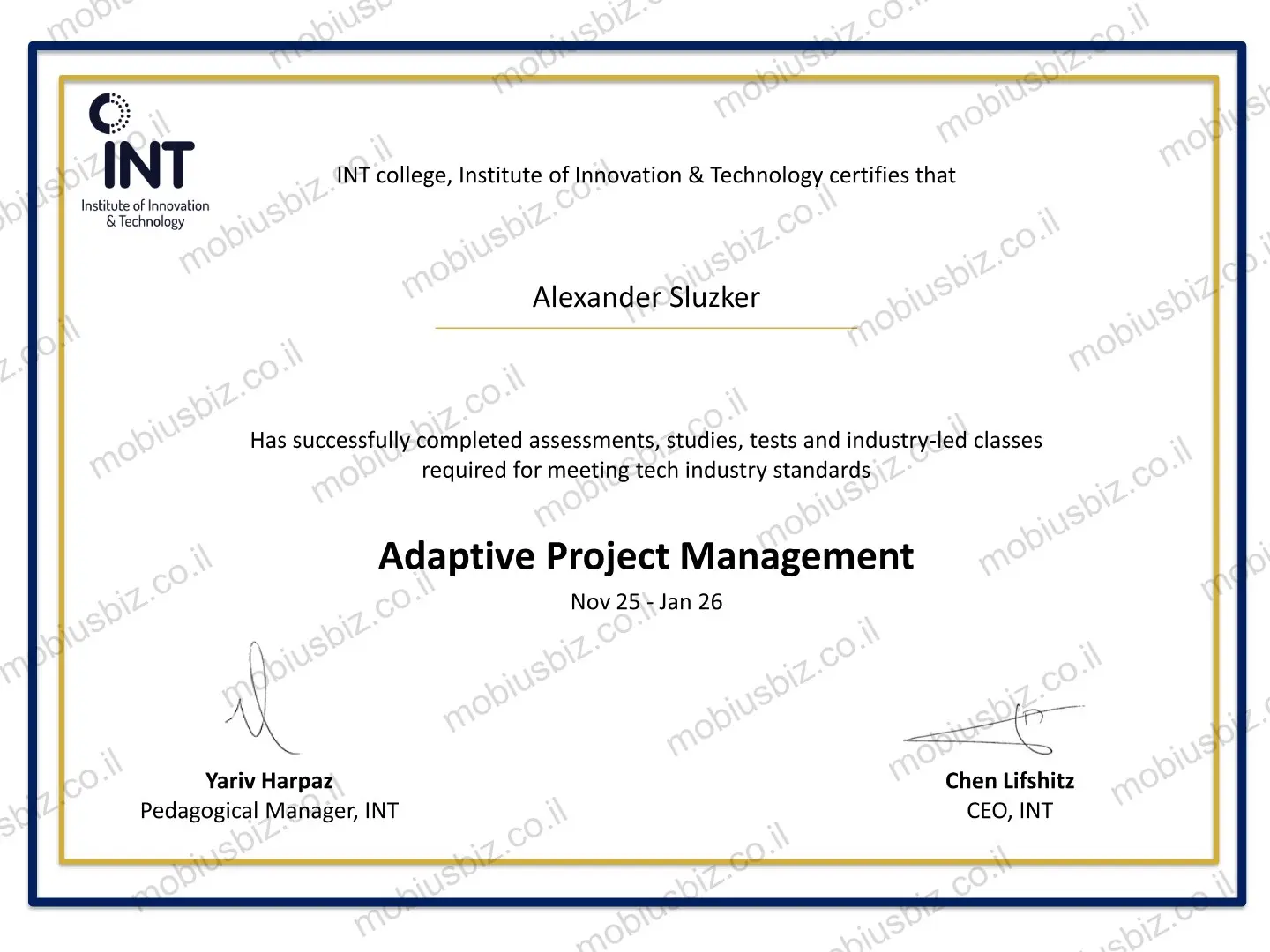
Adaptive project management, INT college
Business, Marketing, Operations & Financial Consultant
Mobius
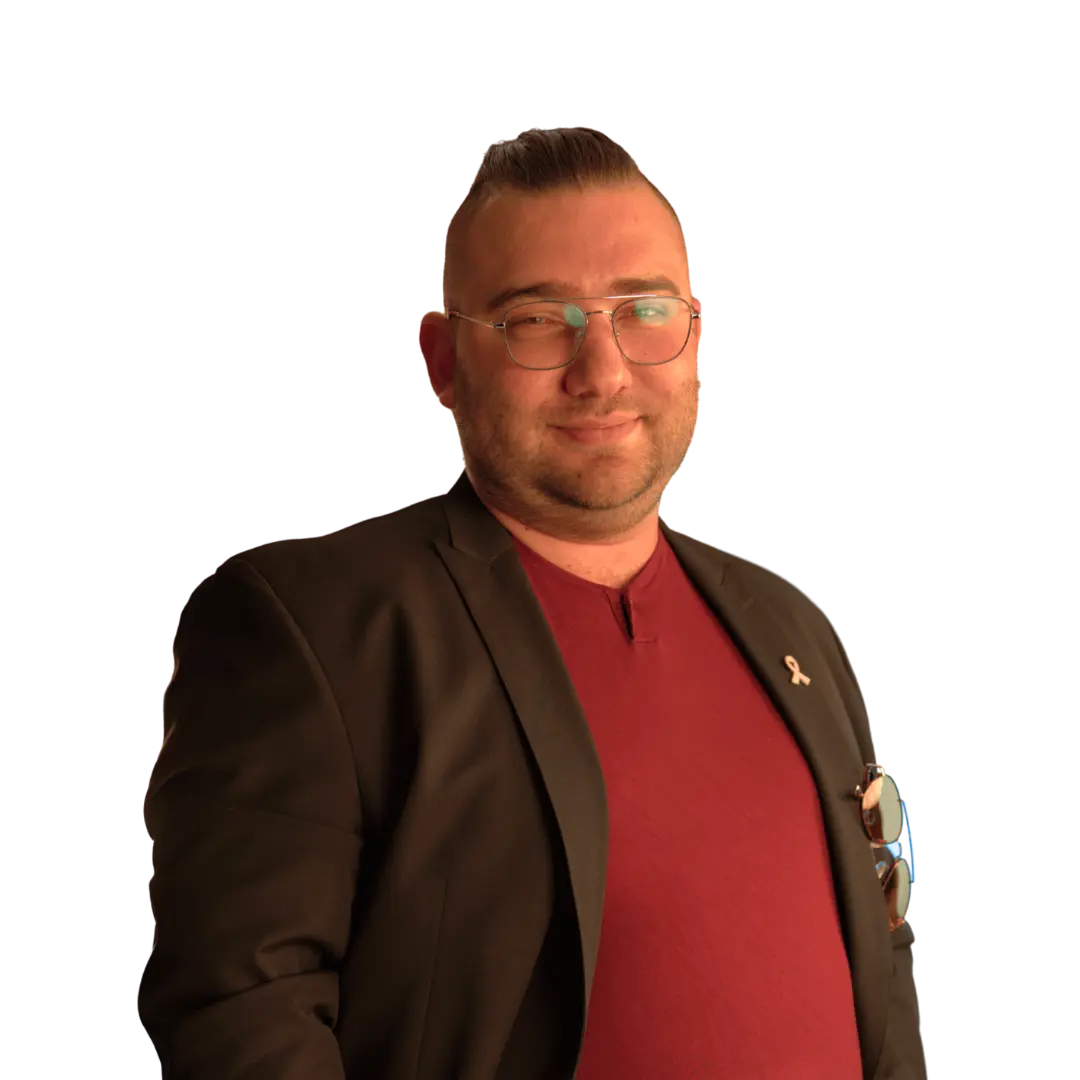
Alexander Slutsker
9+Years of experience in business consulting
I help entrepreneurs, self-employed people, small businesses and startups understand their own numbers, choose what to do first and grow from there.
Book a Free Call+972 055-248-6151. Better on WhatsApp: I am in meetings most of the day and answer as soon as I am free. Other ways to reach me
We can talk in English, Hebrew or Russian.