Physical Product Development
The business decisions before the factory: who buys, what one unit costs, which supplier.
Physical product development consulting is work with founders and businesses who have an idea for a physical product, on the business side before big money goes into manufacturing: who buys it and why, what one unit costs to make in small and in larger quantities, which supplier fits, and a small test run before the big order.
+972 055-248-6151. Better on WhatsApp: I am in meetings most of the day and answer as soon as I am free. Other ways to reach me
We can talk in English, Hebrew or Russian.
Does This Sound Familiar?
I have an idea for a product and I don't know which step comes first.
Finding a reliable manufacturer feels like a maze.
The idea looks great to me, but nobody has paid for it yet.
I'm afraid of putting all my money into a first order before I know it will sell.
Sound familiar? The first conversation is free.
Book a Free CallWhat Clients Say
From different fields, at different stages of business
Dan Manto
Eclipse Capital
Real Estate Investment and Finance, USA
Arty McLabin
GameReady
Game Development Education and Outsourcing, International

Anna
Beautician
After I finished a cosmetology course at a leading company, I was confused. I didn't know how to open a business, what to sell from home, or how to bring in clients. Since I reached out to Mobius, everything has changed. We built an organized plan with clear steps and no unnecessary risks. Today I see results, and I'm growing and developing every month.

Mark
Massage therapist, Gan Yavne
When I finished a massage course, I imagined a different world. I found out it's a hard field, and financial stability isn't easy to find. When I came to Mobius, something changed. We started an organized process and built a business plan. Without Mobius? I probably would have given up. Today I believe in myself and in my own path.
What you get
Knowing whether it can make money
Before the big order, you see whether the price buyers accept leaves a profit after what the product costs to make.
The risky money goes in last
The large sums wait until the cheaper questions have real answers, so less of your money is spent on hope.
Talking to suppliers on firm ground
You come to suppliers knowing your numbers and what to ask for, so the talks are about your terms, not only theirs.
Along the way you get the supporting and guiding materials the work needs, with clear instructions.
Simplified illustration
From a prototype to the shelf
- 1
The idea checked with buyers
Who buys, and at what price
- 2
The prototype
A first version you can hold
- 3
The supplier chosen
Samples checked, a backup ready
- 4
A small test run
A first small batch, to see that it sells
- 5
The large order
Stock, packaging and the shelf
- What it costs to change the product at this stage
The stages a physical product goes through, in order. The bar under each stage shows how the cost of changing the product grows: a change on paper is cheap, and the same change after the large order is the dearest of all.
Simplified. The real work also checks what one unit costs at each quantity, the minimum order your cash can carry and the payment terms, and sets in advance the question each stage must answer before money moves on.
mobiusbiz.co.il
I have worked with
- Google for Startups
- House of Business, Sderot Municipality
- Microsoft Reactor
- GameReady
- Eclipse Capital
- SderoTech
- IUCEL
- Resilience & Health Innovation Hub
- International Resilience Institute of Sderot
















- Google for Startups
- House of Business, Sderot Municipality
- Microsoft Reactor
- GameReady
- Eclipse Capital
- SderoTech
- IUCEL
- Resilience & Health Innovation Hub
- International Resilience Institute of Sderot
What the work can include
You do not need all of it. In the first conversation we choose together the parts your business needs.
- I check with you who buys the product and why, what they use today instead and what price the market really accepts, before money goes into manufacturing.
- I work out with you what one unit costs to make in small and in larger quantities, so the profit is checked before it is assumed.
- I help you find and check suppliers and compare their offers on real criteria, with samples checked and a backup in case the main supplier fails.
- We spend in stages, a prototype, a supplier, a small test run and the launch, and each stage ends with a clear decision to go on or to stop.
- I help you set payment terms with suppliers that protect your cash, so most of your money is not locked up before the goods arrive.
- When the product is ready to sell, I continue with you through the marketing work. Marketing Consulting for Businesses
How the work goes
A free first conversation
We talk, see whether my work fits what your business needs, and I suggest the kind of work that suits you.
Checking the idea against the market
Who buys and why now, what they use instead, what price holds, and what one unit costs at different quantities.
A staged plan with stop points
Prototype, supplier choice, a small test run and launch, each with a question that must be answered before money moves to the next stage.
The ongoing work
We meet as often as the business needs. Between meetings you can send me a short question on WhatsApp, and I reply as soon as I can.
Want to see how these steps would look for you? That is what the first conversation is for.
Book a Free Call9+ years of experience in business consulting
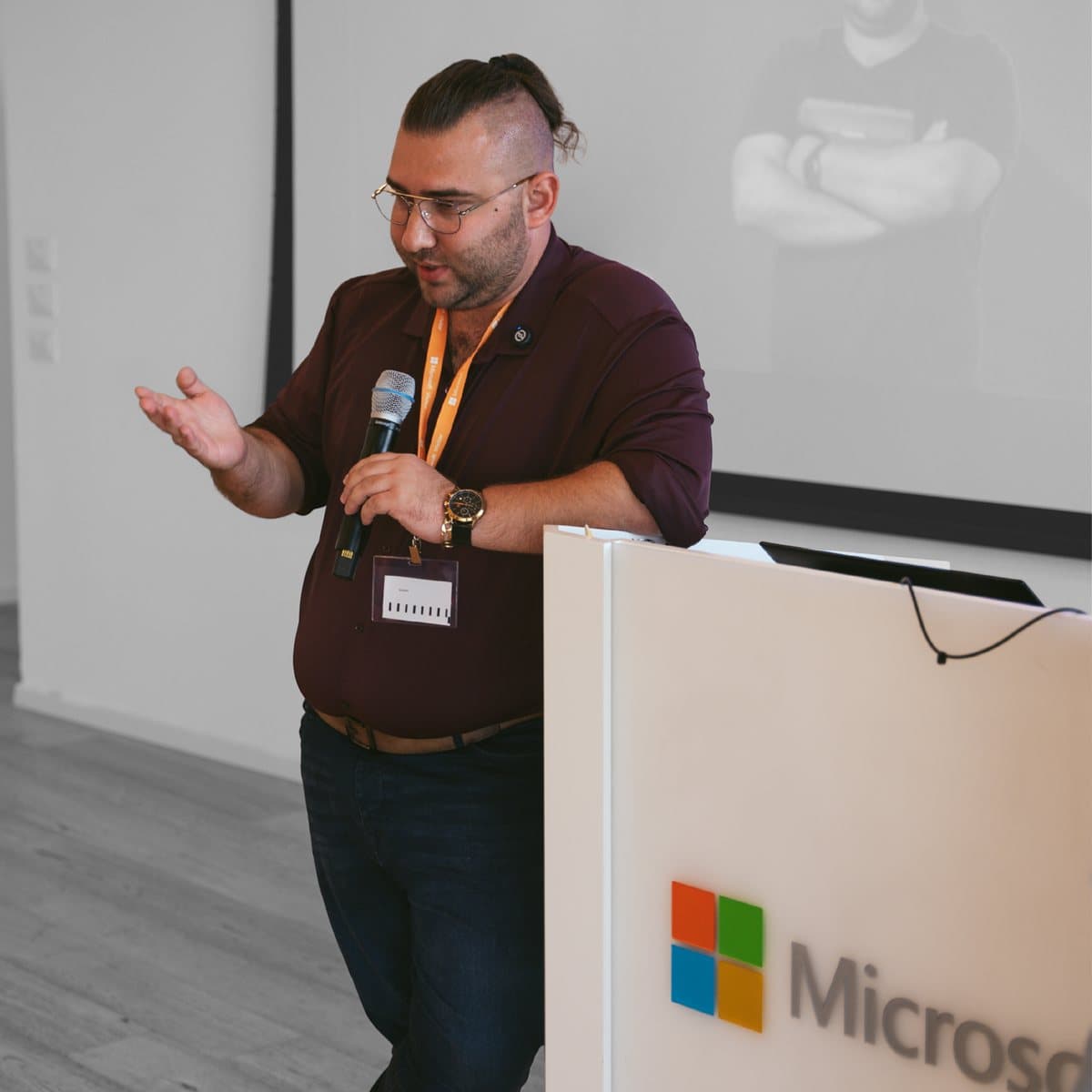
Speaking at Microsoft
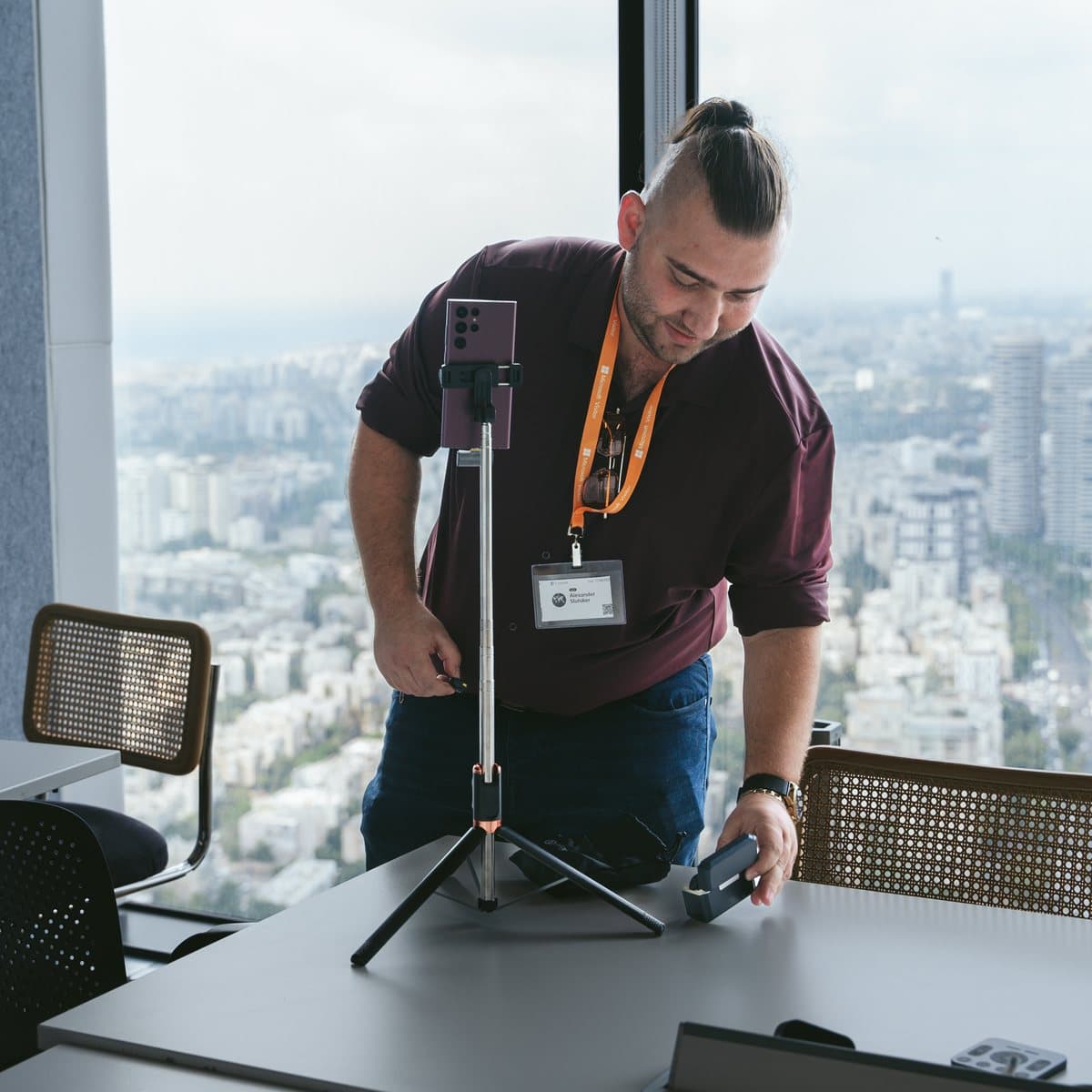
Meeting with international teams, as part of work with a startup
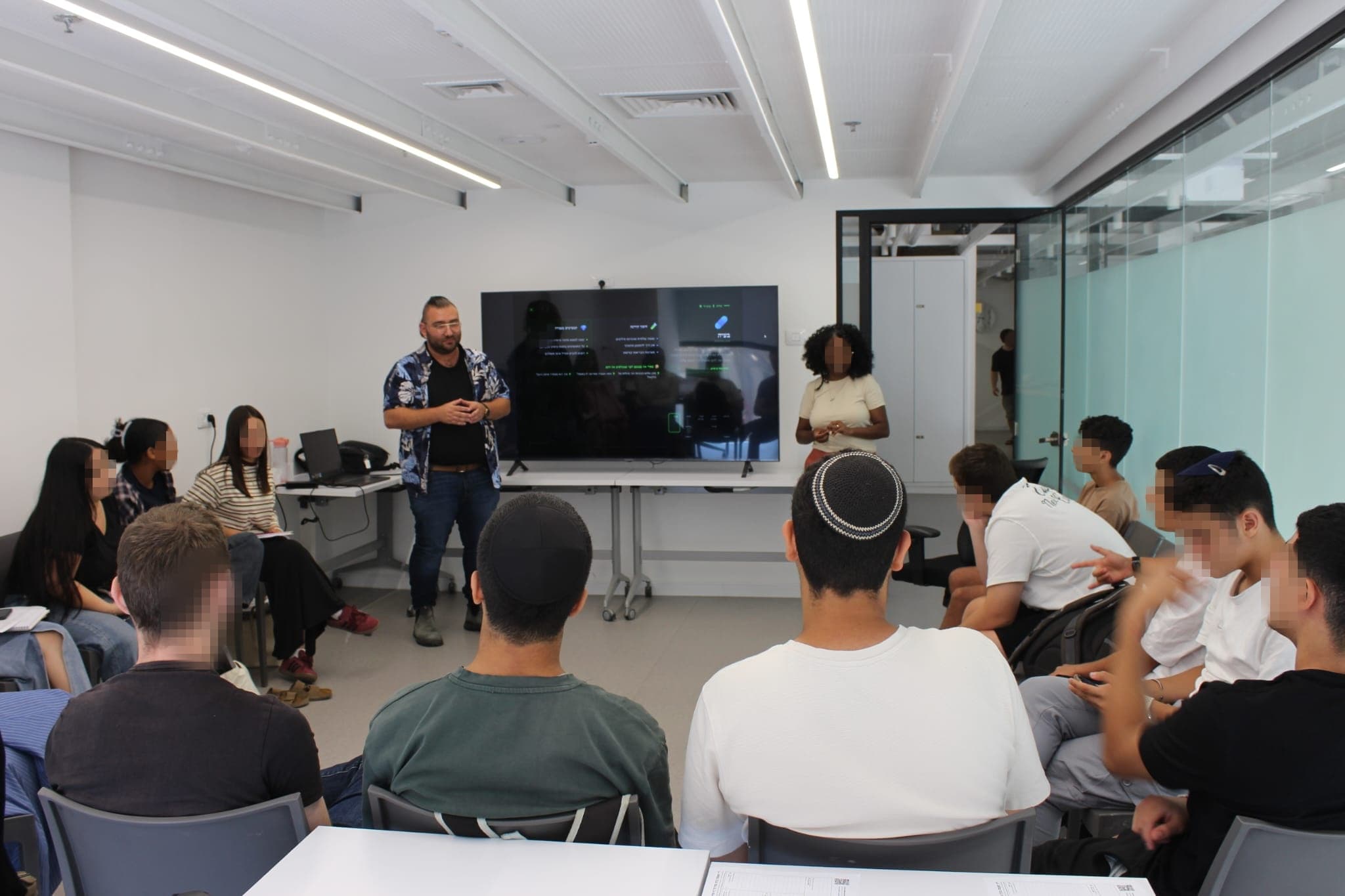
Teenovation, Meital centre Sderot
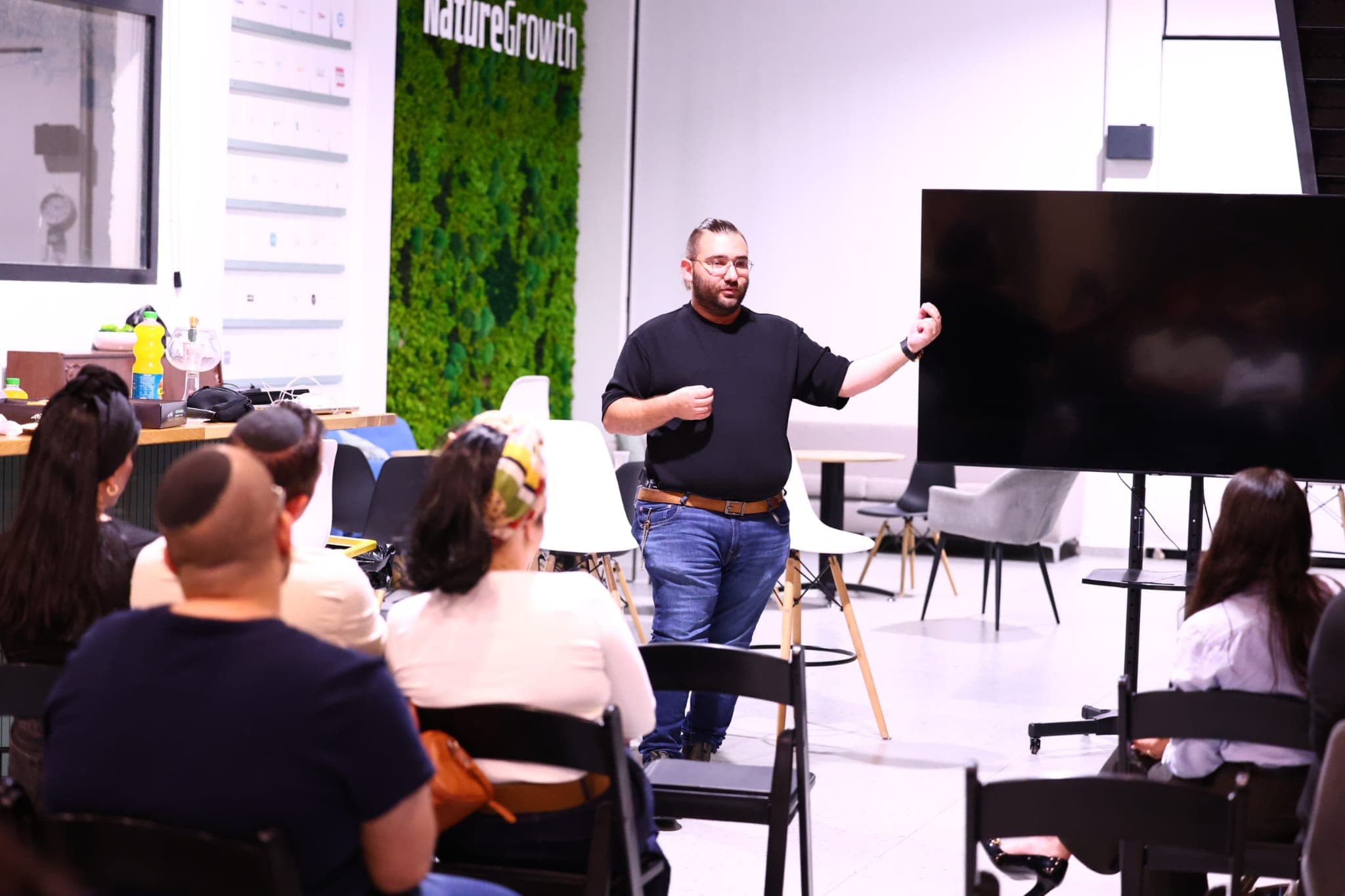
Entrepreneurs session, Sderot
Who does what
What I do
- Check demand, price and unit cost with you
- Help you find and check suppliers and compare their offers
- Set the stages and the decision point of each one
What you do
- Bring the idea, the drawings or the prototype you already have
- Make the decisions to go on or to stop, they stay yours
- Talk to potential buyers and suppliers along the way
What to bring to the first conversation
Bring what you already have, even if it is incomplete. We can start without it too.
- The idea in a few sentences, and a sketch or prototype if you have one
- Who you think will buy it
- Supplier quotes, if you already have any
Whatever you show me about your business stays between the two of us, exactly as it does for every other client of mine.
Who it fits
- A founder with an idea for a physical product who has not spent on manufacturing yet.
- A small business that wants to add a product of its own to what it sells.
- A founder with a prototype who needs to choose a supplier and plan a first run.
When is it better to start elsewhere?
If your product is software only, with nothing to manufacture.
In that case, start here: Startup Consulting, from the Idea to the First Raise
And the paperwork, for anyone who wants to see that too.
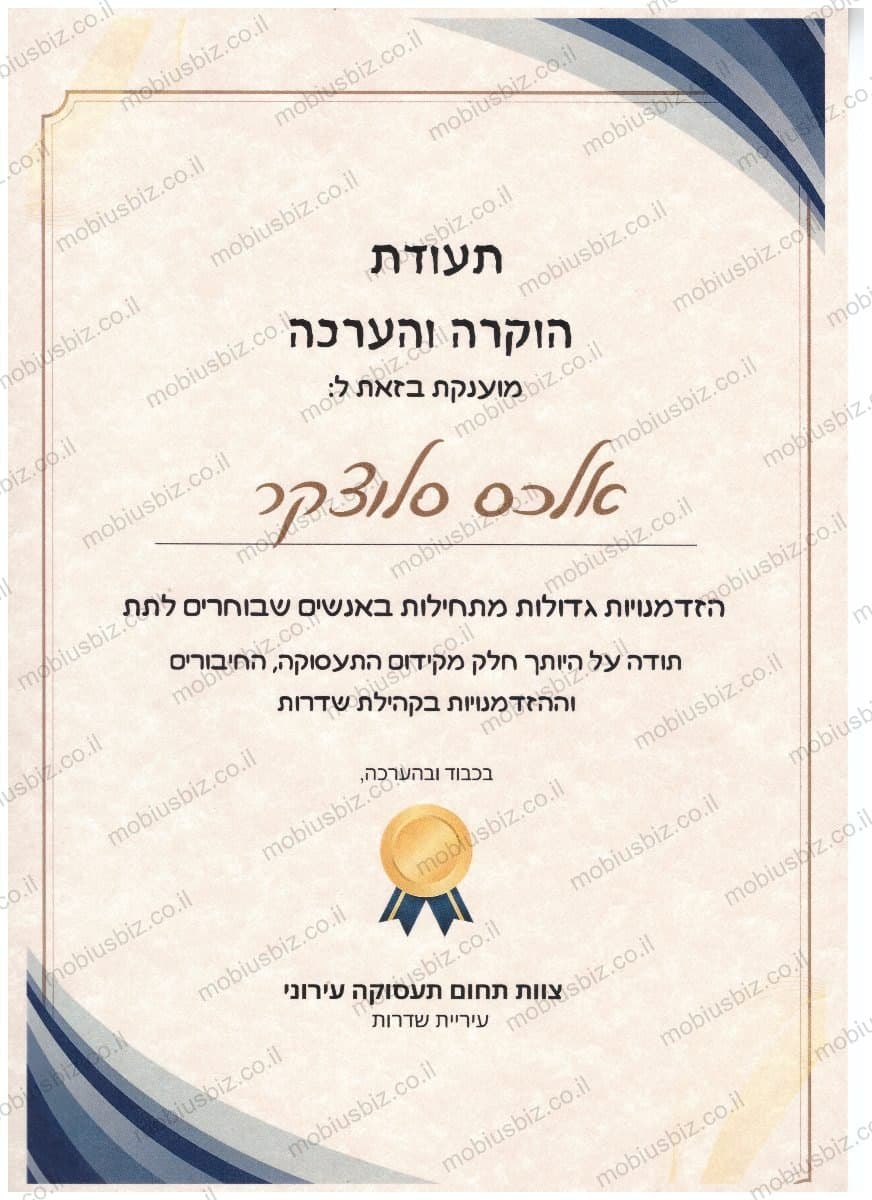
Certificate of appreciation, Sderot municipality

Certificate of honor, Teenovation 2026

Directors and officeholders course, SRI Campus
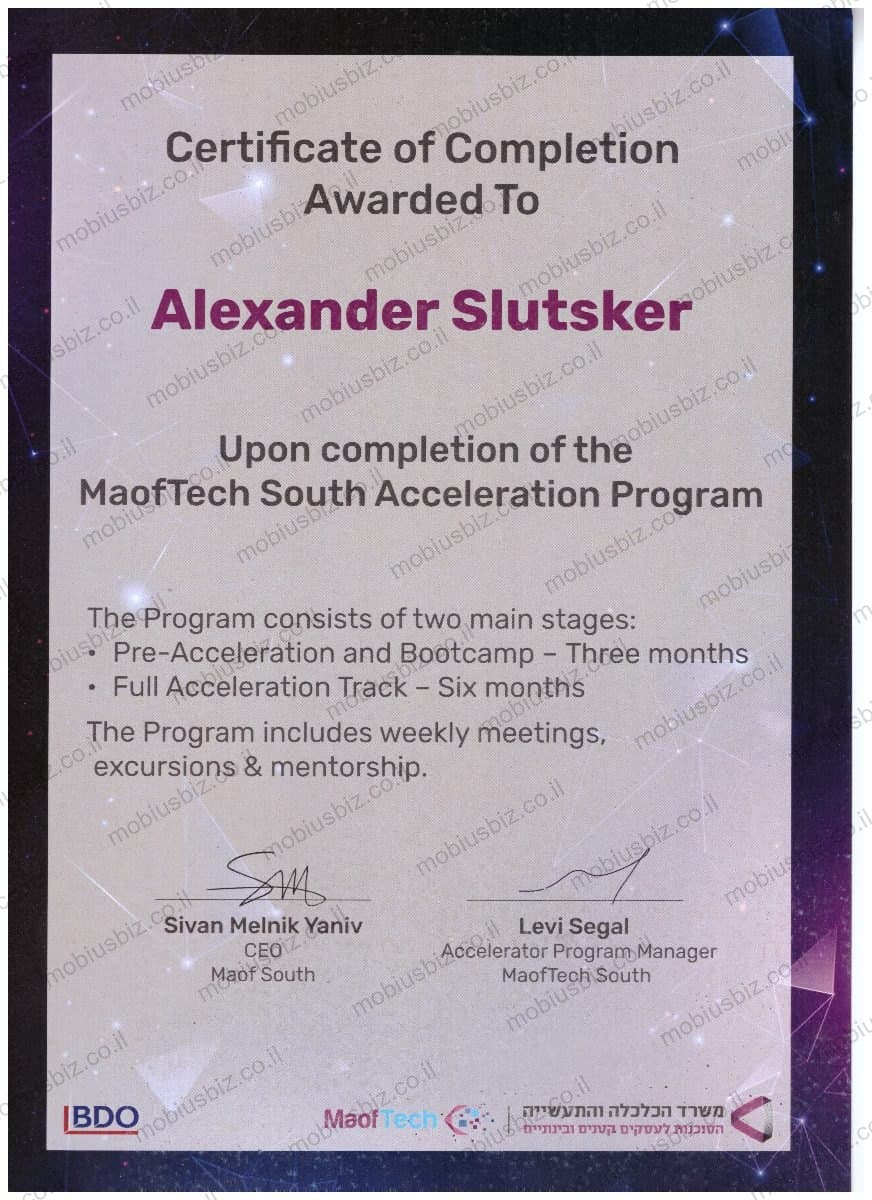
Acceleration program, MaofTech South
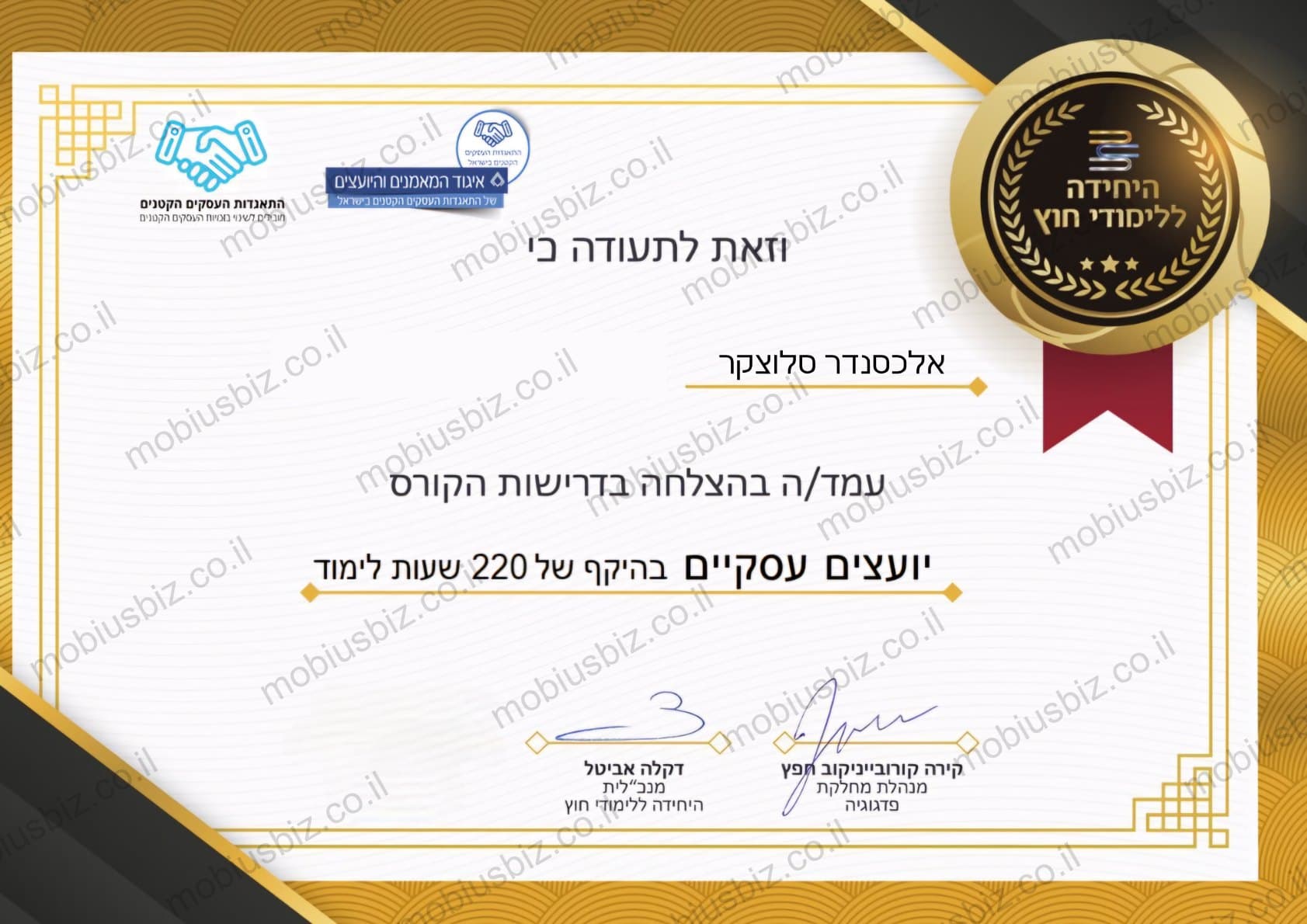
Business consultants course
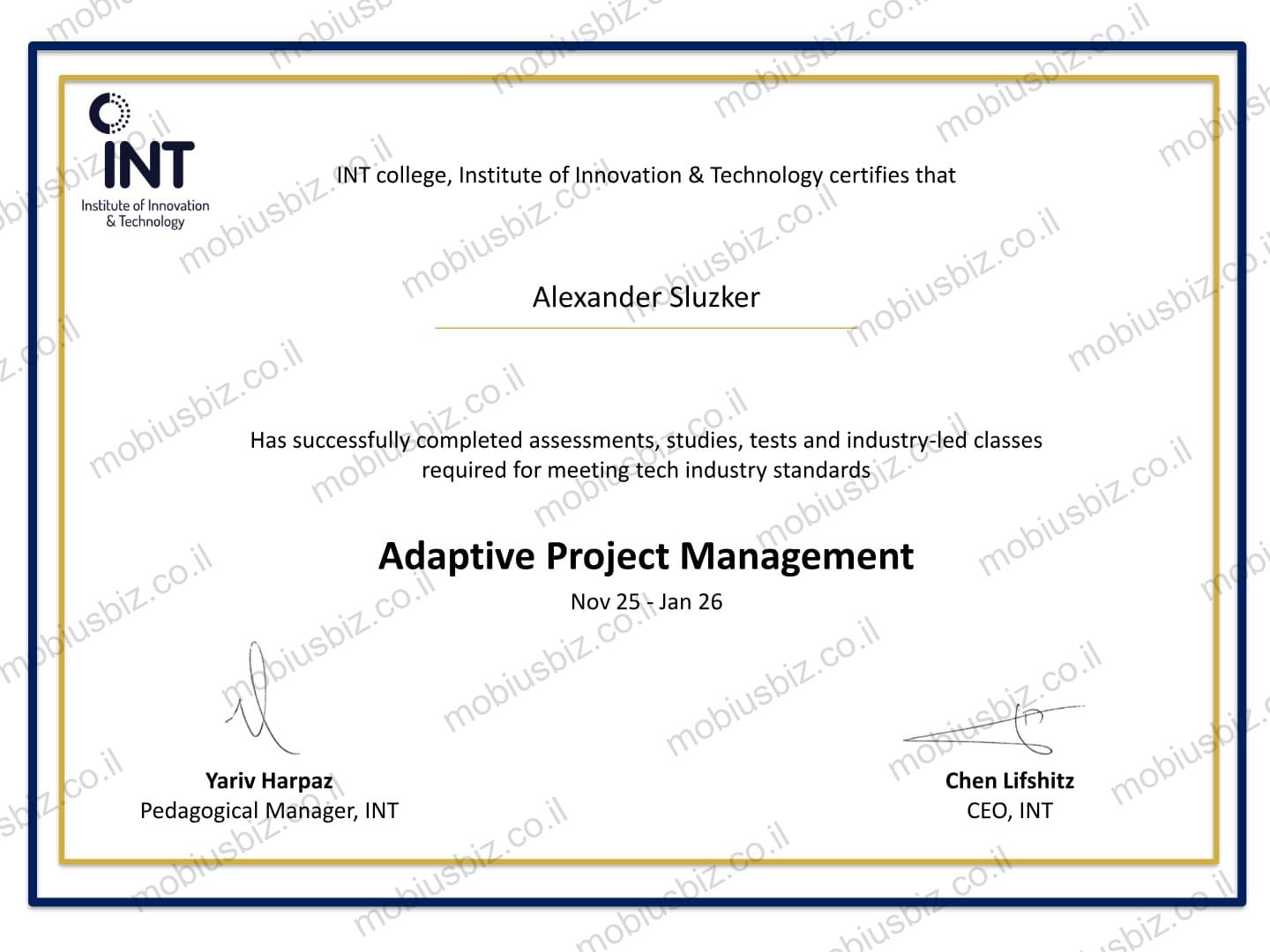
Adaptive project management, INT college
You work directly with me, and I stay your point of contact throughout the work.
- How does it start?
- With a free first conversation of 15 to 30 minutes, by phone or by video. In it we name the problem and shape the work around it. It is not where the answer is handed over. The answer comes out of the work that follows.
- How long before I see results?
- Not from the first meeting, and not from the first few. First we have to understand where the business really stands, so the effort goes only where it works and nothing that already works gets broken. When measurable, steady results come depends on the business and on the pace of the work. After a first conversation I can tell you what to expect in your field.
- How much of my time will it take?
- A meeting of about an hour, as often as the business needs, and a little more at the start while I learn the business. The rest is carrying out the plan, and that is work you would be doing in your business anyway, not time spent in meetings.
- Do my books have to be in order first?
- No. Paperwork is an important tool, but it is not a condition for starting. We begin from where things stand today and put the papers in order along the way, so the work never waits for them.
- What kinds of businesses do you work with?
- I have worked with self-employed professionals, small businesses and startups, in beauty and wellness, the trades, food, retail, manufacturing, education, hi-tech and real estate investment, in Israel and abroad. Your trade matters less than your stage. A bakery and a software company at the same stage are usually stuck on the same thing.
Frequently asked questions
I have an idea for a physical product. Where do we start?
Before the prototype, not in the workshop. The first work answers four questions: who exactly buys this and why now, what they use today instead, what price the market really supports, and what one unit costs to make in small and in larger quantities. Many physical product ideas stop at that last question, where the profit looks fine in the idea and impossible in reality. Once those answers are honest and hold up, we move to the prototype, the supplier and a small test run, instead of committing to big manufacturing decisions on hope.
Can you help with suppliers and manufacturing decisions?
Yes, I help you find and check suppliers. Choosing one is rarely about the cheapest quote. We compare suppliers on real criteria: a minimum order your cash can carry, delivery time, steady quality, communication and language, the ability to grow or shrink with you, protection of your design, and what happens if a batch fails. We look at samples critically, prepare a backup in case the main supplier stops being reliable, and set payment terms so most of your cash is not locked up before the goods arrive.
How do I avoid spending too much before I know it will sell?
By spending in stages. Each stage needs an answer to a clear question before money moves to the next one: does the problem exist, will people pay, can one unit be made at the right cost, will the first batch sell, can you deliver and support at a larger scale. Most early failures come from skipping a stage and putting money into manufacturing or marketing before demand and unit cost were honestly tested. So the go and stop points are set in advance, and the next stage's budget waits until the previous question has a real answer.
How is this different from startup consulting?
Startup consulting guides founders on the way to their first investment round, most often with software. Here the product is something you hold in your hand, so the questions are about the cost of one unit, suppliers, minimum orders and stock, before any fundraising and alongside it.
Can I start with only an idea, without a prototype?
Yes, and it is often the best moment, because nothing has been spent yet. Checking who buys and what one unit costs comes before the prototype, so an idea in a few sentences is enough to begin.
Related services
- Startup Consulting, from the Idea to the First RaiseWhen the product is software, or the question is raising the first investment.
- Business Plan: Building and WritingWhen you need a full business plan for a bank, a fund or partners.
- Financial Consulting for BusinessesWhen the product already sells and the question is cash and profit.
New to consulting? Start with the map of what business consultants do
Ready to Get Started?
Book a Free Call+972 055-248-6151. Other ways to reach me
We can talk in English, Hebrew or Russian.