Early-Stage Fundraising: What Investors Need to See
How founders can prepare for early fundraising with clearer milestones, traction evidence, dilution thinking, and investor-ready answers.
Equity Dilution Calculator
Estimate how a raise and option pool change founder ownership after the round.
Post-money valuation
₪5,000,000
Investor ownership
20%
Founders' ownership after the round
70%
Founders' stake value on paper
₪3,500,000
Ownership ratio
The founders' stake in shekels, on paper
What the new pool takes from the founders ₪500,000
The founders' share falls from 100% to 70%, but the investor's money makes the company bigger by exactly what it buys, so without the pool the stake would still be worth ₪4,000,000. The new option pool is what really costs the founders, ₪500,000.
How we calculated it
Post-money is ₪5,000,000, investor takes 20%, and option pool is 10%.
The founders' stake goes from 100% to 70%, worth ₪3,500,000.
Want to model a raise before signing terms?
Book a free call+972 055-248-6151. Other ways to reach me
This is a simplified, illustrative tool meant to give you a quick feel for the numbers. It is not professional advice. Real business decisions depend on many factors it does not account for, and all results are estimates only. Mobius Business Solutions accepts no responsibility for decisions or actions taken based on this tool.
Early-stage fundraising is not mainly a presentation exercise. A good pitch deck helps, but investors are trying to understand whether capital will accelerate a business that is already learning, or hide weak validation for another few months.
The founder's job is to show momentum, judgment, and a specific next milestone. The money should buy a concrete stage: proving retention, finishing a product, creating repeatable sales, clearing a regulatory step, entering a new market, or reaching a revenue target. It should not simply buy more time.
A common gap in first investor meetings is a deck that describes the product but does not explain the market, the sales process, the use of funds, the risks, or the result the round should create. Closing that gap starts with a financial model, a review of the sales funnel, one core metric of traction (real, repeatable proof customers want it), and the hard questions investors ask: why customers would switch, who decides, how long a sale takes, what slower growth would mean, and why this team can execute.
Preparation does not guarantee investment. It changes the conversation. The founder can answer with assumptions, evidence, and honesty instead of defending a polished story.
Investors fund momentum, not a deck alone
The SBA guide to funding a business explains that venture capital is typically exchanged for ownership, focuses on high-growth companies, and involves higher risk for potential higher return. That is why early investors care about more than the product idea.
They usually test:
- The quality, honesty, speed, and resilience of the team.
- The founder's understanding of the customer and market.
- The urgency of the problem.
- Evidence that customers act, not just compliment the idea.
- Acquisition, retention, sales cycle, pipeline, and gross margin.
- Competitive advantage and learning speed.
- Legal, regulatory, operational, and financing risks.
Early numbers do not have to be perfect. But founders should know which assumptions are still unproven and how they plan to test them.
What the money should buy
A round size should start with the milestone, not with what sounds impressive. Ask: what risk must be reduced before the next stage becomes credible?
Examples:
- A B2B startup may need enough capital to convert paid pilots into annual contracts.
- A B2C product may need to prove cohort retention and paid conversion.
- A regulated business may need to finish a required approval path.
- A technical company may need to complete a product version that allows repeatable implementation.
After that, build the expense plan. Include hiring, product, sales, marketing, legal, accounting, infrastructure, support, and a delay reserve. A startup does not really have 18 months of runway (months of cash left) if the plan assumes immediate growth, delayed hiring, and missing costs.
Evidence investors look for
For B2B, investors may look at paid pilots, pilot-to-contract conversion, contract size, sales cycle, pipeline stage quality, repeat use, renewal, expansion, gross margin, implementation cost, and support load.
For B2C, they may look at active users, retention by cohort, usage frequency, payment conversion, CAC (cost to win a customer), payback, organic growth, and referrals.
The strongest metric is the one that proves the business is learning in the right direction. A large mailing list may matter less than a small group of users who keep paying and returning. For earlier validation work, see startup consulting from idea to traction and how to validate a startup idea.
Round size, dilution, and founder control
Dilution (a shrinking ownership percentage) is not automatically bad. A smaller share of a much stronger company can be better than a larger share of a company that never reaches the next stage.
But dilution cannot be judged by percentage alone. Founders also need to understand valuation, future rounds, option pool size, voting rights, liquidation preferences, protective provisions, vesting, and taxes. The SEC small business glossary is a useful plain-language reference for terms such as capitalization table, SAFE, convertible note, preferred stock, stock option, valuation, and venture capital fund.
Acceptable dilution is not universal. It depends on stage, valuation, amount raised, expected future rounds, investor value, founder motivation, and control. Founders should model the outcome before signing, then review legal and tax consequences with qualified professionals.
What due diligence will test
Due diligence is not a punishment. It is the investor asking whether the story survives contact with documents, data, customers, legal terms, and the team's real operating capacity.
Founders should expect questions about:
- Customer interviews and contracts.
- Revenue quality and collection timing.
- Churn, retention, and usage.
- Cap table and informal equity promises.
- Intellectual property and contractor agreements.
- Sales pipeline credibility.
- Hiring plan and budget.
- Risks the founder has not solved yet.
A strong founder does not pretend there is no risk. A strong founder shows the risk, the current evidence, and the plan for reducing it.
How to use the equity dilution tool
The equity dilution calculator on this page is a planning tool. Use it to model ownership before and after one round and the impact of creating an option pool. To see a later round, run it again with the founders' ownership after the first round typed into current founder ownership.
Do not use the tool as a legal or tax decision-maker. It does not evaluate voting rights, liquidation preferences, investor protections, vesting schedules, employee tax treatment, or future financing terms. For the underlying concepts, read what equity means in business.
Getting the story, the numbers and the round logic ready before investors see them is part of consulting for early stage startups.
If you are preparing to raise, talk it through with me. The goal is not a prettier deck. It is a business ready for a serious conversation.
The content on this blog is general information only and is not a recommendation to act. It is not business, legal, tax, or financial advice. Before making any decision, consult a qualified professional, such as an accountant, a lawyer, or a business advisor, about your specific situation.
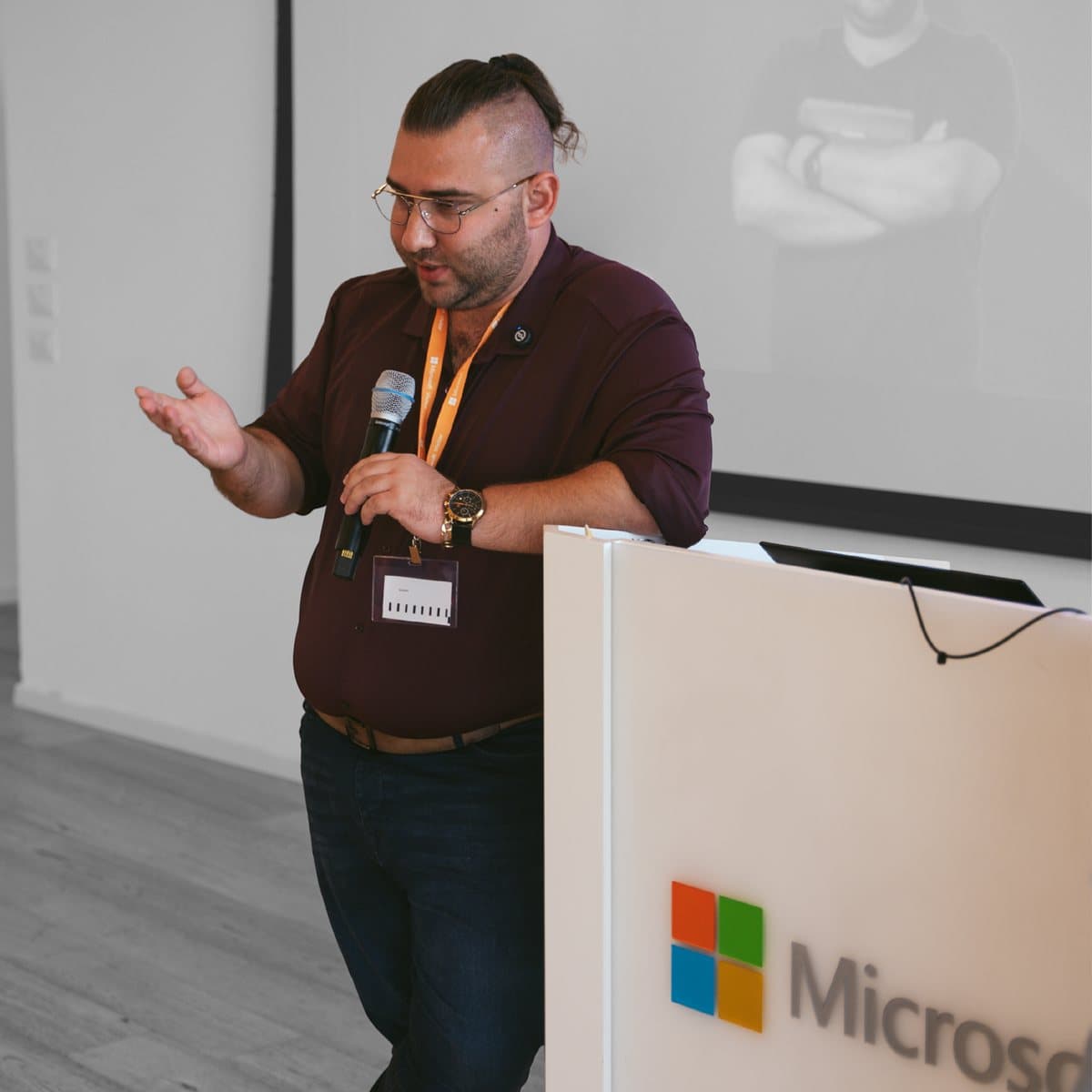
Speaking at Microsoft

Meeting with international teams, as part of work with a startup
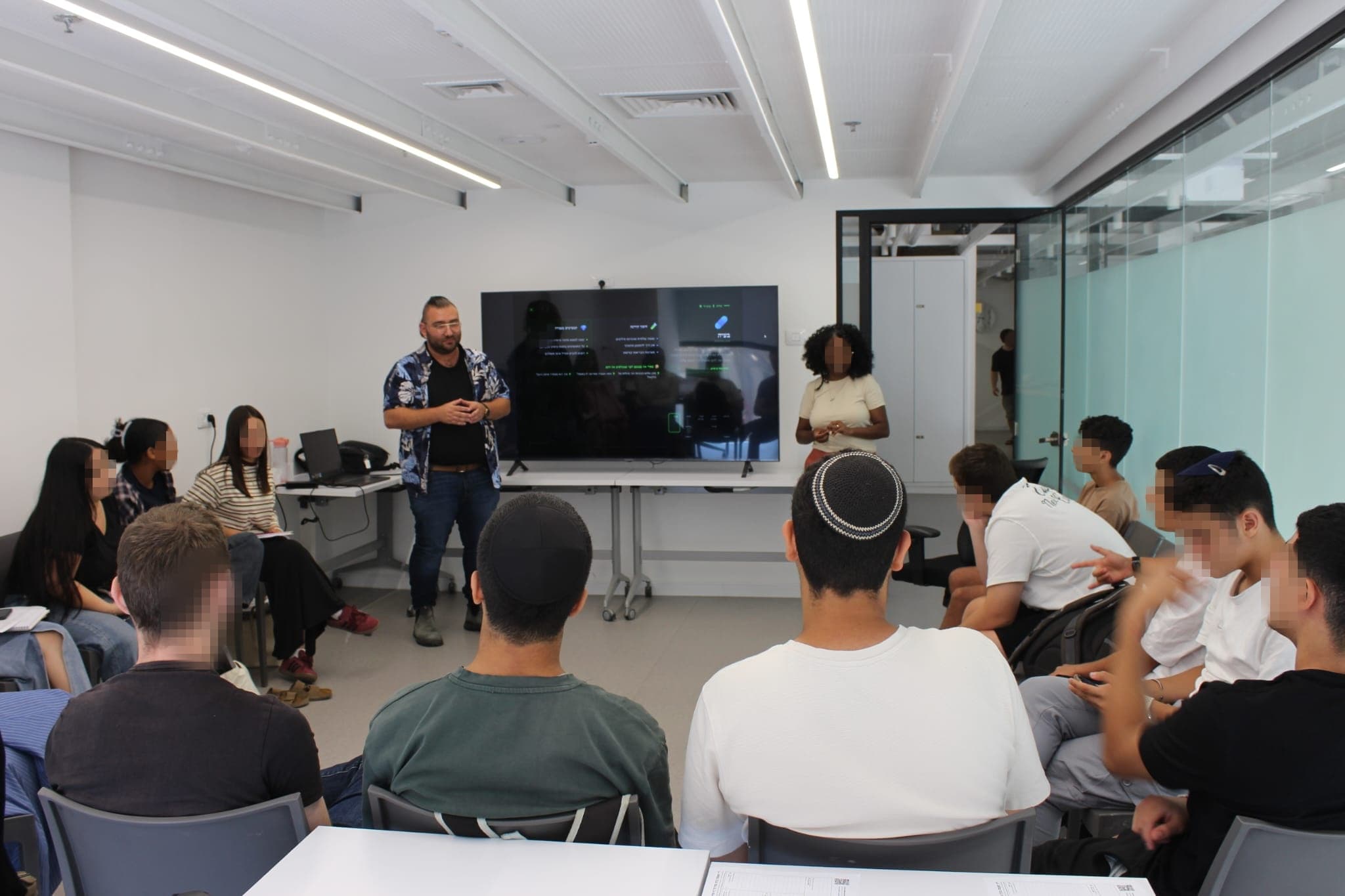
Teenovation, Meital centre Sderot
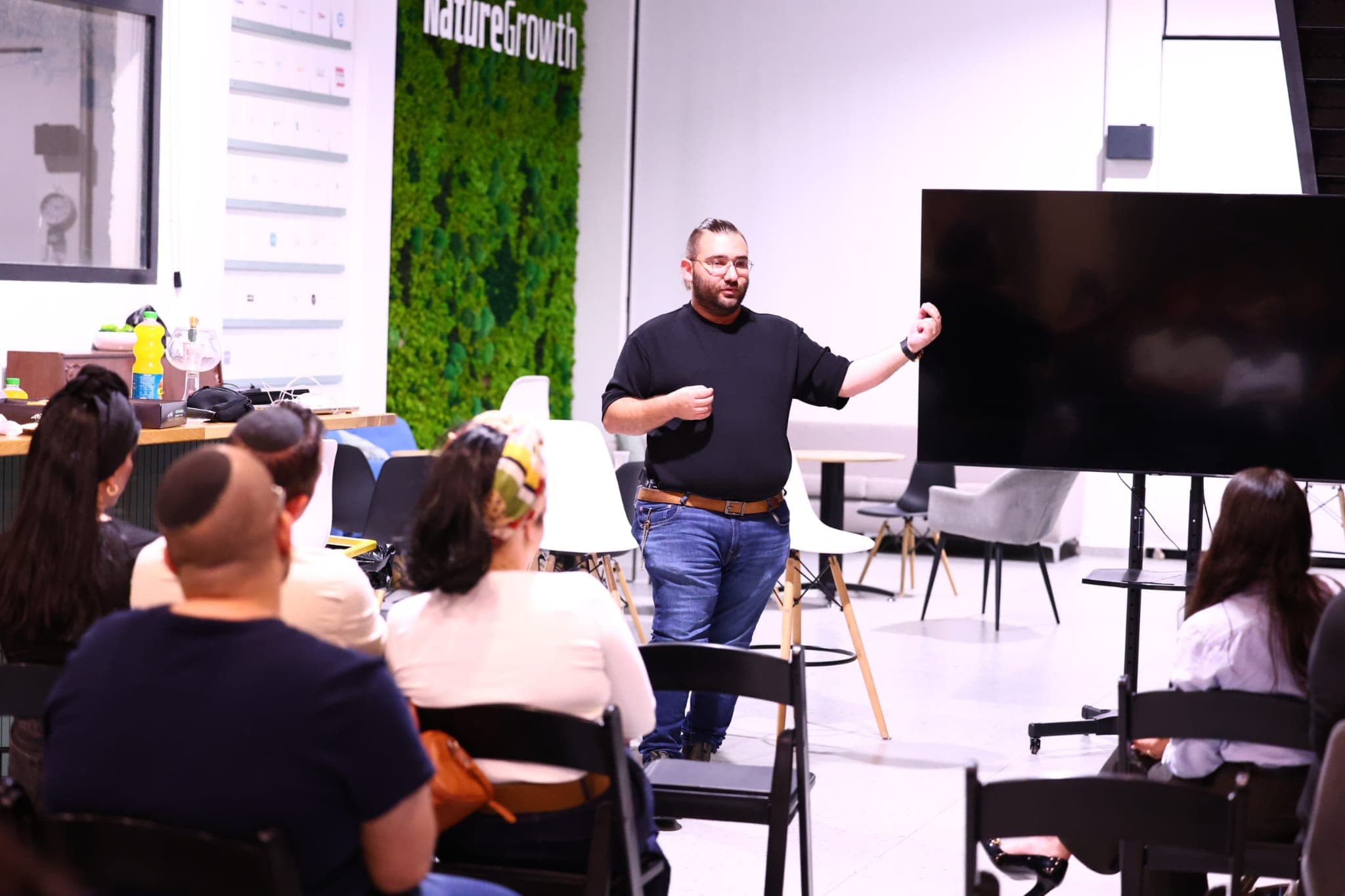
Entrepreneurs session, Sderot
I have worked with
- Google for Startups
- House of Business, Sderot Municipality
- Microsoft Reactor
- GameReady
- Eclipse Capital
- SderoTech
- IUCEL
- Resilience & Health Innovation Hub
- International Resilience Institute of Sderot
















- Google for Startups
- House of Business, Sderot Municipality
- Microsoft Reactor
- GameReady
- Eclipse Capital
- SderoTech
- IUCEL
- Resilience & Health Innovation Hub
- International Resilience Institute of Sderot
What Clients Say
From different fields, at different stages of business
Dan Manto
Eclipse Capital
Real Estate Investment and Finance, USA
Arty McLabin
GameReady
Game Development Education and Outsourcing, International

Anna
Beautician
After I finished a cosmetology course at a leading company, I was confused. I didn't know how to open a business, what to sell from home, or how to bring in clients. Since I reached out to Mobius, everything has changed. We built an organized plan with clear steps and no unnecessary risks. Today I see results, and I'm growing and developing every month.

Mark
Massage therapist, Gan Yavne
When I finished a massage course, I imagined a different world. I found out it's a hard field, and financial stability isn't easy to find. When I came to Mobius, something changed. We started an organized process and built a business plan. Without Mobius? I probably would have given up. Today I believe in myself and in my own path.
And the paperwork, for anyone who wants to see that too.

Certificate of appreciation, Sderot municipality

Certificate of honor, Teenovation 2026

Directors and officeholders course, SRI Campus
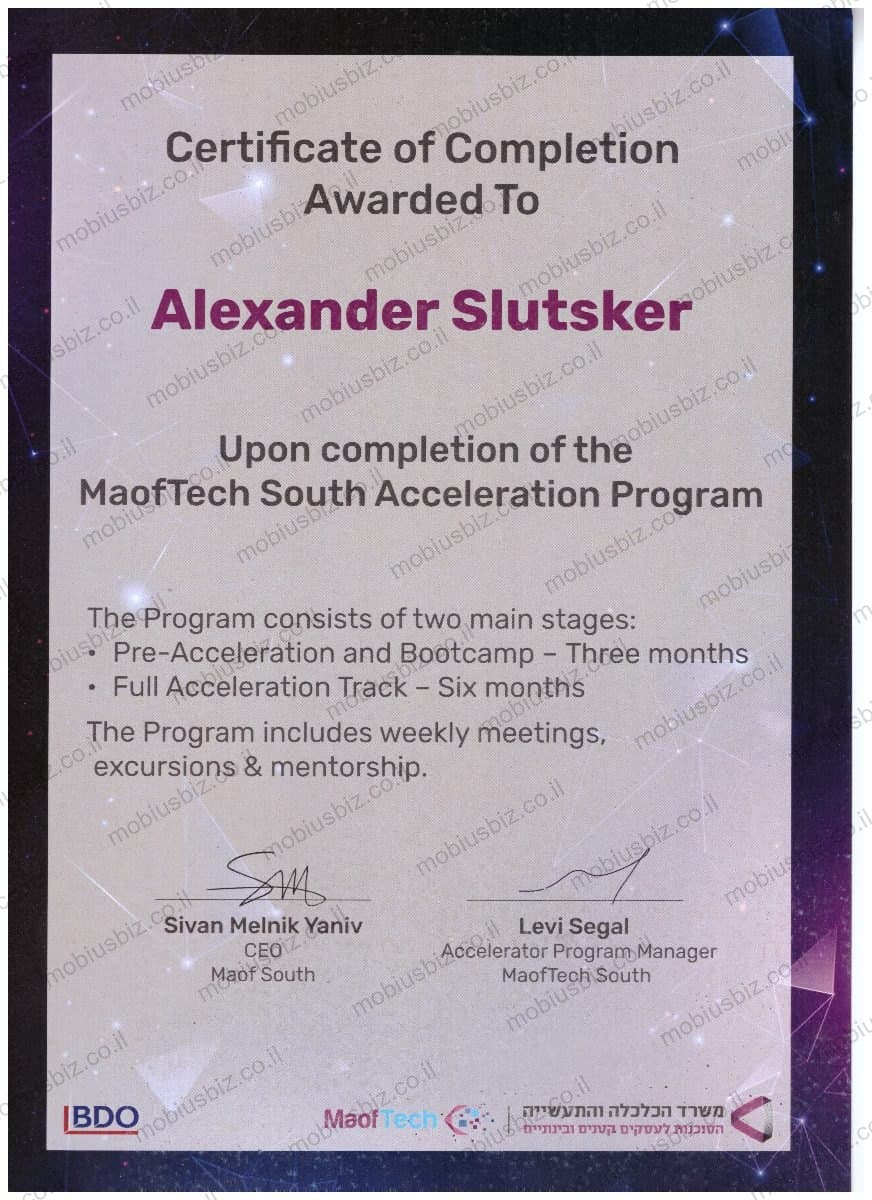
Acceleration program, MaofTech South
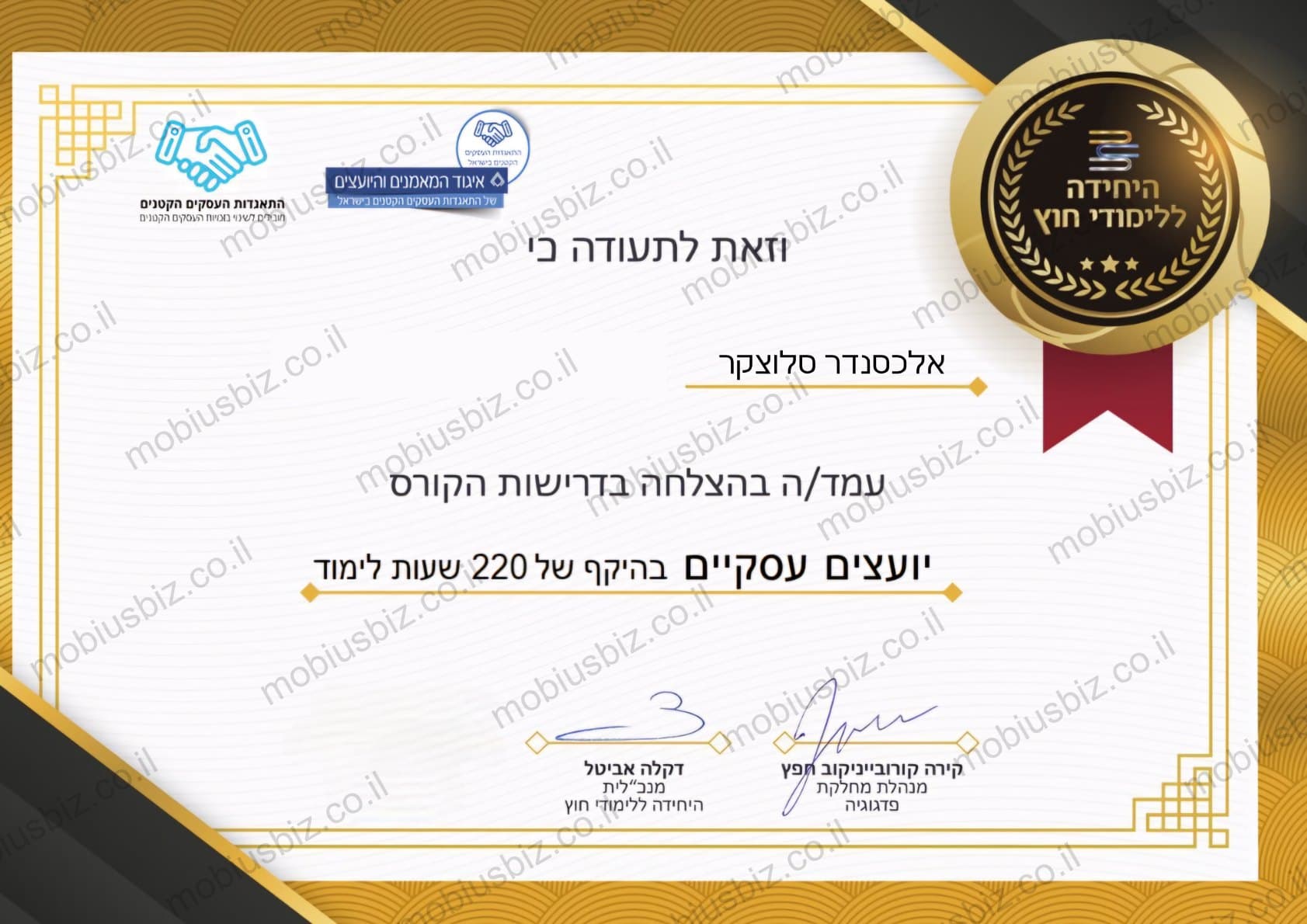
Business consultants course

Adaptive project management, INT college

Business, Marketing, Operations & Financial Consultant
Mobius
Alexander Slutsker
9+Years of experience in business consulting
I help entrepreneurs, self-employed people, small businesses and startups understand their own numbers, choose what to do first and grow from there.
Book a Free Call+972 055-248-6151. Better on WhatsApp: I am in meetings most of the day and answer as soon as I am free. Other ways to reach me
We can talk in English, Hebrew or Russian.