Why Every Business Needs a Consultant at Some Point
When a business needs outside perspective, how to measure what consulting should change, and why a short diagnosis often comes before a big project.
What a Consultant Changes Over Time
Usually, the consultant's biggest visible lift lands early. Your results start slower, then can pick up speed and compound on what was built. Drag the timeline marker to walk through the story.
This is only an illustration of the shape of the work, not a forecast or a timetable. Every business moves at its own pace.
At the marker
Implementing together: your results keep climbing as the changes repeat and stick.
Curious what the start would look like in your business?
Book a free call+972 055-248-6151. Other ways to reach me
This is a simplified, illustrative tool meant to give you a quick feel for the numbers. It is not professional advice. Real business decisions depend on many factors it does not account for, and all results are estimates only. Mobius Business Solutions accepts no responsibility for decisions or actions taken based on this tool.
Not every business needs a consultant from day one. But almost every business reaches a point where the owner is too close to the work to see the real constraint clearly.
That is not a weakness. It is normal. When you are inside sales, delivery, hiring, cash pressure, customer messages, and daily decisions, some patterns become invisible. A consultant can help you step back, name the real problem, and choose the next action with less guesswork.
Outside perspective is useful when problems repeat
The signal is not that the owner is incapable. The signal is that the same problem keeps returning: revenue grows but cash is tight, marketing brings leads but not sales, the team waits for the founder, or every plan looks reasonable until reality starts pushing back.
In those moments, the business needs clearer economics, clearer ownership, and a shorter feedback loop between decisions and results.
Good outside help does not stop at naming the problem. It works next to the owner on the decisions, across finance, marketing and operations, and connects the diagnosis to execution. Along the way the owner learns to read the business in its own language: gross margin (the profit left after direct costs), cash flow (the money moving in and out), conversion rate (the share of interested people who buy). The decisions stay the owner's.
Consulting ROI comes from implemented change
A common pattern: a service company wants to raise its advertising spend because revenue has stopped growing. A diagnosis often shows that the number of leads is not the problem. The company is losing opportunities through slow response, weak qualification (checking early whether an inquiry is a real fit), and poor follow-up after proposals.
The work then goes into how inquiries are handled, clear sales stages, follow-up templates, and a regular review of open opportunities. Low-margin packages get revised, and extra work nobody pays for gets limited.
The value comes from a better conversion rate, better margins, advertising money that is no longer wasted, and less owner time lost on unclear opportunities. It does not come from a report. It comes from changes the company actually implements.
Read the curve, then test the numbers
The curve at the top of this page draws the shape of working with a consultant, not a forecast. The consultant's input is at its highest early on, while you map together how the business runs. In the drawing, your results start slower and pick up speed as the changes repeat and stick. Every business moves at its own pace.
That is why the very start is a poor moment to judge the work. A fairer test is whether the change you expect can be measured at all: profit growth, time saved, better cash flow, or lower risk. If you want to put numbers on it, the consultant ROI (return on investment) calculator in the article on why to hire a business consultant takes conservative figures. Enter a result you could reasonably measure, not the best possible one. Then ask two questions:
- can the result be tracked?
- can the business actually implement the work?
If the answer is no, start with a narrower first step.
When to start smaller
Outside help does not always start with a big project. A common case: an owner wants a growth strategy, but the business has no reliable financial information, does not track where customers come from, and cannot say which services are profitable.
A full strategy project would be premature there. The right first step is a short diagnosis: restore the basic numbers, sort the services, review the customers, and build a simple cash forecast.
Sometimes the best consulting advice is to narrow the problem before taking on a bigger project.
If you are deciding timing, read when to hire a business consultant, how to choose a business consultant, and business diagnosis.
Restoring the basic numbers first and choosing the scope together with the owner is part of small business consulting. What clients say about working with me is further down this page.
If you want to talk about what outside help should change in your business, talk it through with me.
The content on this blog is general information only and is not a recommendation to act. It is not business, legal, tax, or financial advice. Before making any decision, consult a qualified professional, such as an accountant, a lawyer, or a business advisor, about your specific situation.
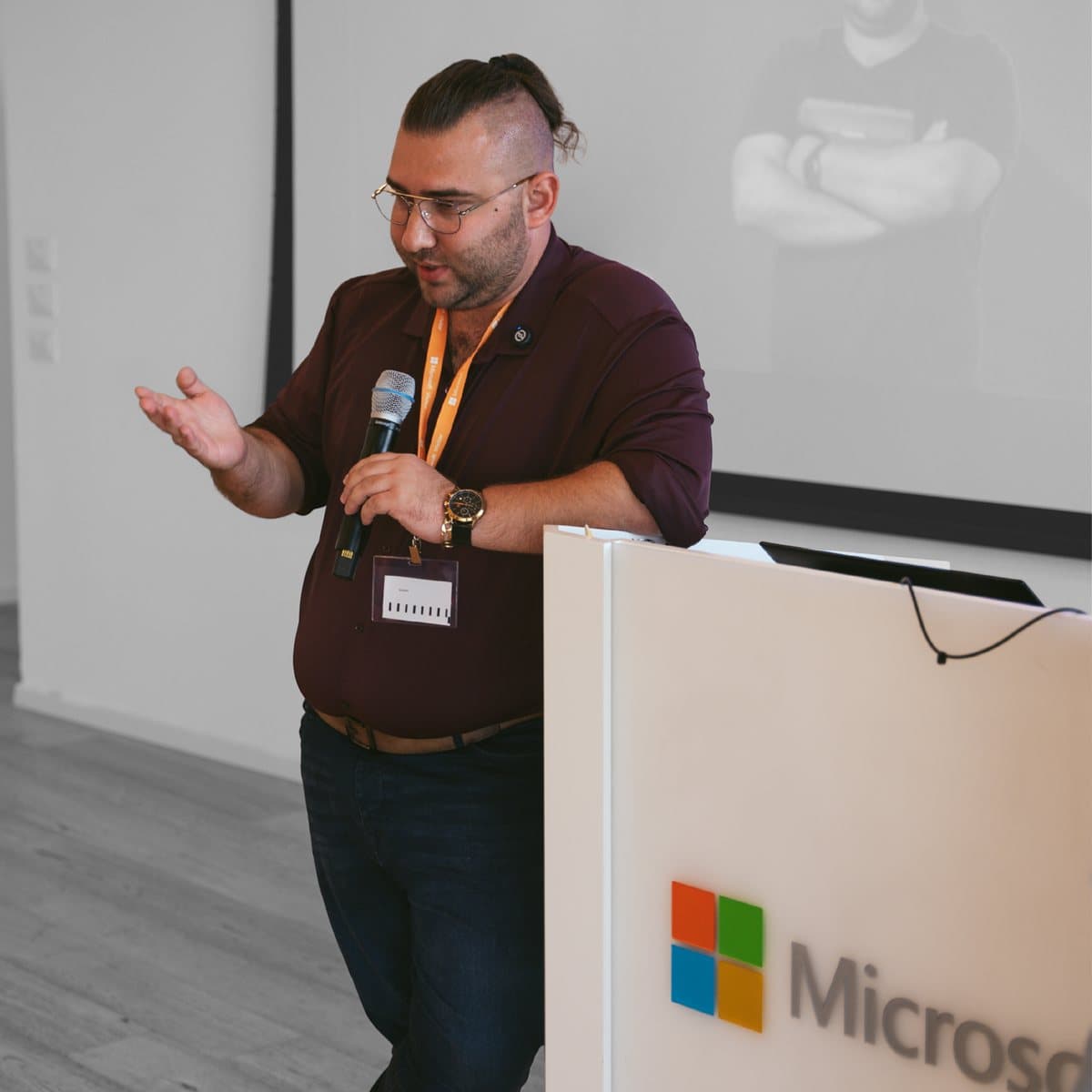
Speaking at Microsoft

Meeting with international teams, as part of work with a startup
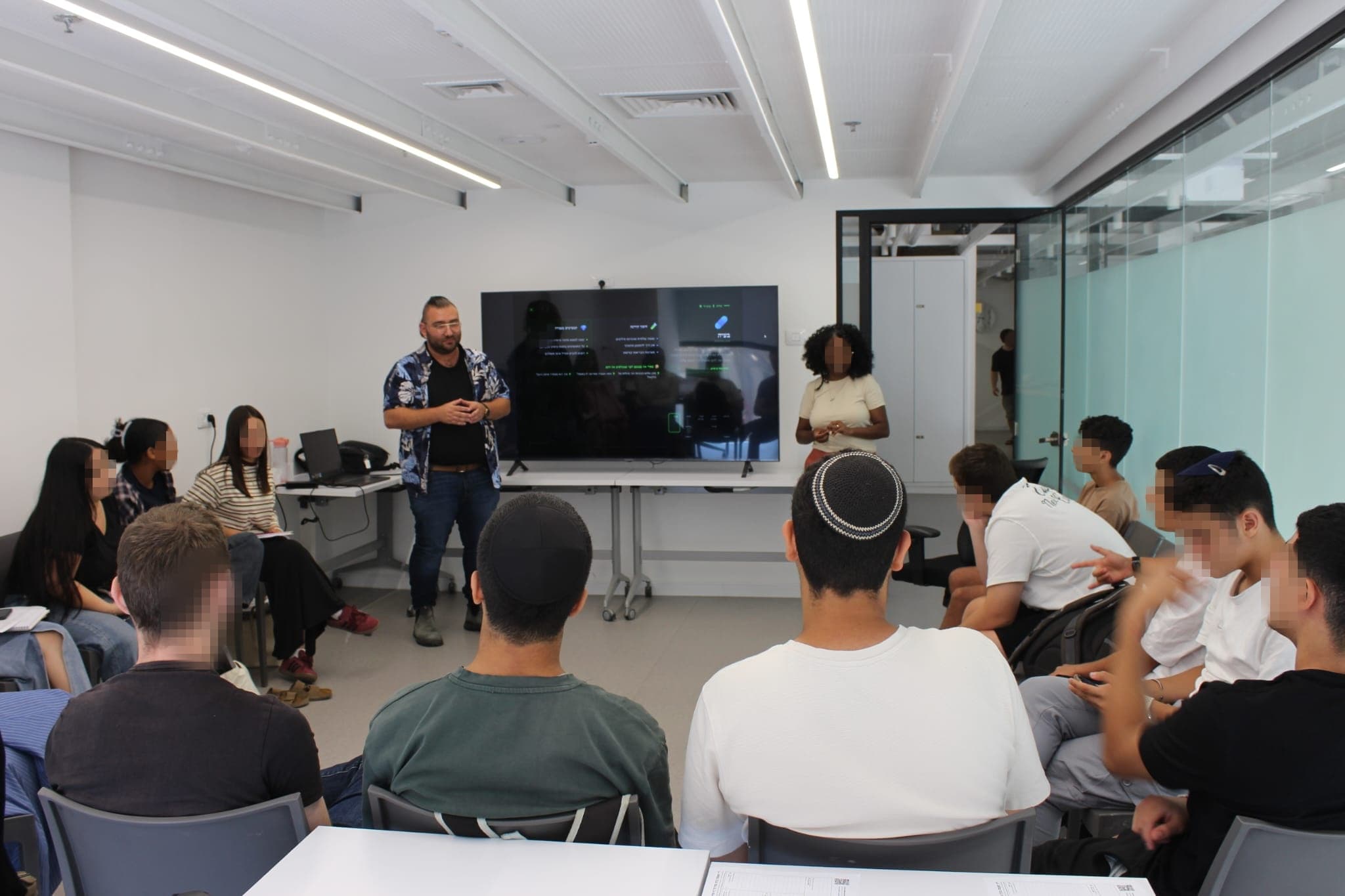
Teenovation, Meital centre Sderot
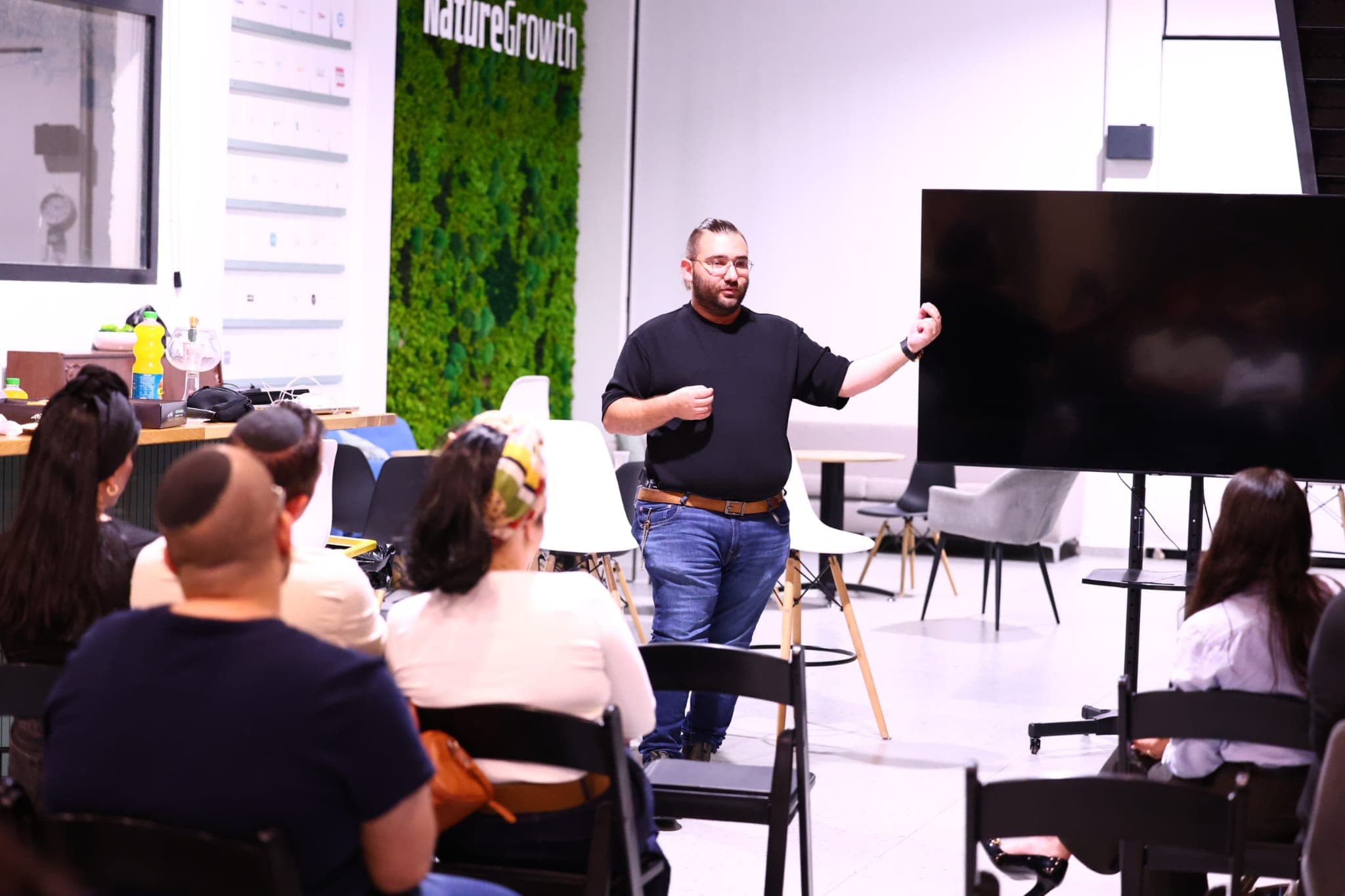
Entrepreneurs session, Sderot
I have worked with
- Google for Startups
- House of Business, Sderot Municipality
- Microsoft Reactor
- GameReady
- Eclipse Capital
- SderoTech
- IUCEL
- Resilience & Health Innovation Hub
- International Resilience Institute of Sderot


















- Google for Startups
- House of Business, Sderot Municipality
- Microsoft Reactor
- GameReady
- Eclipse Capital
- SderoTech
- IUCEL
- Resilience & Health Innovation Hub
- International Resilience Institute of Sderot
What Clients Say
From different fields, at different stages of business
Dan Manto
Eclipse Capital
Real Estate Investment and Finance, USA
Arty McLabin
GameReady
Game Development Education and Outsourcing, International

Anna
Beautician
After I finished a cosmetology course at a leading company, I was confused. I didn't know how to open a business, what to sell from home, or how to bring in clients. Since I reached out to Mobius, everything has changed. We built an organized plan with clear steps and no unnecessary risks. Today I see results, and I'm growing and developing every month.

Mark
Massage therapist, Gan Yavne
When I finished a massage course, I imagined a different world. I found out it's a hard field, and financial stability isn't easy to find. When I came to Mobius, something changed. We started an organized process and built a business plan. Without Mobius? I probably would have given up. Today I believe in myself and in my own path.
And the paperwork, for anyone who wants to see that too.

Certificate of appreciation, Sderot municipality

Certificate of honor, Teenovation 2026

Directors and officeholders course, SRI Campus
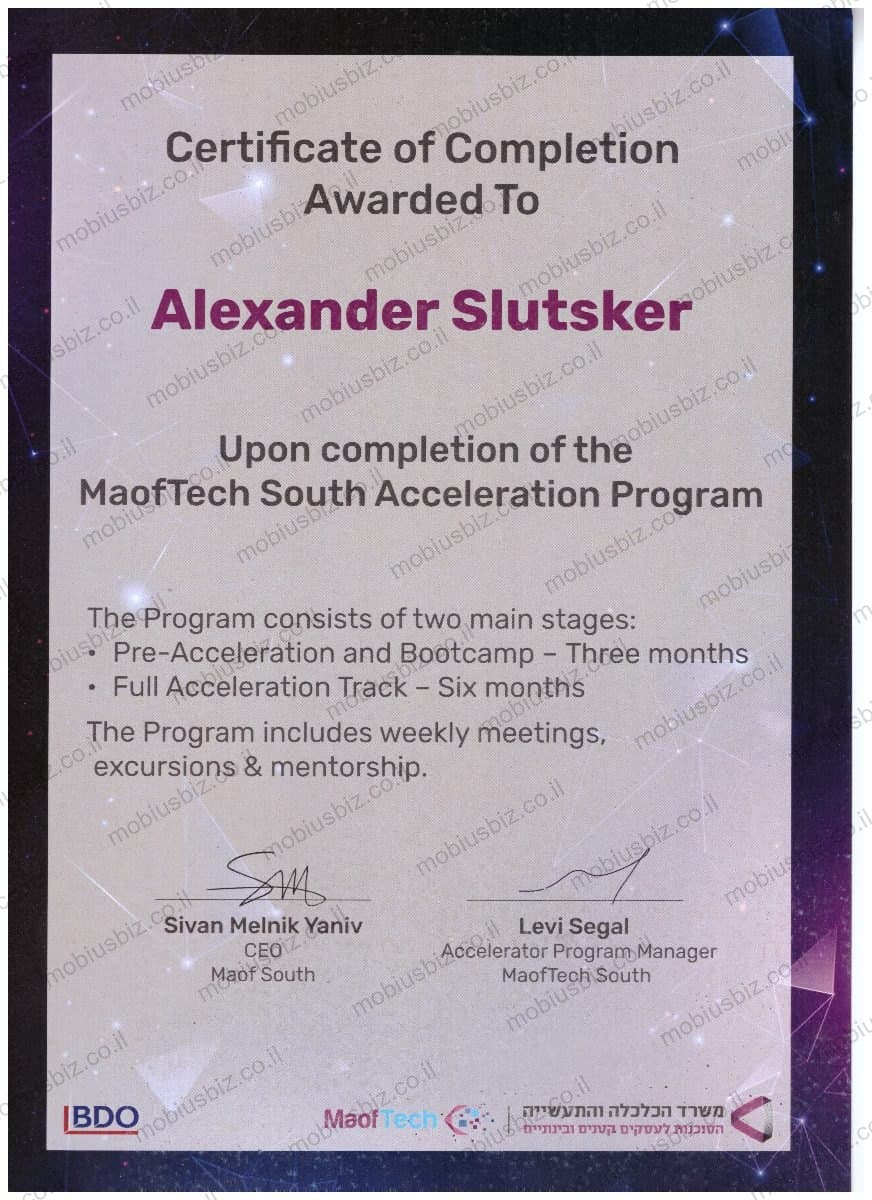
Acceleration program, MaofTech South

Business consultants course

Adaptive project management, INT college

Business, Marketing, Operations & Financial Consultant
Mobius
Alexander Slutsker
9+Years of experience in business consulting
I help entrepreneurs, self-employed people, small businesses and startups understand their own numbers, choose what to do first and grow from there.
Book a Free Call+972 055-248-6151. Better on WhatsApp: I am in meetings most of the day and answer as soon as I am free. Other ways to reach me
We can talk in English, Hebrew or Russian.