Business Diagnosis: Find the Real Constraint
Business diagnosis for owners and founders: separate symptoms from root causes, find the one constraint that holds you back, and turn it into a short plan.
What is a bottleneck
A bottleneck is the slowest step in a process, the one that sets how much the whole business can deliver.
Illustration
The idea in one picture
Business diagnosis is how you find what is really holding a business back. It measures the gap between the business you have and the business you are trying to build, and it looks for the root cause behind the problems you feel every day.
Owners usually feel symptoms first: not enough cash, weak sales, an overloaded team, slow delivery, or marketing that looks busy but brings little. The danger is fixing the symptom before you find the constraint, the bottleneck (the step that slows everything else) that keeps creating it.
Define the desired state first
A diagnosis starts with the goal. What should be better?
The answer may be more profit, steadier cash, less dependence on the owner, faster delivery, better customers, a higher conversion rate (the share of interested people who end up buying), or a team that can work without asking for approval all the time.
Without a desired state, every problem feels equally important. With one, the diagnosis has a direction.
Map the current state honestly
Next, map what is actually happening. Look at revenue, gross margin (the profit left after direct costs), cash flow, where customers come from, how sales are followed up, how the work is delivered, who owns which task, how much still waits for the founder, and which numbers the owner actually receives.
This is where many businesses discover that they do not yet have enough reliable data for a large strategy project. That is not a failure. It is a useful finding.
Separate symptoms from root causes
A cash problem may be caused by slow collection, low margin, the wrong price, owner withdrawals, inventory, debt, or too much income from one or two customers. A marketing problem may be caused by targeting that is too broad, a weak offer, slow follow-up, or a sales process that loses people after the proposal.
The right question is not "what hurts?" It is "what keeps creating the thing that hurts?" A simple way to dig is the 5 Whys (asking why again and again until you reach the cause): cash is short, why? Clients pay late. Why? Nobody follows up on invoices. Why? No one owns that task.
Turn gaps into an action plan
A shallow diagnosis produces a long list of recommendations. A useful one ranks the gaps by impact and urgency, then turns them into actions, each with a person responsible and a number to watch.
For a first stage, three actions are often enough, chosen from a short menu: restore the key numbers, fix one leak in sales follow-up, stop one low-margin package, give one process one owner, track one number every week.
That is how diagnosis becomes execution.
If the gap is strategic, read business plan strategy session. If the gap is financial, read financial KPIs. If the gap is between marketing and sales, read marketing vs sales.
Turning the gaps into a few clear choices, and carrying them out, is the work of strategic business consulting.
If you want to find out what is really holding your business back, talk it through with me.
The content on this blog is general information only and is not a recommendation to act. It is not business, legal, tax, or financial advice. Before making any decision, consult a qualified professional, such as an accountant, a lawyer, or a business advisor, about your specific situation.
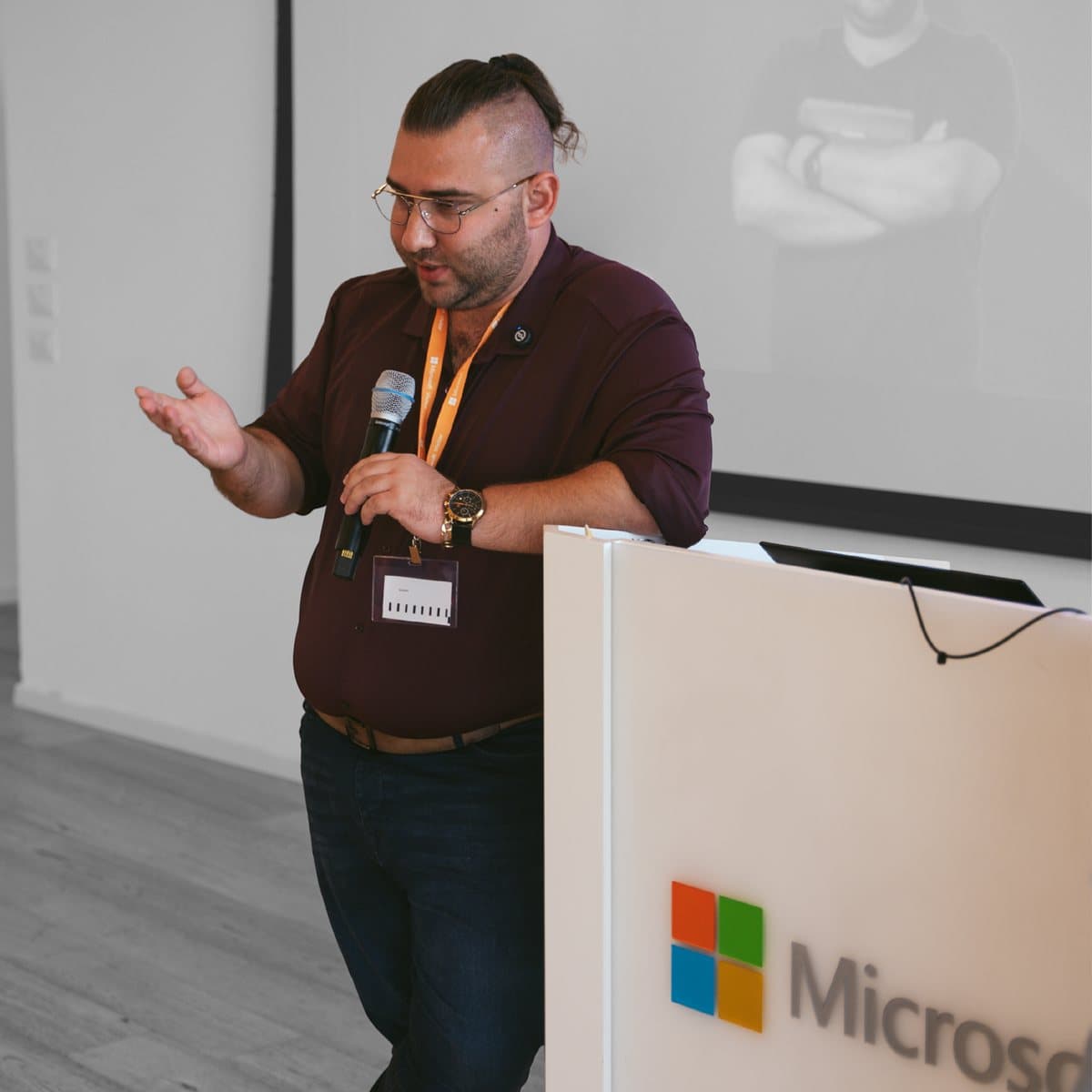
Speaking at Microsoft

Meeting with international teams, as part of work with a startup
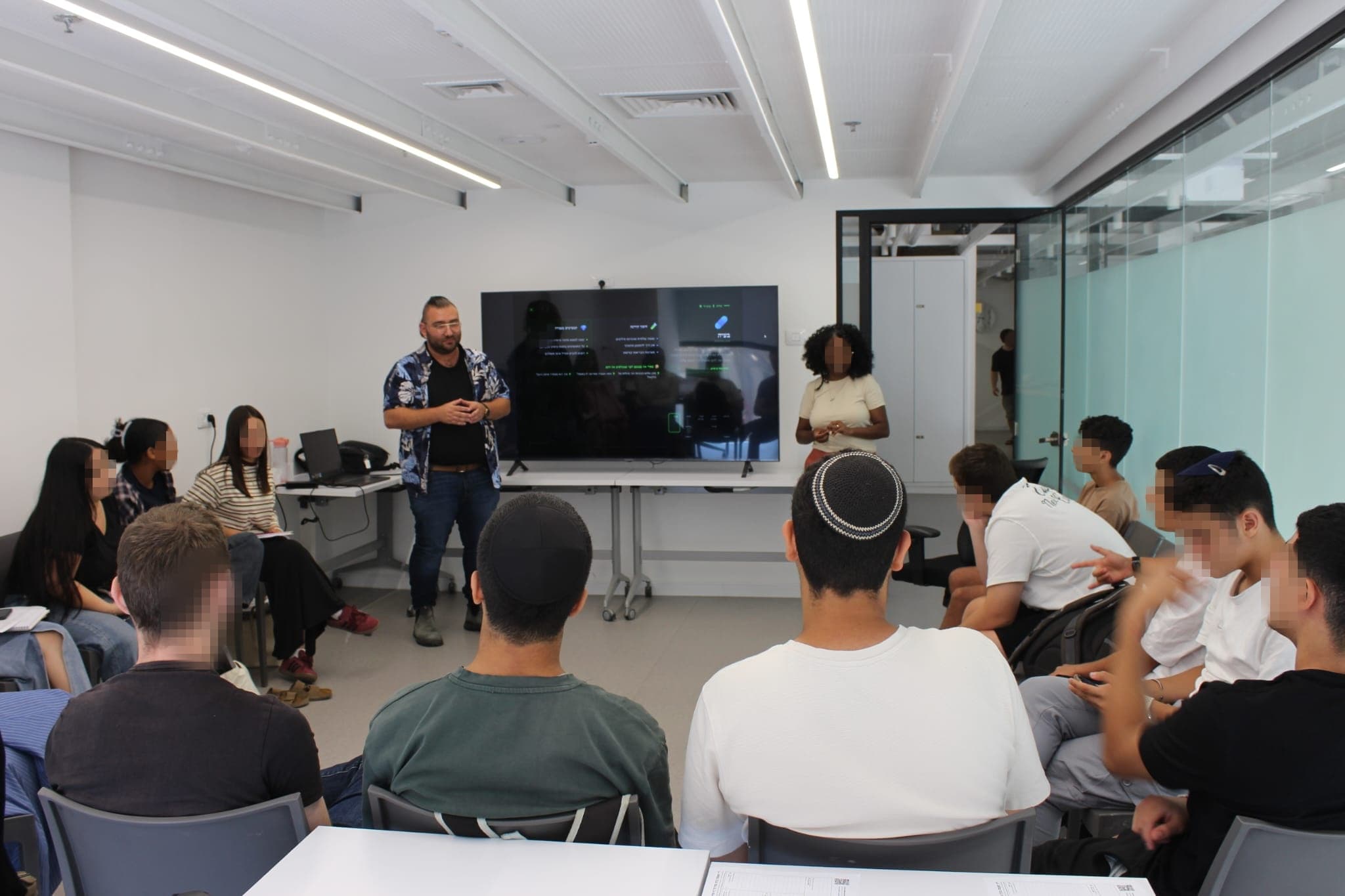
Teenovation, Meital centre Sderot
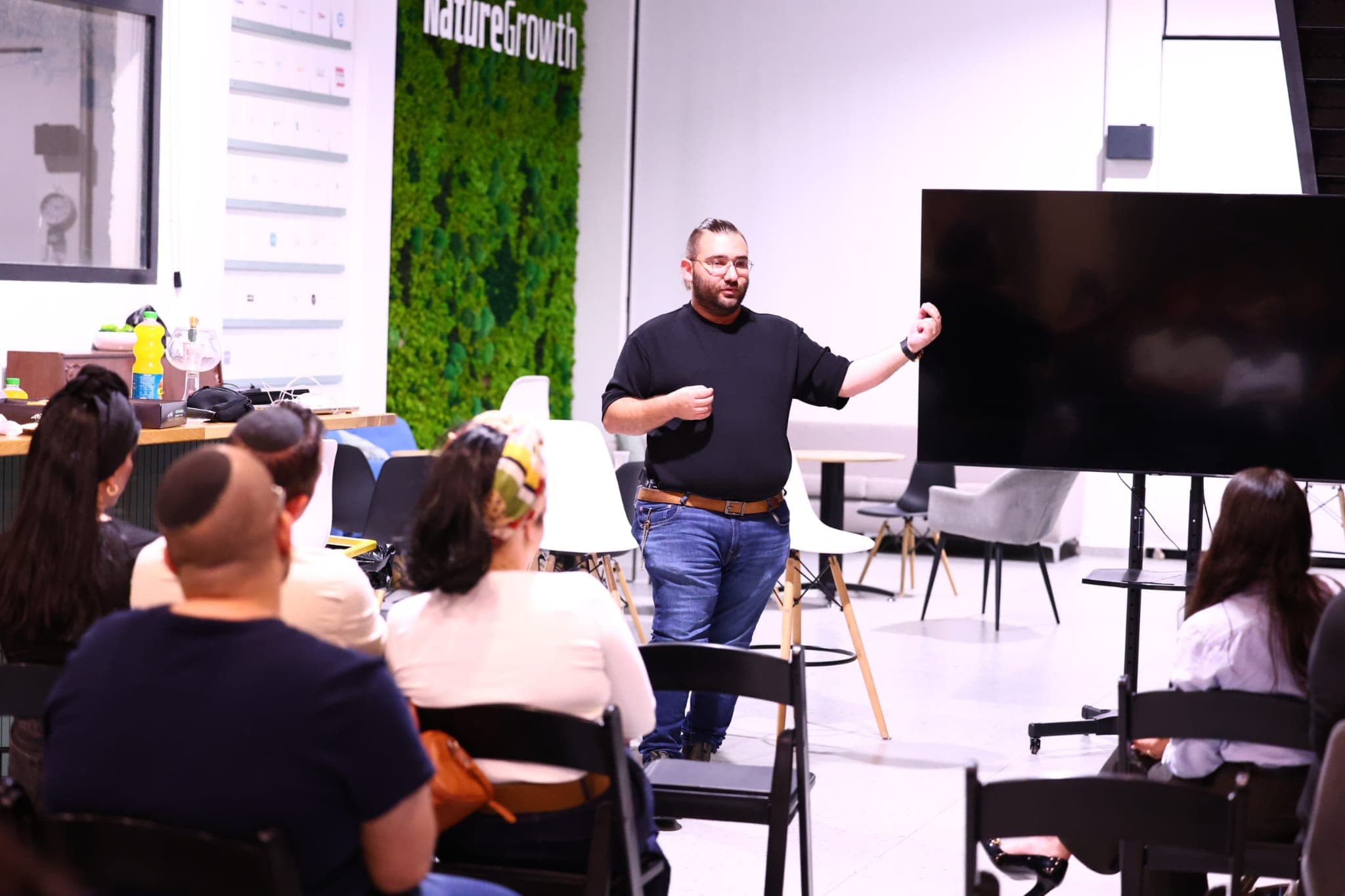
Entrepreneurs session, Sderot
I have worked with
- Google for Startups
- House of Business, Sderot Municipality
- Microsoft Reactor
- GameReady
- Eclipse Capital
- SderoTech
- IUCEL
- Resilience & Health Innovation Hub
- International Resilience Institute of Sderot


















- Google for Startups
- House of Business, Sderot Municipality
- Microsoft Reactor
- GameReady
- Eclipse Capital
- SderoTech
- IUCEL
- Resilience & Health Innovation Hub
- International Resilience Institute of Sderot
What Clients Say
From different fields, at different stages of business
Dan Manto
Eclipse Capital
Real Estate Investment and Finance, USA
Arty McLabin
GameReady
Game Development Education and Outsourcing, International

Anna
Beautician
After I finished a cosmetology course at a leading company, I was confused. I didn't know how to open a business, what to sell from home, or how to bring in clients. Since I reached out to Mobius, everything has changed. We built an organized plan with clear steps and no unnecessary risks. Today I see results, and I'm growing and developing every month.

Mark
Massage therapist, Gan Yavne
When I finished a massage course, I imagined a different world. I found out it's a hard field, and financial stability isn't easy to find. When I came to Mobius, something changed. We started an organized process and built a business plan. Without Mobius? I probably would have given up. Today I believe in myself and in my own path.
And the paperwork, for anyone who wants to see that too.

Certificate of appreciation, Sderot municipality

Certificate of honor, Teenovation 2026

Directors and officeholders course, SRI Campus
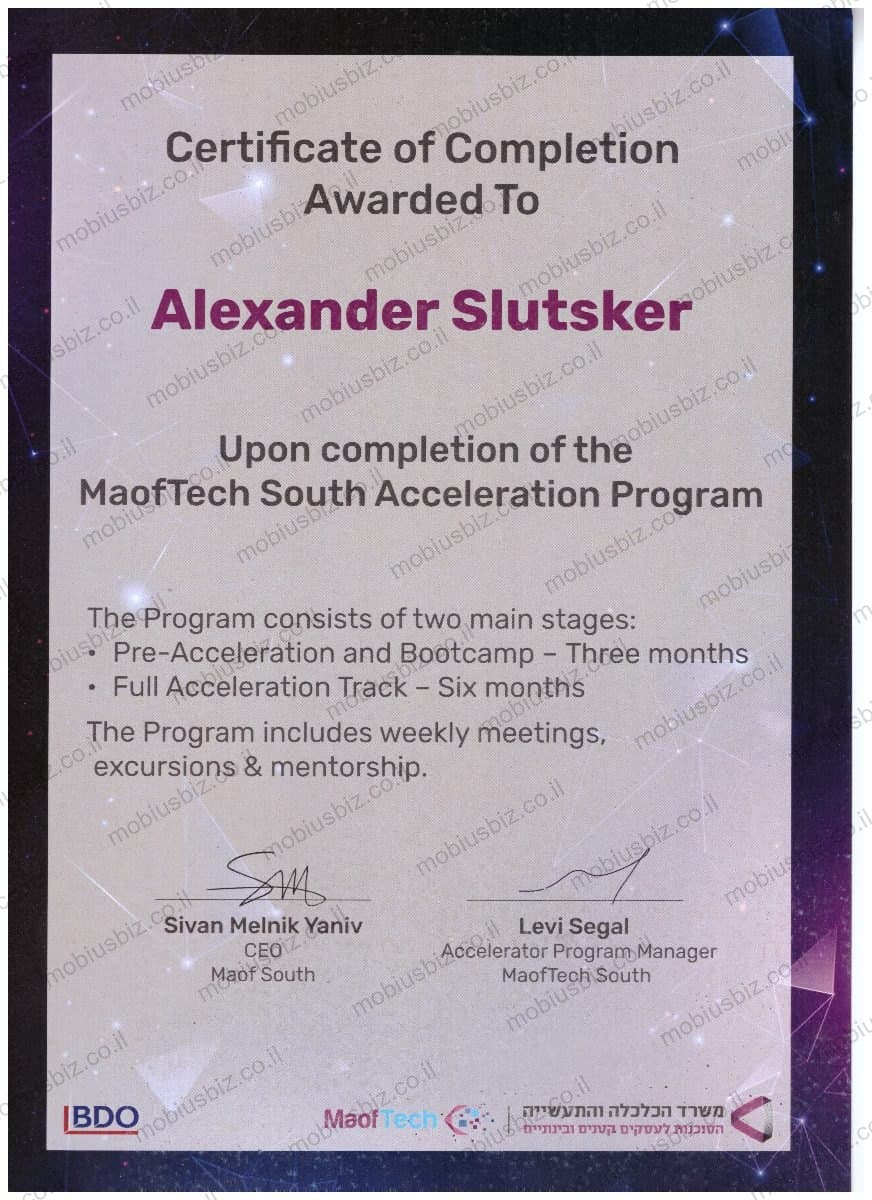
Acceleration program, MaofTech South

Business consultants course

Adaptive project management, INT college

Business, Marketing, Operations & Financial Consultant
Mobius
Alexander Slutsker
9+Years of experience in business consulting
I help entrepreneurs, self-employed people, small businesses and startups understand their own numbers, choose what to do first and grow from there.
Book a Free Call+972 055-248-6151. Better on WhatsApp: I am in meetings most of the day and answer as soon as I am free. Other ways to reach me
We can talk in English, Hebrew or Russian.