Why Hire a Business Consultant: Real ROI
Why hire a business consultant: decide if the work will change a real result, in revenue, margin, cash flow, time saved, risk avoided and what gets implemented.
Consultant ROI Calculator
See what a consulting engagement returns: the revenue upside, the risk you avoid, how fast the cost pays back, and the knowledge that stays with you.
Return over the engagement
-10%
Months to earn back the whole fee
20.0
Risk you avoid each year, not counted in the return: ₪25,000
Net gain over the engagement, after the fee
-₪9,000
Extra gross profit after 1 year
₪54,000
Extra gross profit after 3 years
₪162,000
Extra gross profit after 5 years
₪270,000
Extra gross profit after 10 years
₪540,000
The value beyond the numbers
- New knowledge and skills that stay in the business
- Processes and operations that keep working after the project
- Fewer costly mistakes
- Calmer, more confident decisions
- Hours back in your week
- A partner in your corner
What this means
An extra ₪7,500 of revenue a month leaves ₪4,500 of gross profit, which pays back the ₪90,000 cost in about 20.0 months, a -10% return over the 18-month engagement. You also avoid around ₪25,000 of risk every year, which the return does not count. If the improvement holds, the extra gross profit adds up to ₪540,000 over 10 years. Just as important, the knowledge, processes, and working habits stay with the business after the engagement ends.
The multi-year figures add up the extra gross profit only. They do not deduct the consulting fee, and they assume the improvement holds after the engagement ends. Treat them as potential, not a promise.
Want help turning this estimate into an execution plan?
Book a free call+972 055-248-6151. Other ways to reach me
This is a simplified, illustrative tool meant to give you a quick feel for the numbers. It is not professional advice. Real business decisions depend on many factors it does not account for, and all results are estimates only. Mobius Business Solutions accepts no responsibility for decisions or actions taken based on this tool.
A business consultant is worth hiring only when the problem is expensive enough and the work can change a measurable outcome. The goal is not a larger report. The goal is a better decision, a cleaner system, or a result the business actually implements.
The owner stays the one who decides. My part is to put the numbers, the options and the risks on the table in plain language, and to hand over the words behind them: cash flow (money moving in and out), margin (the profit left after costs), positioning (why a customer picks you and not the next option). Those words stop being someone else's vocabulary and start being yours, and an owner who speaks them decides better between our conversations, not only during them.
Which problems are worth bringing a consultant into
Consulting ROI (return on investment) starts with the cost of the problem.
The problem may be:
- Revenue stuck because the sales process loses people who were ready to buy
- Margin falling because the price does not cover what delivering the work really costs
- Cash pressure because customers pay late and suppliers are paid early
- Your day eaten by decisions the team could make without you
- Marketing money going to the wrong audience or a weak offer
- A launch, a hire, a supplier or a new market that turns expensive if it is done badly
A small problem usually needs one clear decision, and once you see the numbers behind it you can often make that decision yourself. The problems that need a second head are the ones that can cost you months of your time, tens or hundreds of thousands of shekels, a major customer, or a window that does not open twice.
The hidden cost of staying stuck
Owners weigh bringing someone in against doing nothing, as if doing nothing were free. It is not. It is simply a cost nobody invoices you for.
The hidden cost can include:
- Months of weak conversion, where the enquiries arrive and few of them buy
- Advertising money spent on the wrong problem
- Low-margin work that keeps filling the calendar
- Cash trapped with customers who pay slowly
- Decisions that wait because nobody owns the next step
- A bad hire, a bad location, a bad supplier term or a bad launch
- A salary the owner never takes, because the price never covered the risk they carry
None of these appear as a line in your accounts, which is exactly why they run for so long. A business that answers an enquiry two days late, or never comes back after sending a proposal, is dropping demand it has already paid to create. The money was spent, the interest arrived, and it leaked out on the way to a signature.
That is the point of measuring the return at all. Not to admire a report, but to see which of these leaks is the expensive one right now.
A short diagnosis changes the first decision
Many owners work hard on the wrong problem.
They increase marketing when the issue is follow-up. They hire when the issue is process. They discount when the issue is unclear value. They chase more revenue when slow-paying customers are the immediate danger.
A good consultant should begin by clarifying the business problem:
- What decision are we trying to make?
- Which number proves the problem exists?
- Which part of the way the business makes money is under pressure?
- What can be changed within the owner's budget and time?
- How will we know whether the work succeeded?
For more on diagnosis, read business diagnosis and finding gaps. If you are still deciding timing, compare this with when to hire a business consultant.
Where consulting ROI usually appears
Consulting return usually appears in several places, not only in new revenue.
Revenue:
- More enquiries turning into paying customers
- An offer that is easier to say yes to
- A shorter road from first enquiry to payment
- More customers who come back a second time
Margin:
- Prices that cover what the work really costs you
- Less unpaid work after the price is agreed
- Fewer hours and materials lost on the way
- More of the services that leave real profit behind
Cash flow:
- A deposit before the work starts
- Payment in stages instead of everything at the end
- Invoices collected closer to their due date
- A reserve that survives a genuinely slow month
Time:
- Fewer decisions waiting for the owner
- A written process the team can repeat without asking
- Less work done twice
- Meetings on a rhythm instead of in a panic
Mistakes that never happen:
- A launch held back until the assumptions are checked
- A hire the business did not need
- A supplier the business cannot afford to depend on
- Money kept out of a plan that does not add up even on paper
This is why a consultant's work on profitability should be measured in business outcomes, not in pages delivered.
How to define a focused piece of work
The scope, what the work covers and what it deliberately leaves out, should be narrow enough to work.
Define before anything starts:
- The one decision or number the work is about
- Where that number stands today
- The data someone has to pull, and who pulls it
- What the work includes, and what it does not
- What the owner has to do, and by when
- How often you meet, and when you check the change happened
- What success looks like as a number
A wide scope is tempting and it is usually the wrong start. Build a full growth strategy on numbers nobody trusts and you get confident recommendations standing on guesses. If the business cannot yet say which services make money, or where its customers came from, the first piece of work is a short diagnosis. Rebuild the main numbers, sort the services by what each one really leaves behind, find where the customers actually come from, and put together a simple forecast of the cash going in and out.
That is not a smaller version of the work. It is the part that makes everything after it worth doing, and it stays yours.
How to use the Consultant ROI tool
The tool above is a way to think, not a promise. Put in conservative numbers, the ones you would defend to your accountant, then ask:
- What would have to be true for this return to happen?
- Which improvement can actually be measured?
- Who will implement the change?
- How long before the result appears?
- What happens if the improvement is half as large?
- What risk or waste is the work meant to reduce?
The tool is useful because it forces the conversation into numbers. It cannot prove that the return will arrive. What you type in matters more than the percentage it shows.
What makes the work land, and what holds it back
The same work produces a very different result depending on what is in place when it starts.
It lands when:
- You can name the decision that is stuck
- There is a number that shows the problem is real
- Someone in the business has room in the week to carry out the change
- You want the assumption tested, not confirmed
- The result is defined before anything begins
It stalls when the opposite is true, and the honest move then is to start smaller. A short diagnosis that rebuilds the numbers and names the real problem is a small first step, and it turns a vague unease into a decision you can act on.
If you are comparing consultant types, read how to choose a business consultant. If you want the broader argument for outside perspective, read why every business needs a consultant.
The right next step
The skeptical owner usually asks: how do I know this will produce a result and not only a presentation?
The answer is to agree what the work covers and how it will be measured, before it starts. If the problem is not clear enough for that yet, a short diagnosis is the first step. You can also read what people who have worked with me say in the recommendations further down this page.
With me, consulting for small business owners usually opens with that short diagnosis.
If you want to work out what the right next step is for your business, talk it through with me. The first question is not whether consulting sounds useful in general. The first question is which result would make it worth doing in your business, and I would rather answer that one together than hand you a recommendation you did not ask for.
The content on this blog is general information only and is not a recommendation to act. It is not business, legal, tax, or financial advice. Before making any decision, consult a qualified professional, such as an accountant, a lawyer, or a business advisor, about your specific situation.
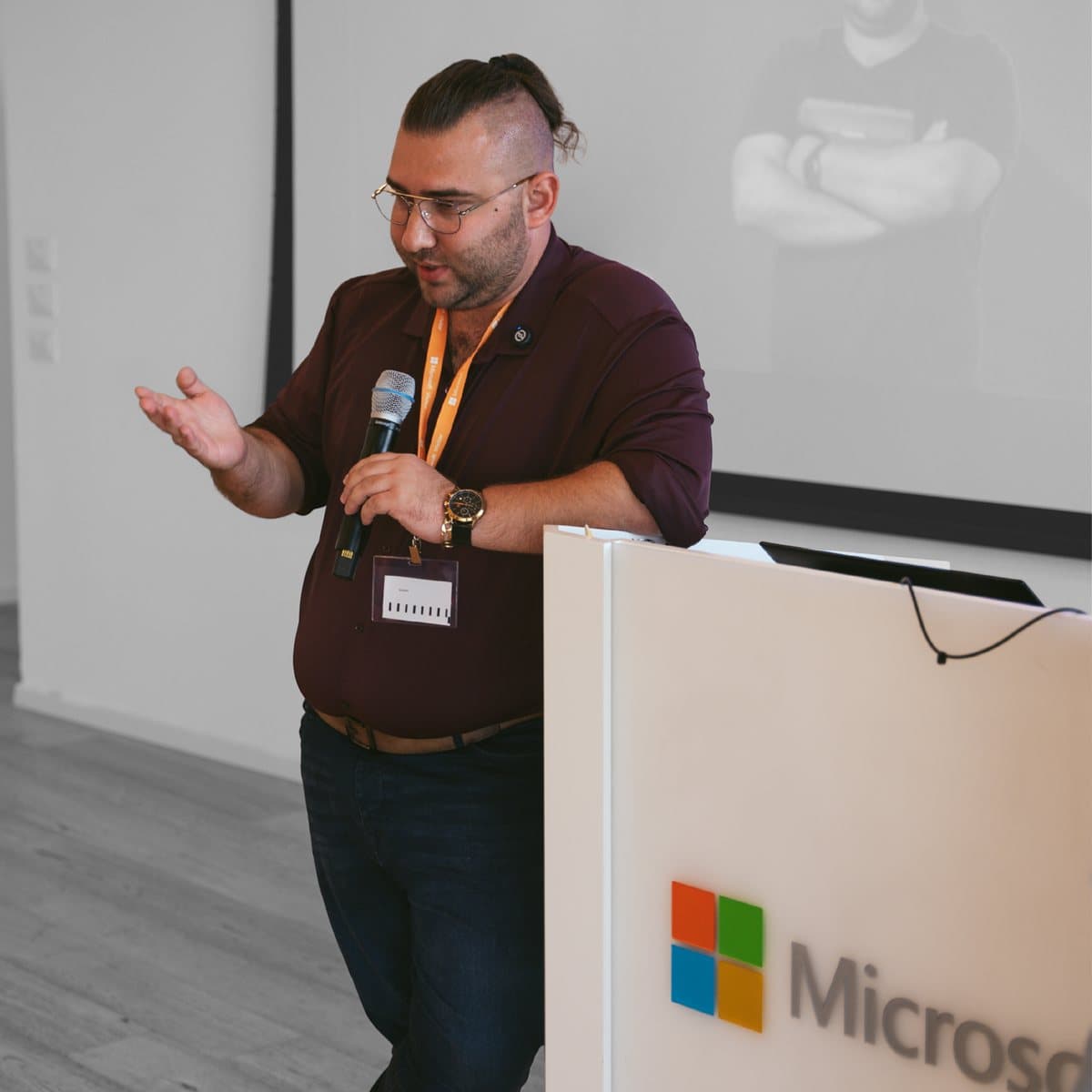
Speaking at Microsoft

Meeting with international teams, as part of work with a startup
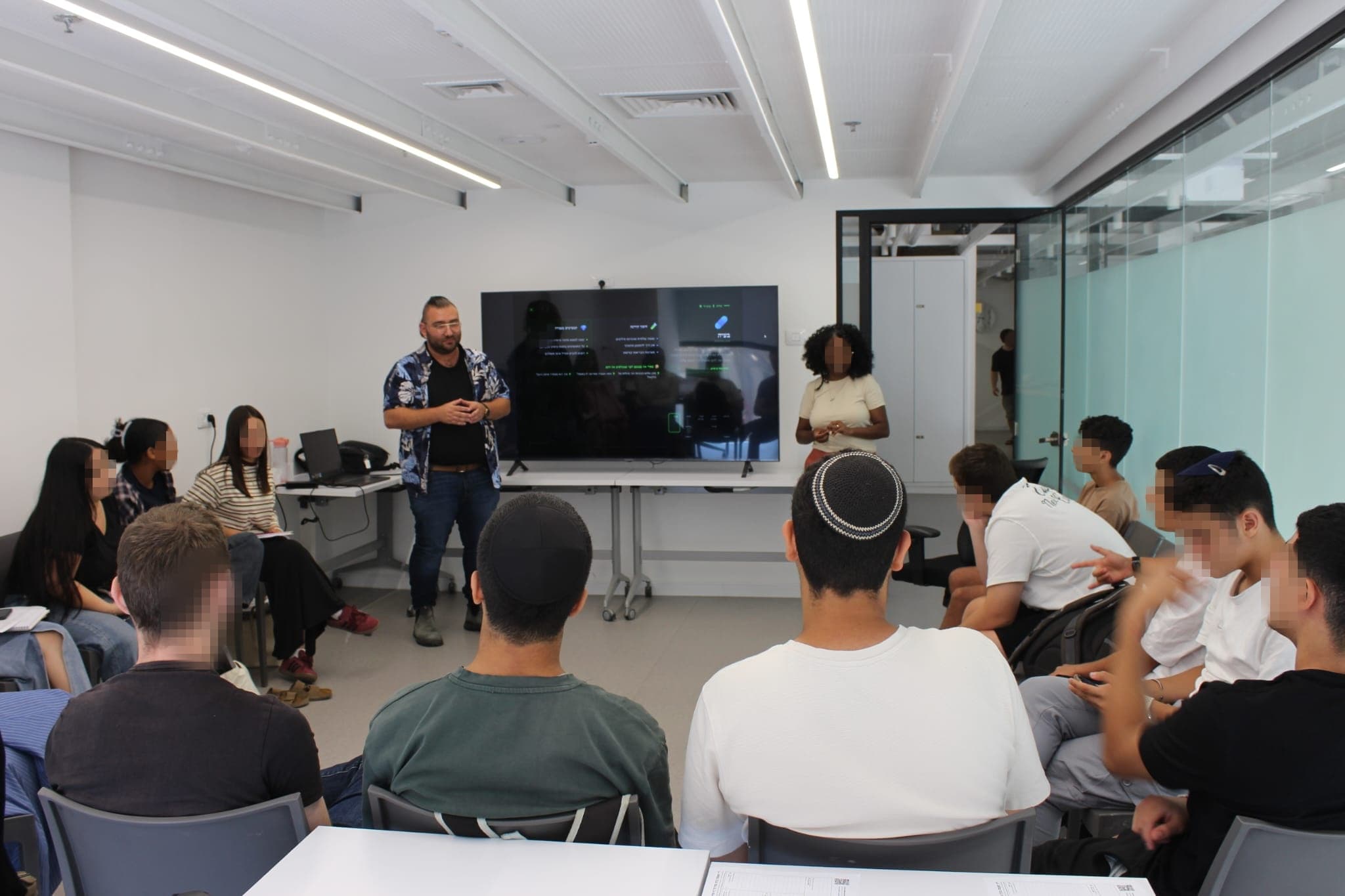
Teenovation, Meital centre Sderot
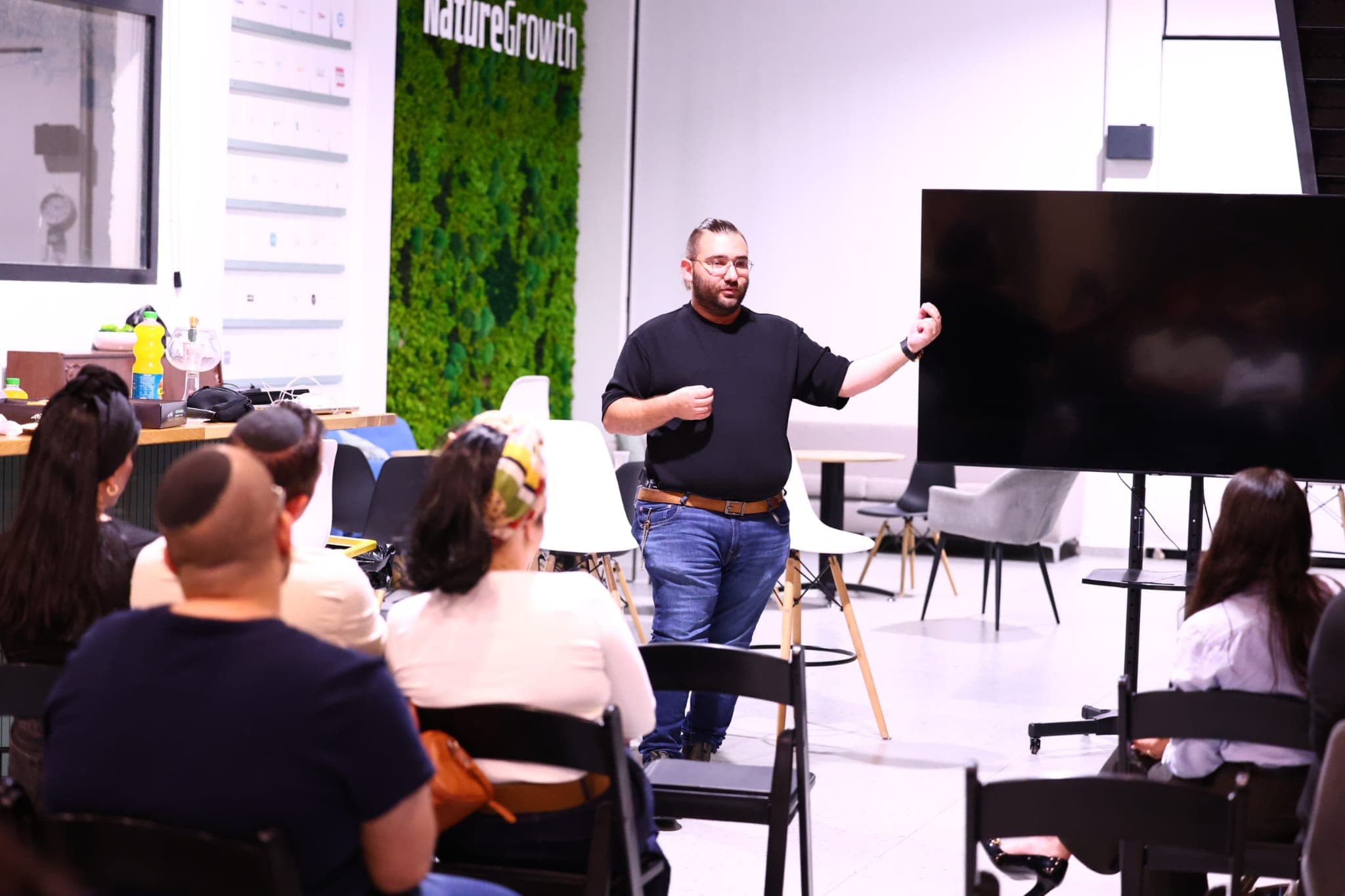
Entrepreneurs session, Sderot
I have worked with
- Google for Startups
- House of Business, Sderot Municipality
- Microsoft Reactor
- GameReady
- Eclipse Capital
- SderoTech
- IUCEL
- Resilience & Health Innovation Hub
- International Resilience Institute of Sderot


















- Google for Startups
- House of Business, Sderot Municipality
- Microsoft Reactor
- GameReady
- Eclipse Capital
- SderoTech
- IUCEL
- Resilience & Health Innovation Hub
- International Resilience Institute of Sderot
What Clients Say
From different fields, at different stages of business
Dan Manto
Eclipse Capital
Real Estate Investment and Finance, USA
Arty McLabin
GameReady
Game Development Education and Outsourcing, International

Anna
Beautician
After I finished a cosmetology course at a leading company, I was confused. I didn't know how to open a business, what to sell from home, or how to bring in clients. Since I reached out to Mobius, everything has changed. We built an organized plan with clear steps and no unnecessary risks. Today I see results, and I'm growing and developing every month.

Mark
Massage therapist, Gan Yavne
When I finished a massage course, I imagined a different world. I found out it's a hard field, and financial stability isn't easy to find. When I came to Mobius, something changed. We started an organized process and built a business plan. Without Mobius? I probably would have given up. Today I believe in myself and in my own path.
And the paperwork, for anyone who wants to see that too.

Certificate of appreciation, Sderot municipality

Certificate of honor, Teenovation 2026

Directors and officeholders course, SRI Campus
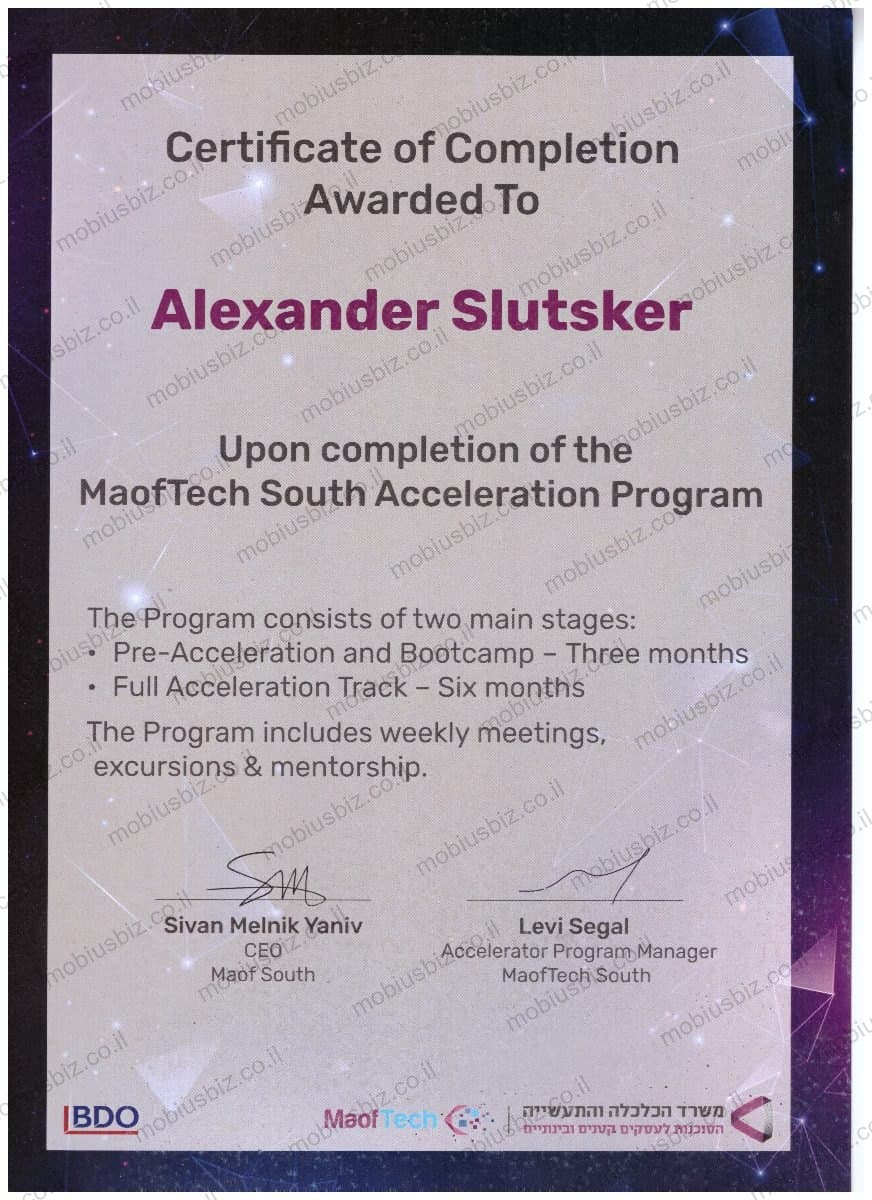
Acceleration program, MaofTech South

Business consultants course

Adaptive project management, INT college

Business, Marketing, Operations & Financial Consultant
Mobius
Alexander Slutsker
9+Years of experience in business consulting
I help entrepreneurs, self-employed people, small businesses and startups understand their own numbers, choose what to do first and grow from there.
Book a Free Call+972 055-248-6151. Better on WhatsApp: I am in meetings most of the day and answer as soon as I am free. Other ways to reach me
We can talk in English, Hebrew or Russian.