How to Choose a Business Consultant Who Will Help You Grow
How to choose a business consultant worth recommending: diagnosis, fit, evidence, a clear way of working and the red flags, rather than titles alone.
Consultant Fit Scorecard
Rate six statements about a consultant you are considering and get a verdict, plus the questions to ask on the first call.
1. They diagnosed before they recommended anything
2. They talk in your numbers, not in generic frameworks
3. They gave a realistic timeline, not a magic one
4. You understand exactly what the work gives you as it goes
5. They named risks and what could go wrong
6. Recommendations and reviews from businesses like yours hold up
1 = not at all, 5 = clearly yes.
Promising, dig deeper first
- How will you diagnose my business before proposing a plan?
- Which of my numbers will you want to see first?
- What can I realistically expect at the start, in my field?
Prefer to talk it through directly?
Book a free call+972 055-248-6151. Other ways to reach me
This is a simplified, illustrative tool meant to give you a quick feel for the numbers. It is not professional advice. Real business decisions depend on many factors it does not account for, and all results are estimates only. Mobius Business Solutions accepts no responsibility for decisions or actions taken based on this tool.
How do you choose a business consultant? Not by the most impressive title. A business consultant worth recommending is a person who can diagnose your business, explain the logic, help you act and reduce risk while you grow.
The wrong choice hurts the business itself: a wrong plan, lost time, weak execution or a team that follows advice that was never built for your reality.
Start with the problem, not the consultant
Before comparing consultants, write down the decision you need help with. Are you stuck with profit, cash flow, team structure, marketing, sales, pricing, operations, expansion or owner burnout?
This matters because different problems need different diagnostic tools. If you are not sure whether now is the right time, read when to hire a business consultant. If the issue is broader company direction, read business consulting for companies. And if you are still deciding between a coach and a consultant, how a business coach differs from a business consultant shows which one your problem calls for.
Do not hire by title alone
I strongly disagree with choosing a consultant only because the title sounds impressive. A former executive from a large bank may be excellent for a large bank, but that does not prove fit for a small company that has to turn 100 shekels into 500, then 500 into 1,000, without corporate departments behind it.
Small-business consulting requires practical constraint thinking. The consultant must understand limited budgets, owner fatigue, marketing realities, cash timing, hiring risk and the fact that every recommendation uses resources the business may need elsewhere.
A large following online is not proof either. A consultant worth hiring should be able to explain the business theory, the evidence and the execution path.
Questions to ask before hiring
Use questions that reveal how the consultant thinks: how they measure success, which industries they know and how they handle resistance to their recommendations. That matters because consulting is not only analysis. It is also execution inside a real human system.
Ask:
- How do you diagnose a business before recommending action?
- What information do you need from us?
- Which numbers would you watch first?
- How do you decide whether the problem is strategy, finance, operations, marketing, sales or management?
- What have you built and run yourself?
- Which of these areas do you actually work in yourself?
- What will I have in hand after the first meeting?
- When would you tell a client not to hire you?
The answers should be clear. If the answer is "because that is how it works", that is a red flag (a reason to keep looking).
Check that the business can carry the plan
A good consultant plans work the business can carry. Ask how the plan fits the time, people and money the business has today.
If the business cannot fund the marketing channel, product work, hiring, tools or process change that the plan requires, the plan stays on paper. A good plan starts from what the business can act on now and makes room for the next step.
Through Mobius Business Solutions I work in practical, plain language with small businesses, people planning a business and owners who want to move from stress to structure, and part of the work is teaching the language of business along the way. If you want to know who I am and where I come from, read who is Alex Slutsker.
Test fit through diagnosis
A good first engagement should give you a clearer view of the business. You should understand the suspected root problem, what information is still missing, what action would come first and what risk must be managed.
Do not expect magic in one call. But do expect thinking that is specific to your business. Generic advice sounds smooth. Diagnosis sounds concrete.
How that first diagnosis works for a small business is laid out on the page for small business consulting in Israel.
If you want to compare the decision with other reasons for hiring help, read why hire a business consultant or talk it through with me. The right consultant does not only make you feel confident. The right consultant helps you make better decisions and act on them. What owners who have worked with me say is in the recommendations below the article.
The content on this blog is general information only and is not a recommendation to act. It is not business, legal, tax, or financial advice. Before making any decision, consult a qualified professional, such as an accountant, a lawyer, or a business advisor, about your specific situation.
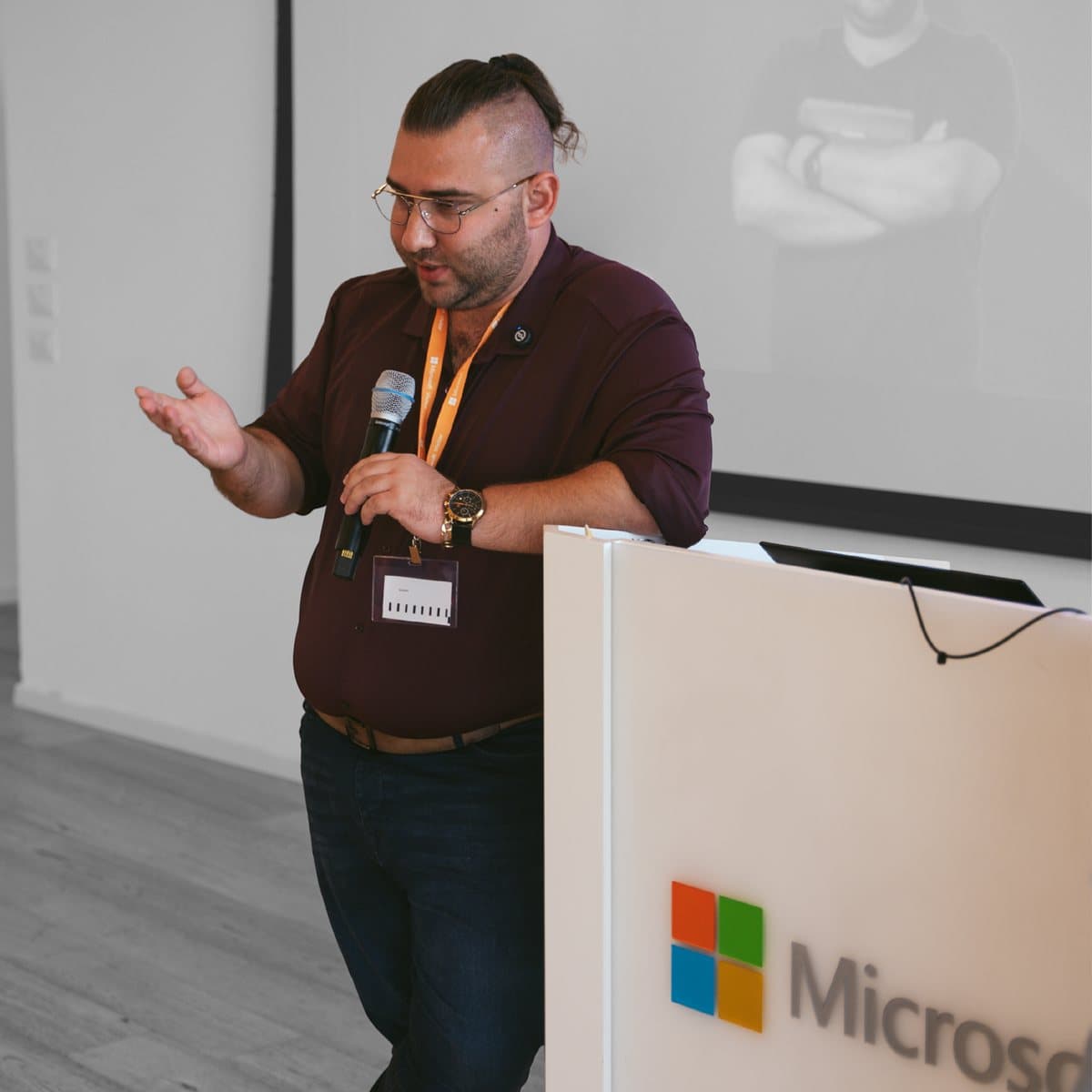
Speaking at Microsoft
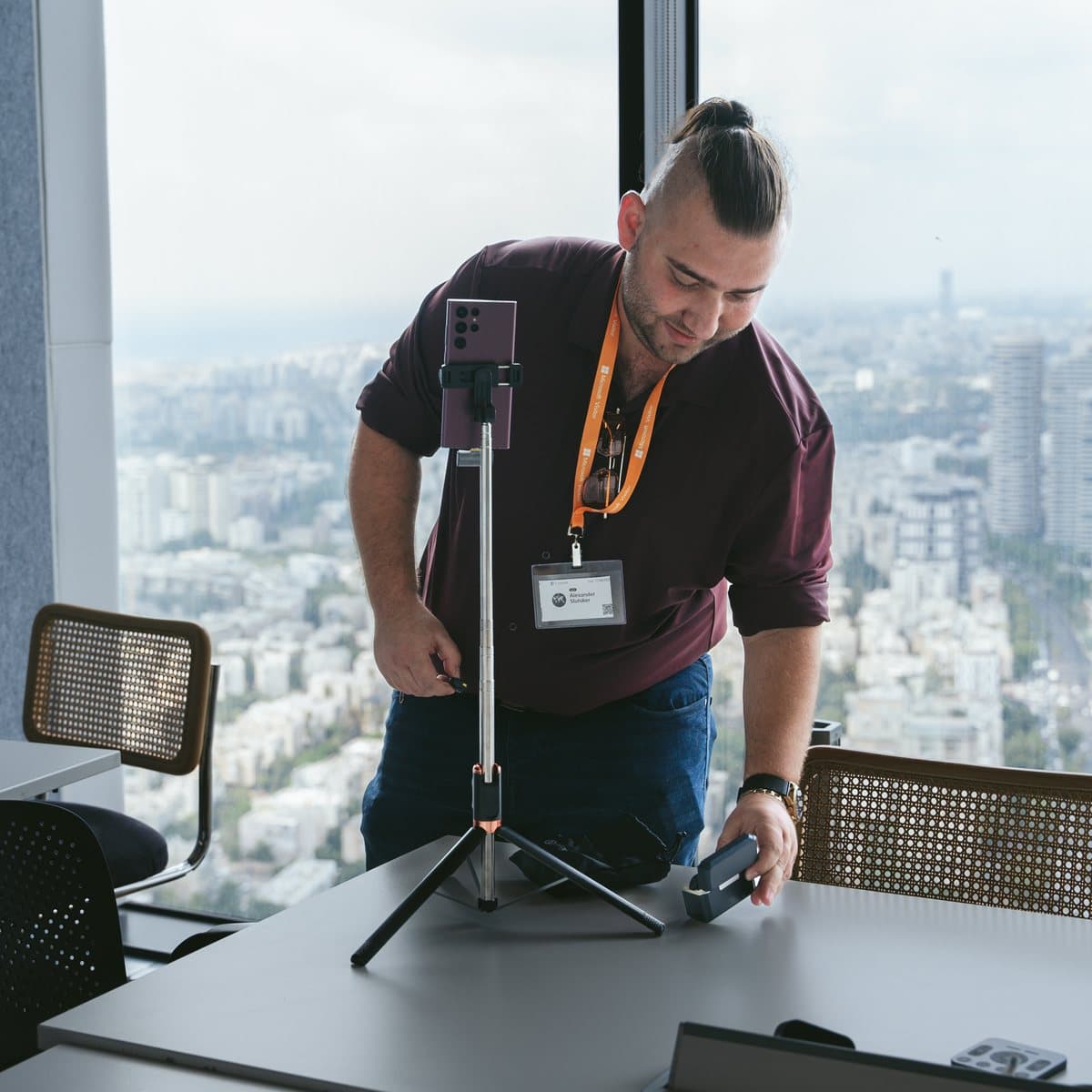
Meeting with international teams, as part of work with a startup
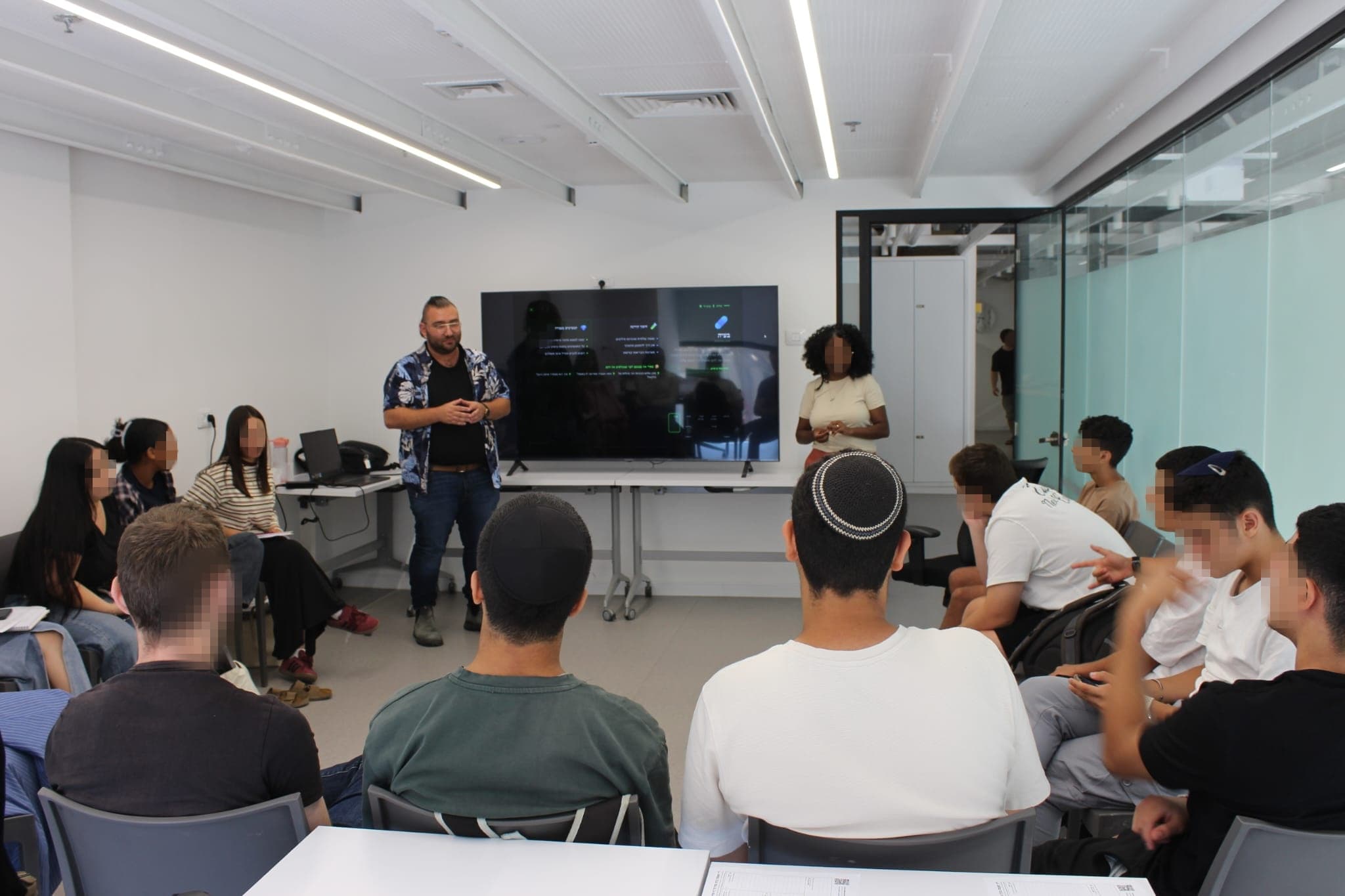
Teenovation, Meital centre Sderot
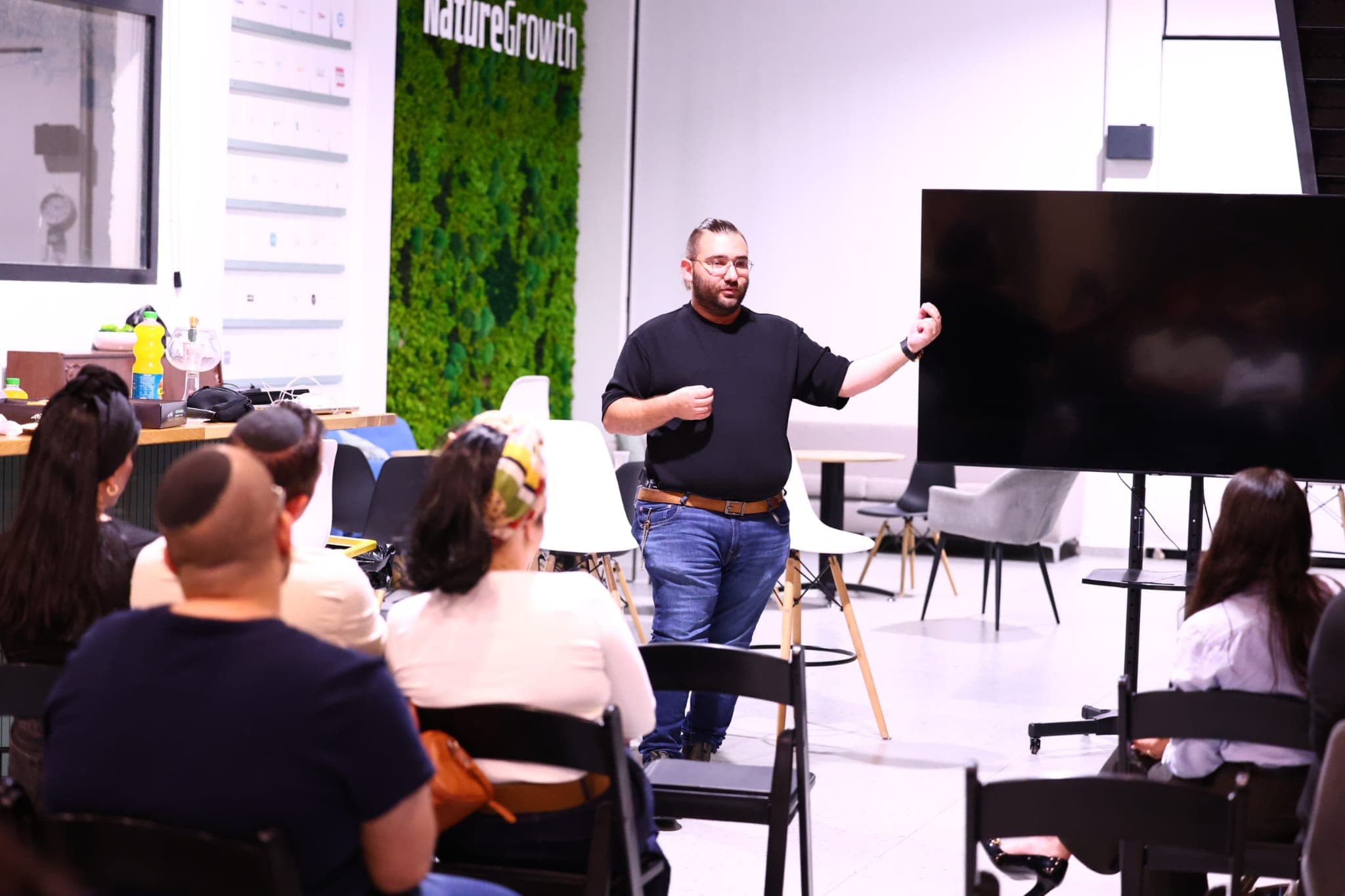
Entrepreneurs session, Sderot
I have worked with
- Google for Startups
- House of Business, Sderot Municipality
- Microsoft Reactor
- GameReady
- Eclipse Capital
- SderoTech
- IUCEL
- Resilience & Health Innovation Hub
- International Resilience Institute of Sderot

















- Google for Startups
- House of Business, Sderot Municipality
- Microsoft Reactor
- GameReady
- Eclipse Capital
- SderoTech
- IUCEL
- Resilience & Health Innovation Hub
- International Resilience Institute of Sderot
What Clients Say
From different fields, at different stages of business
Dan Manto
Eclipse Capital
Real Estate Investment and Finance, USA
Arty McLabin
GameReady
Game Development Education and Outsourcing, International

Anna
Beautician
After I finished a cosmetology course at a leading company, I was confused. I didn't know how to open a business, what to sell from home, or how to bring in clients. Since I reached out to Mobius, everything has changed. We built an organized plan with clear steps and no unnecessary risks. Today I see results, and I'm growing and developing every month.

Mark
Massage therapist, Gan Yavne
When I finished a massage course, I imagined a different world. I found out it's a hard field, and financial stability isn't easy to find. When I came to Mobius, something changed. We started an organized process and built a business plan. Without Mobius? I probably would have given up. Today I believe in myself and in my own path.
And the paperwork, for anyone who wants to see that too.

Certificate of appreciation, Sderot municipality

Certificate of honor, Teenovation 2026

Directors and officeholders course, SRI Campus
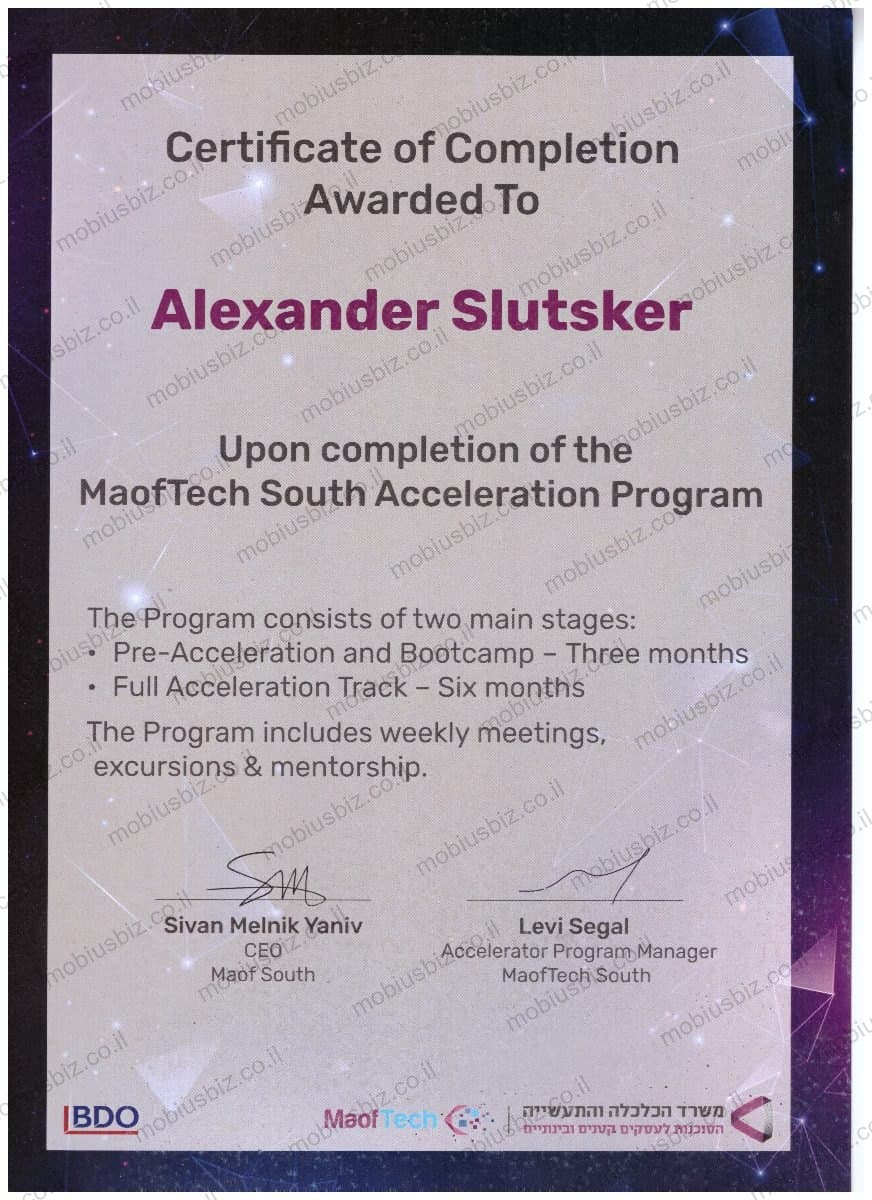
Acceleration program, MaofTech South
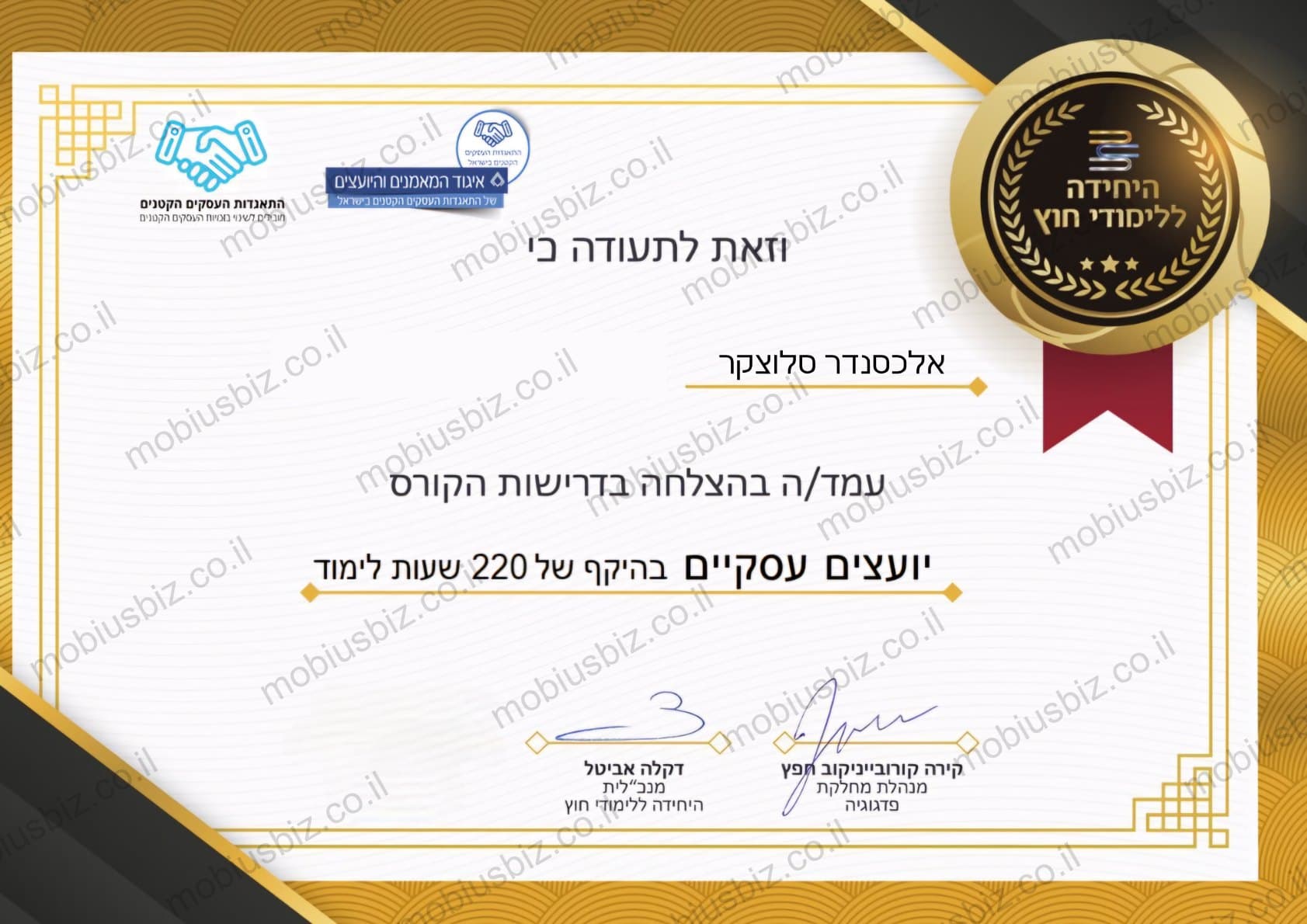
Business consultants course
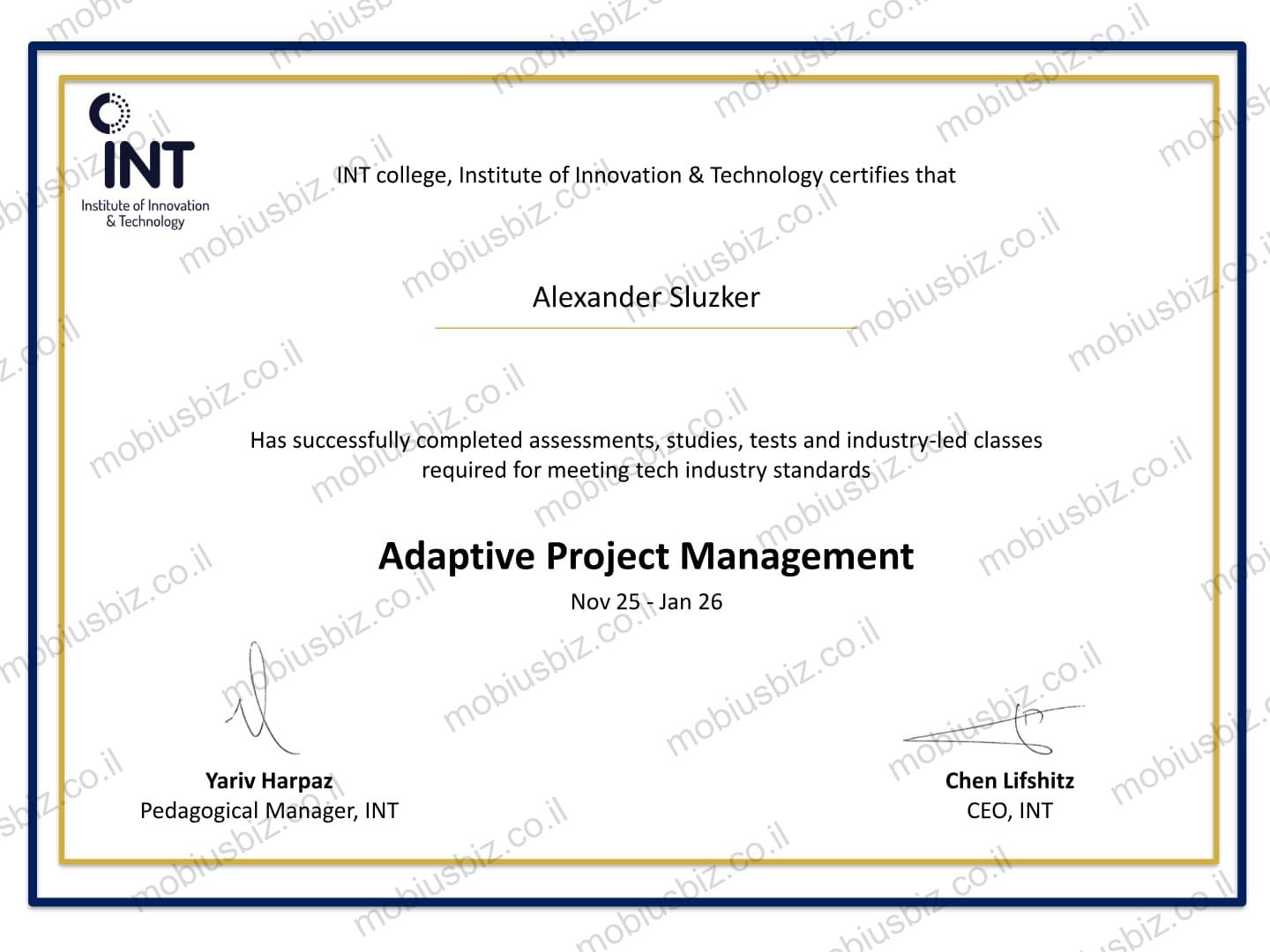
Adaptive project management, INT college
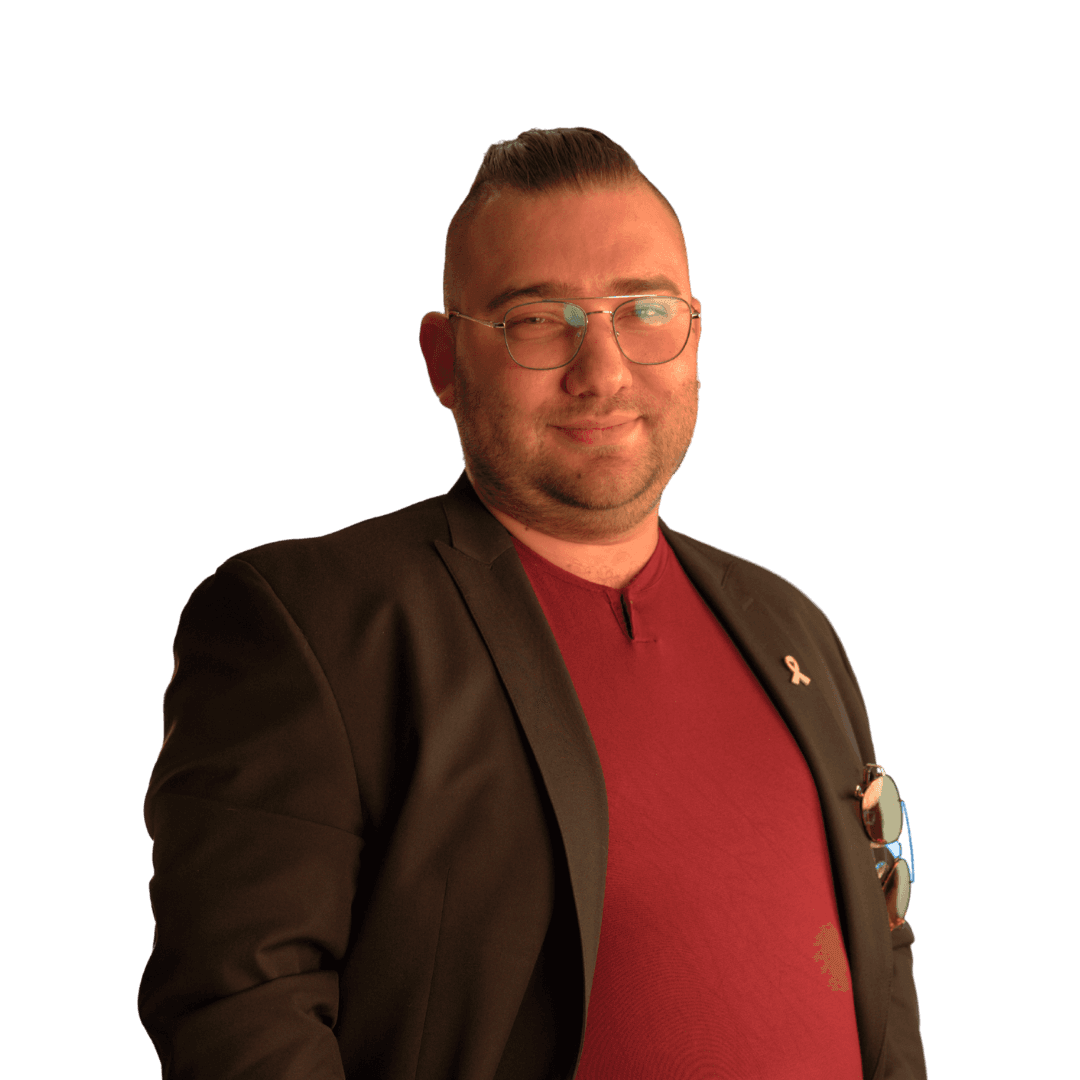
Business, Marketing, Operations & Financial Consultant
Mobius
Alexander Slutsker
9+Years of experience in business consulting
I help entrepreneurs, self-employed people, small businesses and startups understand their own numbers, choose what to do first and grow from there.
Book a Free Call+972 055-248-6151. Better on WhatsApp: I am in meetings most of the day and answer as soon as I am free. Other ways to reach me
We can talk in English, Hebrew or Russian.