Business Intelligence and Market Research
Facts about your market, your competitors and your customers, before you spend.
Business intelligence and competitor research are how you check before you decide. I research your competitors, your market and your customers, so the next decision about marketing, prices or a new offer rests on facts, not on a guess.
+972 055-248-6151. Better on WhatsApp: I am in meetings most of the day and answer as soon as I am free. Other ways to reach me
Does This Sound Familiar?
I'm about to spend on advertising or a new website, and I don't really know what my competitors do.
Sales dropped, and I can't tell whether it's the competitors, the price or the offer.
I think there is demand for my service, but I don't know how many people actually look for it.
Customers go to someone else, and nobody tells me why.
Sound familiar? The first conversation is free.
Book a Free CallWhat Clients Say
From different fields, at different stages of business
Dan Manto
Eclipse Capital
Real Estate Investment and Finance, USA
Arty McLabin
GameReady
Game Development Education and Outsourcing, International

Anna
Beautician
After I finished a cosmetology course at a leading company, I was confused. I didn't know how to open a business, what to sell from home, or how to bring in clients. Since I reached out to Mobius, everything has changed. We built an organized plan with clear steps and no unnecessary risks. Today I see results, and I'm growing and developing every month.

Mark
Massage therapist, Gan Yavne
When I finished a massage course, I imagined a different world. I found out it's a hard field, and financial stability isn't easy to find. When I came to Mobius, something changed. We started an organized process and built a business plan. Without Mobius? I probably would have given up. Today I believe in myself and in my own path.
What you get
Knowing the market before you spend
Before money goes into advertising, a website or a new offer, you know what the market already looks like.
Knowing why, before you react
When sales change, you learn whether it is the competitors, the price or the offer, before you change anything.
Findings that stay yours
What the research finds is yours to use inside the business, and it feeds the next decision.
Along the way you get the supporting and guiding materials the work needs, with clear instructions.
Simplified illustration
From one question to one decision
- Open information: ads, sites, published prices
- Interviews with customers
- Contact as an ordinary customer
- Your own data
Analysis
The sources read side by side and checked against each other
Findings
Each one marked as confirmed or not
The decision: a plan, a campaign, an offer or a price
The research starts with one business question. Four kinds of sources feed it: open information, interviews, contact with competitors as an ordinary customer and the business's own data. Read together they give findings, and the findings lead to one decision.
Simplified. Real research also checks how many people search for what you sell and in which months, reads the reviews in your field, and ranks the opportunities by effort against benefit.
mobiusbiz.co.il
I have worked with
- Google for Startups
- House of Business, Sderot Municipality
- Microsoft Reactor
- GameReady
- Eclipse Capital
- SderoTech
- IUCEL
- Resilience & Health Innovation Hub
- International Resilience Institute of Sderot


















- Google for Startups
- House of Business, Sderot Municipality
- Microsoft Reactor
- GameReady
- Eclipse Capital
- SderoTech
- IUCEL
- Resilience & Health Innovation Hub
- International Resilience Institute of Sderot
What the work can include
You do not need all of it. In the first conversation we choose together the parts your business needs.
- I find who you really compete with: the ones that come up when your customers search, and the ones you lose deals to.
- I look at what competitors promise, how they sell and what they advertise, from open information only: their ads, websites, offers and published prices.
- I contact competitors as an ordinary customer would, from a scenario you approve in advance.
- I check how many people search for what you sell, in which words and in which months.
- I talk with customers, your own and the ones who chose someone else, and read the reviews in your field.
- I read what your own data already says: where visitors come from, where they drop off and what is not measured at all.
- I show you where you can stand out, what nobody in your field is saying yet, with the opportunities ranked by effort against benefit.
- If you want, I keep following the competitors over time.
- I research in Hebrew, Russian and English, as your market needs.
- I mark every finding that could not be confirmed, so you know what you can rely on.
How the work goes
A free first conversation
We talk, see whether my work fits what your business needs, and I suggest the kind of work that suits you.
Defining the question
We put your business question into one sentence, choose the parts of the research that answer it, and you name the competitors you lose deals to.
The research
I start from what your own data already says, then move to the competitors in open information, to the market and the search demand, and to conversations with people when they are part of the plan.
Findings and decisions
I present what I found, each finding marked as confirmed or not, and we decide together what to do with it: a marketing plan, a campaign, a new offer or a price change.
Want to see how these steps would look for you? That is what the first conversation is for.
Book a Free Call9+ years of experience in business consulting
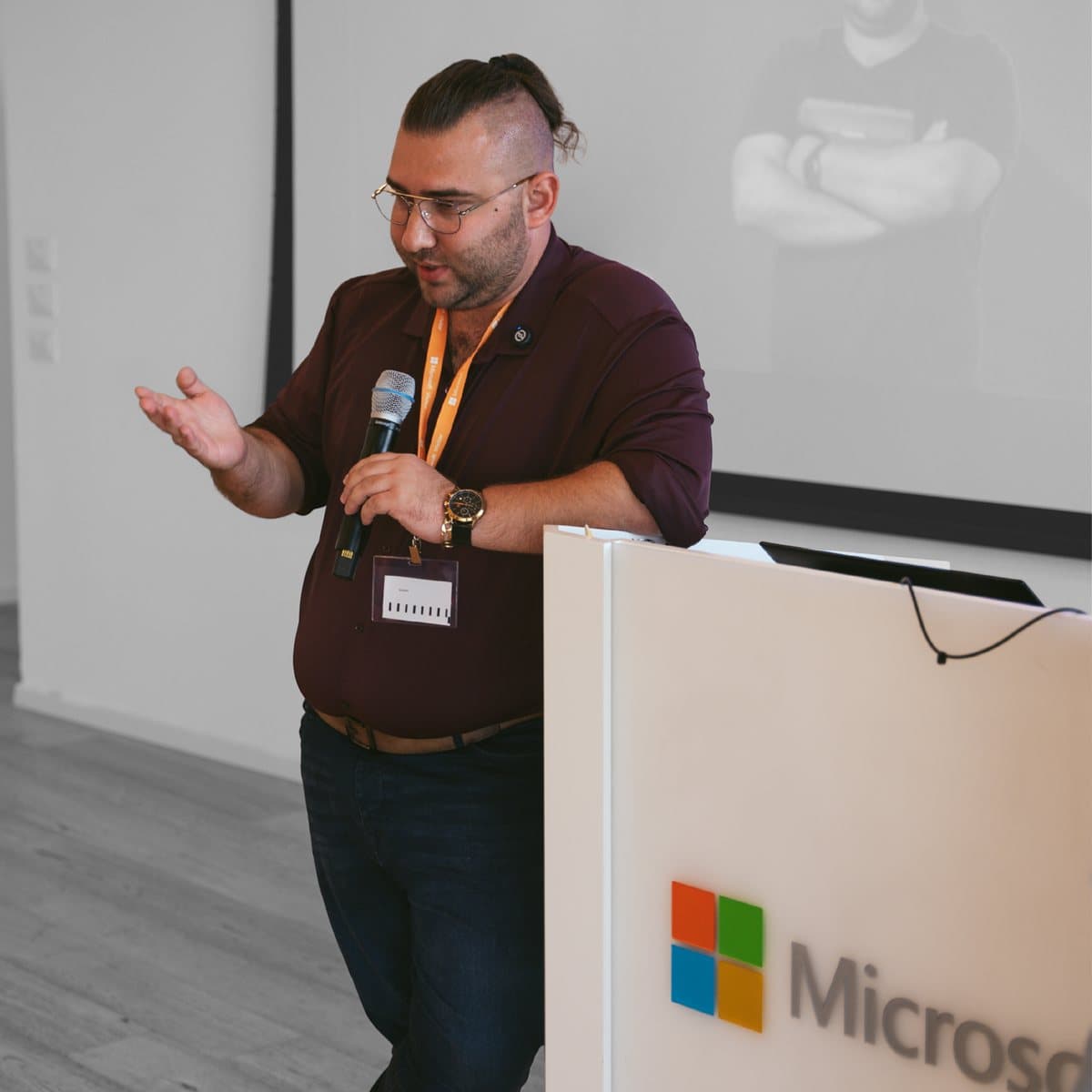
Speaking at Microsoft
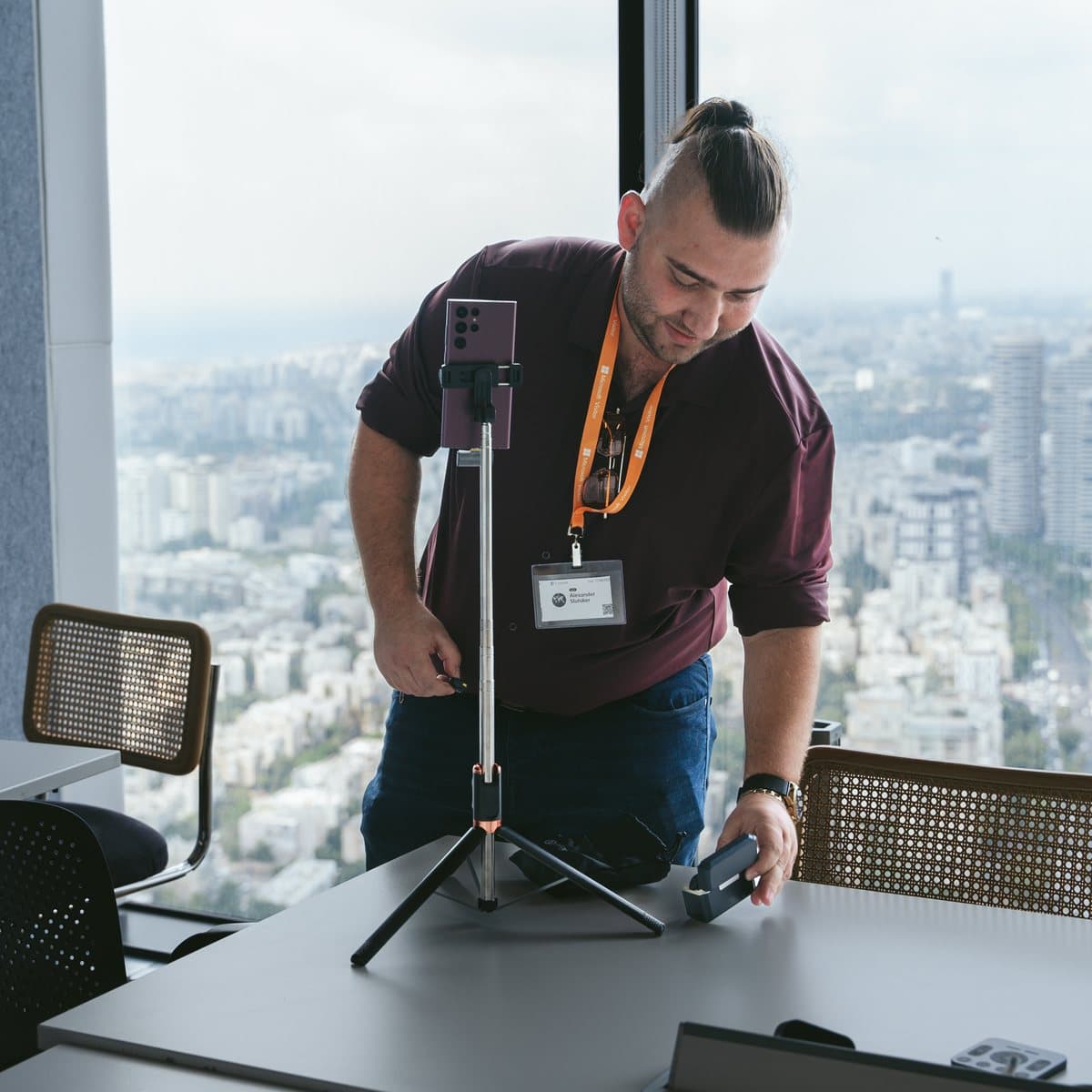
Meeting with international teams, as part of work with a startup
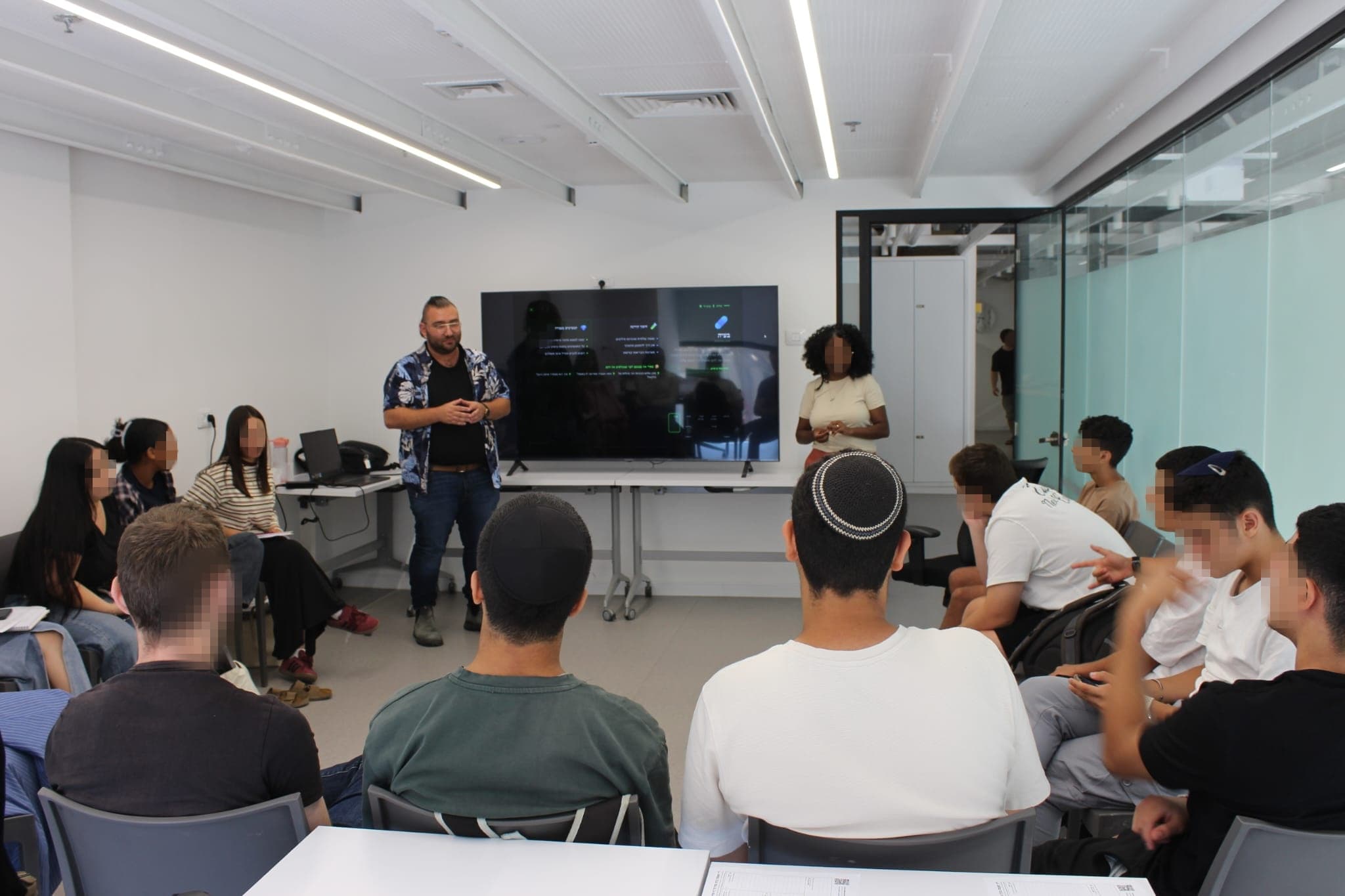
Teenovation, Meital centre Sderot
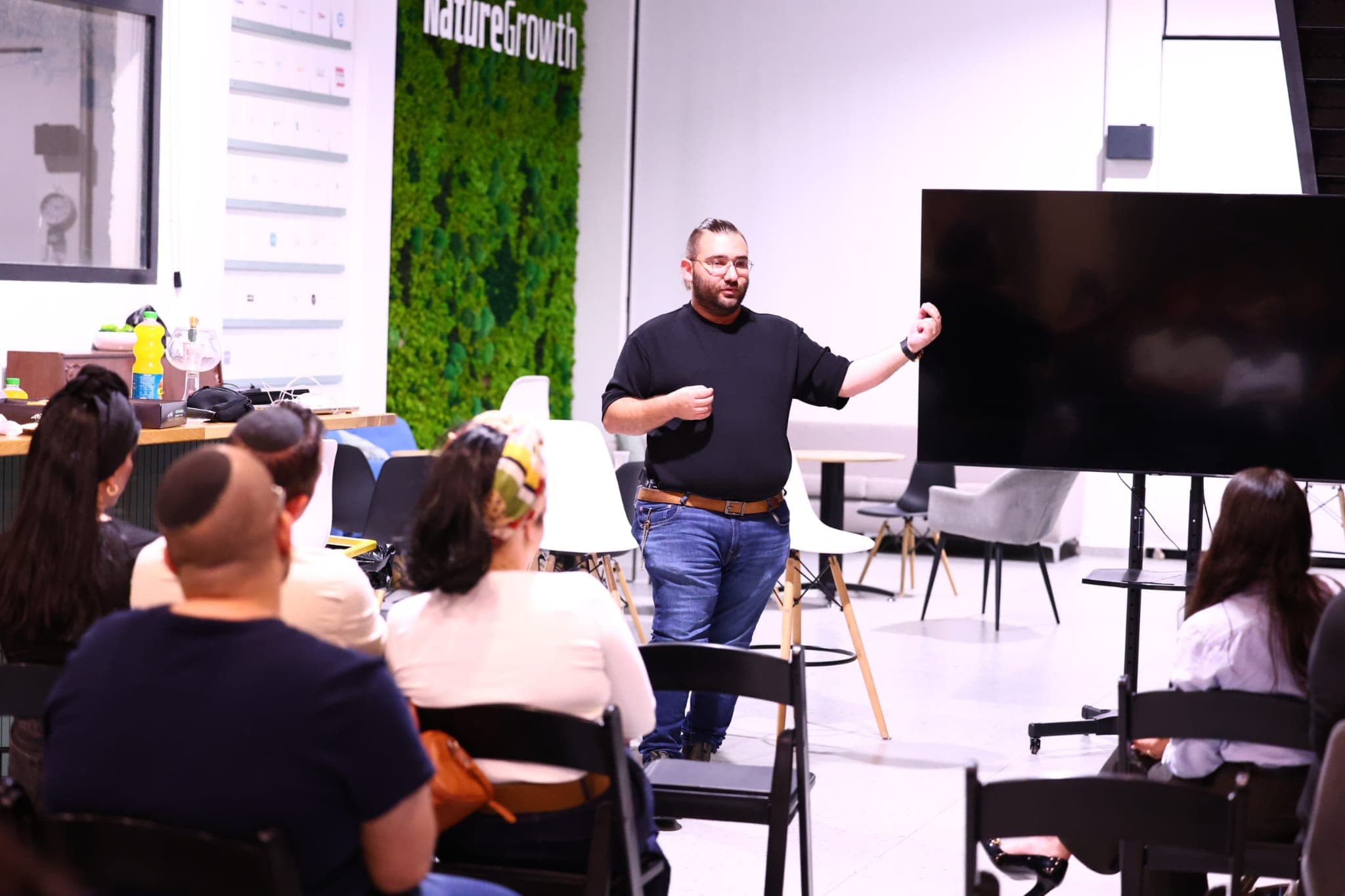
Entrepreneurs session, Sderot
Who does what
What I do
- Find and read the open information about your competitors and your market
- Contact competitors as an ordinary customer would, and run the interviews
- Put the findings together and mark what could not be confirmed
What you do
- Name the competitors you lose deals to
- Make the first contact with customers who agree to talk
- Give view access to your data, at a level you can remove with one click
- Decide what to do with the findings
What to bring to the first conversation
Bring what you already have, even if it is incomplete. We can start without it too.
- The question you need answered, in one sentence
- Two to four competitors you lose deals to
- The words you use to describe what you sell
Who it fits
- An owner about to spend on marketing, a website or a new offer who wants to know the market first.
- A business whose sales changed and who wants to know why before reacting.
- A business entering a new field, a new area or a new language community.
When is it better to start elsewhere?
If you already know your market well and the question is how to reach more customers.
In that case, start here: Marketing Consulting for Businesses
And the paperwork, for anyone who wants to see that too.
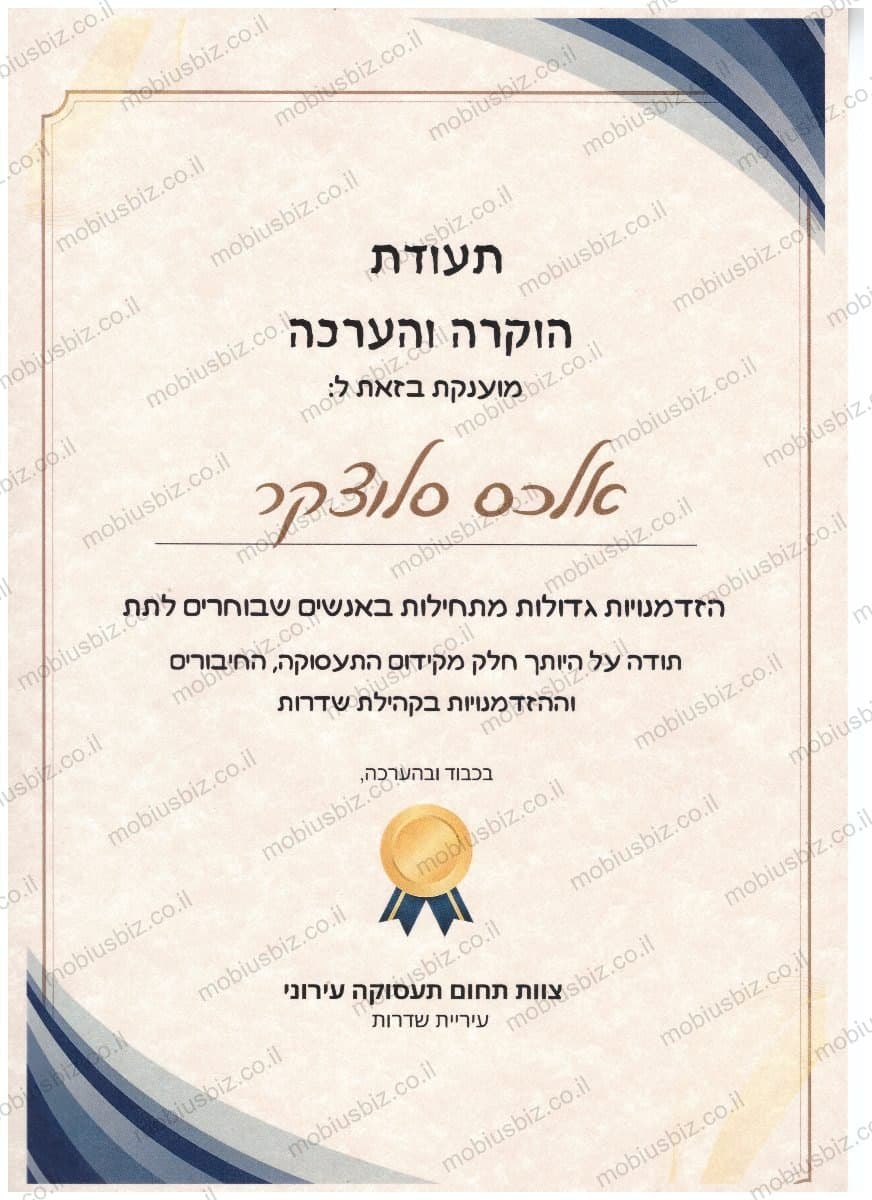
Certificate of appreciation, Sderot municipality
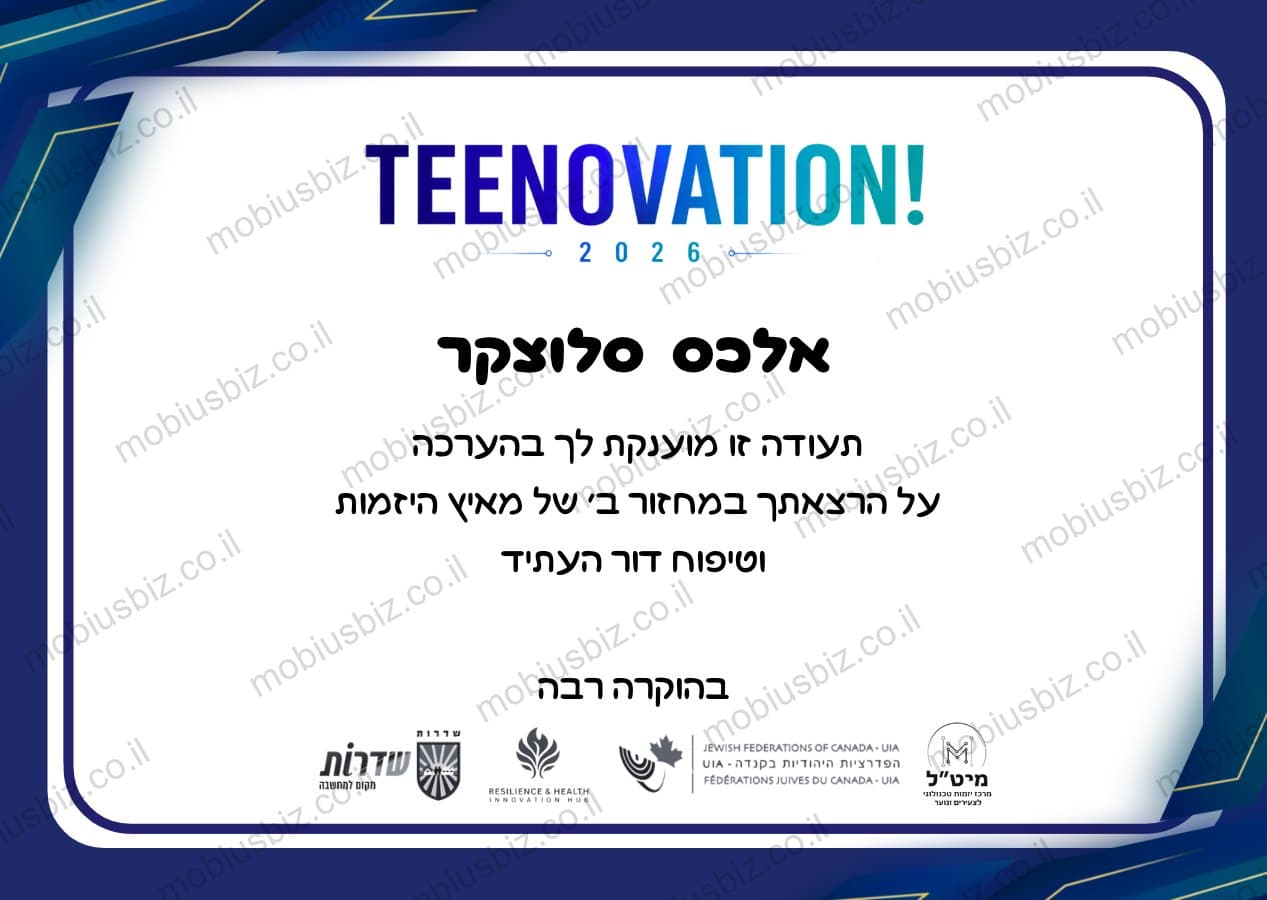
Certificate of honor, Teenovation 2026
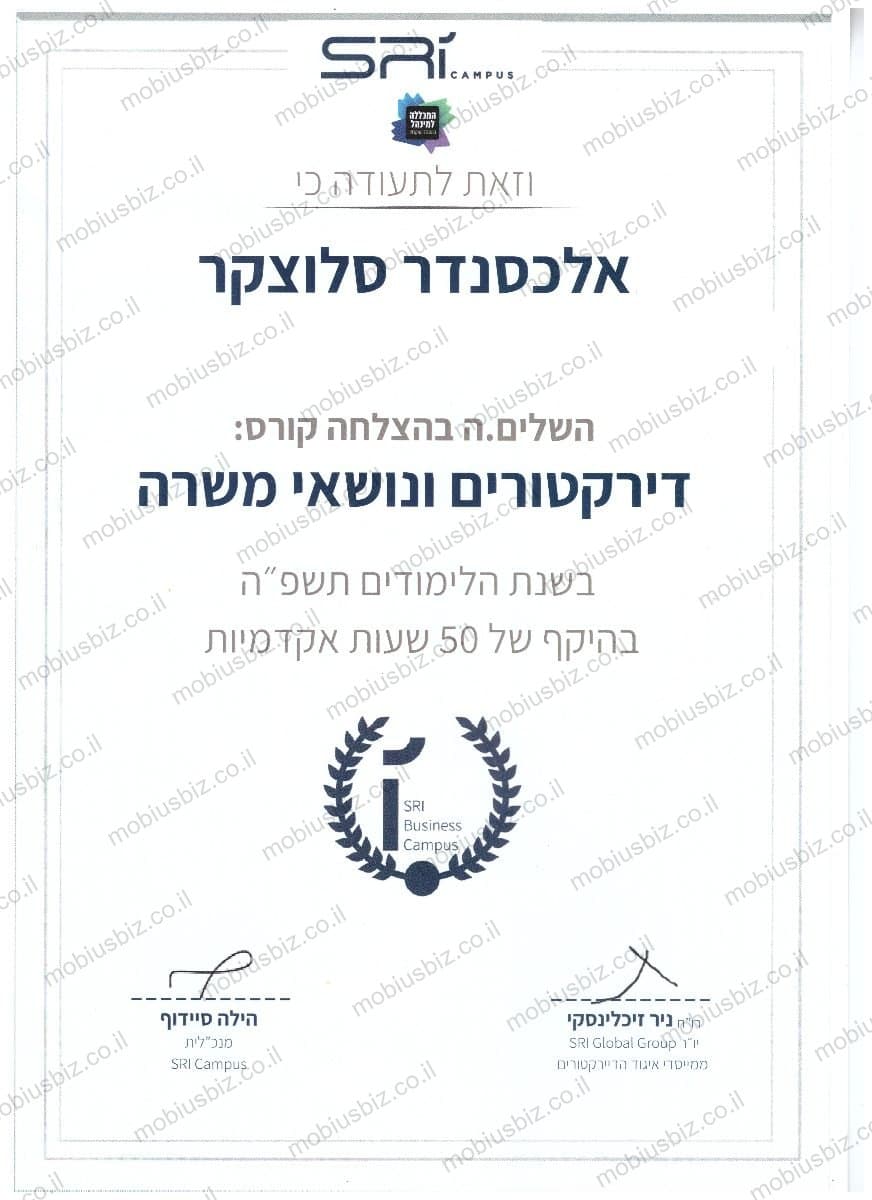
Directors and officeholders course, SRI Campus
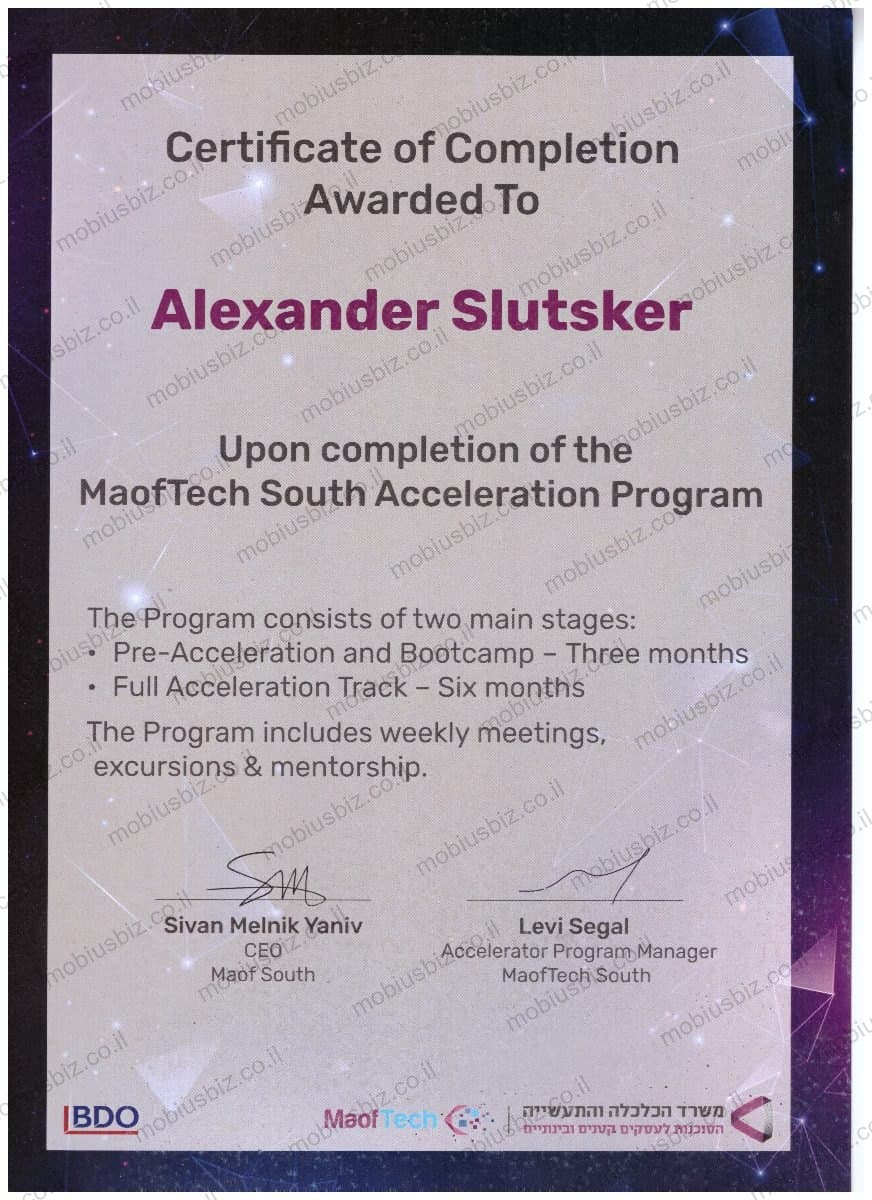
Acceleration program, MaofTech South
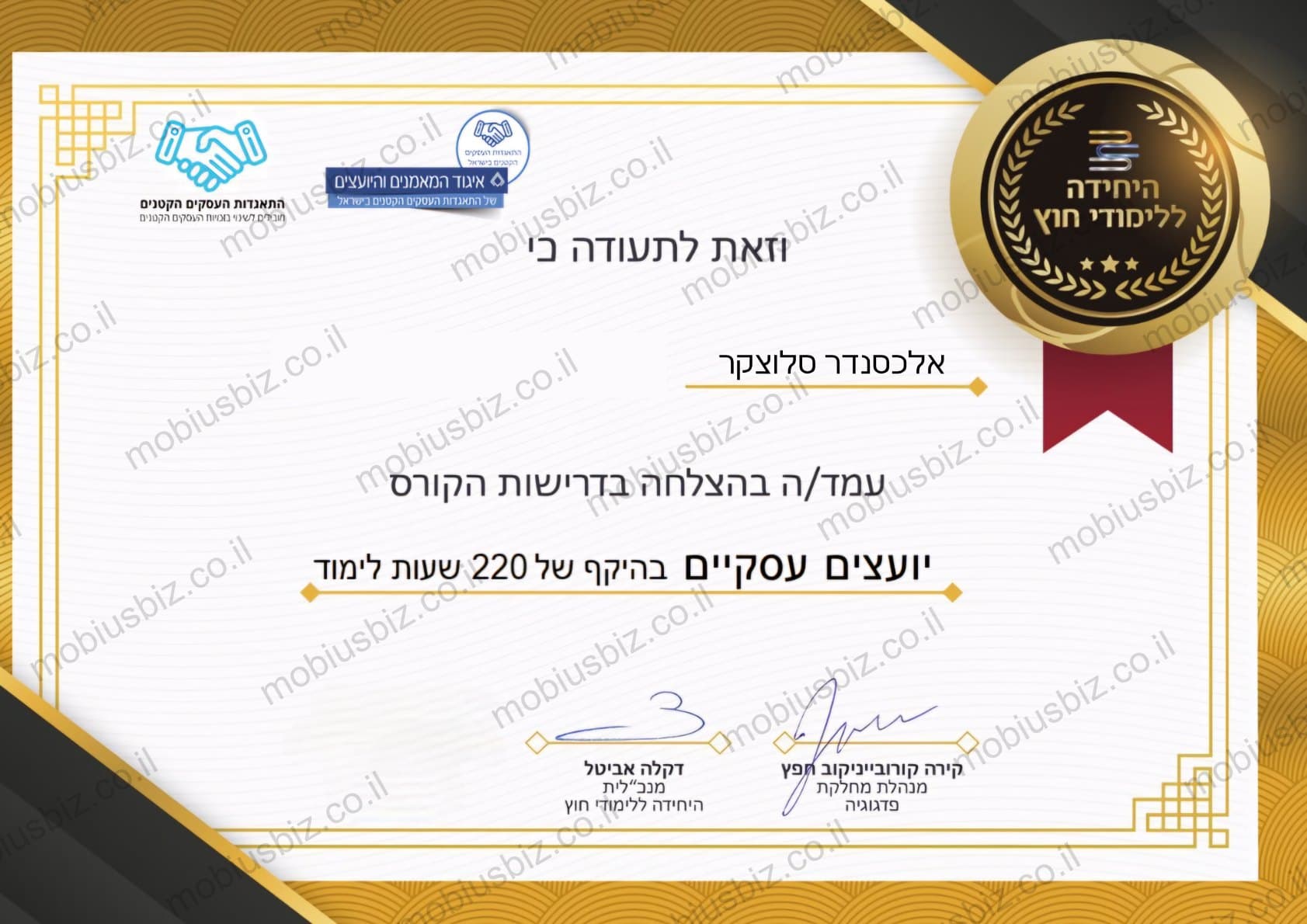
Business consultants course
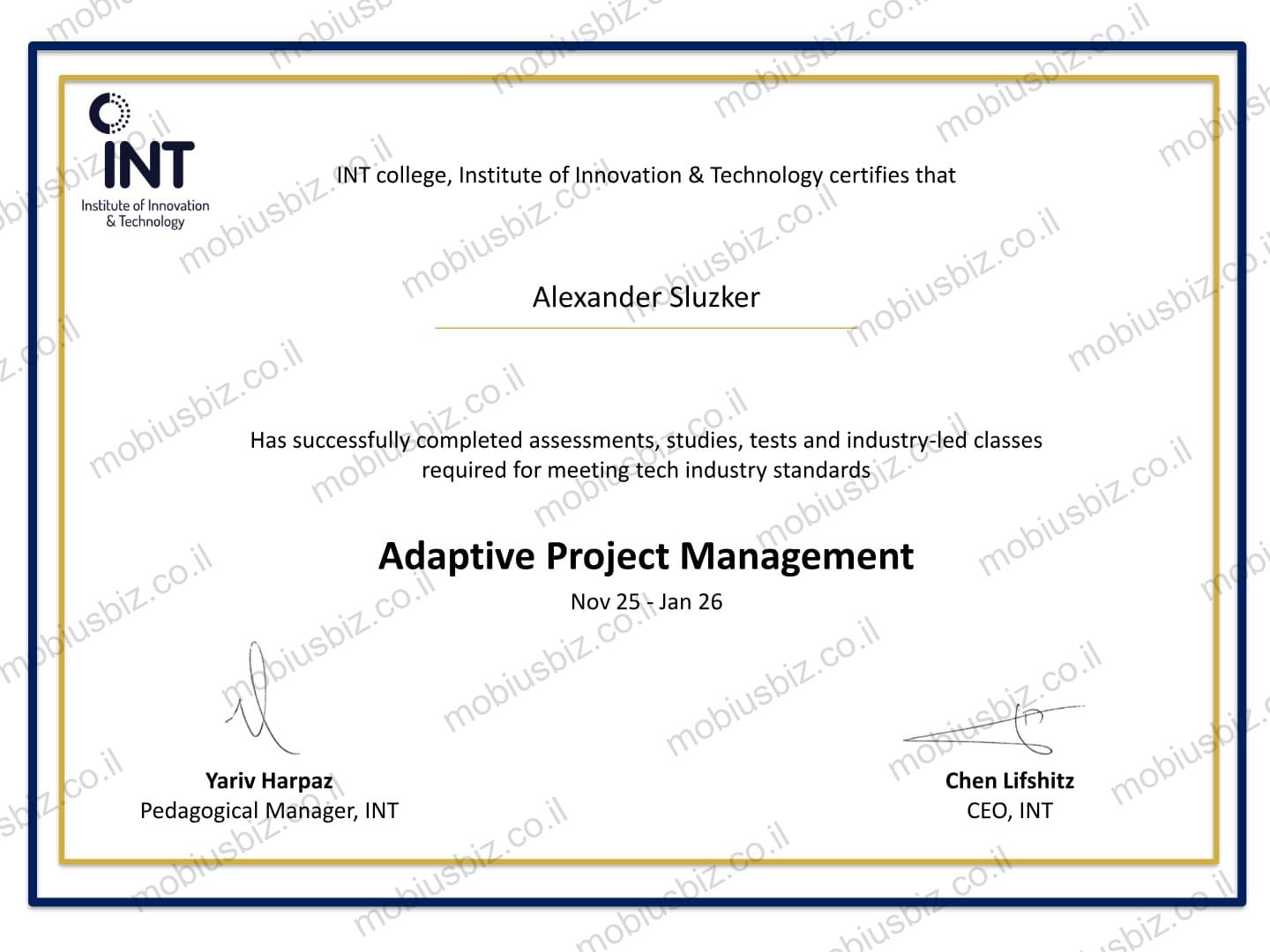
Adaptive project management, INT college
You work directly with me, and I stay your point of contact throughout the work.
Free intro call, no commitment.
- How does it start?
- With a free first conversation of 15 to 30 minutes, by phone or by video. In it we name the problem and shape the work around it. It is not where the answer is handed over. The answer comes out of the work that follows.
- How long before I see results?
- Not from the first meeting, and not from the first few. First we have to understand where the business really stands, so the effort goes only where it works and nothing that already works gets broken. When measurable, steady results come depends on the business and on the pace of the work. After a first conversation I can tell you what to expect in your field.
- How much of my time will it take?
- A meeting of about an hour, as often as the business needs, and a little more at the start while I learn the business. The rest is carrying out the plan, and that is work you would be doing in your business anyway, not time spent in meetings.
- Do my books have to be in order first?
- No. Paperwork is an important tool, but it is not a condition for starting. We begin from where things stand today and put the papers in order along the way, so the work never waits for them.
- What happens to the numbers I show you?
- Whatever you show me about your business stays between the two of us, exactly as it does for every other client of mine.
- What kinds of businesses do you work with?
- I have worked with self-employed professionals, small businesses and startups, in beauty and wellness, the trades, food, retail, manufacturing, education, hi-tech and real estate investment, in Israel and abroad. Your trade matters less than your stage. A bakery and a software company at the same stage are usually stuck on the same thing.
Frequently asked questions
What is business intelligence for a small business?
An organised look at information that is already open to anyone: competitors' ads, websites and published prices, reviews, how many people search for what you sell, and what your own customers say. Put together, it answers the questions a decision rests on: who you really compete with, what they promise, and what nobody in your field offers yet.
Where are the limits of this research?
I work with open information only. No access to anyone else's accounts, no buying databases, no collecting data against a platform's rules. Contacting a competitor means asking a question any customer could ask, from a scenario you approve in advance, and never placing an order that causes them harm. The people I interview know why they are talking to me, and their details are kept private. The findings are facts about businesses, never judgements about people.
Can you find out how much my competitors spend on ads?
No. The public ad libraries of the advertising platforms show what an advertiser says: the offer, the promise, where the ad leads and how long it has been running. For an advertiser that runs only in Israel, they do not show what it pays or whom it targets. What they do show is usually enough to understand what a competitor believes works, because an ad that has run for months usually brings them something.
Do I need every part of the research?
No. The research is built from parts, and we choose the ones that answer your question. Before a campaign, a focused look at the main competitors can be enough. A decision about a new market or a new offer needs a wider picture, sometimes with interviews.
How is this different from marketing consulting?
The research brings the facts: what the market, the competitors and the customers look like. Marketing consulting decides what to do with them: the offer, the audience and the channels. Often one leads straight into the other.
What happens to the findings?
They are yours, for use inside your business. They feed the next decision, and they age as the market moves, which is why the competitors can be followed over time.
In which languages do you research?
Hebrew, Russian and English, as your market needs. For a business that also sells to Russian speakers in Israel, the research covers their searches and their communities too.
Related services
- Marketing Consulting for BusinessesWhen the findings are in and the question is the marketing plan.
- Strategic Consulting and Ongoing Business GuidanceWhen the findings raise a bigger question about the direction of the business.
- Business Launch SupportWhen the research is part of checking a business before it opens.
New to consulting? Start with the map of what business consultants do