What Business Operations Actually Are (Not Firefighting)
Operations is the repeatable system that makes the 100th delivery as good as the first. Here is what it really means and where to start.
What is a business process
A business process is a repeatable set of activities that turns inputs into a result a customer values, like a WhatsApp inquiry that ends in a paid invoice.
The same chain, every time
Process owner: one named person, from the first message to the money in the bank
- WhatsApp inquiry
- Reply
- Quote
- Approval
- Scheduling
- Delivery
- Invoice
- Collection
- Paid invoice
The next inquiry runs through the same steps, in the same order.
One person answers for the whole chain, so a quote that stalls or an invoice nobody chases has someone to notice it.
Business operations is the repeatable system that turns your promise into a delivered result, over and over, without depending on you to hold it together by hand. It is what makes the hundredth delivery as good as the first. It is not firefighting, and it is not just being busy. Marketing and sales win the customer. Operations is what keeps them, because customers judge you on what you actually deliver, not on what you planned.
Most owners do not have an operations problem. They have an operations gap: the whole way the work gets done lives in one person's head. That works until the business grows, the owner gets sick, or two things go wrong at once. Understanding what operations really is turns that fragile setup into something that can grow and survive a bad week.
What operations actually is
Operations is the how of the business: the business processes (the repeatable steps that turn a request into a result), tools, and habits that carry work from "we agreed to do this" to "it is done and the customer is happy." It covers the boring, essential things (taking the order, doing the work, invoicing, handling problems), and it is where promises either get kept or quietly broken.
The key word is repeatable. Delivering once is not operations. Anyone can pull off a heroic one-time result. Operations is the system that delivers the same good result the tenth and hundredth time, on an ordinary day, without a hero. If your quality depends on you personally being present and remembering everything, you have output, but you do not yet have operations.
It is a system, not just getting things done
The damaging belief is that operations means working hard and staying busy. Busyness is not a system, and it does not scale. A business built on the owner remembering everything is not a business yet, it is a job that owns the person doing it.
Real operations moves the recurring work out of memory and into simple, visible form: written steps, checklists, and tools that anyone can follow. This is not bureaucracy for its own sake. It is what lets the work happen well when you are not the one doing it, and it is the only way a business grows past the limits of one person's attention.
The 100th delivery is the real test
Anyone can make the first customer thrilled. The question that separates a real business from a hustle is whether the hundredth customer gets the same experience. That only happens when the how is defined, so the result does not swing with mood, memory, or who happened to do the work that day.
This is why consistency is an operations achievement, not a personality trait. When the steps are clear and the checks are built in, a good result stops requiring heroics. The customer gets the same quality on your worst day as on your best, because the process is carrying the load, not your willpower.
Find the bottleneck before you optimize anything else
Not all steps are equal. Every process has a bottleneck (the step that slows everything else down): the step with the least capacity, which caps the throughput (how much the whole business actually delivers). Speeding up any other step does not increase output, it just stacks up more work in front of the real limit.
This is the most misunderstood thing in operations. Owners buy tools, add effort, and hire, all around the wrong step, and wonder why nothing moves. The disciplined move is to find the true constraint first and widen that. Do that and everything downstream flows better. It is often the fastest way to get more done without adding hours or headcount.
What it costs to run on chaos
Chaos rarely announces itself. It shows up as the same mistakes repeating, things slipping through the cracks when you are busy, quality that depends on who did the work, an owner who cannot take a day off, and growth that makes the delivery worse instead of better because the fragile system finally cracks.
None of these feel like an operations decision in the moment. They feel like a bad hire, a tough month, or plain bad luck. But they trace back to the same gap: no repeatable way to get the work done well. The cost is not only the wasted time and rework, which quietly eats your margin, it is the customers who left because the experience was inconsistent.
The order that actually works
- Map how the work really flows. Draw a process map (the actual steps from order to delivery), not the idealized version. You cannot fix what you cannot see.
- Find the bottleneck. Locate the one step that limits everything, and focus there first.
- Remove the steps that add nothing. Cut the busywork before you speed anything up.
- Write down the recurring tasks. Turn what repeats into simple checklists and SOPs (standard step-by-step procedures for repeatable tasks).
- Then add tools. Choose software to support the clean process, never to paper over a messy one.
- Measure and improve. Watch where work piles up or breaks, and tighten it. Operations is never finished: it is continuous improvement, small fixes that add up.
Owners usually start at step five, buying a tool, while the flow is still undefined. Get the order right and the tool finally helps. Skip it and you have just automated the chaos.
Walking through these steps in this order, with your own business on the table, is what I do in operations consulting for business owners.
When you do not need outside help
If your work delivers the same quality without you personally holding it together, your team can run the core processes from written steps, and you can take a week off without the business wobbling, your operations are probably in good shape and you do not need help.
An outside view helps most when you are the bottleneck and cannot see your way out, when growth keeps breaking delivery, or when you are too deep in the daily work to redesign it. There, help does not add complexity, it removes chaos. As a business consultant, I would rather help you build a system that does not depend on your memory than watch a good business stay trapped inside it.
If your business still runs on what you remember, tell me where it gets stuck.
Sources
- Eliyahu Goldratt, "The Goal," and the Theory of Constraints, on the bottleneck as the constraint that governs the output of an entire system.
The content on this blog is general information only and is not a recommendation to act. It is not business, legal, tax, or financial advice. Before making any decision, consult a qualified professional, such as an accountant, a lawyer, or a business advisor, about your specific situation.
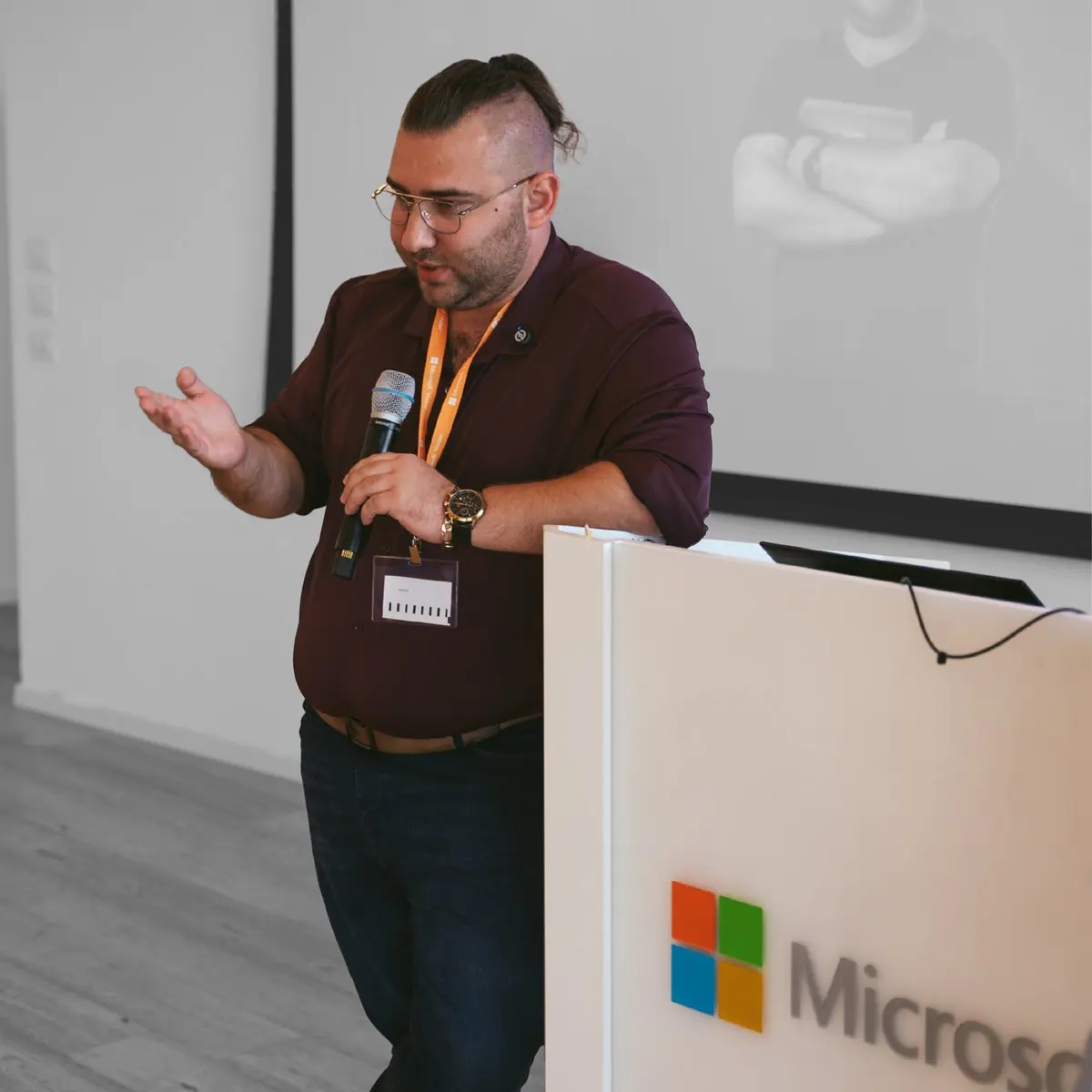
Speaking at Microsoft
Meeting with international teams, as part of work with a startup
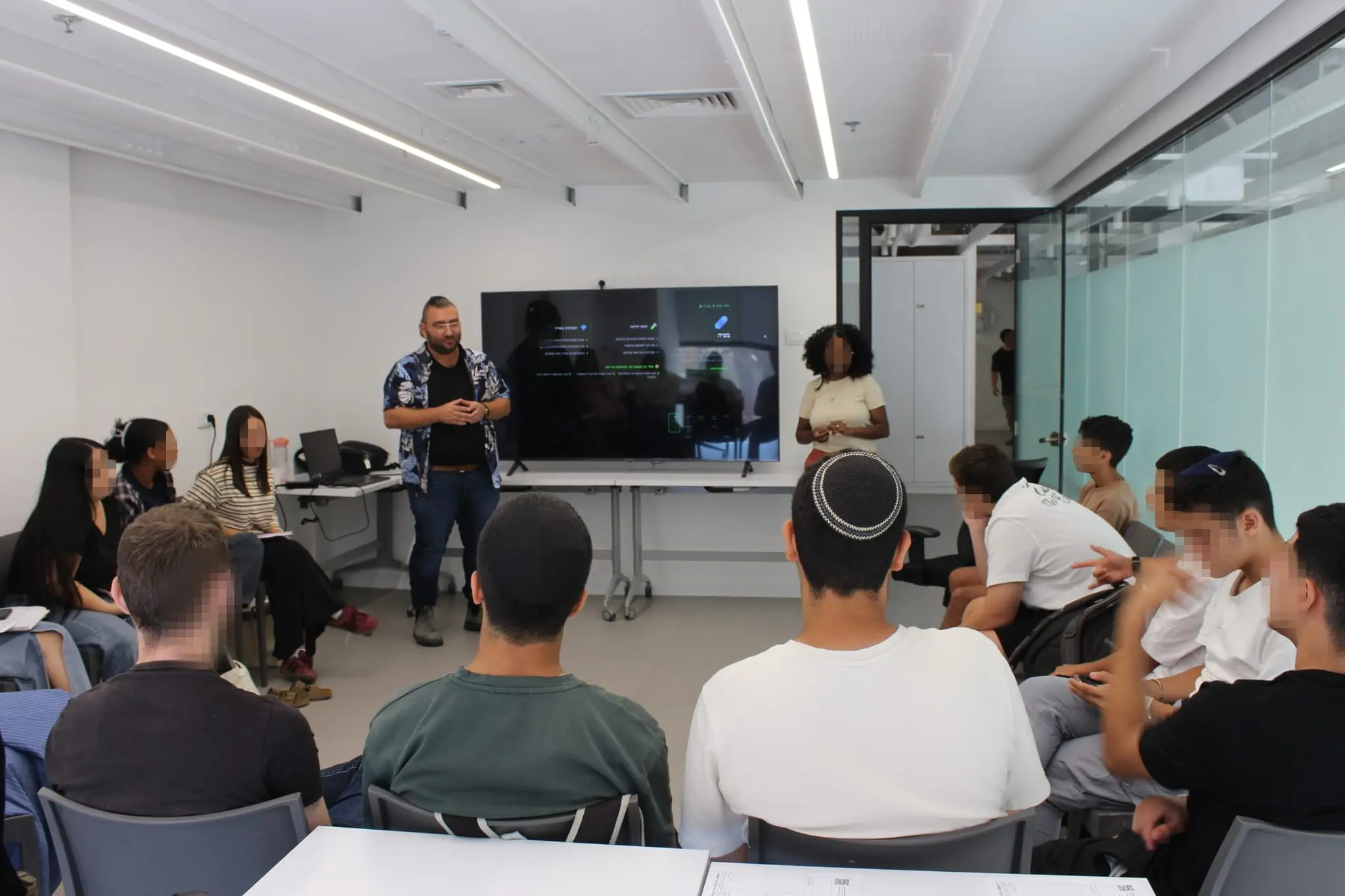
Teenovation, Meital centre Sderot
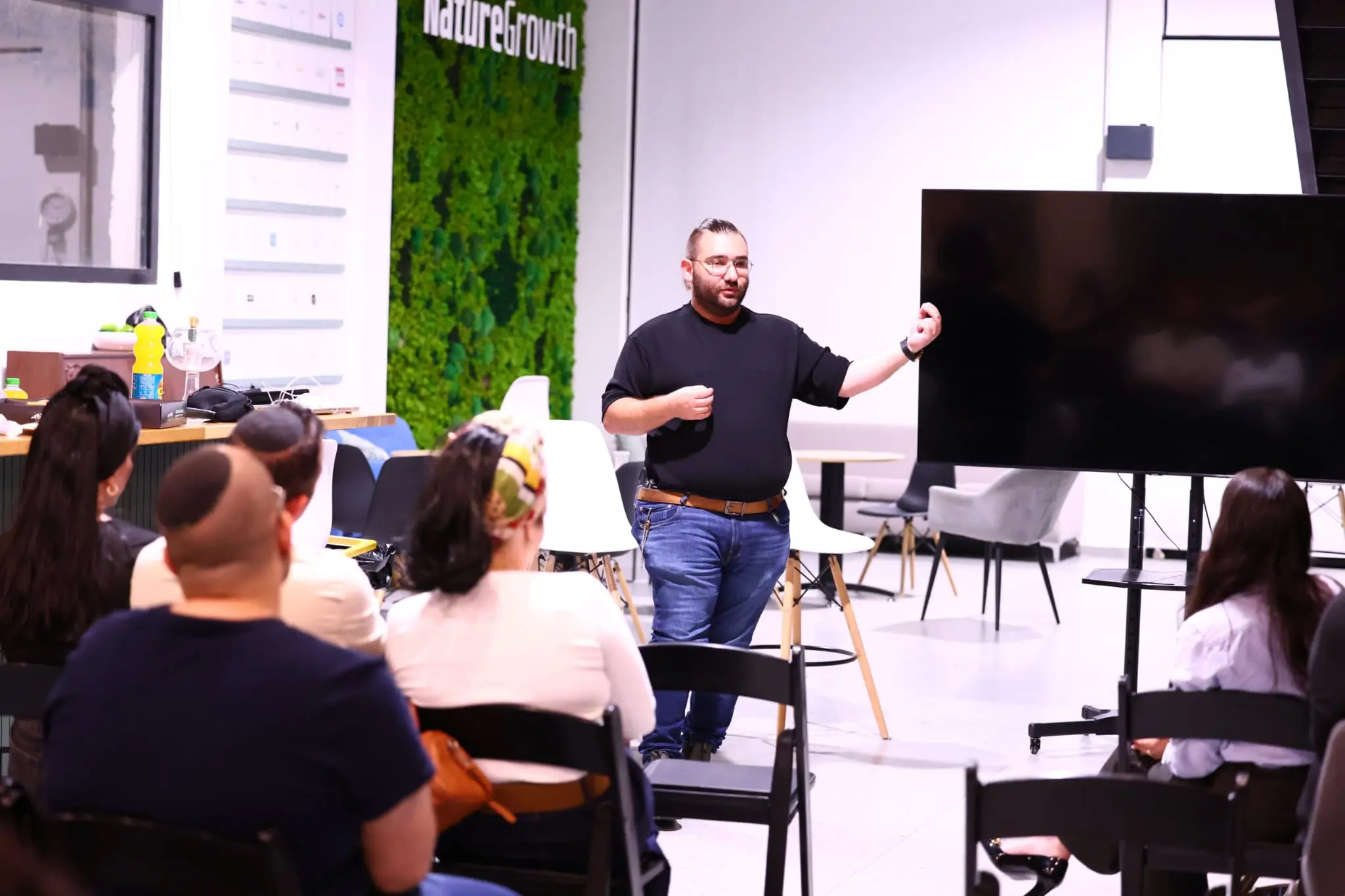
Entrepreneurs session, Sderot
I have worked with
- Google for Startups
- House of Business, Sderot Municipality
- Microsoft Reactor
- GameReady
- Eclipse Capital
- SderoTech
- IUCEL
- Resilience & Health Innovation Hub
- International Resilience Institute of Sderot


















- Google for Startups
- House of Business, Sderot Municipality
- Microsoft Reactor
- GameReady
- Eclipse Capital
- SderoTech
- IUCEL
- Resilience & Health Innovation Hub
- International Resilience Institute of Sderot
What Clients Say
From different fields, at different stages of business
Dan Manto
Eclipse Capital
Real Estate Investment and Finance, USA
Arty McLabin
GameReady
Game Development Education and Outsourcing, International

Anna
Beautician
After I finished a cosmetology course at a leading company, I was confused. I didn't know how to open a business, what to sell from home, or how to bring in clients. Since I reached out to Mobius, everything has changed. We built an organized plan with clear steps and no unnecessary risks. Today I see results, and I'm growing and developing every month.

Mark
Massage therapist, Gan Yavne
When I finished a massage course, I imagined a different world. I found out it's a hard field, and financial stability isn't easy to find. When I came to Mobius, something changed. We started an organized process and built a business plan. Without Mobius? I probably would have given up. Today I believe in myself and in my own path.
And the paperwork, for anyone who wants to see that too.

Certificate of appreciation, Sderot municipality

Certificate of honor, Teenovation 2026

Directors and officeholders course, SRI Campus
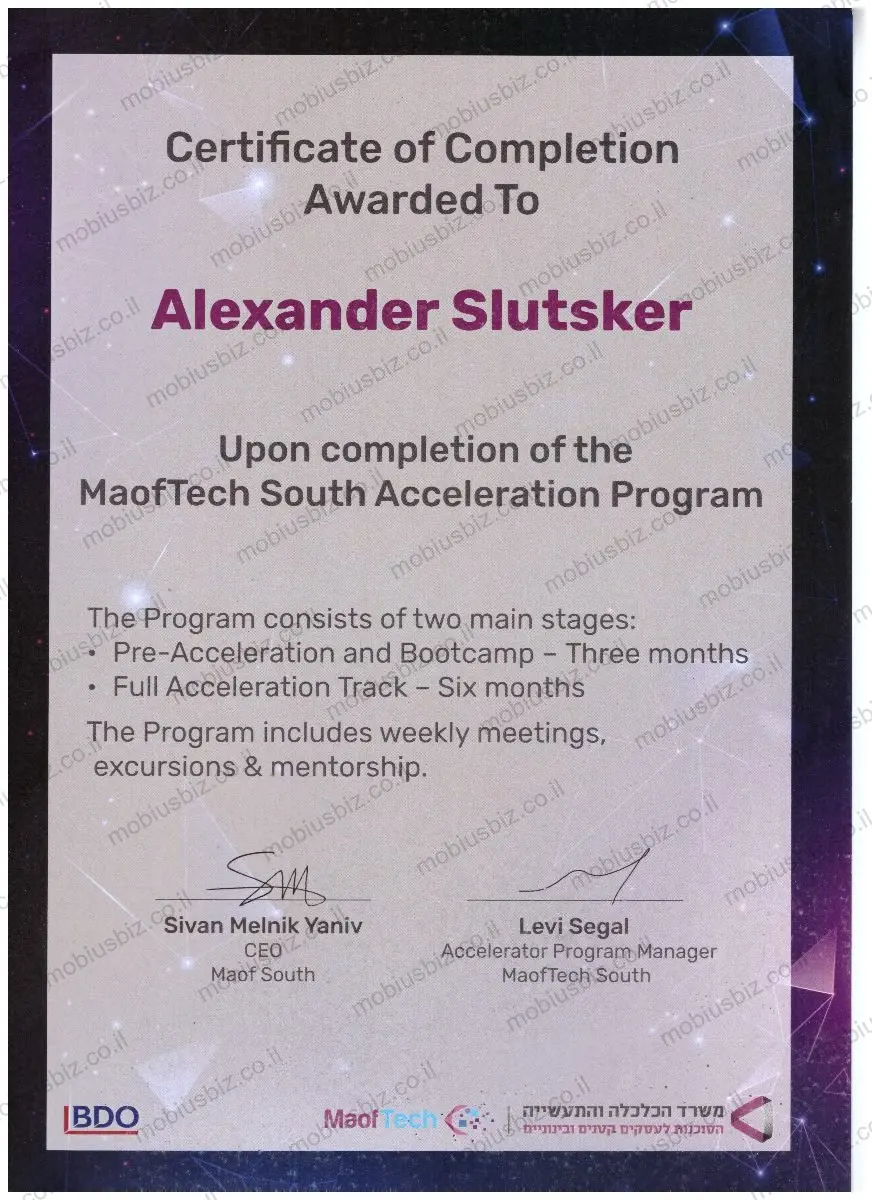
Acceleration program, MaofTech South

Business consultants course
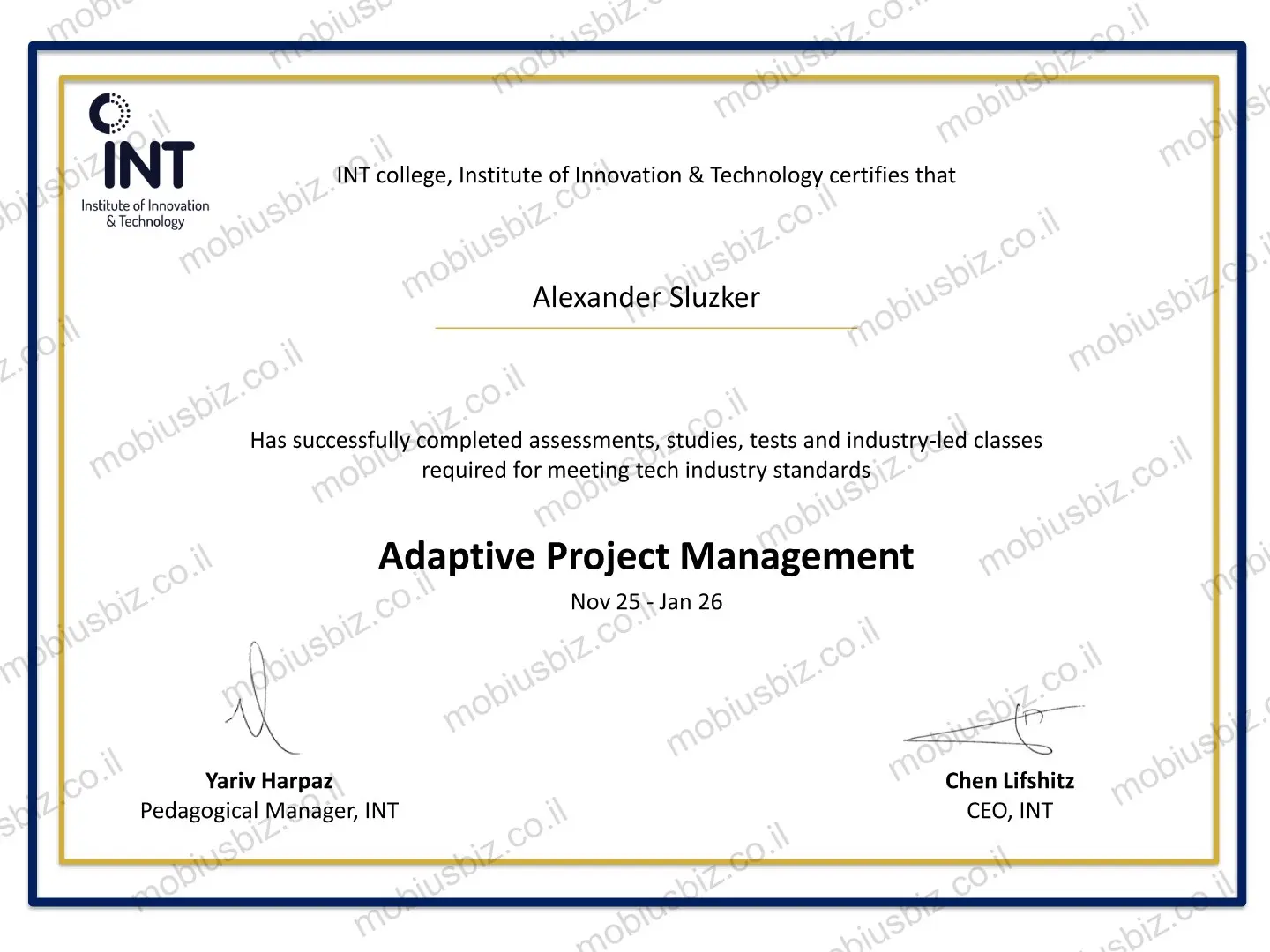
Adaptive project management, INT college

Business, Marketing, Operations & Financial Consultant
Mobius
Alexander Slutsker
9+Years of experience in business consulting
I help entrepreneurs, self-employed people, small businesses and startups understand their own numbers, choose what to do first and grow from there.
Book a Free Call+972 055-248-6151. Better on WhatsApp: I am in meetings most of the day and answer as soon as I am free. Other ways to reach me
We can talk in English, Hebrew or Russian.