What Business Technology Actually Is (Fit, Not Hype)
Business technology is choosing tools that fit the business and get used, not chasing the newest thing. Here is how to decide what to adopt.
Business technology is the set of tools you use to run and grow the business, and choosing it well means picking what fits how you actually work and what your team will really use, not chasing whatever is newest. Technology is a means, not the goal. The goal is a workflow that saves time, prevents mistakes, or serves customers better. Judge a tool by that outcome, not by how advanced or exciting it is, and most technology decisions get much simpler.
The expensive mistake is treating the newest thing as automatically better. Owners buy tools because they are impressive, then watch them sit unused because they never fit a real problem or the way the team works. Understanding what business technology really is turns a pile of unused subscriptions into a small set of tools that earn their cost.
What business technology actually is
Technology in a business is anything that helps the work happen: a website, a booking system, accounting software, a customer database, the tools that carry a task from start to finish. Its value is entirely in what it does for the business (time saved, errors prevented, customers better served), not in how modern it is. Most of these tools are now SaaS (software sold as an online subscription), so a tool nobody uses keeps costing money every month.
This is why fit matters more than sophistication. A simple tool that removes a real bottleneck and that everyone actually uses is worth far more than an advanced one that impresses in a demo and then goes ignored. The question is never "is this the best technology?" It is "does this fit our problem, and will our team use it?"
Fit beats the newest thing, almost every time
There is constant pressure to adopt the latest, as if being current were the same as being competitive. It is not. Competitiveness comes from technology that solves a real problem better, not from wearing the newest label. A boring, well chosen tool that the whole team uses usually beats a cutting edge one that sits unused after the excitement fades.
The disciplined stance is to make the new thing prove itself against your specific problem before you buy in. Let others pay to be first and work out the bugs. When a technology clearly fits a real need you have, adopt it. Until then, being current is a cost, not an advantage, and chasing every new tool is a reliable way to spend money and confuse your team.
Start from the problem, never from the tool
The best technology decisions begin with a business problem, not a product. Where do you waste the most time? Where do customers get frustrated? What breaks when you get busy? Answer those, then look for a tool that fixes that specific thing and that your team will actually adopt. Buying a tool and then hunting for a use is how unused subscriptions pile up.
Judge the candidate on its ROI (return on investment): how much time will it save, how many mistakes will it prevent, how many more customers can you serve. Features are easy to be dazzled by and mostly irrelevant. A tool that clearly removes a real bottleneck pays for itself. One bought because it looked advanced usually does not.
Fix the process before you automate it
Software does not fix a broken business process, it makes it faster and more expensive. If you automate a confusing workflow, you get automated confusion. So first draw a process map of how the work should flow, remove the steps that add nothing, and only then choose a tool to support the clean process.
This order is what separates technology that pays off from technology that disappoints. The right tool on a clear process is powerful, it removes friction the team can feel. The same tool bolted onto chaos just entrenches the chaos and adds a bill. Most disappointing technology purchases were not bad tools, they were good tools applied to an undefined process.
What it costs to chase technology instead of fit
Chasing technology rarely looks like a mistake in the moment, it looks like progress. It shows up as a growing pile of subscriptions nobody fully uses, tools that do not talk to each other so your data lives in five places, time lost fighting software instead of doing the work, and a team quietly reverting to the old way because the new tool never fit.
None of this feels like a technology decision gone wrong, it feels like you just need the next tool. But it traces back to the same gap: buying tools before understanding the problem and the workflow. The cost is not only the wasted subscriptions, it is the time drained by tools that add steps instead of removing them, and the focus lost to managing software instead of the business.
The order that actually works
- Name the real problem. Find where time is wasted, customers are frustrated, or things break under load.
- Fix the process. Map how the work should flow and cut the steps that add nothing, before any tool.
- Choose for fit and adoption. Pick the tool that solves that problem and that your team will actually use.
- Prefer fewer, connected tools. Choose ones that work together, for example through an API (a standard way for two programs to exchange data), over a separate app for every task.
- Judge by outcome. Measure time saved, mistakes prevented, customers served, not features owned.
- Cancel what nobody uses. Review regularly and drop the tools that never earned their cost.
Owners often start by buying the impressive tool and hoping a use appears. Get the order right and every tool is aimed at a real problem, and the team actually adopts it. Skip it and you accumulate cost and confusion.
Matching each tool to a real problem in the process, and dropping the rest, is part of operational consulting for growing businesses.
When you do not need outside help
If your tools each solve a clear problem, your team actually uses them, they connect rather than scatter your data, and you buy from need rather than hype, your technology choices are sound and you do not need help.
An outside view helps most when you are about to spend on a tool you are unsure about, when your stack has become a disconnected mess, or when you keep buying software that goes unused. There, help is not more technology, it is the discipline to start from the problem and buy less, better. As a business consultant, I would rather help you cancel three tools you do not use and choose one that fits than watch technology spending quietly drain a good business.
If you are about to buy a tool and are not sure it fits, run it past me first.
The content on this blog is general information only and is not a recommendation to act. It is not business, legal, tax, or financial advice. Before making any decision, consult a qualified professional, such as an accountant, a lawyer, or a business advisor, about your specific situation.
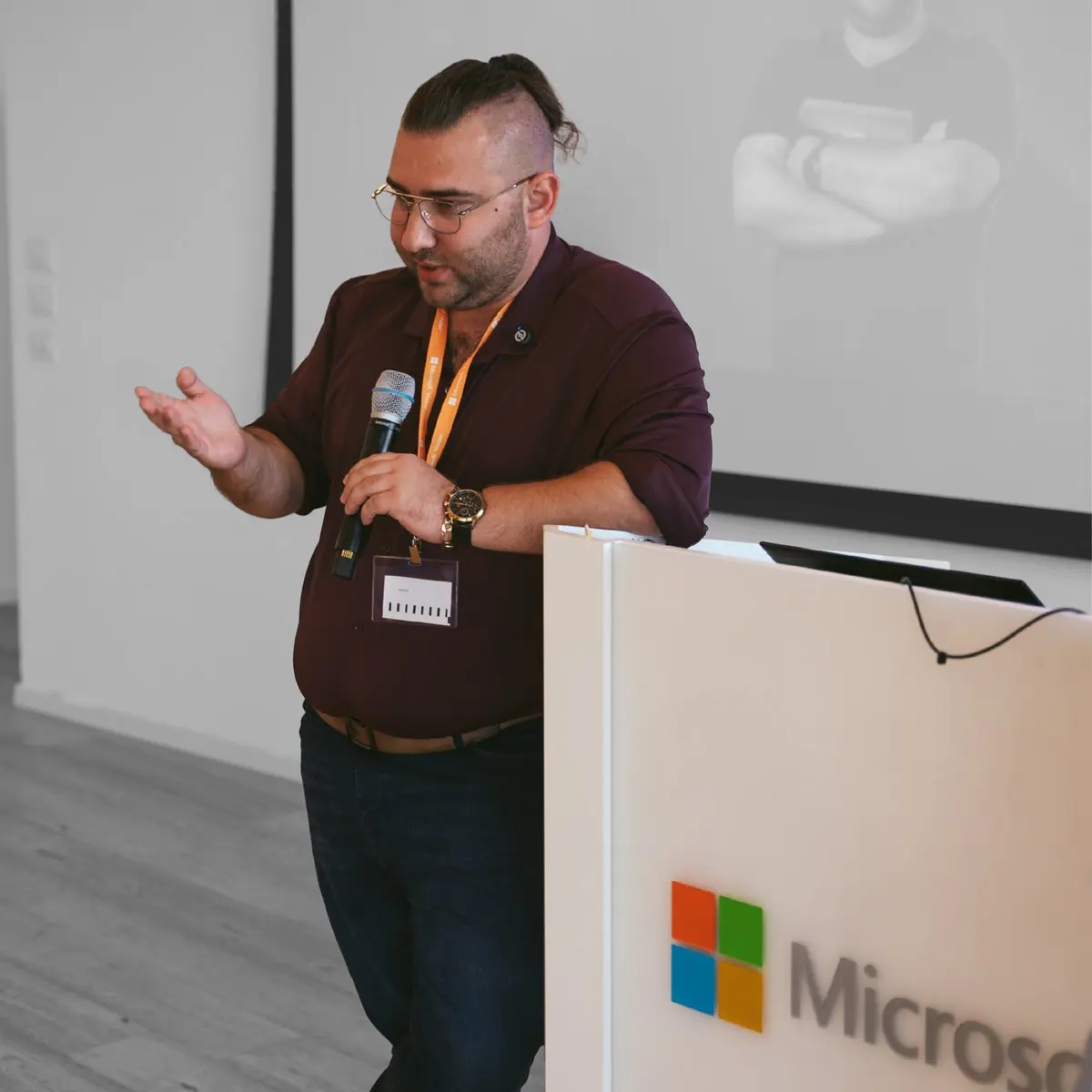
Speaking at Microsoft

Meeting with international teams, as part of work with a startup
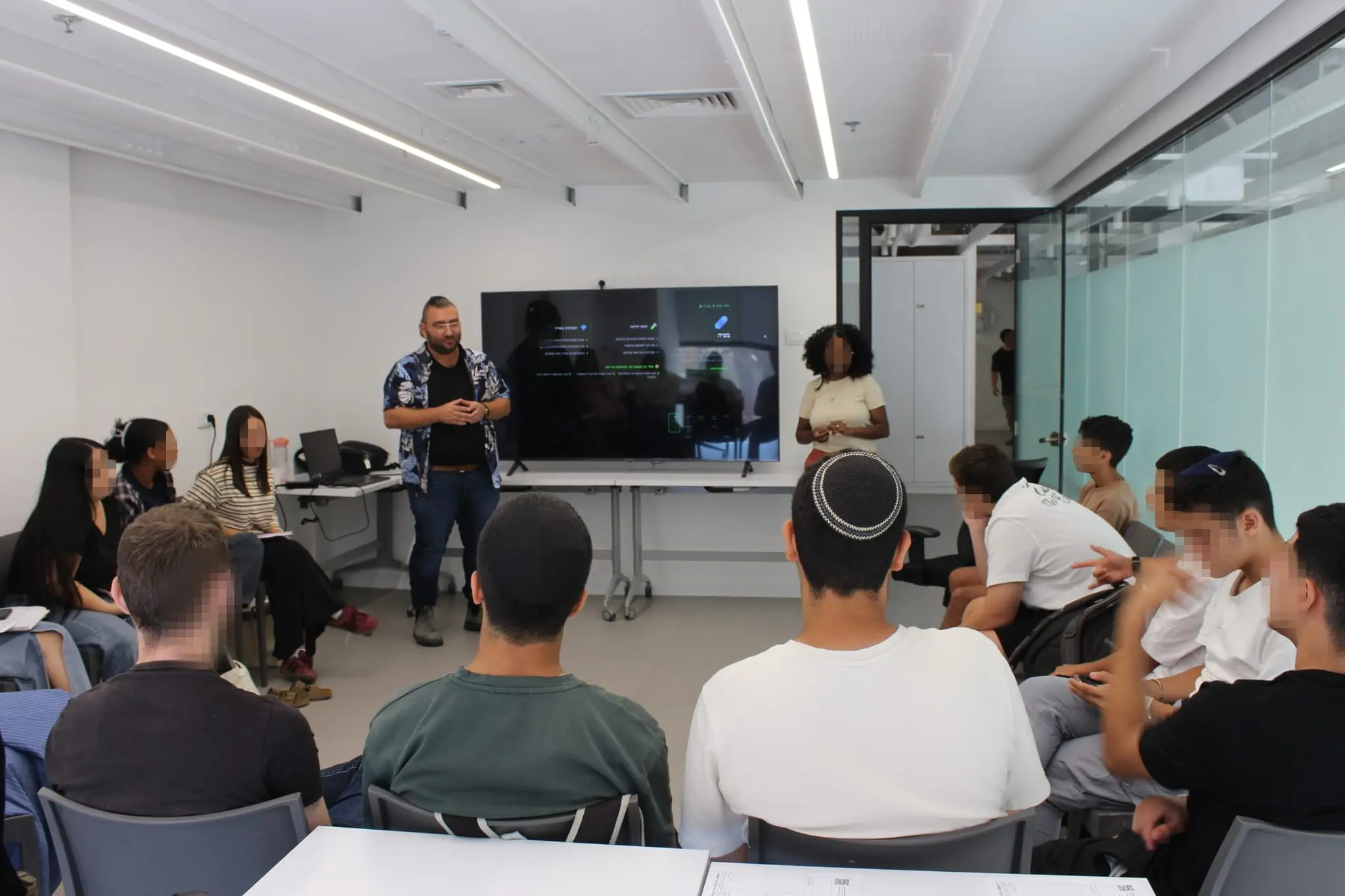
Teenovation, Meital centre Sderot
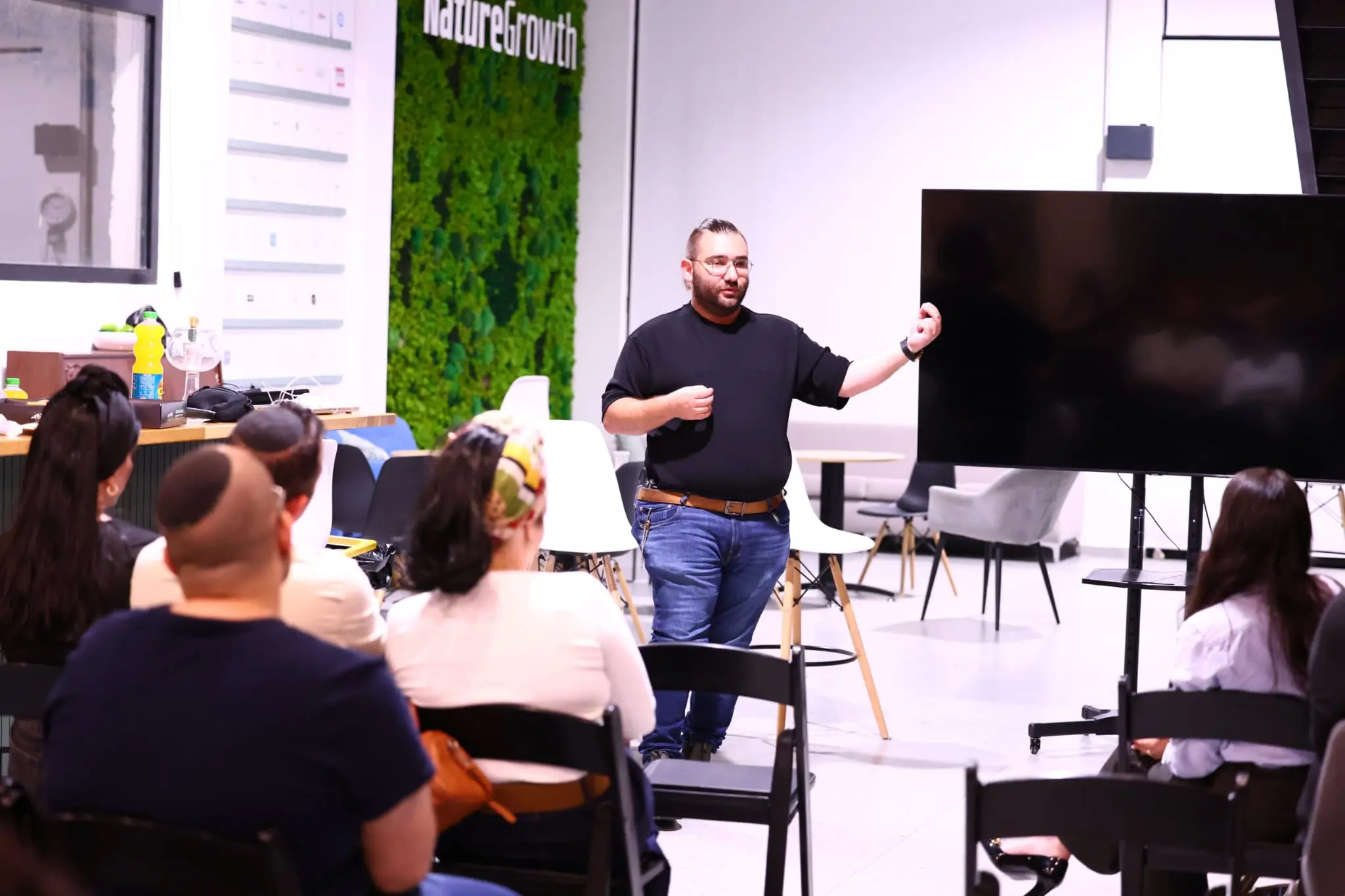
Entrepreneurs session, Sderot
I have worked with
- Google for Startups
- House of Business, Sderot Municipality
- Microsoft Reactor
- GameReady
- Eclipse Capital
- SderoTech
- IUCEL
- Resilience & Health Innovation Hub
- International Resilience Institute of Sderot

















- Google for Startups
- House of Business, Sderot Municipality
- Microsoft Reactor
- GameReady
- Eclipse Capital
- SderoTech
- IUCEL
- Resilience & Health Innovation Hub
- International Resilience Institute of Sderot
What Clients Say
From different fields, at different stages of business
Dan Manto
Eclipse Capital
Real Estate Investment and Finance, USA
Arty McLabin
GameReady
Game Development Education and Outsourcing, International

Anna
Beautician
After I finished a cosmetology course at a leading company, I was confused. I didn't know how to open a business, what to sell from home, or how to bring in clients. Since I reached out to Mobius, everything has changed. We built an organized plan with clear steps and no unnecessary risks. Today I see results, and I'm growing and developing every month.

Mark
Massage therapist, Gan Yavne
When I finished a massage course, I imagined a different world. I found out it's a hard field, and financial stability isn't easy to find. When I came to Mobius, something changed. We started an organized process and built a business plan. Without Mobius? I probably would have given up. Today I believe in myself and in my own path.
And the paperwork, for anyone who wants to see that too.

Certificate of appreciation, Sderot municipality

Certificate of honor, Teenovation 2026

Directors and officeholders course, SRI Campus
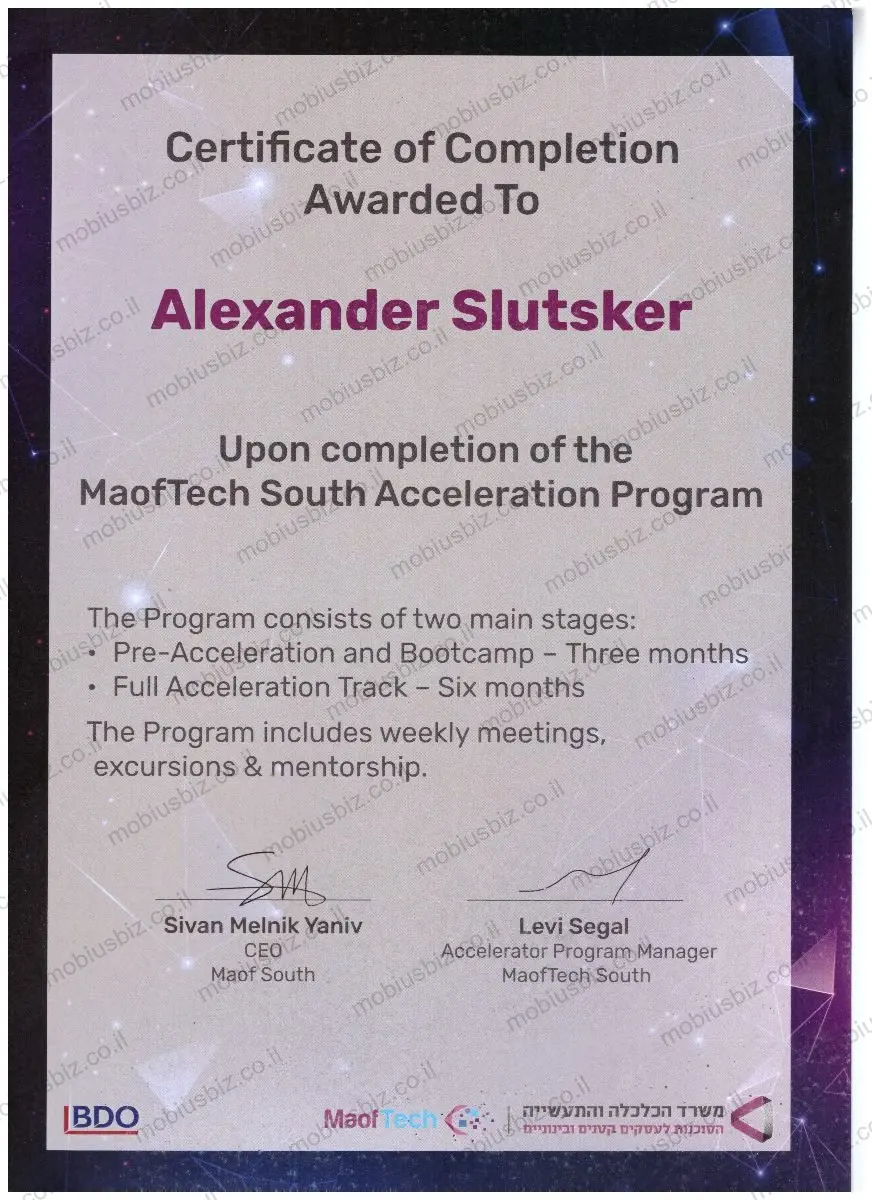
Acceleration program, MaofTech South

Business consultants course
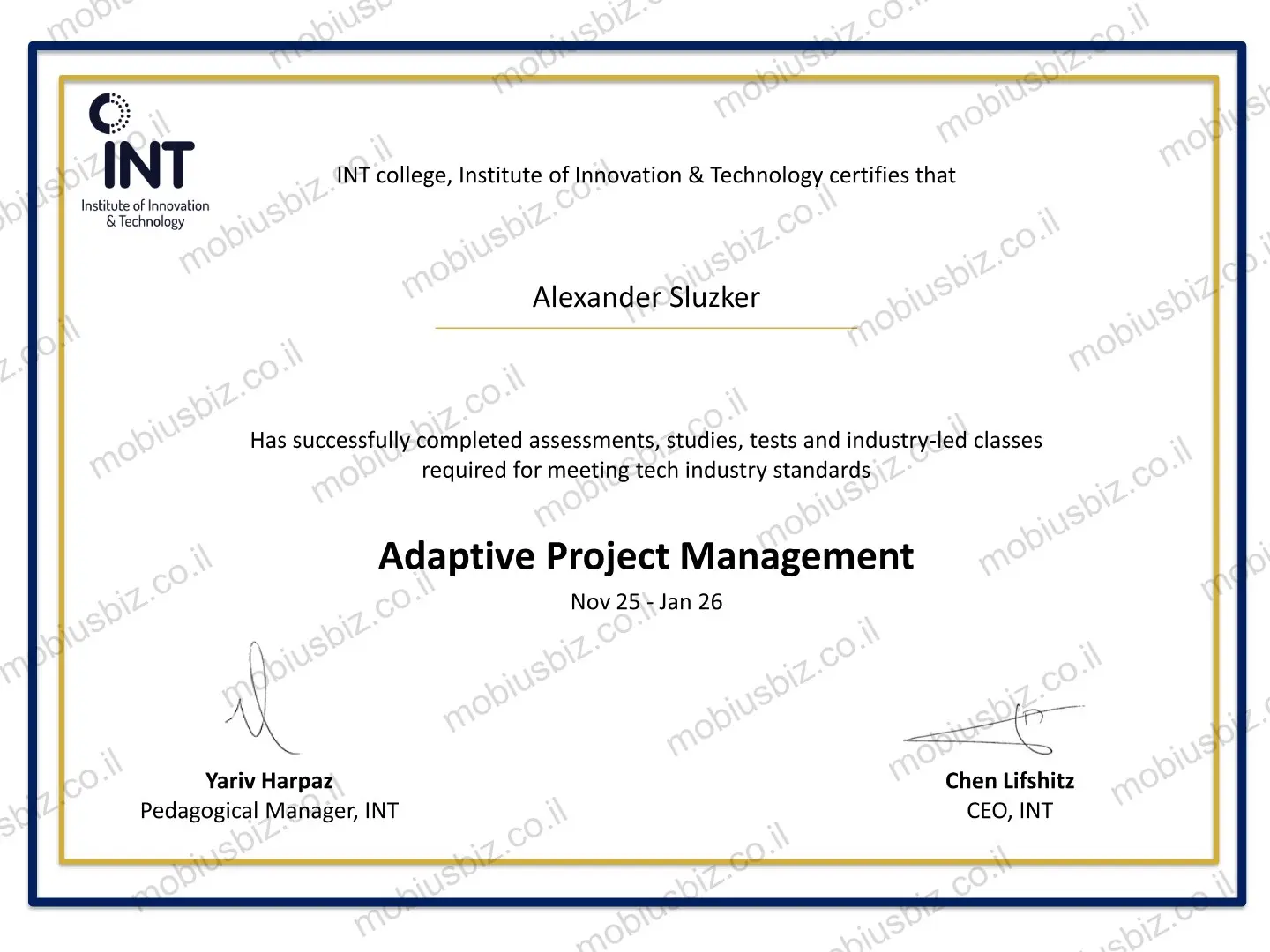
Adaptive project management, INT college

Business, Marketing, Operations & Financial Consultant
Mobius
Alexander Slutsker
9+Years of experience in business consulting
I help entrepreneurs, self-employed people, small businesses and startups understand their own numbers, choose what to do first and grow from there.
Book a Free Call+972 055-248-6151. Better on WhatsApp: I am in meetings most of the day and answer as soon as I am free. Other ways to reach me
We can talk in English, Hebrew or Russian.