What Sales Actually Is (Not Pushiness or a Born Gift)
Sales is a repeatable process for helping the right person decide, not a personality trait. Here is what it really is and why your leads stall.
What is a pipeline
A sales pipeline is the set of your open deals, each at its stage from first contact to closing.
Illustration
The board in money
Contact
10% chance
- ₪6,000
- ₪10,000
₪16,000× 10% = ₪1,600
Qualified
30% chance
- ₪14,000
₪14,000× 30% = ₪4,200
Proposal
60% chance
- ₪50,000
- ₪20,000
₪70,000× 60% = ₪42,000
Negotiation
80% chance
- ₪20,000
₪20,000× 80% = ₪16,000
On the board₪120,000
In the forecast₪63,800
The board holds ₪120,000. Counted at each stage's chance, it forecasts ₪63,800, and ₪42,000 of that sits in one column, Proposal.
Sales is a repeatable process for helping the right person reach a decision to buy. It is not pushiness, and it is not a gift some people are born with. It is a set of skills (ask good questions, understand the real problem, address honest doubts, ask for the decision) that anyone willing to practice can learn. The owners who dread selling almost always picture the pushy version. The real thing looks much more like helping.
Get this wrong and you either avoid selling, which starves the business, or you push, which burns the trust the business runs on. Understanding what sales actually is removes both the fear and the sleaze.
What sales actually is
Sales is the direct, one-to-one work of turning an interested person into a customer who is glad they bought. It happens in a conversation, on a call, or across a few messages, and its job is to close the gap between "this looks interesting" and "yes, let us do it."
That gap is made of specific things: an unclear problem, an unproven fit, an unanswered doubt, a price that has not yet been connected to value. Selling well is simply working through those, honestly, until the right person can decide. The wrong person should be allowed to walk, and a good seller helps them do that too.
Sales and marketing are a relay, not rivals
Marketing and sales are constantly confused, and blending them hides where revenue actually breaks. Marketing is mostly one to many: it reaches the right audience, builds interest, and brings people to you over time. Sales is one to one: it takes an interested person and helps them decide now.
Think of it as a relay. Marketing runs the first leg and hands the baton, sales runs the second and crosses the line. Most "our marketing is not working" problems are really a dropped baton: good interest arrives and then dies in slow follow up, a vague offer, or no clear next step. Before spending more on attracting people, make sure you are not losing the ones you already attracted.
It is a process, not a personality
The damaging myth is that selling is charisma, that you either have it or you do not. In reality the strongest sellers are usually the best listeners, because customers buy from people who understand them, not people who talk the most.
That is good news, because a process can be learned and improved while a personality cannot. A simple sales process (find people who fit, reach out, understand the problem, show the solution, answer the real objections, ask for the decision, and follow up) turns selling from a mood into a method. Written down, it can be measured, improved, and one day handed to someone else. Left in your head, every deal is improvised and nothing compounds.
The lead was never the real problem
"We need more leads" is the most common request and often the wrong one. When plenty of interest arrives but few people buy, the leak is almost always after the lead: follow up that takes days, doubts nobody answered, a price never tied to a result, or an offer that does not match what caught their eye.
Pouring more leads into that is like adding water to a leaking bucket. The fix is unglamorous: answer faster, make the next step obvious, and address the two or three objections that always come up. A modest number of leads through a tight process beats a flood through a leaky one, and those extra sales cost nothing to attract.
Objections are information, not rejection
The moment most owners fear is the objection, especially "it is too expensive." But an objection is usually a question in disguise. "Too expensive" often means "I do not yet see why this is worth it" or "I am comparing you to the wrong thing," and sometimes it means you are talking to a buyer who was never the right fit.
The move is not to argue or to instantly discount. It is to ask: compared to what, and what result do you need? Sometimes you connect the price to the value and the objection dissolves. Sometimes you learn this was never your customer, which saves you both time. Either way, the objection told you something you needed to know.
What it costs to avoid the sales work
Avoiding sales rarely looks like a decision. It looks like a great product nobody hears about, leads that go cold because no one followed up, prices kept low out of fear of the conversation, and revenue that depends entirely on the founder's mood that week.
None of these feel like a sales problem in the moment. They feel like a quiet market or bad luck. But they trace back to the same gap: no honest, repeatable way to help the right people decide. The cost is not the awkwardness you avoided, it is the customers who would have said yes if anyone had helped them get there.
The order that actually works
- Know who fits. Get clear on the buyer who has the problem and can act: a prospect (a lead who fits and can buy), not everyone who showed interest. Selling to everyone sells to no one.
- Make the handoff clean. Ensure interested people meet a fast, clear next step, not silence.
- Understand before you pitch. Ask about the real problem first. The pitch should answer what you heard.
- Name the objections out loud. Have honest answers to the two or three that always come up.
- Ask for the decision, then follow up. Many sales come only after several contacts, so do not stop at one.
- Write it down. Turn what works into a process you can measure and improve.
Owners try to fix sales by working harder inside a broken process. Get the order right and the same effort converts far more. Skip it and you are just improvising faster.
Turning what already works in your sales into a process you can measure is part of sales consulting for small businesses.
When you should not hire a consultant
If your conversion rate (the share of leads who end up buying) is healthy, you can explain exactly why you win, and your prices reflect the value you deliver, you probably do not need help with sales, and a good advisor will tell you that instead of selling you a system you do not need.
Where help pays off is the gap between doing and repeating: you can win a deal but cannot say how, leads arrive but stall, or you know you undercharge but cannot stop. There an outside view turns your instinct into a written, teachable process and prices it honestly. As a business consultant, I would rather help you sell what you already have well than watch good customers slip away for want of a clear next step. If leads reach you and then stall, tell me where they stop and I will go through that conversation with you. What owners who have worked with me say is in the recommendations below the article.
Sources
- HubSpot and the U.S. Chamber of Commerce, on the distinction between sales and marketing and the handoff between them.
The content on this blog is general information only and is not a recommendation to act. It is not business, legal, tax, or financial advice. Before making any decision, consult a qualified professional, such as an accountant, a lawyer, or a business advisor, about your specific situation.
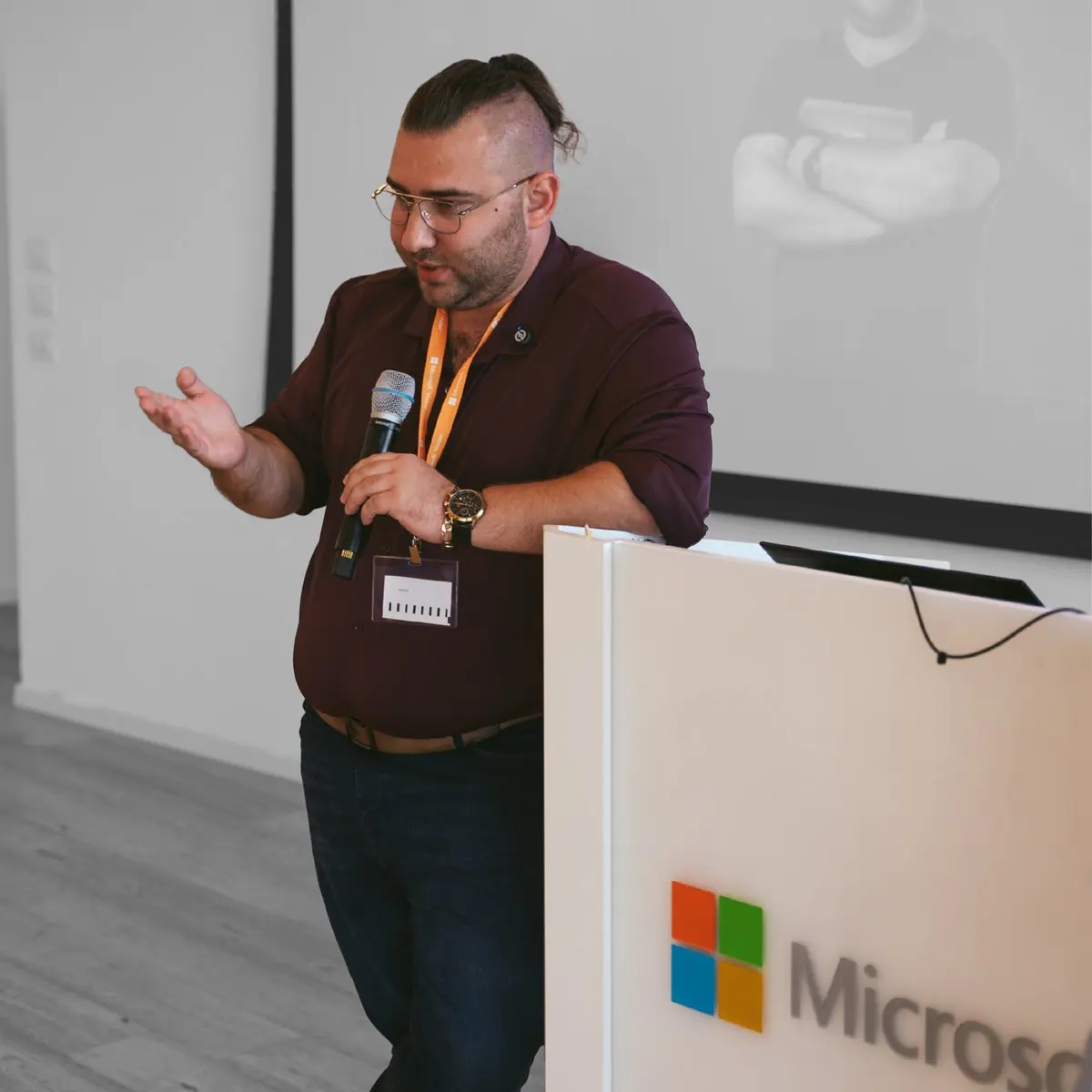
Speaking at Microsoft

Meeting with international teams, as part of work with a startup
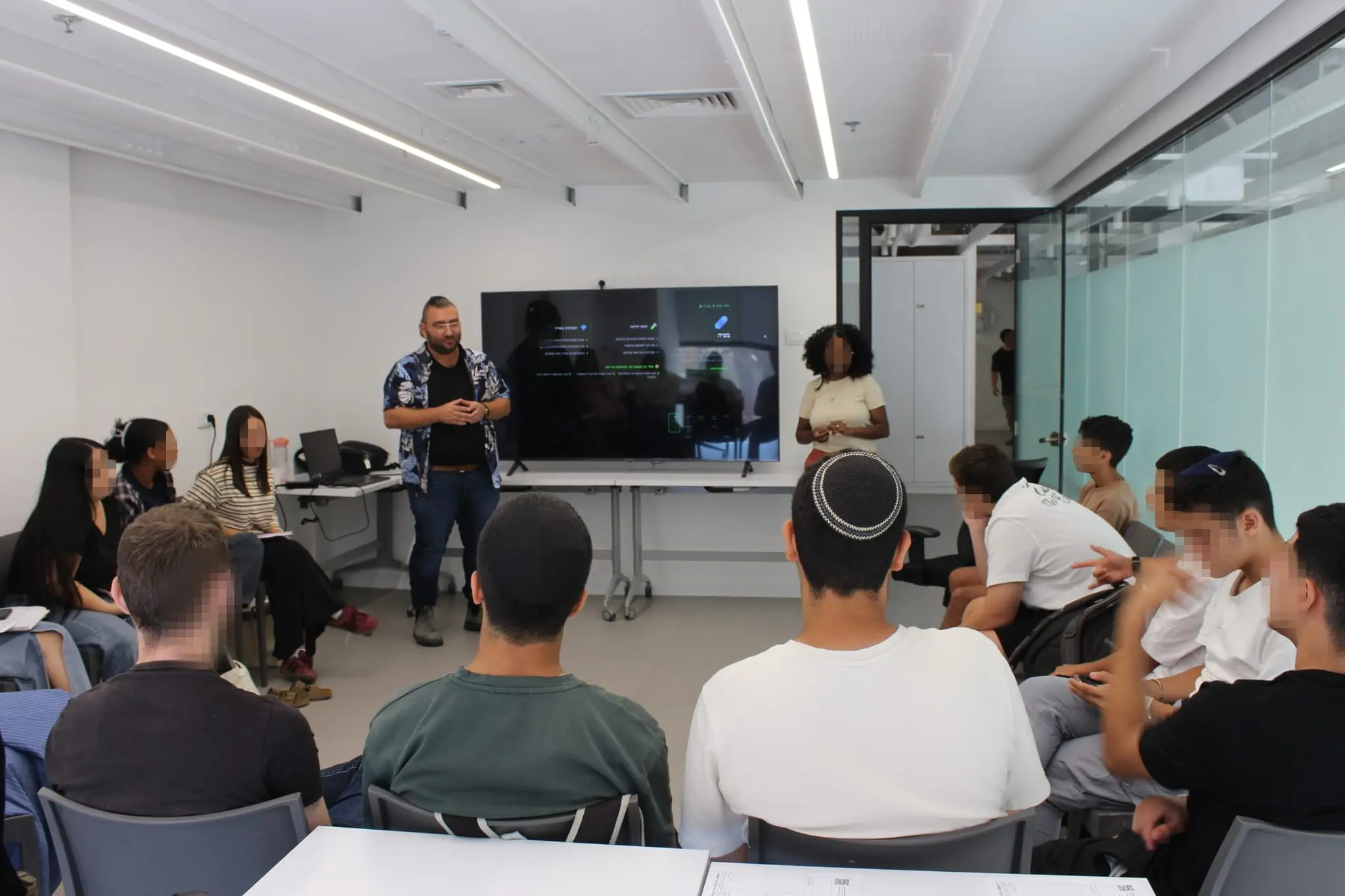
Teenovation, Meital centre Sderot

Entrepreneurs session, Sderot
I have worked with
- Google for Startups
- House of Business, Sderot Municipality
- Microsoft Reactor
- GameReady
- Eclipse Capital
- SderoTech
- IUCEL
- Resilience & Health Innovation Hub
- International Resilience Institute of Sderot


















- Google for Startups
- House of Business, Sderot Municipality
- Microsoft Reactor
- GameReady
- Eclipse Capital
- SderoTech
- IUCEL
- Resilience & Health Innovation Hub
- International Resilience Institute of Sderot
What Clients Say
From different fields, at different stages of business
Dan Manto
Eclipse Capital
Real Estate Investment and Finance, USA
Arty McLabin
GameReady
Game Development Education and Outsourcing, International

Anna
Beautician
After I finished a cosmetology course at a leading company, I was confused. I didn't know how to open a business, what to sell from home, or how to bring in clients. Since I reached out to Mobius, everything has changed. We built an organized plan with clear steps and no unnecessary risks. Today I see results, and I'm growing and developing every month.

Mark
Massage therapist, Gan Yavne
When I finished a massage course, I imagined a different world. I found out it's a hard field, and financial stability isn't easy to find. When I came to Mobius, something changed. We started an organized process and built a business plan. Without Mobius? I probably would have given up. Today I believe in myself and in my own path.
And the paperwork, for anyone who wants to see that too.

Certificate of appreciation, Sderot municipality

Certificate of honor, Teenovation 2026

Directors and officeholders course, SRI Campus
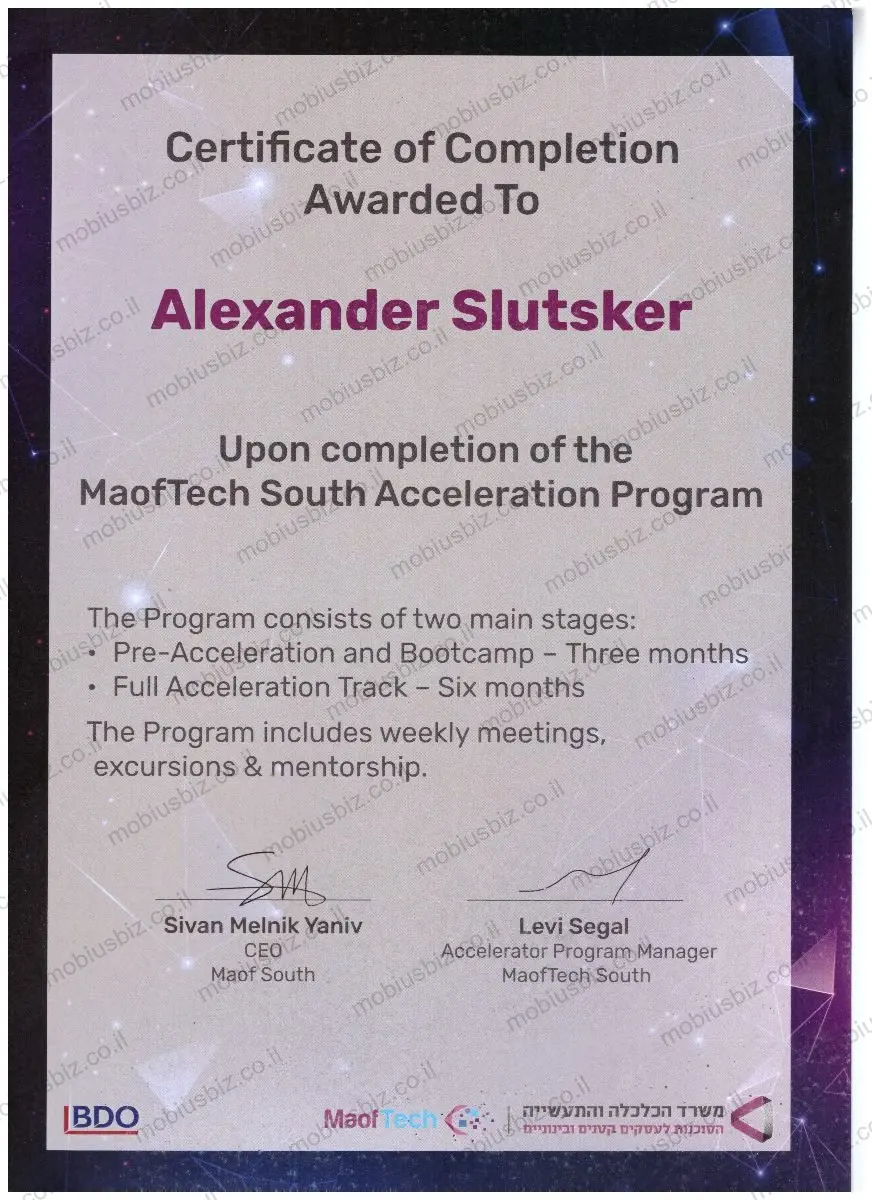
Acceleration program, MaofTech South
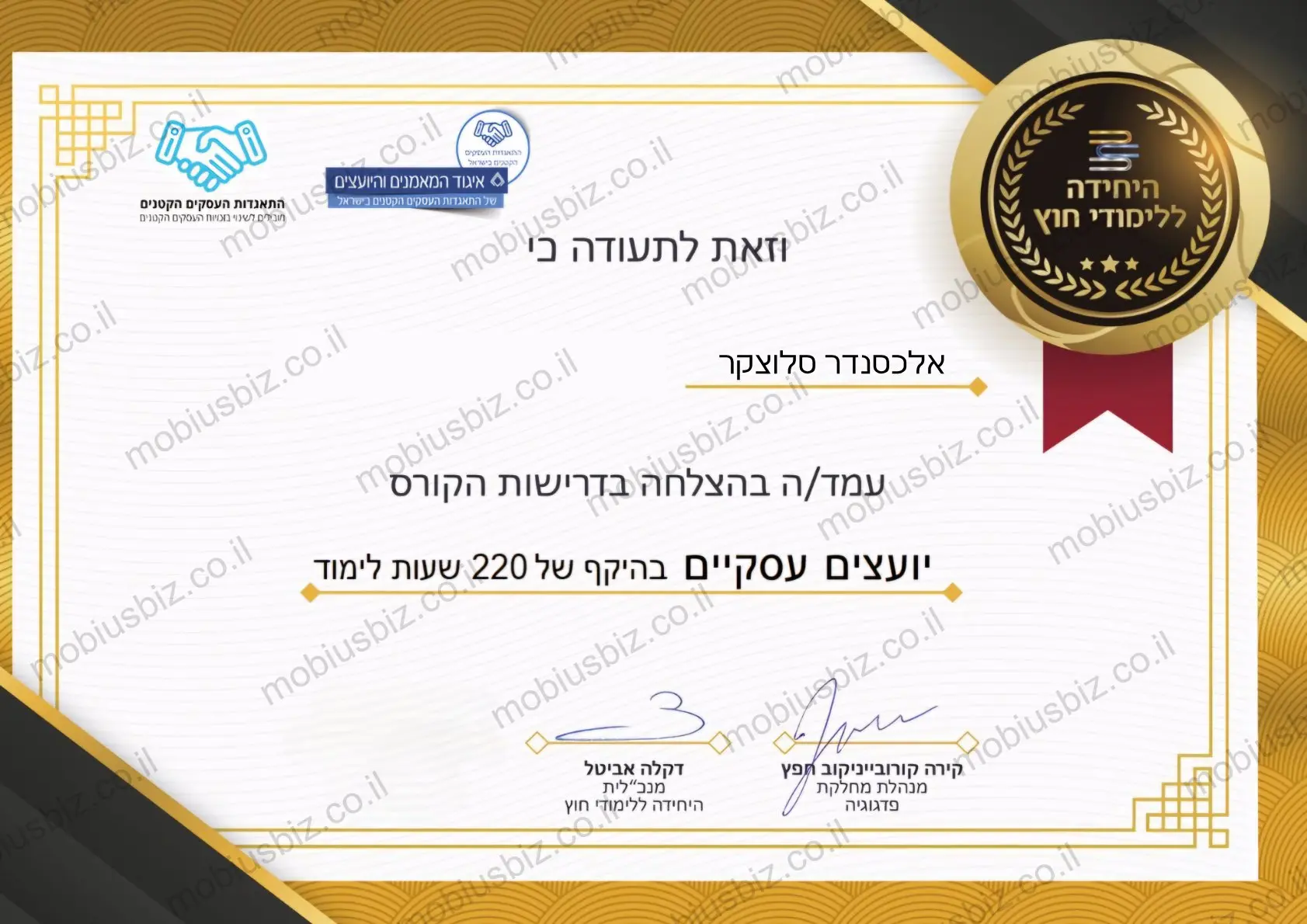
Business consultants course

Adaptive project management, INT college

Business, Marketing, Operations & Financial Consultant
Mobius
Alexander Slutsker
9+Years of experience in business consulting
I help entrepreneurs, self-employed people, small businesses and startups understand their own numbers, choose what to do first and grow from there.
Book a Free Call+972 055-248-6151. Better on WhatsApp: I am in meetings most of the day and answer as soon as I am free. Other ways to reach me
We can talk in English, Hebrew or Russian.