What Business Strategy Actually Is (Choosing What Not to Do)
Strategy is not a goal or a plan. It is the choices about what to do and what to say no to. Here is what it really means and why trade-offs are the point.
What is business strategy
Business strategy is the set of choices about which customers to serve, how to win them and what not to do, so money and time go where they count.
Illustration
Two routes, one choice
- It gives
- Planned clients who book ahead
- It costs
- Slow months outside the wedding seasons
Route B is the choice. Its price is the slow months, and the list of things the salon stopped doing.
What the salon stopped doing
- The third chair for fast cuts
- Walk in discount days
- Matching the chains' prices
Business strategy is the set of deliberate choices about where you compete, who you serve, how you win, and what you will refuse to do. That last part is the one most people skip, and it is the most important. As Michael Porter wrote, the essence of strategy is choosing what not to do. A strategy is not a goal, and it is not a plan. It is a choice, and every real choice means giving something up.
This is why so many businesses have goals, plans, and activity but no strategy. They try to serve everyone, match every competitor, and chase every new idea, which leaves them indistinct and stretched. Understanding what strategy actually is turns a busy, undifferentiated business into one that customers choose on purpose.
What strategy actually is
Strategy is the answer to a few sharp questions: who exactly is this for, how are we different, why would someone pick us over the obvious alternative, and what will we deliberately not do. Answer those with real trade-offs and you have a strategy. Leave them vague and you have hope dressed as a plan.
Notice that a target like grow 30 percent is not on that list. That is a goal, a destination. Strategy is the chosen route and the things you leave behind to travel it. A goal tells you where you want to be, a strategy tells you how you will get there in a way a competitor cannot simply copy, and what you will sacrifice to make it real.
A goal is not a strategy, and a plan is not either
The most common confusion is treating a goal as a strategy. More revenue, more customers, more locations: these are directions, not decisions. They say nothing about how you will win or what you will give up, so they offer no guidance when a real choice appears.
A business plan is closer but still not the same. A plan describes activities and forecasts numbers, a strategy is the core set of choices the plan should be built around. You can write a thick, confident plan with no strategy inside it: pages of activity with no clear decision about who you serve and how you are different. That is the expensive version of looking busy.
The heart of it: choosing what not to do
Every strong strategy rests on trade-offs. Doing more of one thing means doing less of another, and pretending otherwise is how strategies dissolve into mush. Porter's airline example is perfect: an airline can serve full meals or turn its planes around fastest, but not both, because each choice costs the other. The trade-off is not a weakness of the strategy, it is the strategy.
This is why the no matters as much as the yes. Choosing to be the fastest means accepting you will not be the cheapest. Choosing to serve demanding premium clients means turning away bargain hunters. A business that refuses every trade-off, wanting to be fast and cheap and premium and everything to everyone, ends up being nothing in particular, and easy for anyone who actually chose to beat.
How to tell if you really have one
The honest test is simple: what do you deliberately not do, and which customers are you happy to lose. If you cannot answer, you have goals and activity, not a strategy. A real strategy shows up as visible trade-offs: this segment and not that one, this strength rather than all of them, this price position on purpose.
The tell of a missing strategy is looking like everyone else. If a customer could swap you for three competitors without noticing a real difference, you have not made a choice yet. Distinctiveness is not an accident or a matter of personality. It is the visible result of having decided what to be and what to give up.
What it costs to skip the strategy
A strategy gap rarely announces itself, because a business can grow for a while without one, carried by a rising market, hard work, or luck. It shows up quietly: competing mainly on price, chasing every unrelated chance to earn, struggling to explain why a customer should choose you, and spreading effort so thin that nothing is truly excellent.
None of these feel like a strategy problem in the moment. They feel like a competitive market or a demanding customer base. But they trace back to the same gap: no clear choice about what to be and what to refuse. The bill arrives when a focused competitor shows up or the market tightens, and there is no distinctive reason to pick you.
The order that actually works
- Name your best customer. Not everyone who might buy, but the specific group you serve best and most profitably, your ideal customer profile.
- Name your real difference. What you do better than the obvious alternatives in the eyes of that customer, which is your value proposition.
- Choose your trade-offs. Decide what you will deliberately not do or not be, and who you are willing to lose.
- Write it in a page. One clear page of choices you will actually follow beats a fifty page plan you file away.
- Align activity to it. Judge every new idea and every expense against the choice, and say no to the good ones that do not fit.
- Review on a rhythm. Revisit once or twice a year and when the game changes, but commit long enough for the choice to pay off.
Owners often skip straight to activity and plans while the core choices stay unmade. Get the choices right and the plan writes itself. Skip them and no amount of planning creates a reason to be chosen.
Making those core choices with someone who asks the hard questions is what strategic consulting for small businesses is for.
When you should not hire a consultant
If you can say clearly who you serve, why they choose you over the obvious alternative, and what you deliberately do not do, and your team's decisions reflect those choices, you have a real strategy and probably do not need help articulating one.
Where an outside view helps is when you are growing but cannot explain why customers pick you, when every direction seems reasonable so you commit to none, or when you are too close to see the trade-offs. There, help is not a generic plan, it is the pressure to make the clear choices a strategy requires. As a business consultant, I would rather force three honest decisions with you than hand you a thick document that decides nothing. If you want to make those choices together, talk it through with me. What business owners who worked with me say is in the recommendations below this article.
Sources
- Michael Porter, "What Is Strategy?", Harvard Business Review, 1996, on strategy as trade-offs, the line between strategy and operational effectiveness, and the principle that the essence of strategy is choosing what not to do.
The content on this blog is general information only and is not a recommendation to act. It is not business, legal, tax, or financial advice. Before making any decision, consult a qualified professional, such as an accountant, a lawyer, or a business advisor, about your specific situation.
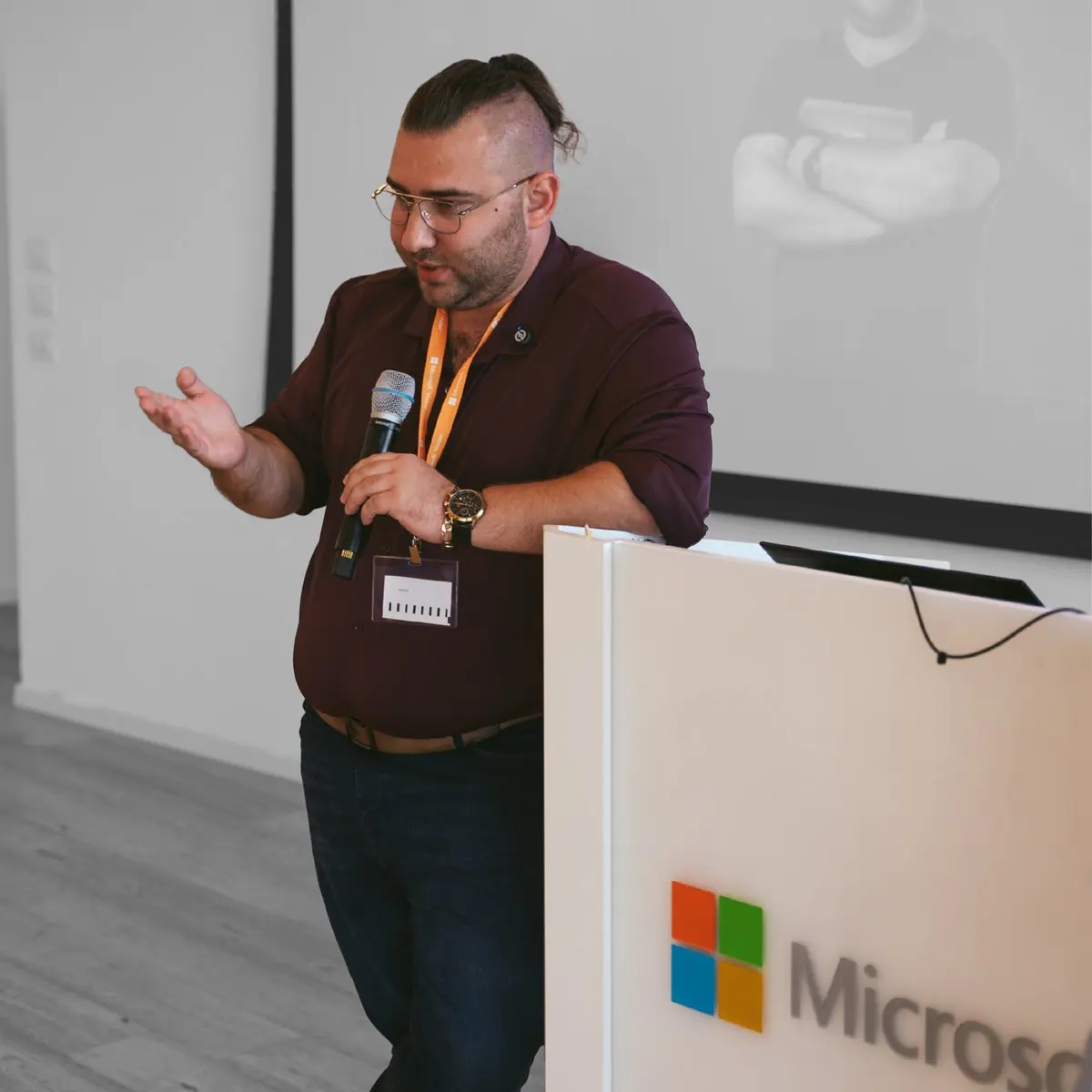
Speaking at Microsoft

Meeting with international teams, as part of work with a startup
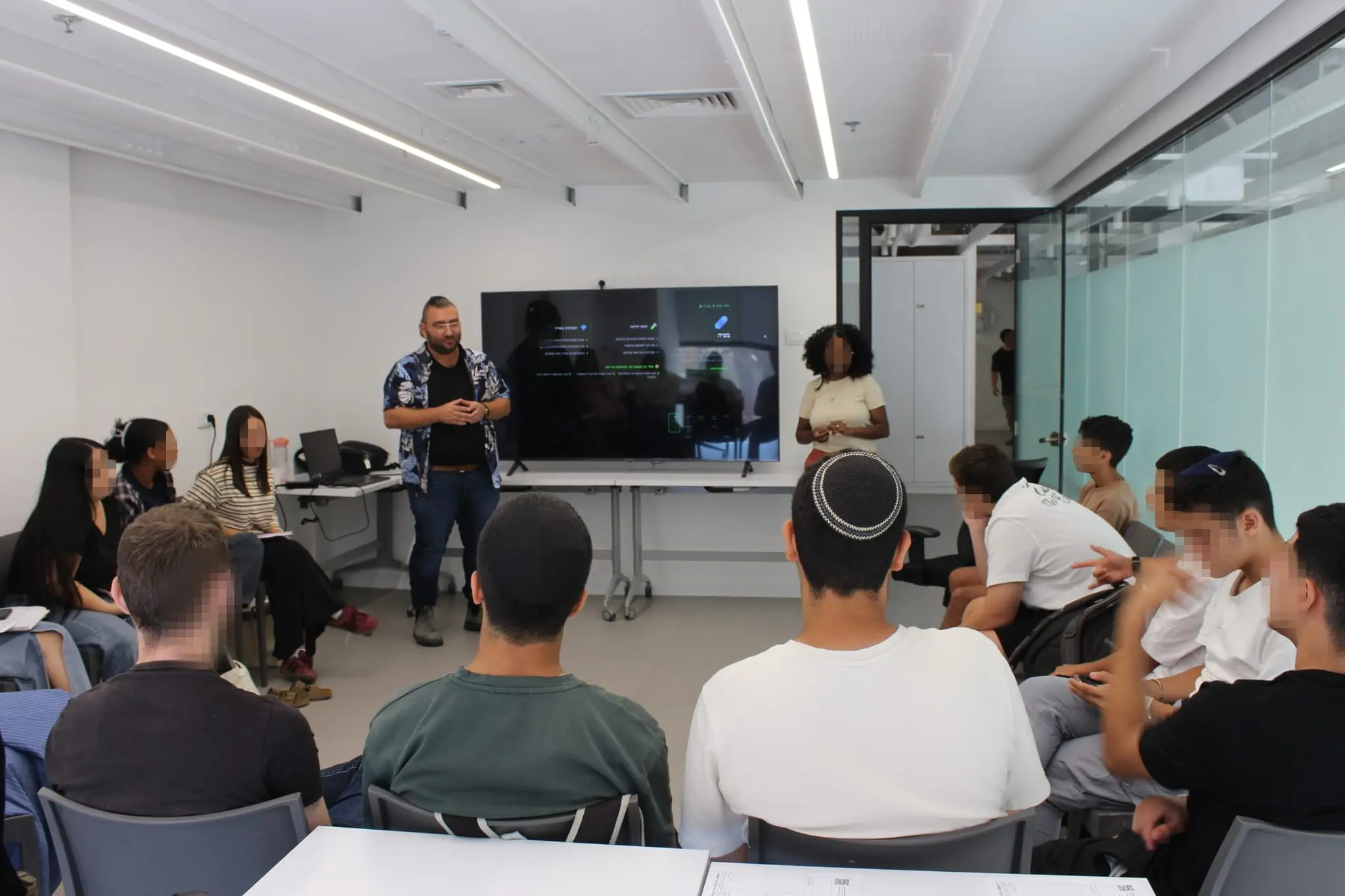
Teenovation, Meital centre Sderot

Entrepreneurs session, Sderot
I have worked with
- Google for Startups
- House of Business, Sderot Municipality
- Microsoft Reactor
- GameReady
- Eclipse Capital
- SderoTech
- IUCEL
- Resilience & Health Innovation Hub
- International Resilience Institute of Sderot


















- Google for Startups
- House of Business, Sderot Municipality
- Microsoft Reactor
- GameReady
- Eclipse Capital
- SderoTech
- IUCEL
- Resilience & Health Innovation Hub
- International Resilience Institute of Sderot
What Clients Say
From different fields, at different stages of business
Dan Manto
Eclipse Capital
Real Estate Investment and Finance, USA
Arty McLabin
GameReady
Game Development Education and Outsourcing, International

Anna
Beautician
After I finished a cosmetology course at a leading company, I was confused. I didn't know how to open a business, what to sell from home, or how to bring in clients. Since I reached out to Mobius, everything has changed. We built an organized plan with clear steps and no unnecessary risks. Today I see results, and I'm growing and developing every month.

Mark
Massage therapist, Gan Yavne
When I finished a massage course, I imagined a different world. I found out it's a hard field, and financial stability isn't easy to find. When I came to Mobius, something changed. We started an organized process and built a business plan. Without Mobius? I probably would have given up. Today I believe in myself and in my own path.
And the paperwork, for anyone who wants to see that too.

Certificate of appreciation, Sderot municipality

Certificate of honor, Teenovation 2026

Directors and officeholders course, SRI Campus
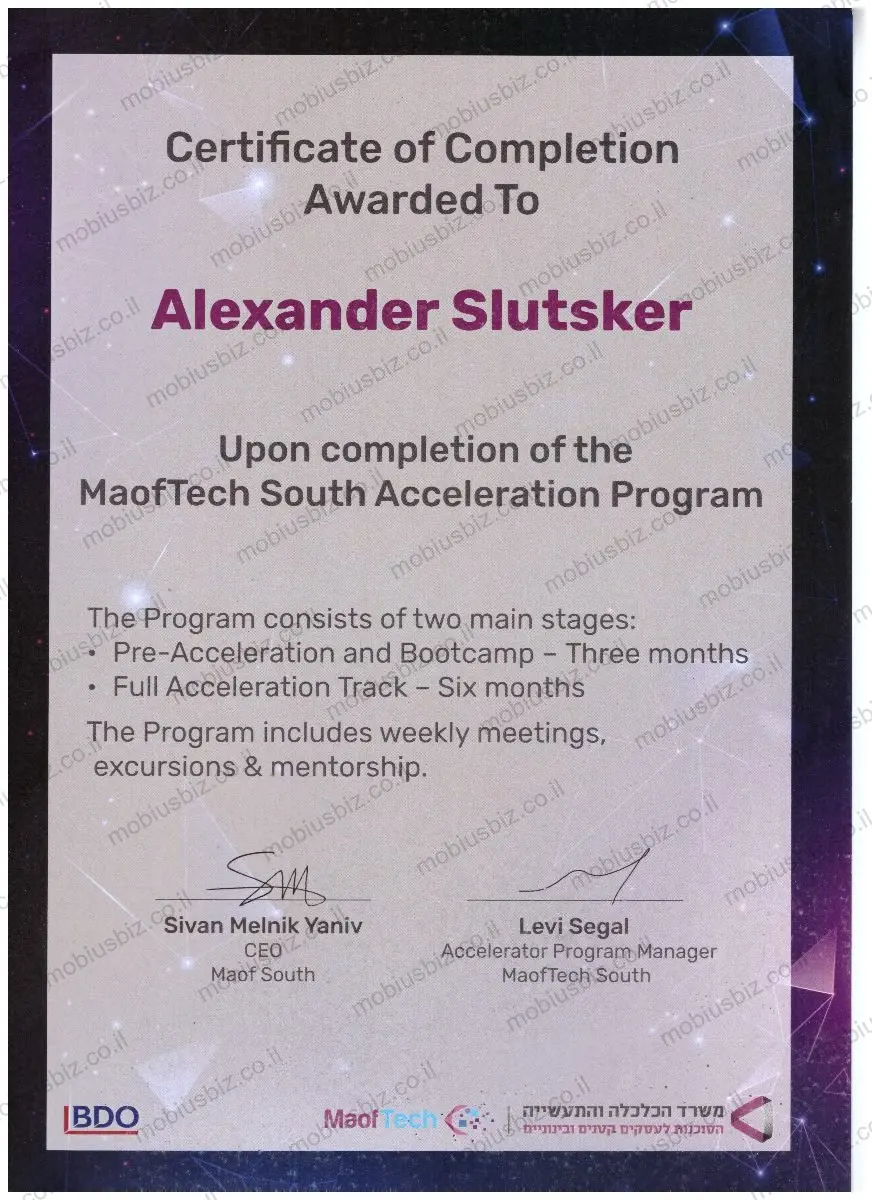
Acceleration program, MaofTech South

Business consultants course

Adaptive project management, INT college

Business, Marketing, Operations & Financial Consultant
Mobius
Alexander Slutsker
9+Years of experience in business consulting
I help entrepreneurs, self-employed people, small businesses and startups understand their own numbers, choose what to do first and grow from there.
Book a Free Call+972 055-248-6151. Better on WhatsApp: I am in meetings most of the day and answer as soon as I am free. Other ways to reach me
We can talk in English, Hebrew or Russian.