Business Plan Strategy Session: What Actually Happens
What a business plan strategy session should include, from diagnosis and market reality to gaps, roadmap, education, execution, and follow-up.
A business plan strategy session is not a motivational meeting. It is a structured way to test a business idea, an existing plan, or a struggling operation against real market conditions, real numbers, and real execution limits.
The best sessions do three jobs. They diagnose where things stand, expose the gaps, and turn the next stage into a roadmap. My own process is simple to describe: meeting, analysis, plan preparation, explanation, gap finding, education, and staying alongside the execution as the results start to move.
What should happen before the session?
Good strategy work starts before the meeting. Bring the raw truth.
For a new business, that means quotes from suppliers, renovation estimates, rent options, license or permit requirements, expected labor, available cash, and early market research. For an existing business, bring revenue, costs, cash flow (money moving in and out), customer sources, marketing spend, bottlenecks (steps that slow everything else), and the decisions that feel stuck.
The business plan guide of the SBA (the U.S. Small Business Administration) is useful as a checklist because it forces you to cover market analysis, operations, marketing, funding, and financial projections. But a session should not blindly fill a template. It should decide what matters for this business.
Step 1: Diagnose the current reality
The first question is not "what do you want to build?" It is "what is true right now?"
For a founder, the truth may be that demand is not proven, supplier costs are unknown, or the marketing budget is too optimistic. For a struggling owner, the truth may be that the current strategy is treated as the only possible strategy, even while competitors stay profitable in the same market.
This is where a consultant has to be honest. If an owner arrives with no research and only tries to prove that the vision is realistic, the session loses its value. My approach is to put the facts on the table, wish the owner success, and pause, rather than pretend the numbers support the decision.
Step 2: Map the gaps
After diagnosis, the session maps the gap between the goal and the reality.
The gap might be financial: cash arrives too late, CAC (cost to win a customer) ignores salaries, or the break-even point (where income covers all costs) leaves out the owner's work time. It might be operational: the business needs permits, fire safety, staff training, supplier reliability, or better delivery processes. It might be strategic: the owner is aiming at a weak audience while a stronger segment is nearby.
This is also where Israel-specific planning matters. A local service business should first understand the local market, population density, purchasing power, culture, religion, location, regulation, and customer behavior. A startup, by contrast, often needs to think globally from the beginning.
Step 3: Build the roadmap
A strategy session should produce a roadmap, not only a document.
That roadmap should include:
- The main decision
- The assumptions that must be tested
- The missing data
- The financial model or next calculation
- The first actions
- The owner of each action
- The review date
The guidance of the BDC (the Business Development Bank of Canada) on measuring a strategic plan supports this approach: tie measures to objectives, keep the list simple, and use current data as feedback. A session that creates twelve priorities and no review rhythm creates noise, not strategy.
Step 4: Explain and educate
A good consultant does not only say what to do. The owner should understand why the recommendation exists.
If the plan delays launch, the reason should be clear. Maybe the renovation estimate is too low. Maybe the marketing budget assumes that customers will appear without awareness spending. Maybe a bakery that needs a large investment is choosing a location without enough foot traffic, or with labor costs that break the model.
Education matters because the owner makes decisions every day, most of them with nobody else in the room. That is why I explain the reasoning behind every recommendation, so the owner learns to read the numbers and the market the way I do. The goal is better judgment, not dependence.
Step 5: Follow through after the session
Strategy becomes valuable only when it changes action.
After the session, the plan should move into follow-up: checking quotes, speaking with customers, reviewing marketing economics, modeling cash flow, or building a smaller test. For some businesses that means delaying launch. For simple self-employed freelancers, it may mean starting small and learning while operating.
Both paths can be correct. The difference is risk. If the business requires serious investment, it is usually better to delay and improve the plan than to launch underfunded and solve expensive problems later.
When the session shows that a full plan is needed, I can build it with you from the numbers you brought: see business plan building and writing.
For the wider plan structure, see how to build a business plan. If you are not sure where the real constraint is, start with business diagnosis, or talk it through with me in a practical first conversation.
The content on this blog is general information only and is not a recommendation to act. It is not business, legal, tax, or financial advice. Before making any decision, consult a qualified professional, such as an accountant, a lawyer, or a business advisor, about your specific situation.
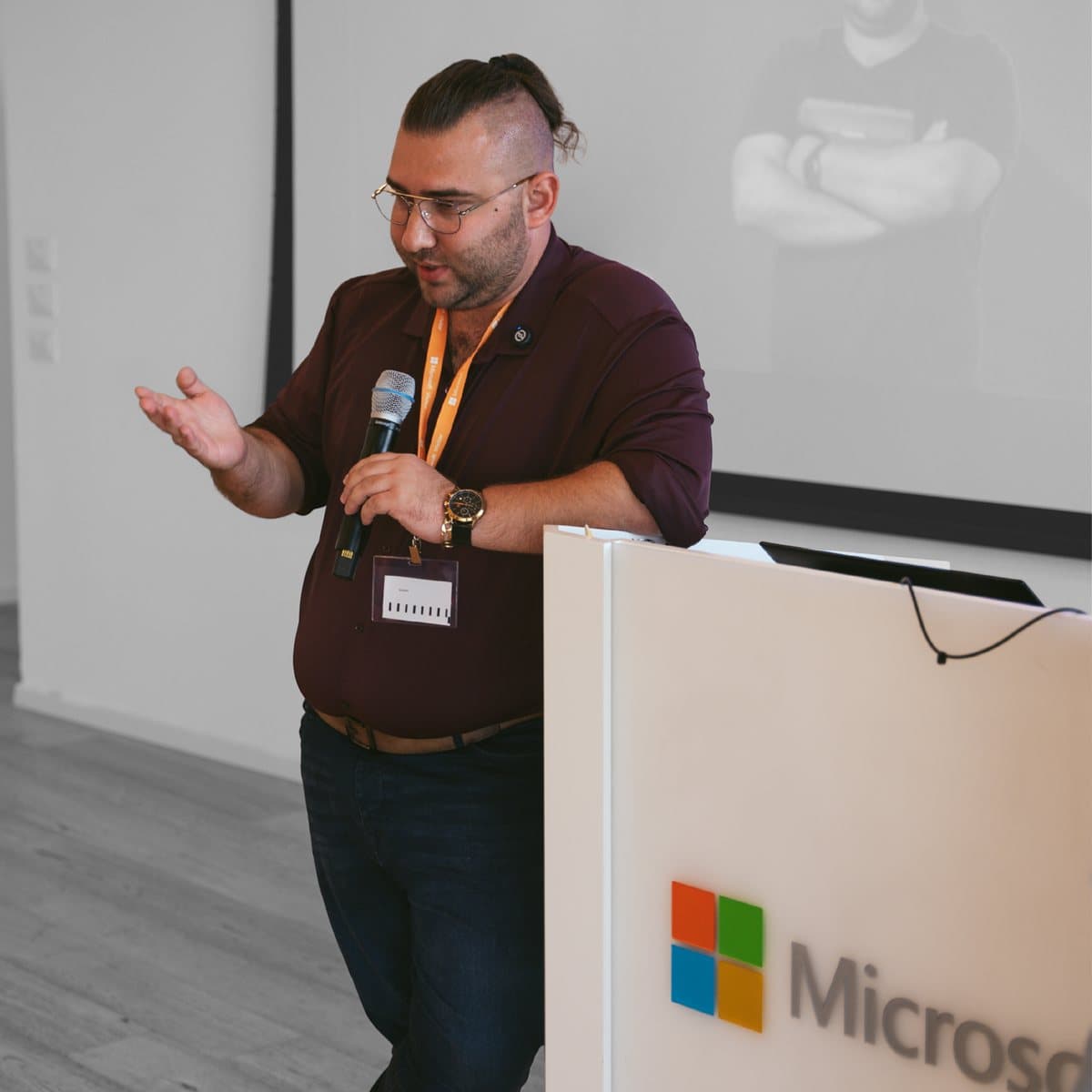
Speaking at Microsoft
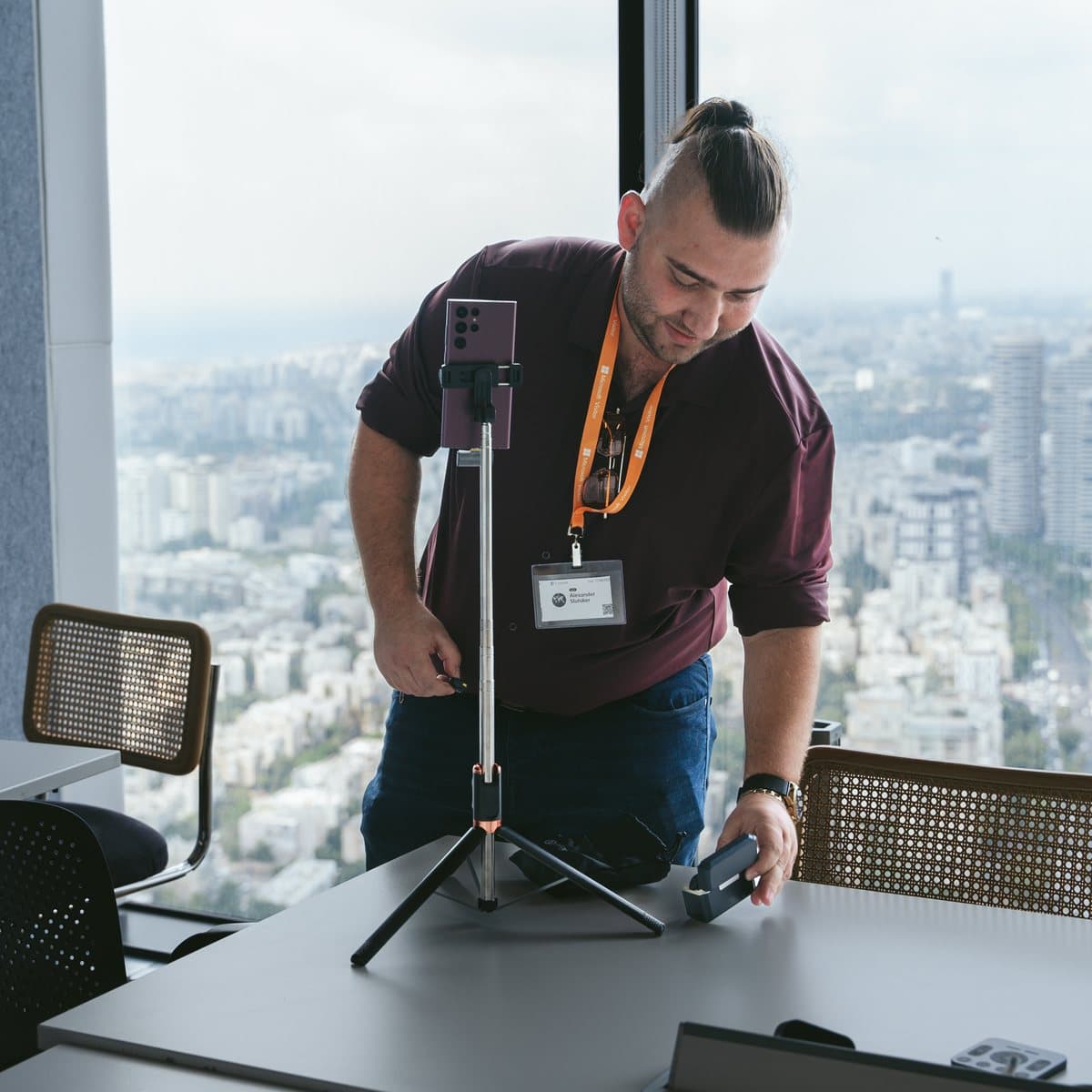
Meeting with international teams, as part of work with a startup
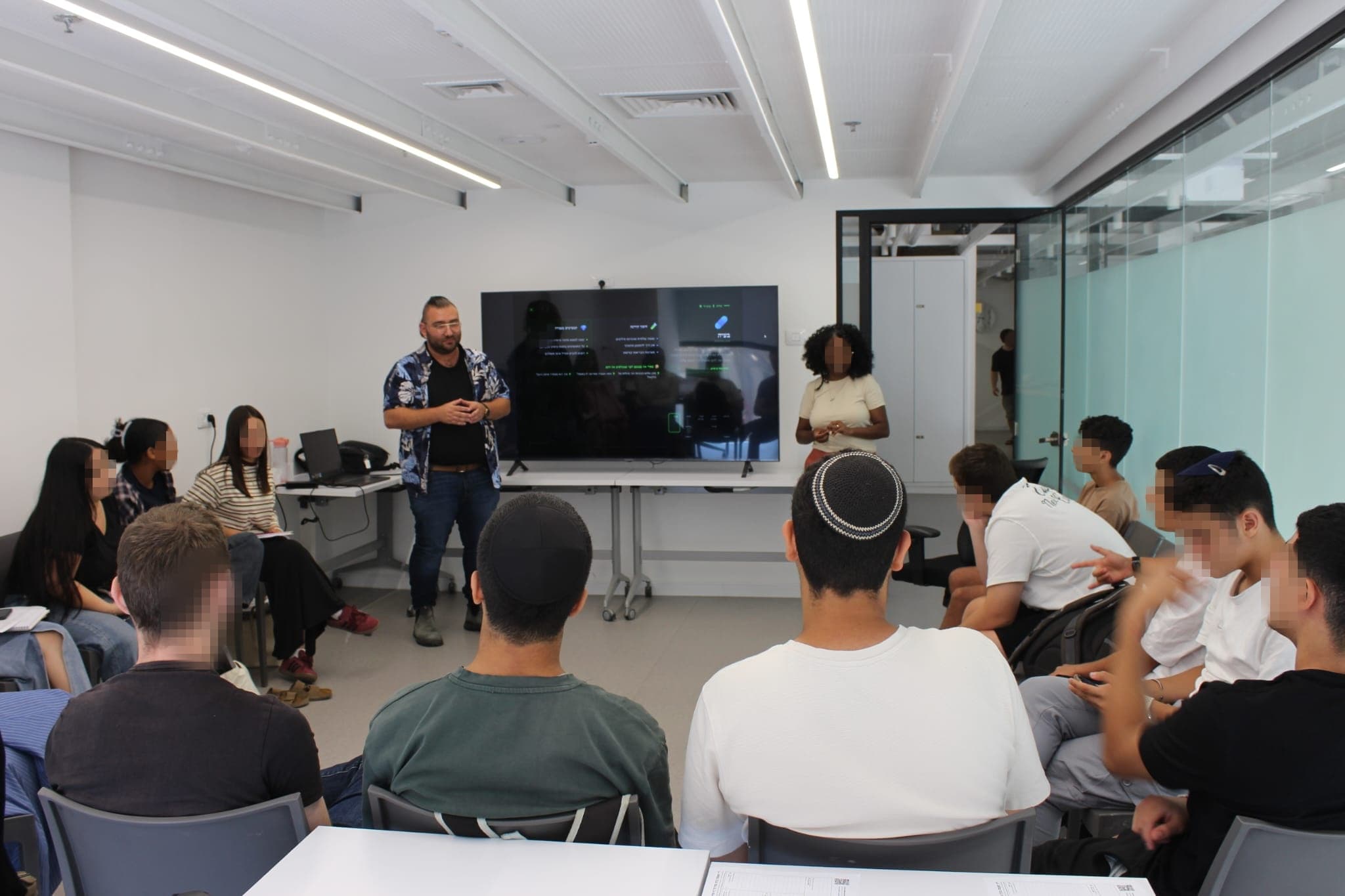
Teenovation, Meital centre Sderot
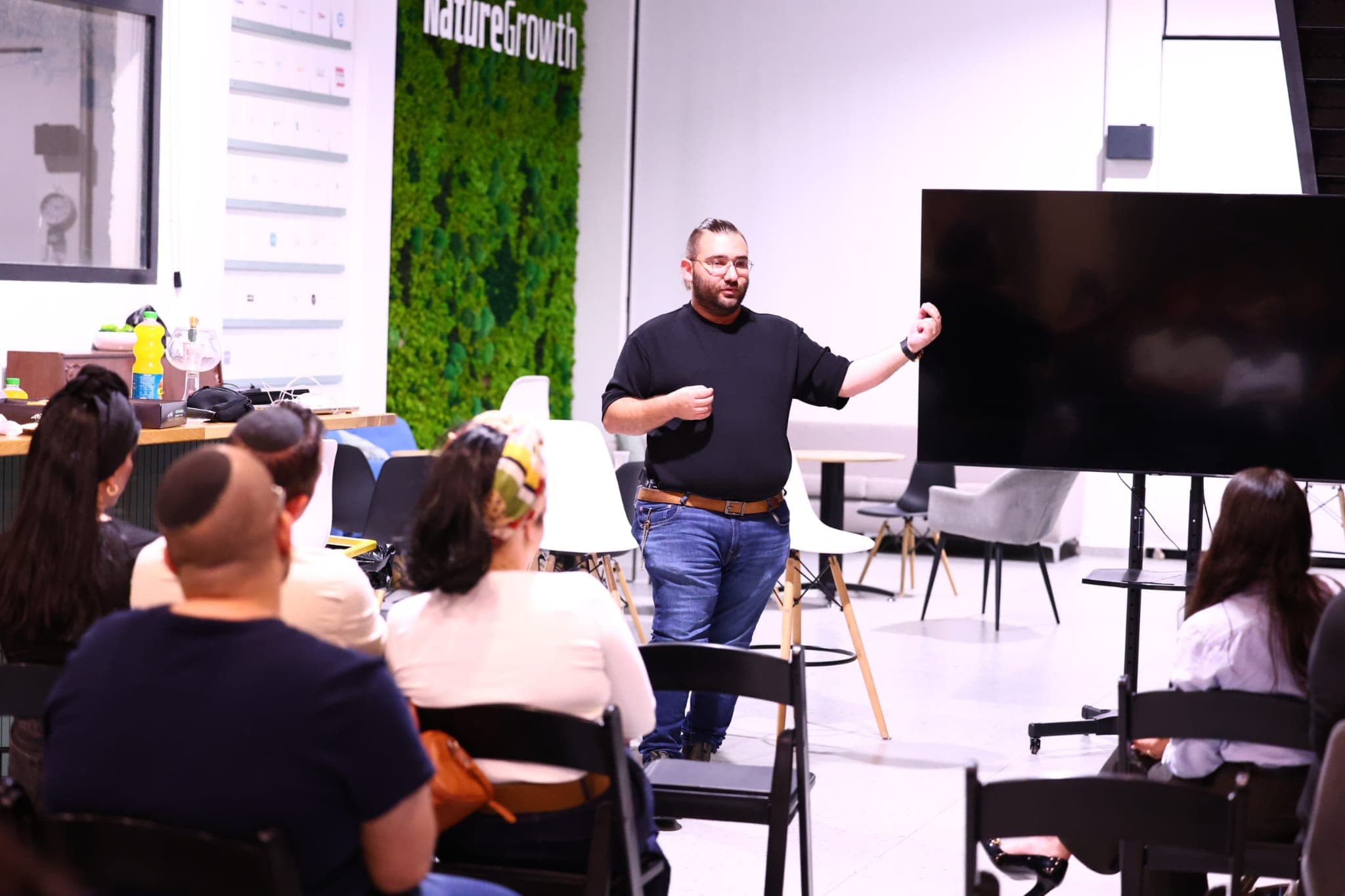
Entrepreneurs session, Sderot
I have worked with
- Google for Startups
- House of Business, Sderot Municipality
- Microsoft Reactor
- GameReady
- Eclipse Capital
- SderoTech
- IUCEL
- Resilience & Health Innovation Hub
- International Resilience Institute of Sderot















- Google for Startups
- House of Business, Sderot Municipality
- Microsoft Reactor
- GameReady
- Eclipse Capital
- SderoTech
- IUCEL
- Resilience & Health Innovation Hub
- International Resilience Institute of Sderot
What Clients Say
From different fields, at different stages of business
Dan Manto
Eclipse Capital
Real Estate Investment and Finance, USA
Arty McLabin
GameReady
Game Development Education and Outsourcing, International

Anna
Beautician
After I finished a cosmetology course at a leading company, I was confused. I didn't know how to open a business, what to sell from home, or how to bring in clients. Since I reached out to Mobius, everything has changed. We built an organized plan with clear steps and no unnecessary risks. Today I see results, and I'm growing and developing every month.
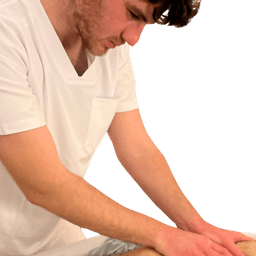
Mark
Massage therapist, Gan Yavne
When I finished a massage course, I imagined a different world. I found out it's a hard field, and financial stability isn't easy to find. When I came to Mobius, something changed. We started an organized process and built a business plan. Without Mobius? I probably would have given up. Today I believe in myself and in my own path.
And the paperwork, for anyone who wants to see that too.

Certificate of appreciation, Sderot municipality
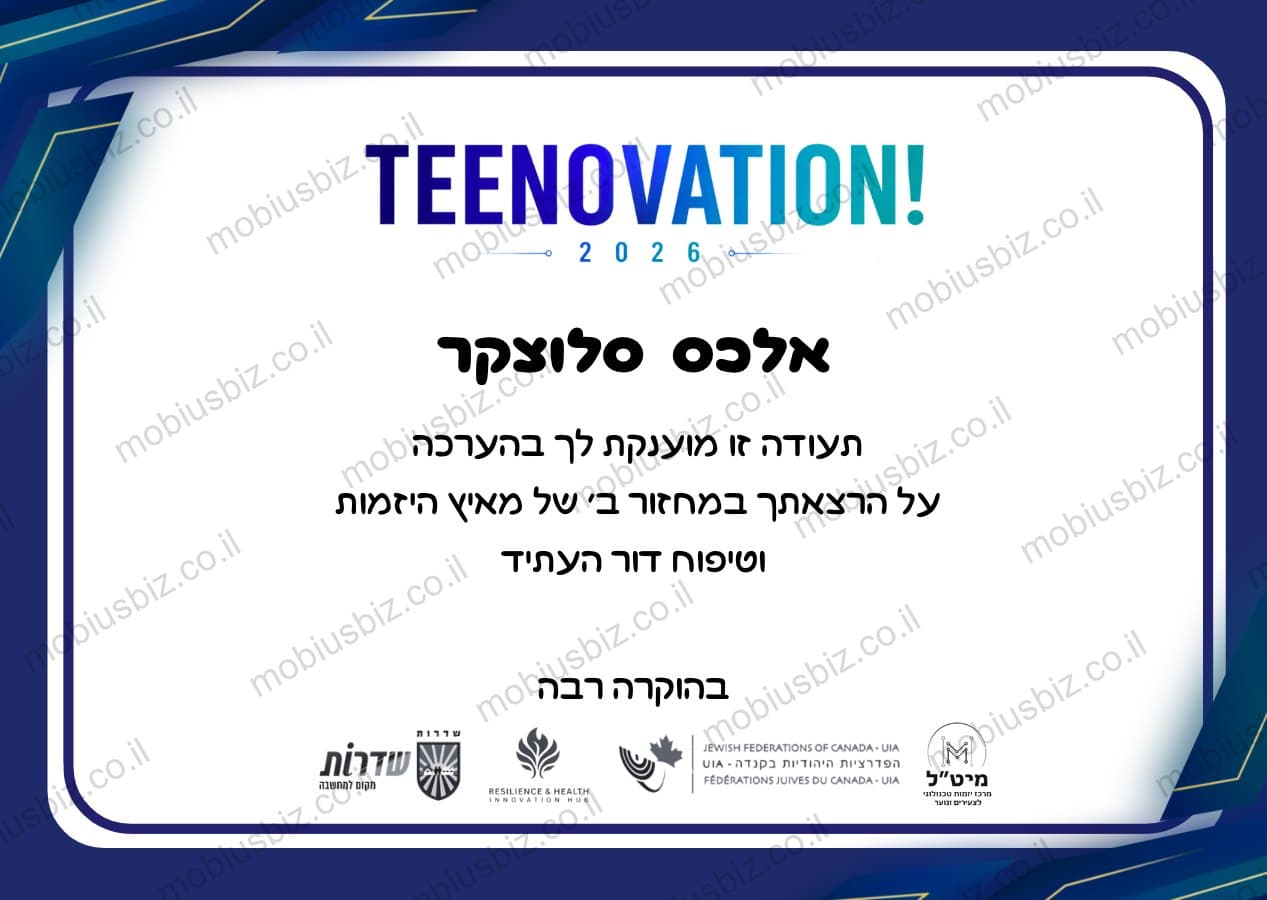
Certificate of honor, Teenovation 2026
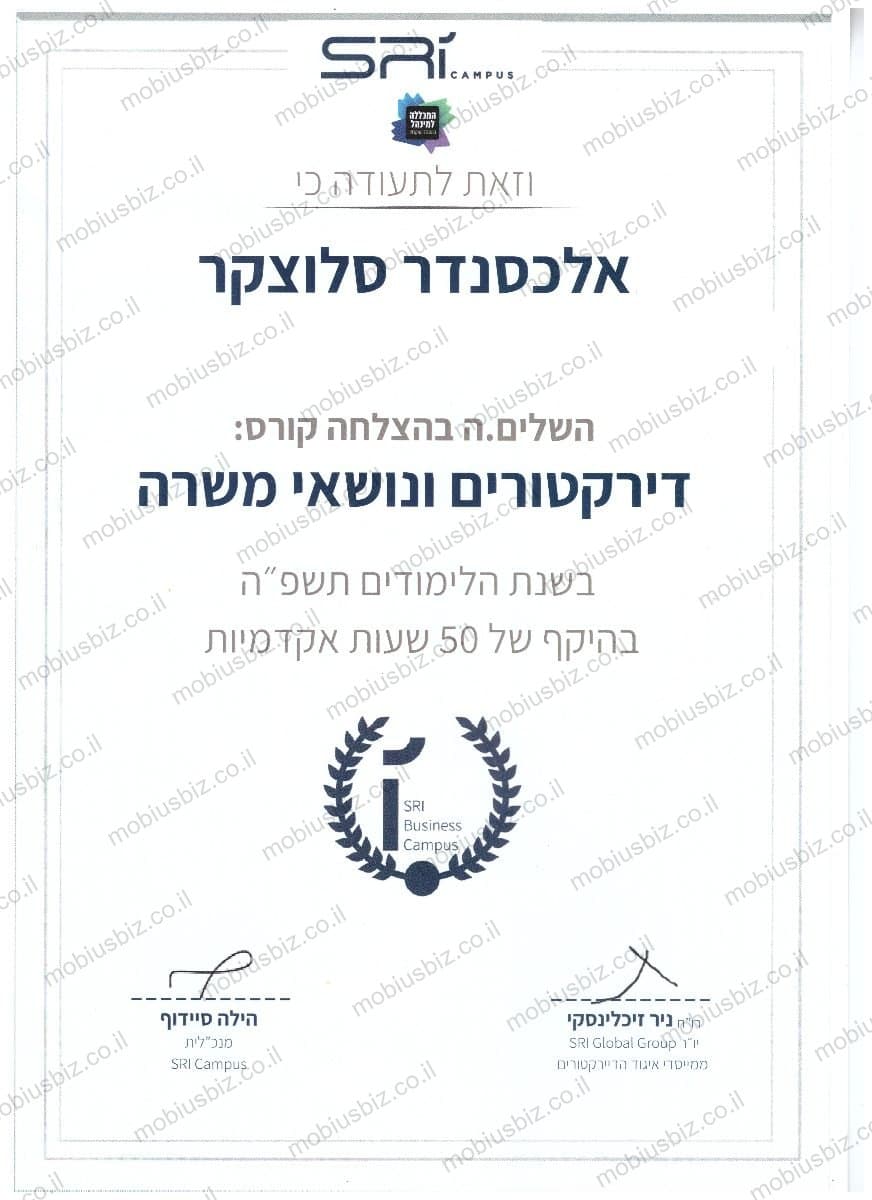
Directors and officeholders course, SRI Campus
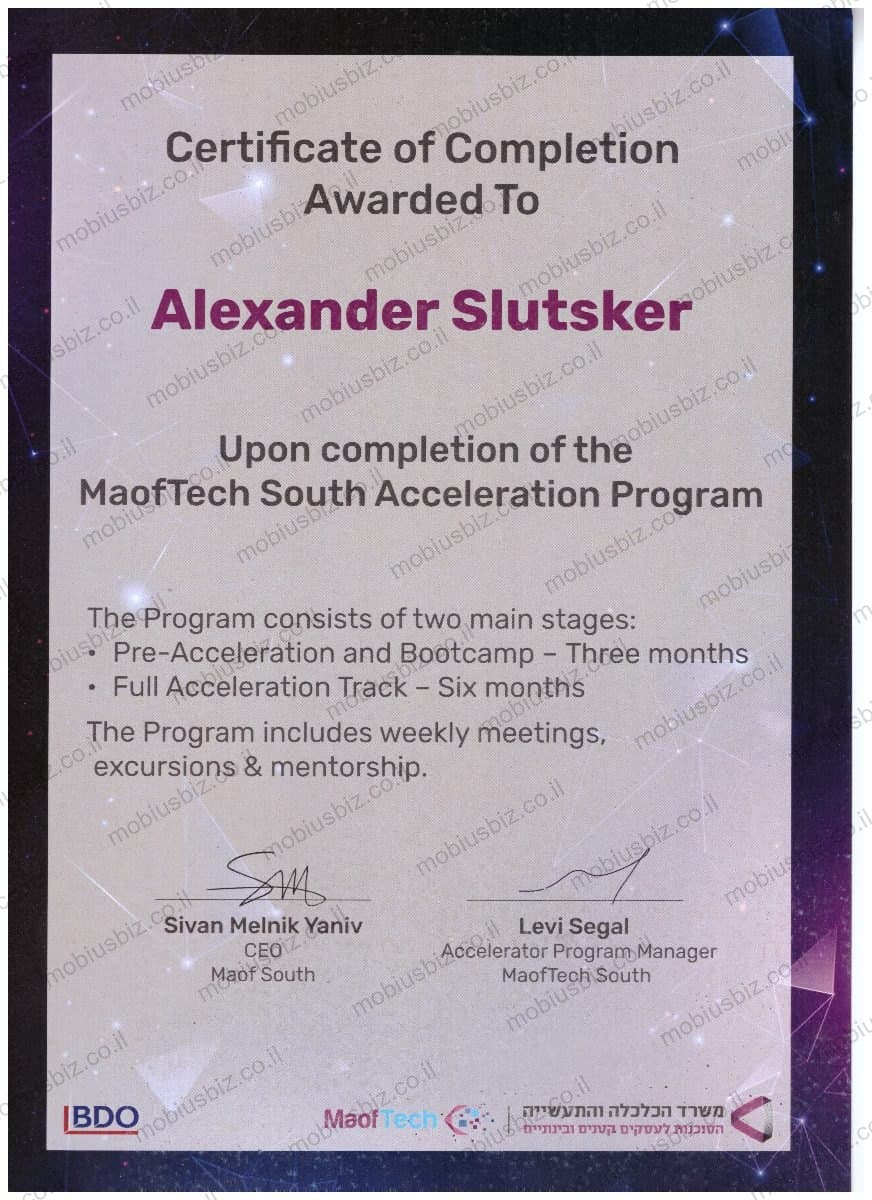
Acceleration program, MaofTech South
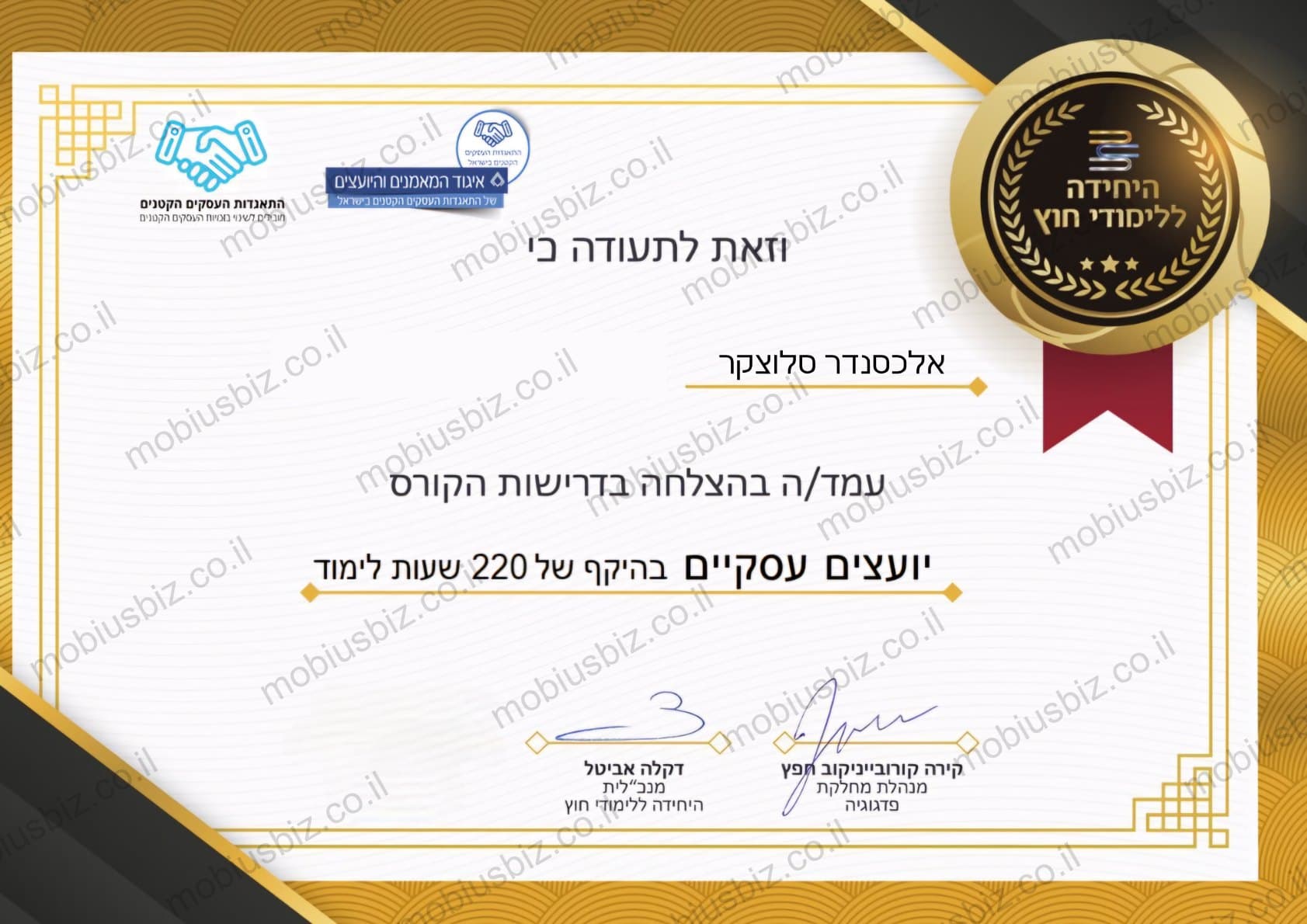
Business consultants course
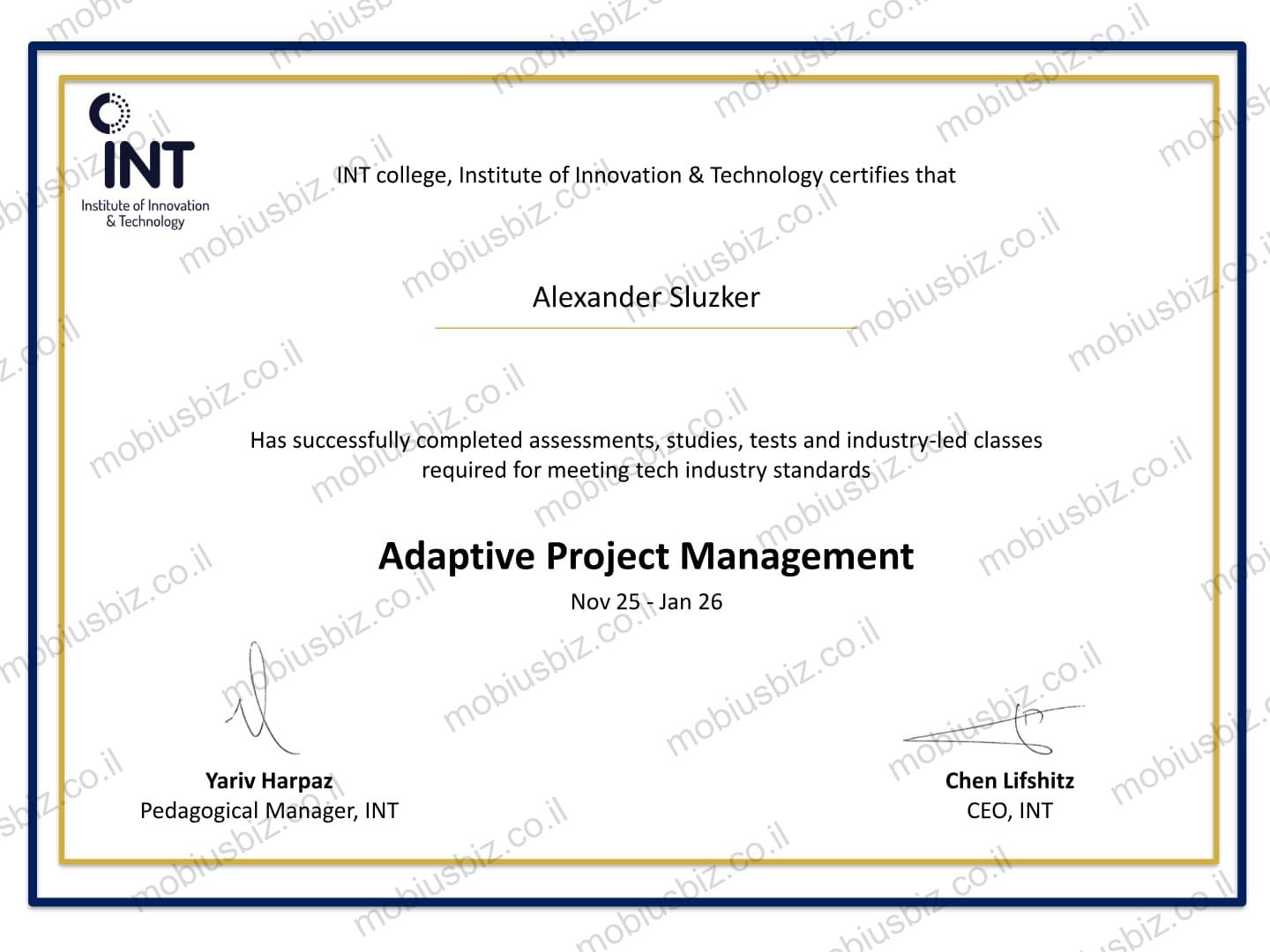
Adaptive project management, INT college
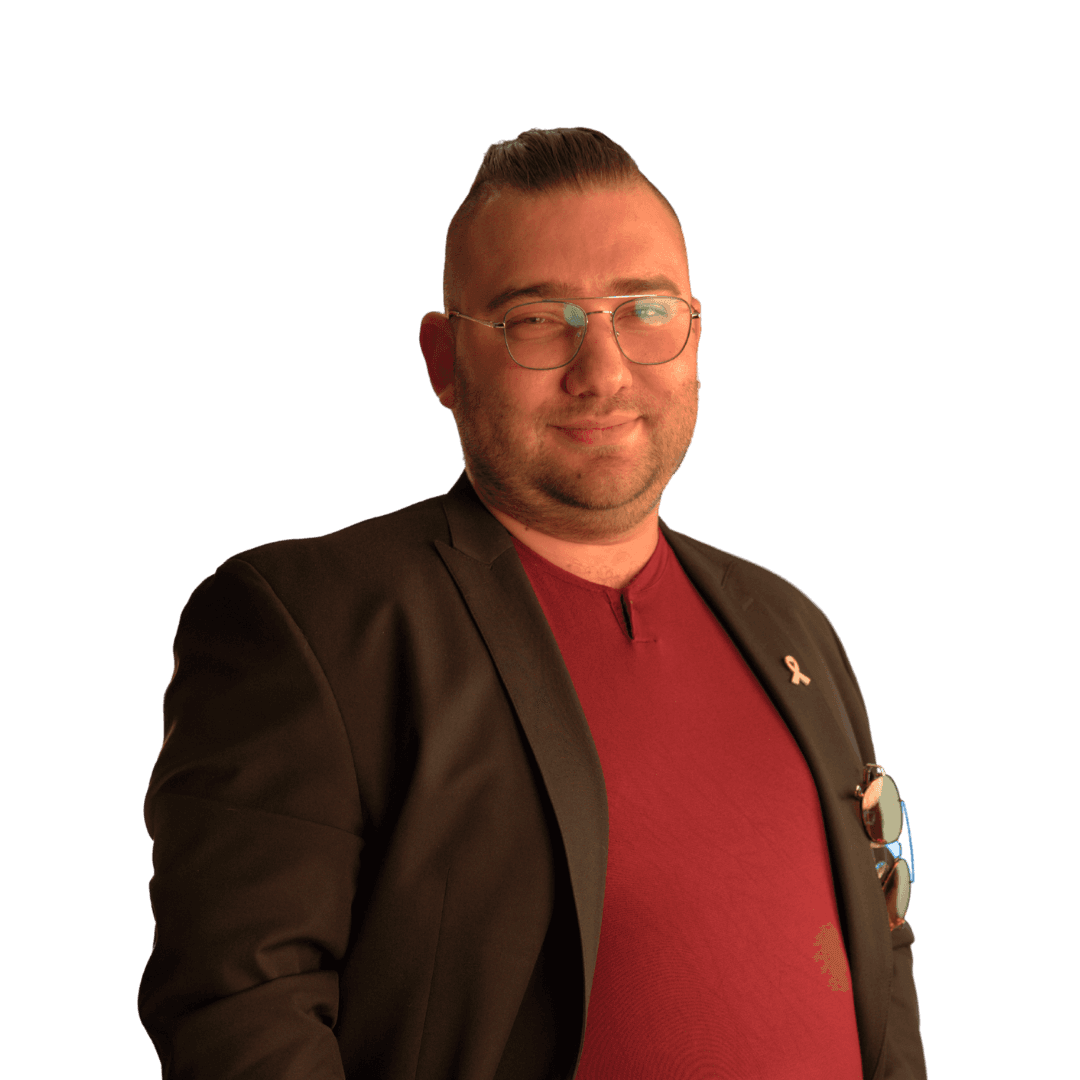
Business, Marketing, Operations & Financial Consultant
Mobius
Alexander Slutsker
9+Years of experience in business consulting
I help entrepreneurs, self-employed people, small businesses and startups understand their own numbers, choose what to do first and grow from there.
Book a Free Call+972 055-248-6151. Better on WhatsApp: I am in meetings most of the day and answer as soon as I am free. Other ways to reach me
We can talk in English, Hebrew or Russian.