Build Your First Team: Hire or Outsource?
Hire or outsource? A practical way for a small business owner to decide whether the next step is an employee, a contractor, an agency, or no hire yet.
Hire vs Outsource Calculator
Compare the real monthly cost of an employee with the cost of flexible outsourced hours.
Employee monthly cost
₪17,400
Outsourced monthly cost before VAT
₪12,000
Break-even hours
116
Monthly cost gap
₪5,400
- Employee: ₪17,400 a month, at any number of hours
- Freelancer: ₪150 an hour
Up to 116 hours a month the freelancer costs less. Past that the salary wins, because each extra hour adds ₪150 to the outsourcing bill and nothing to the salary. The flip side: the salary is paid in a slow month too, while an hourly bill falls with the work.
What this means
An employee costs ₪17,400 after overhead. Outsourcing costs ₪12,000. The break-even point is 116 hours per month. At these hours outsourcing is cheaper by ₪5,400 a month.
Want to decide which model fits your next stage?
Book a free call+972 055-248-6151. Other ways to reach me
This is a simplified, illustrative tool meant to give you a quick feel for the numbers. It is not professional advice. Real business decisions depend on many factors it does not account for, and all results are estimates only. Mobius Business Solutions accepts no responsibility for decisions or actions taken based on this tool.
Your first team decision is about capacity (how much work the business can handle), not status. A business does not become stronger because the owner can say "we hired someone." It becomes stronger when the right constraint is removed.
The most common mistake is hiring because the owner feels overloaded, without first defining which work should leave the owner's desk. Sometimes the answer is a full-time employee. Sometimes it is outsourcing. Sometimes it is automation, deletion, a better process, or a clearer offer.
A common picture: the owner of a service business handles sales, client work, materials, invoices, coordination and admin, and assumes the first hire must be another expensive specialist. Map the week, and a large part of it often turns out to be repetitive admin and coordination. Then the better first move may be a part-time operations assistant, or outsourced help with planning, collecting materials, tracking deadlines and basic client messages. That frees the owner for sales and the complex work, and a specialist hire can come later, on firmer ground.
The first people decision should increase capacity by freeing the scarcest resource: owner time.
Define the work before choosing the person
Before you ask "employee or contractor?", write the work down.
Define:
- The result you need
- The tasks involved
- How often the work repeats
- How much judgment it requires
- What quality standard matters
- What information, tools, and access the person needs
- Who reviews the work
- What can go wrong
If you cannot define the work, you are not ready to delegate it. You may be ready to analyze it.
This is where many owners discover that the first hire should not copy the owner. The first hire should remove the bottleneck (the step that slows everything else) that blocks growth, quality, sales, or owner focus.
When full-time hiring makes sense
A full-time employee can make sense when the work is stable, recurring, central to the business, and important enough to justify management time.
Look for signals such as:
- The same work appears every week or month
- The owner is refusing profitable opportunities because delivery capacity is full
- Important sales or strategy work is delayed
- Quality depends too much on the owner's personal intervention
- Expected gross profit can cover the full cost of the role
- The need has lasted months, not one stressful week
Full-time hiring gives more control, continuity, cultural fit, and internal knowledge. It also adds salary, onboarding (getting a new person started), management responsibility, payroll, legal, benefits, equipment, and risk.
The SBA guide to hiring and managing employees is a useful reminder that hiring involves payroll structure, records, labor law awareness, and tax obligations. Exact requirements depend on your country and legal structure, so review them with the relevant accountant, payroll professional, or lawyer before hiring.
When outsourcing makes sense
Outsourcing is useful when the work is specialized, variable, temporary, not core enough for an internal role, or easier to buy from someone who already has the tools and experience.
Good outsourcing candidates include design sprints, bookkeeping support, specific marketing execution, automation setup, video editing, HR setup, legal documents, and technical tasks that do not require daily internal control.
Outsourcing is not automatically cheaper. A low hourly rate can become expensive if instructions are unclear, quality is inconsistent, deadlines slip, or the owner spends too much time reviewing and correcting.
Outsource only after you can define the expected result, deadline, review standard, communication rhythm, and ownership of files or customer contact.
Classification and control need professional review
Do not choose "contractor" only because it feels flexible. Worker classification is a real compliance issue.
The IRS worker classification guide uses the full relationship, including behavioral control, financial control, and relationship type, to evaluate whether someone is an employee or independent contractor. Israeli rules are different, and the Kol Zchut rights portal explains what an employer in Israel owes an employee. The practical lesson is the same everywhere: who controls the work, how much the person relies on you, whose tools they use, who sets the schedule, which benefits they get and how long the relationship lasts all matter.
This article is business planning guidance, not legal, tax, or HR advice. If the role is ongoing, supervised, and central to the business, get professional classification advice before treating the person as a contractor.
Use the hire-vs-outsource tool as a planning aid
The hire-vs-outsource tool on this page compares only the money: the full monthly cost of an employee, the monthly cost of the outsourced hours, and the number of outsourced hours at which the two cost the same. Control, consistency, flexibility, training time, quality risk, and owner effort stay judgment calls you make around that number.
Use it before the decision, not after. Enter realistic assumptions and ask:
- What is the monthly cost including management time?
- What happens if the person leaves?
- Which option protects quality better?
- Which option can start faster?
- Which option creates a reusable capability inside the business?
The tool does not decide legal classification. It does not replace a real conversation about the work, the person, and the risk.
If the workload is part of a broader shift from owner-led delivery to team delivery, continue with scaling from solo to team. If the work repeats, document it with building company processes.
Document the first handoff
Delegation does not start with handing over a task. It starts with a clear result and authority.
Before the first handoff, write:
- What success looks like
- What the person may decide alone
- When they must ask
- What deadline matters
- What quality examples they should follow
- How the owner will review the work
If you only transfer tasks, people come back with questions. If you transfer results, authority, and standards, the business starts building a real team.
Clear ownership of tasks, real delegation and a simple routine for reviewing the work are what management consulting for small business owners builds with you.
If you want to work out whether your next step should be a hire, an outside partner, a better process, or no hire yet, talk it through with me.
The content on this blog is general information only and is not a recommendation to act. It is not business, legal, tax, or financial advice. Before making any decision, consult a qualified professional, such as an accountant, a lawyer, or a business advisor, about your specific situation.

Speaking at Microsoft

Meeting with international teams, as part of work with a startup
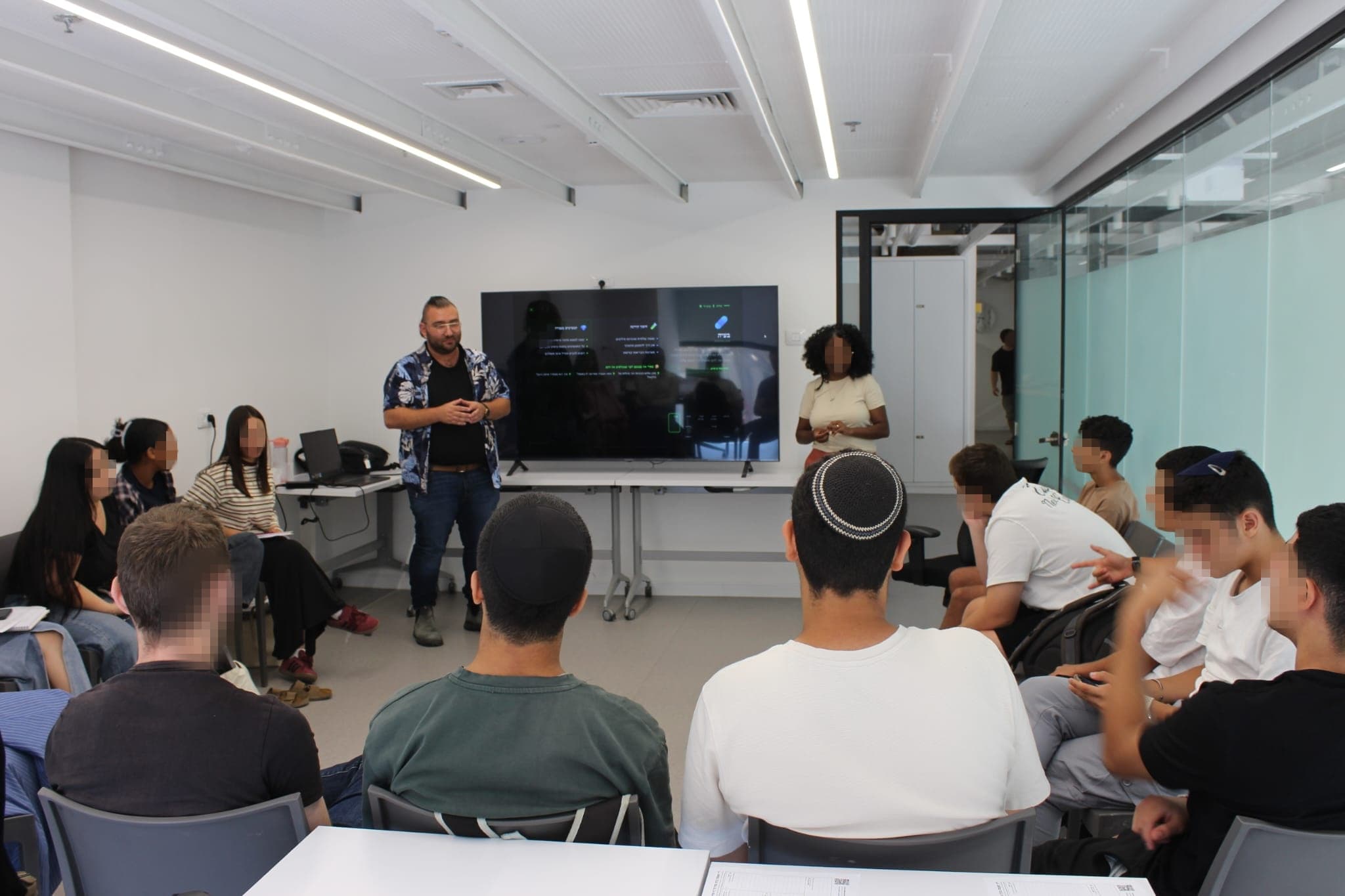
Teenovation, Meital centre Sderot

Entrepreneurs session, Sderot
I have worked with
- Google for Startups
- House of Business, Sderot Municipality
- Microsoft Reactor
- GameReady
- Eclipse Capital
- SderoTech
- IUCEL
- Resilience & Health Innovation Hub
- International Resilience Institute of Sderot


















- Google for Startups
- House of Business, Sderot Municipality
- Microsoft Reactor
- GameReady
- Eclipse Capital
- SderoTech
- IUCEL
- Resilience & Health Innovation Hub
- International Resilience Institute of Sderot
What Clients Say
From different fields, at different stages of business
Dan Manto
Eclipse Capital
Real Estate Investment and Finance, USA
Arty McLabin
GameReady
Game Development Education and Outsourcing, International

Anna
Beautician
After I finished a cosmetology course at a leading company, I was confused. I didn't know how to open a business, what to sell from home, or how to bring in clients. Since I reached out to Mobius, everything has changed. We built an organized plan with clear steps and no unnecessary risks. Today I see results, and I'm growing and developing every month.

Mark
Massage therapist, Gan Yavne
When I finished a massage course, I imagined a different world. I found out it's a hard field, and financial stability isn't easy to find. When I came to Mobius, something changed. We started an organized process and built a business plan. Without Mobius? I probably would have given up. Today I believe in myself and in my own path.
And the paperwork, for anyone who wants to see that too.

Certificate of appreciation, Sderot municipality

Certificate of honor, Teenovation 2026

Directors and officeholders course, SRI Campus

Acceleration program, MaofTech South

Business consultants course

Adaptive project management, INT college

Business, Marketing, Operations & Financial Consultant
Mobius
Alexander Slutsker
9+Years of experience in business consulting
I help entrepreneurs, self-employed people, small businesses and startups understand their own numbers, choose what to do first and grow from there.
Book a Free Call+972 055-248-6151. Better on WhatsApp: I am in meetings most of the day and answer as soon as I am free. Other ways to reach me
We can talk in English, Hebrew or Russian.