From Freelancer to Business Owner: Build a System
How skilled freelancers move beyond selling personal hours through pricing, productized offers, delegation, processes, and financial separation.
The freelancer ceiling is personal capacity. If every sale, delivery promise, client question, revision, invoice, and follow-up depends on your own hours, the business can be busy and still stuck.
Becoming a business owner does not happen the moment you hire someone. It happens when sales, delivery, and money are managed as a system instead of as an extension of your personal workday.
A typical shift runs in three steps. First, split your services into standard packages, which cuts proposal time and custom work. Second, raise the minimum project price and charge separately for urgency and extra revisions. Third, document repeat tasks and hand them to a contractor. Alongside all three, open a separate business account, set a fixed owner payment, and build reserves for taxes and running costs.
Signs you are ready to shift
You may be ready to move from freelancer to owner when the same problems repeat.
Look for:
- You are fully booked but income is not growing
- Too much time goes to unpaid coordination
- Clients buy custom work every time
- Your effective hourly rate is lower than expected
- Repeat tasks consume a large part of the week
- Good opportunities are refused because you have no capacity
- Revenue depends too heavily on one or two clients
- You cannot take time off without delivery stopping
The question is not only "Can I hire?" The better question is: what part of the business should stop depending on my personal hours?
Productize outcomes before adding people
Productizing (turning a service into a clearer packaged offer) does not mean becoming generic. It means turning repeated value into a clearer promise, scope, price, and delivery path.
Start with:
- A clear result
- Defined scope
- Included and excluded items
- Limited revision rounds
- Delivery stages
- Minimum project price
- Extra fees for urgency or additional work
- A standard proposal template
When the offer is clearer, clients understand what they are buying. It also becomes easier to delegate because the work is no longer reinvented from zero every time.
For pricing discipline, read how to price your services.
Raise your price or change the pricing model when value supports it
Freelancers often undercharge because they price the visible work and ignore management, risk, revisions, delays, communication, and business development time.
Before changing price, calculate:
- Real delivery hours
- Admin and communication time
- Revision time
- CAC (the cost to win a customer)
- Software and tools
- Taxes and reserves
- Non-billable time
- Margin (the profit left after costs)
Sometimes the right move is a higher minimum fee. Sometimes it is a package. Sometimes it is a retainer (a fixed monthly fee), milestone billing, value-based pricing, or a separate urgent-delivery fee.
Do not raise your price just because someone online says to. Raise it when the offer, value, positioning, and delivery economics support it.
Delegate or outsource low-leverage work
Hiring is not the only path. Many freelancers should first outsource or delegate a specific bottleneck (the step that slows everything else).
Good first candidates include:
- Admin
- Scheduling
- File preparation
- Basic research
- Design production
- Editing
- Bookkeeping support
- Client material collection
- Follow-up reminders
The handoff should include a clear result, deadline, quality example, authority, and review point. Delegation starts with a clear result and authority, not with handing over a task.
Use building your first team and scaling from solo to team to decide whether the next step is an employee, contractor, tool, or process.
Build processes and financial separation
The business needs to remember how work is done without everything staying in your head.
Start with:
- Lead intake template
- Proposal template
- Project kickoff checklist
- Delivery checklist
- Quality review standard
- Client update template
- Invoice and collection routine
Write each repeat process down as a short SOP (a standard operating procedure, the written steps anyone can follow). Keep it a living document that people actually use, not a file nobody opens.
Financial separation is just as important. For a freelancer becoming an owner, that means a separate business account, fixed owner pay, tax reserves, and a monthly review of profit and cash flow.
Read separating personal and business money before the bank balance becomes confusing.
Protect quality as the business grows
Growth creates risk: inconsistent quality, unclear client communication, file access problems, weak data security, and contractors who become invisible to the client but still affect the result.
Protect the business with:
- Written scope
- Access control
- Client data rules
- Quality examples
- Review checkpoints
- Backup contractor options
- Clear ownership of files and work product
Do not scale confusion. Build the smallest system that protects the client result, owner time, and cash.
Deciding what the business should become once your calendar is full is the kind of choice I work through in business strategy consulting.
If you are booked, tired, and ready to stop selling only personal hours, talk it through with me. The goal is not to become a large company. The goal is to build a business that does not break when your calendar is full. What business owners who worked with me say is in the recommendations further down this page.
The content on this blog is general information only and is not a recommendation to act. It is not business, legal, tax, or financial advice. Before making any decision, consult a qualified professional, such as an accountant, a lawyer, or a business advisor, about your specific situation.
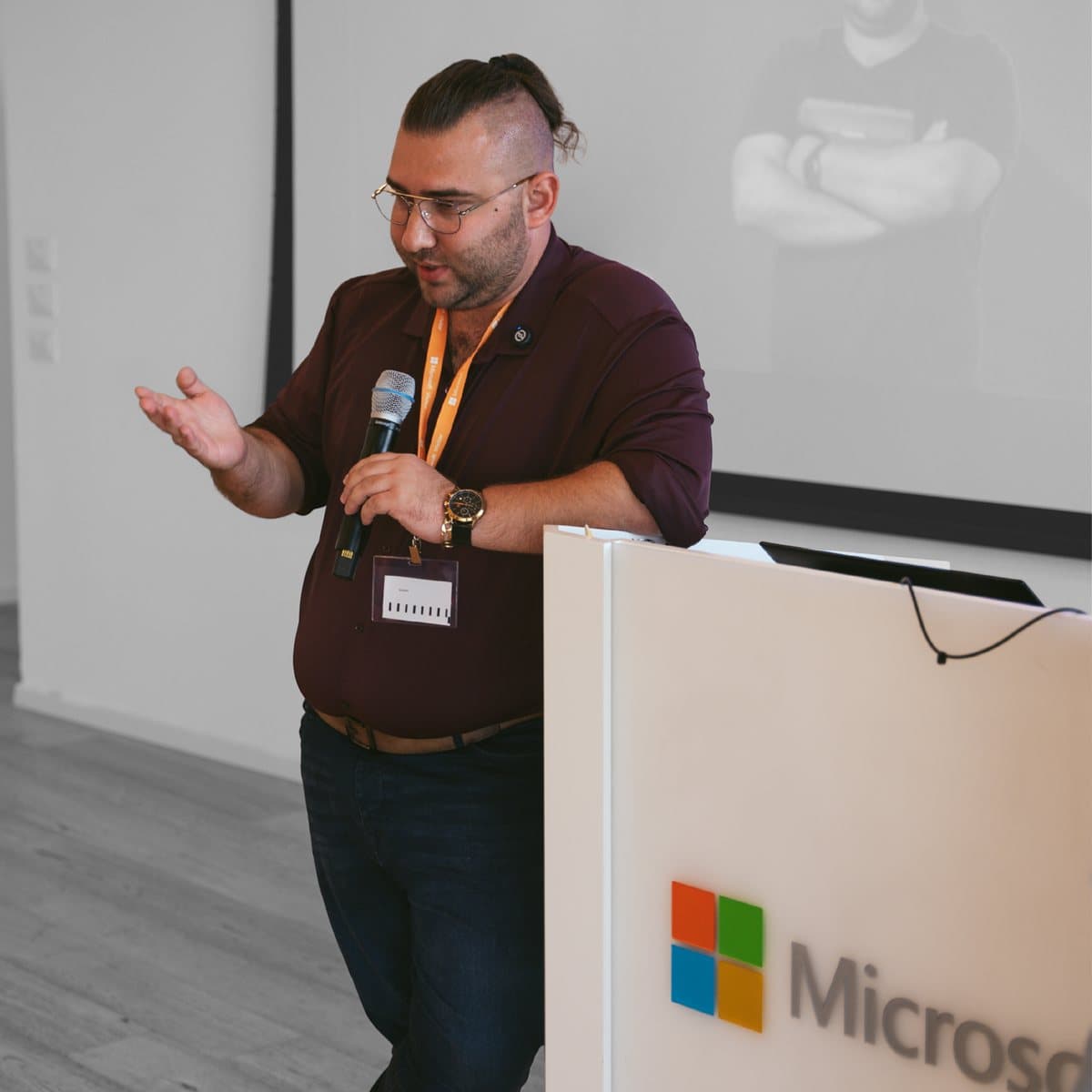
Speaking at Microsoft

Meeting with international teams, as part of work with a startup
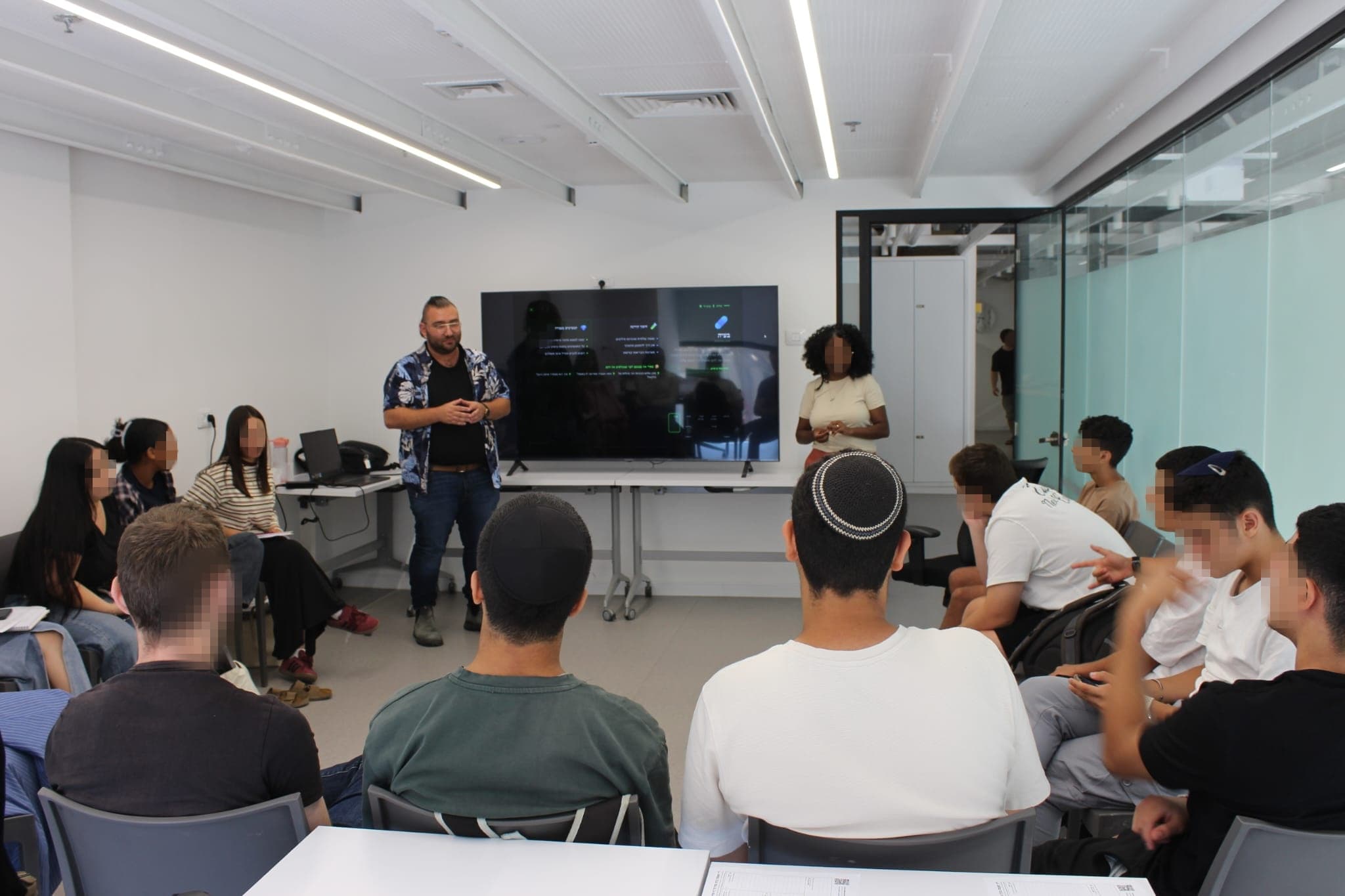
Teenovation, Meital centre Sderot
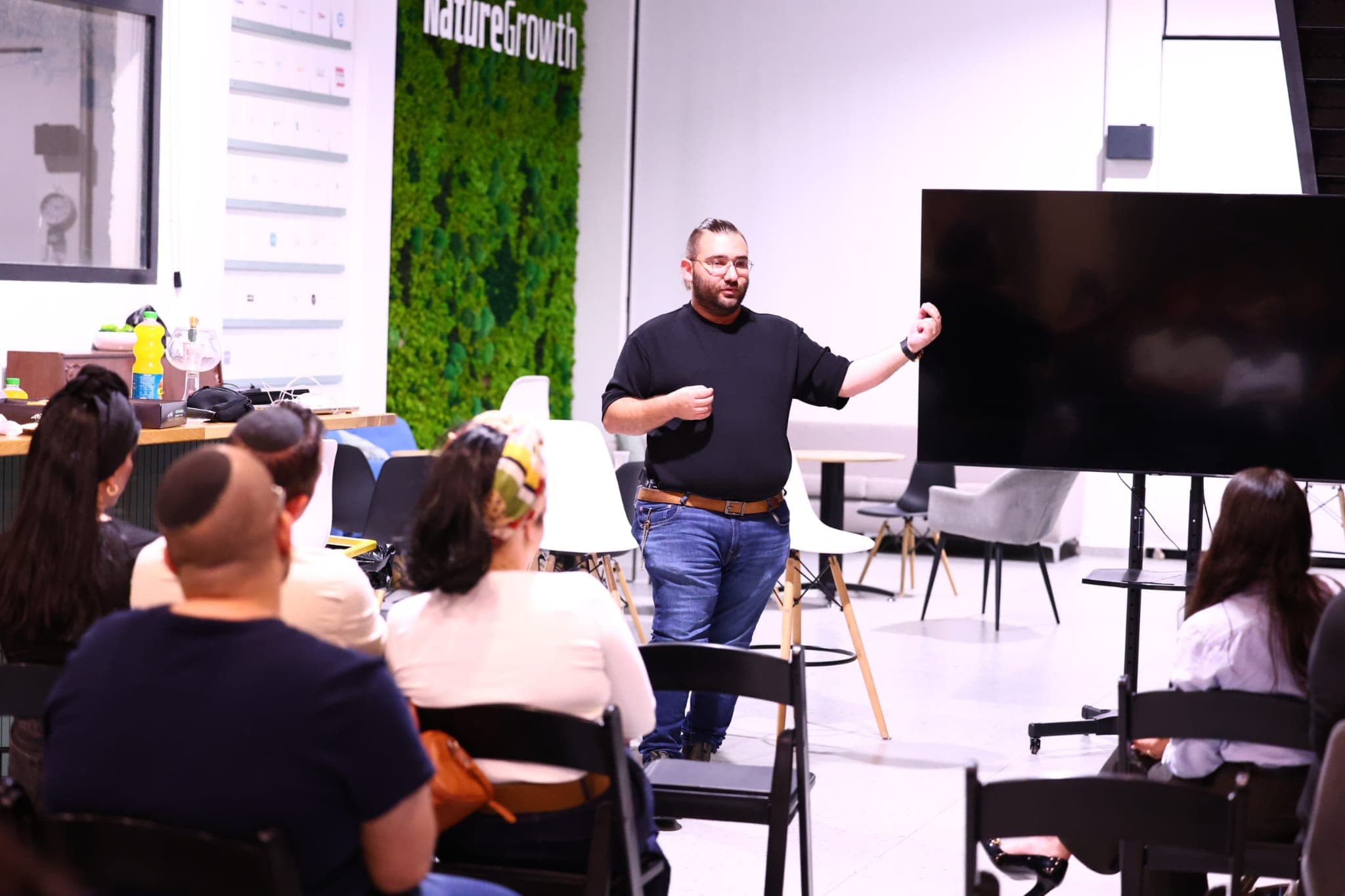
Entrepreneurs session, Sderot
I have worked with
- Google for Startups
- House of Business, Sderot Municipality
- Microsoft Reactor
- GameReady
- Eclipse Capital
- SderoTech
- IUCEL
- Resilience & Health Innovation Hub
- International Resilience Institute of Sderot


















- Google for Startups
- House of Business, Sderot Municipality
- Microsoft Reactor
- GameReady
- Eclipse Capital
- SderoTech
- IUCEL
- Resilience & Health Innovation Hub
- International Resilience Institute of Sderot
What Clients Say
From different fields, at different stages of business
Dan Manto
Eclipse Capital
Real Estate Investment and Finance, USA
Arty McLabin
GameReady
Game Development Education and Outsourcing, International

Anna
Beautician
After I finished a cosmetology course at a leading company, I was confused. I didn't know how to open a business, what to sell from home, or how to bring in clients. Since I reached out to Mobius, everything has changed. We built an organized plan with clear steps and no unnecessary risks. Today I see results, and I'm growing and developing every month.

Mark
Massage therapist, Gan Yavne
When I finished a massage course, I imagined a different world. I found out it's a hard field, and financial stability isn't easy to find. When I came to Mobius, something changed. We started an organized process and built a business plan. Without Mobius? I probably would have given up. Today I believe in myself and in my own path.
And the paperwork, for anyone who wants to see that too.

Certificate of appreciation, Sderot municipality

Certificate of honor, Teenovation 2026

Directors and officeholders course, SRI Campus
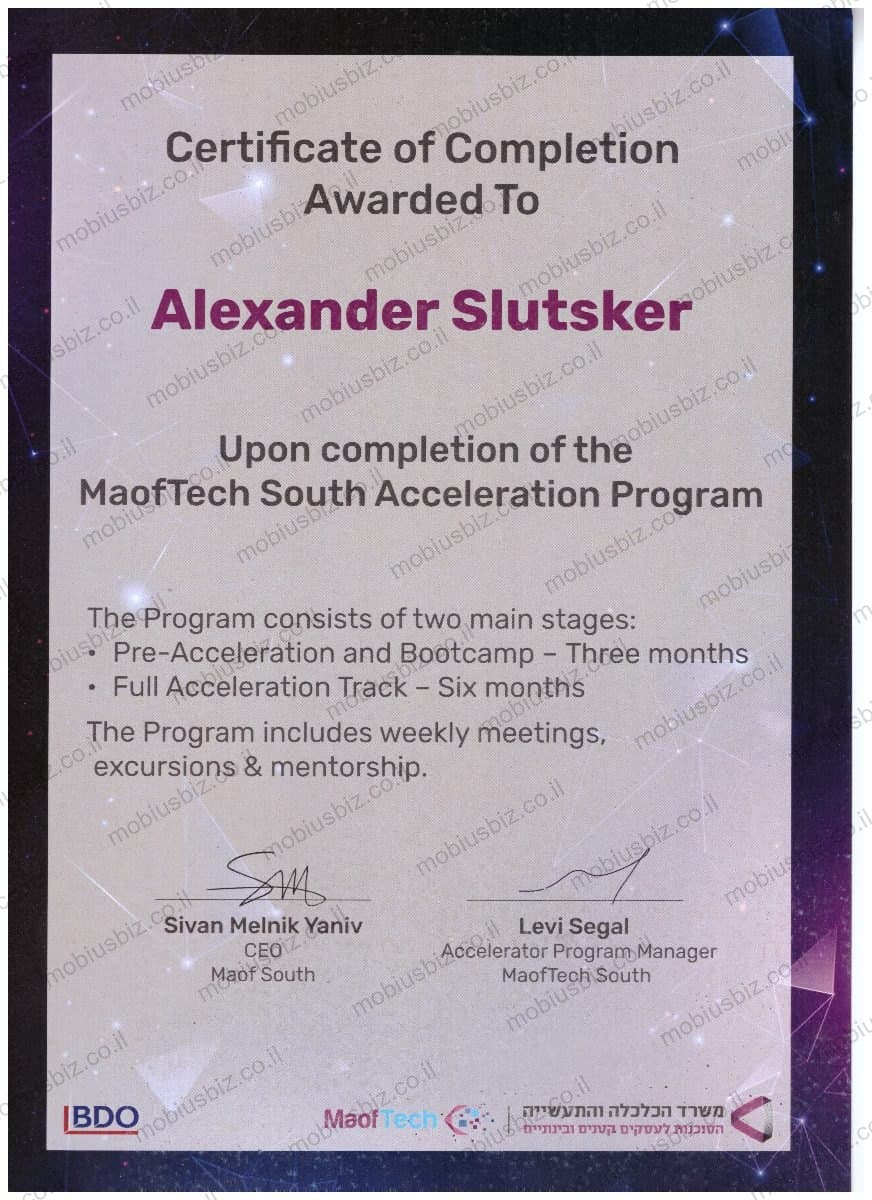
Acceleration program, MaofTech South

Business consultants course

Adaptive project management, INT college

Business, Marketing, Operations & Financial Consultant
Mobius
Alexander Slutsker
9+Years of experience in business consulting
I help entrepreneurs, self-employed people, small businesses and startups understand their own numbers, choose what to do first and grow from there.
Book a Free Call+972 055-248-6151. Better on WhatsApp: I am in meetings most of the day and answer as soon as I am free. Other ways to reach me
We can talk in English, Hebrew or Russian.