A lecture for organisations · 90 minutes · On site / Online
What Sets Startups Apart from Small Businesses
Most people use the words entrepreneurship and startup as if they meant the same thing, then run the wrong playbook for years. This lecture draws the line clearly. It compares a startup with a regular business on the dimensions an owner actually feels, ownership dilution, growth expectations, funding logic, decision speed, and what happens to the business the day the founder stops working. Alex Slutsker, a business consultant, walks the room through the comparison and leaves each participant with a way to test which side their own idea belongs on, before real money goes into it.
The content is matched in advance to your audience and goals on a short fitting call.
- Duration
- 90 minutes
- Format
- On site · Online
- Built for
- Startup founders, Aspiring founders
What your audience takes away
- ▸Tell a scalable startup idea apart from a solid small business.
- ▸Judge whether your venture needs growth capital or ordinary business credit.
- ▸Weigh ownership dilution against control before inviting anyone onto the cap table.
- ▸Size the downside of an idea before committing your savings to it.
- ▸Explain to a partner or a bank which model you are building.
Who this lecture is for
Built for accelerator and incubator programme managers assembling a founder cohort, municipal young adult centres and business departments running entrepreneurship evenings, university and college entrepreneurship centres, and small and medium business owners' forums where members keep asking whether their business could be a startup. It also suits welfare and human resources coordinators who want an enrichment session with a real decision inside it. Mixed rooms are welcome, because the comparison gives both the product founder and the bakery owner something to act on.
Who delivers the lecture
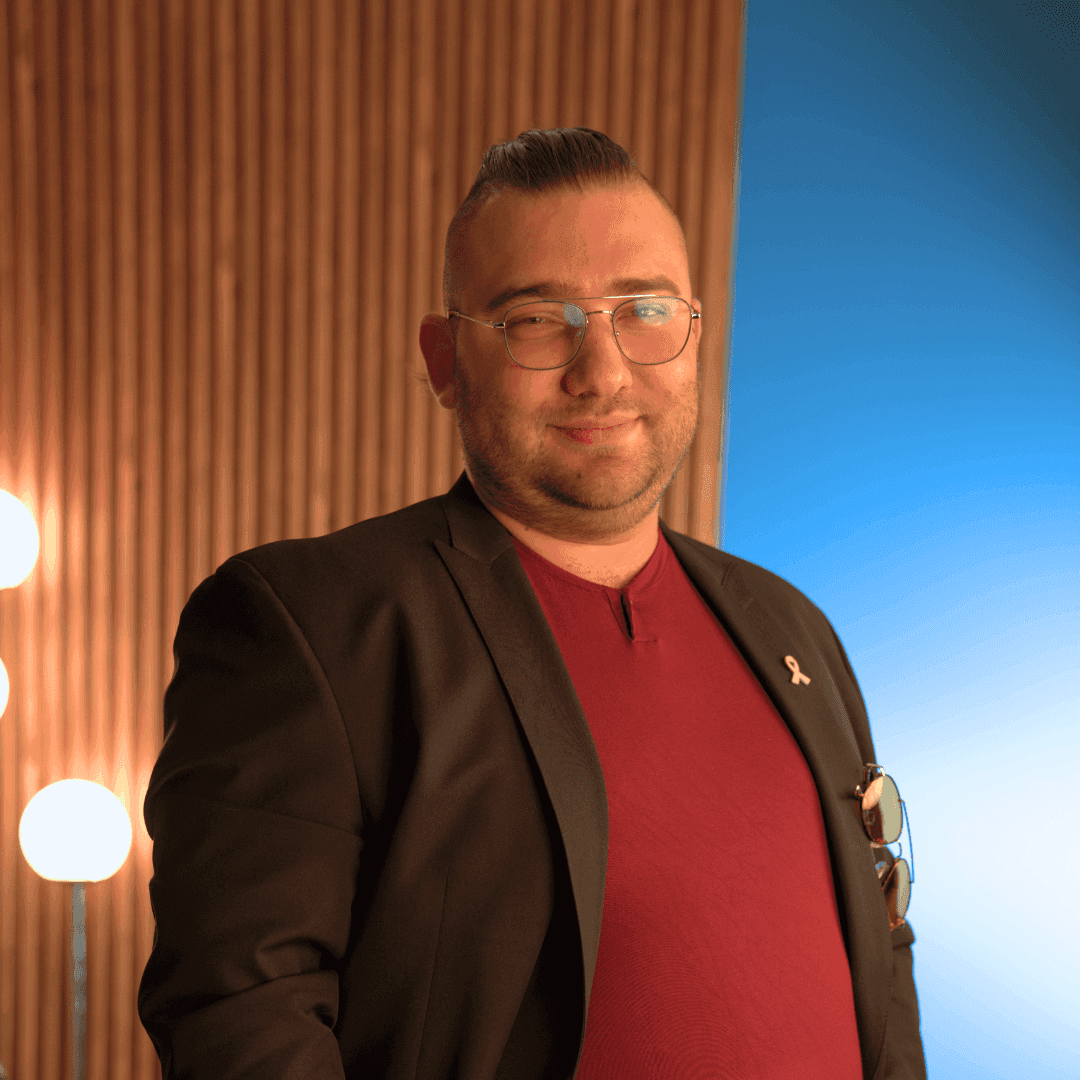
Alexander Slutsker
Business consultant, entrepreneur and founder of Mobius Business Solutions
- ✓14 years of entrepreneurship and consulting, dozens of businesses and managers accompanied in Israel
- ✓MBA in Hi-Tech and Entrepreneurship
- ✓BBA in Marketing and Finance
What organisers say
Alexander's lecture is simply a must for every pre-army programme or youth centre. Our young people received an amazing, practical toolbox for adult life. The content is delivered in a fascinating way, at eye level.
How booking works
- 1
Get in touch
Send a WhatsApp message or use the form, with the date, the audience and the setting.
- 2
A short fitting call
On the call the content and examples are matched to your audience and goals.
- 3
The lecture is delivered
On site or online, 90 minutes, questions from the room included.
Worked with
- Google for Startups
- הבית לעסקים של עיריית שדרות
- Microsoft Reactor
- GameReady
- SderoTech
- IUCEL
- Resilience & Health Innovation Hub
- International Resilience Institute of Sderot















Want this lecture at your organisation?
Send a message with the date and the audience, and a short fitting call matches the content to your organisation.
More lectures in this area
Frequently asked questions
I already run a profitable small business. Can it become a startup, or would I need to start something new?
Both routes exist and the lecture treats it as a decision rather than an upgrade. We look at what would have to change in the model itself, not just in ambition, and at which existing businesses genuinely carry a scalable core versus which are healthy exactly as they are. Owners usually leave with a clearer answer than the one they came in with.
Is a services or consulting business ever a startup, or does it require a product?
This comes up in almost every room. The lecture works through what makes revenue repeatable without adding people in proportion, which is the real test, and shows where a services business can carry a product inside it. Participants who conclude their business is not a startup are not being told they failed, they are being told to stop applying rules written for a different game.
If a venture turns out not to be a startup, what funding routes stay open to it?
The comparison covers this directly, because the mismatch between funding type and business type is where a lot of owners get stuck. We separate capital that expects an exit from capital that expects repayment, and look at what each one asks of the owner in exchange. Nobody leaves thinking venture money is the only serious money.
How does the lecture handle the failure rate that entrepreneurship content always leads with?
It refuses to use it as a scare statistic. Raising anxiety without giving anyone a decision framework is the standard move in this space and it helps nobody. Instead the session treats risk as something you size and bound before you commit, so the room ends with a way to test an idea cheaply rather than with a vague sense of dread.
How much ownership does the startup path usually cost a founder?
Rather than quoting figures that shift with the market, the lecture explains the mechanism, why outside investors need a meaningful share, how each round changes the founder's position, and what that means in daily practice for who decides what. Participants get the logic, so they can read any specific offer they later receive instead of memorising a benchmark.
Part of the audience is experienced and part is new. Will it work?
Yes. The depth is set in advance on the fitting call, examples are matched to the sector, and the base assumes no prior knowledge. Audience questions give the experienced their room too.