AI and Data
What AI, analytics and data systems actually do inside a business.
AI and data are not magic. They pay off where the goal is clear and the data is clean, in drafting, routine replies, and cutting admin. Everywhere else they waste money. Clean data usually matters more than any clever tool on top of it. The terms below are the working vocabulary of that work.
Read: what AI and data actually do for a businessAI
AI (artificial intelligence) is software that does tasks that used to need a person, such as writing, sorting or predicting, by learning patterns from data.
Machine Learning
Machine learning is the part of AI where software learns rules from examples instead of being told them, then uses those rules to predict or sort new cases.
Generative AI
Generative AI is AI that creates new text, images, audio or code from a request. What it writes is a likely draft built from patterns, not a checked fact.
LLM
An LLM (large language model) is AI trained on masses of text to predict the next piece of a sentence. That is how chat tools write answers, right or wrong.
AI Model
An AI model is the trained file at the heart of an AI tool: it takes an input, applies patterns learned from data, and returns a prediction, a label or text.
Token
A token is a piece of a word that an AI language model reads and writes. Usage is counted and billed in tokens, and the same text takes more in some languages.
Context Window
A context window is how much text, in tokens, a model can see at once: instructions, files, the chat so far and its reply. What falls outside, it cannot use.
Prompt
A prompt is the instruction you give an AI tool: the question, the task, the context and the format you want. A clearer prompt gets a more useful answer.
Model Training
Model training is how an AI model learns: it sees many examples, checks its guesses against the right answers and adjusts itself until the errors shrink.
Inference
Inference is the moment a trained AI model does its job: it takes a new question and produces an answer. It happens on every request, so it is the ongoing cost.
Embedding
An embedding is a list of numbers that stands for the meaning of a text or image, so texts that mean the same land close together, even with different words.
Vector Database
A vector database stores embeddings and finds the items closest in meaning to a question, even when the question and the document use different words.
RAG
RAG (retrieval-augmented generation) is a method where AI answers from your documents: it first finds the relevant passages, then writes the answer from them.
Hallucination
An AI hallucination is an answer an AI model makes up and states with confidence, such as an invented price, rule or source, because it predicts likely words.
Agent
An AI agent is AI software that does tasks, not just answers: it plans steps and uses connected tools, such as a calendar or email, to reach a goal you set.
Fine-tuning
Fine-tuning is extra training of a ready AI model on your own examples, so it learns a style, format or task. It changes how it answers, not what it knows.
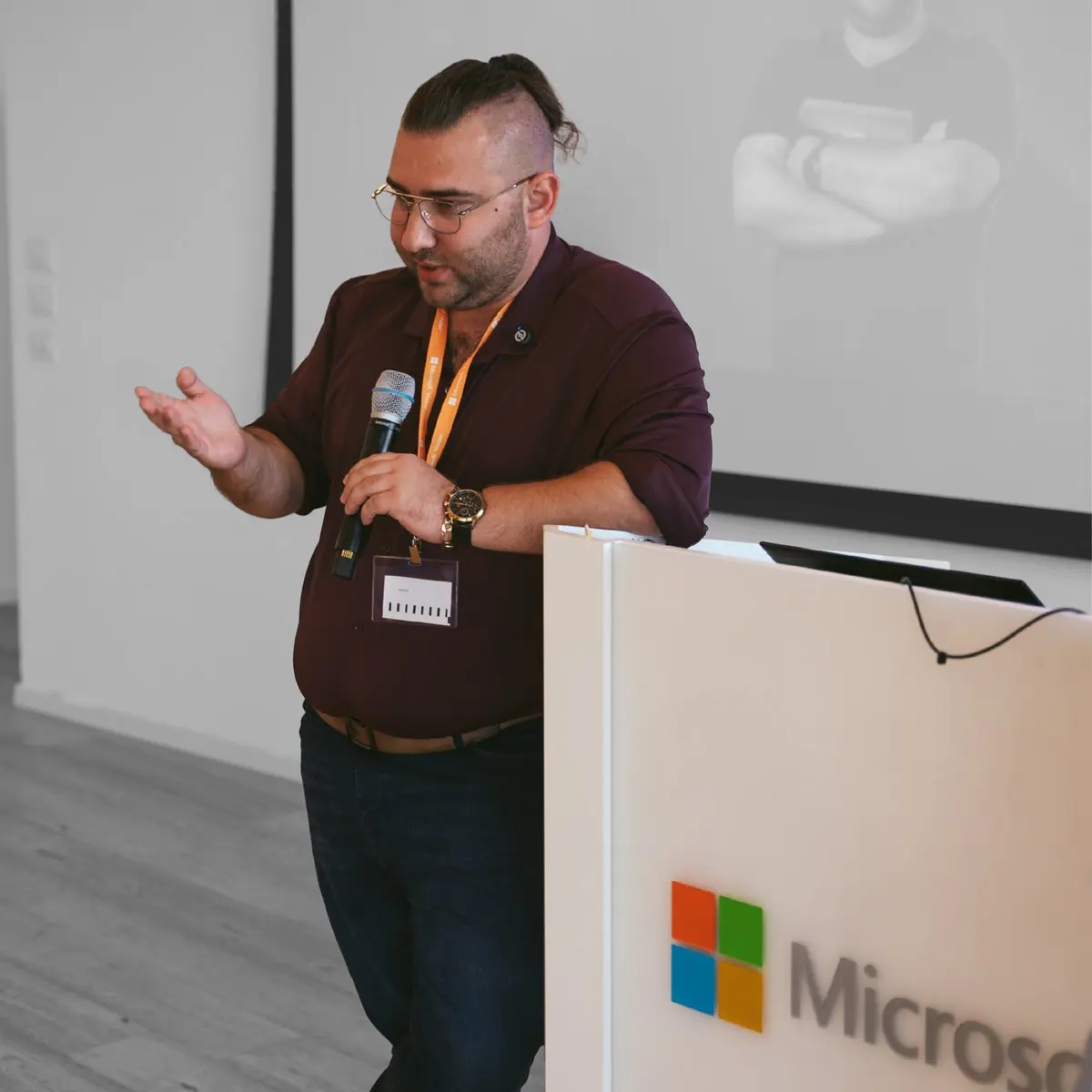
Speaking at Microsoft

Meeting with international teams, as part of work with a startup
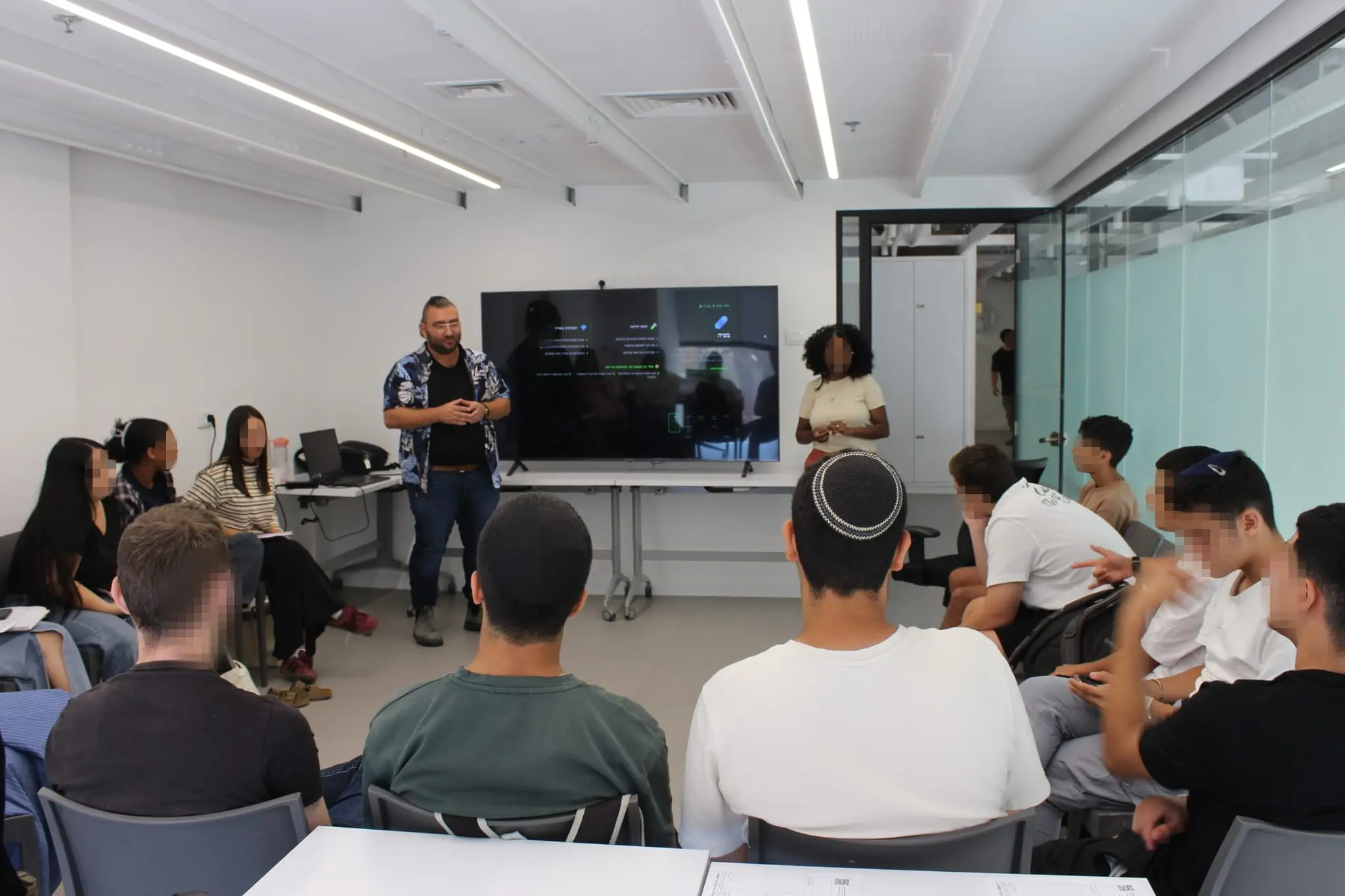
Teenovation, Meital centre Sderot
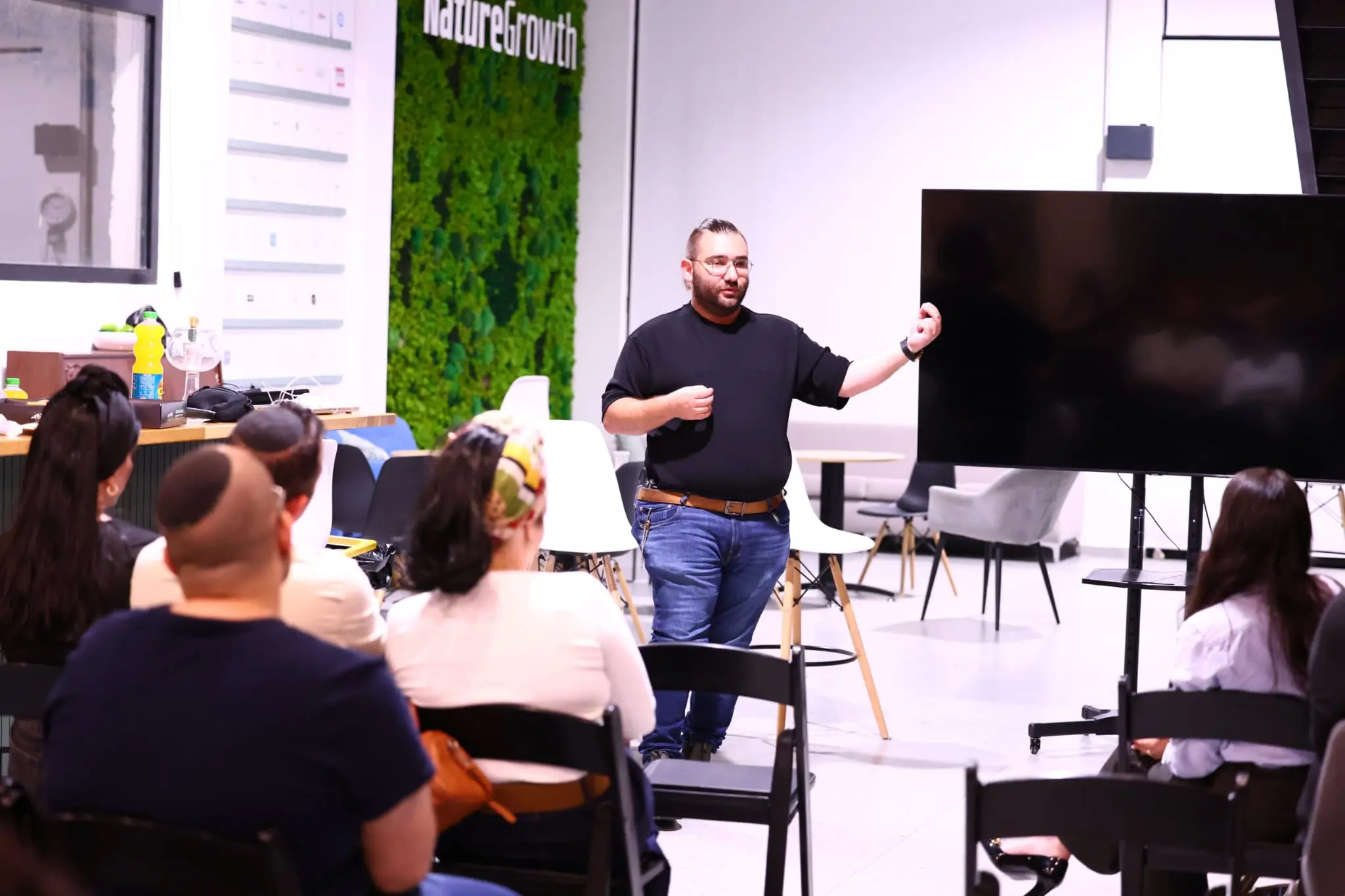
Entrepreneurs session, Sderot
I have worked with
- Google for Startups
- House of Business, Sderot Municipality
- Microsoft Reactor
- GameReady
- Eclipse Capital
- SderoTech
- IUCEL
- Resilience & Health Innovation Hub
- International Resilience Institute of Sderot


















- Google for Startups
- House of Business, Sderot Municipality
- Microsoft Reactor
- GameReady
- Eclipse Capital
- SderoTech
- IUCEL
- Resilience & Health Innovation Hub
- International Resilience Institute of Sderot
What Clients Say
From different fields, at different stages of business
Dan Manto
Eclipse Capital
Real Estate Investment and Finance, USA
Arty McLabin
GameReady
Game Development Education and Outsourcing, International

Anna
Beautician
After I finished a cosmetology course at a leading company, I was confused. I didn't know how to open a business, what to sell from home, or how to bring in clients. Since I reached out to Mobius, everything has changed. We built an organized plan with clear steps and no unnecessary risks. Today I see results, and I'm growing and developing every month.

Mark
Massage therapist, Gan Yavne
When I finished a massage course, I imagined a different world. I found out it's a hard field, and financial stability isn't easy to find. When I came to Mobius, something changed. We started an organized process and built a business plan. Without Mobius? I probably would have given up. Today I believe in myself and in my own path.
Wondering where AI actually fits your business?
Alex helps Israeli businesses use AI and data where it pays off, and skip it where it does not. The first call is free.
+972 055-248-6151. Better on WhatsApp: I am in meetings most of the day and answer as soon as I am free. Other ways to reach me