What Project Management Actually Is (Not Status Meetings)
Project management is delivering a defined result inside scope, time, and cost. Here is what it means and why the triple constraint governs everything.
What is a project
A project is temporary work with a start and a finish that creates one unique result, such as a new website, within limits of scope, time and cost.
Illustration
Scope, time and cost pull on each other
Six weeks, five pages, the same team: the three sides are in balance.
Project management is the discipline of delivering a specific, one time result to a defined standard, on time and within budget. It is not status meetings, and it is not a wall of tasks. A project has a clear end and a clear deliverable, and project management is the work of protecting that end from the three forces that constantly push against it: scope, time, and cost. Get those trade-offs right and the project ships. Ignore them and it drifts, late, over budget, and never quite finished.
Whether or not you use the word, most businesses run projects: a launch, a move, a new system, a rebrand. Understanding what project management actually is turns those from open-ended efforts that drag on into bounded jobs that get done and then get out of the way.
What project management actually is
A project is a temporary effort with a start, an end, and a defined result, unlike operations, which repeat indefinitely. Project management is how you carry that effort from "we decided to do this" to "it is done to the standard we agreed," without letting it sprawl. Its real content is not activity, it is judgment: deciding what the project includes, when it must land, what it can cost, and what gives when reality pushes.
The word that matters is defined. A vague project, "do a website," has no natural end and no way to know when it is finished. A defined project, "a five-page site with these sections, live by this date, for this budget," can actually be managed, because now there is something to protect.
The triple constraint governs everything
At the center of project management sits the triple constraint (scope, time, and cost): what you deliver, when, and for how much. These three are linked, so you cannot quietly change one without the others moving. Want it faster without cutting anything? It costs more, more people, more overtime. Want it cheaper? Either the scope shrinks or the timeline stretches.
This is the single most useful idea in the whole discipline. Most project trouble is really a refusal to accept the trade-off: insisting on full scope, the original date, and the fixed budget at the same time, when the work turns out harder than hoped. You cannot hold all three against reality. The skill is deciding, on purpose, which one you will flex first.
Scope creep is where projects quietly die
The most common way a project fails is not a dramatic disaster, it is scope creep: a steady trickle of small, reasonable sounding additions that each seem harmless and together blow the deadline and the budget. Nobody decides to double the project, it just happens one "just one more thing" at a time.
The defense is unglamorous but powerful: decide out loud what is in and what is out before you start, and treat every new request as a real trade-off, not a freebie. If something is added, something else gives: less elsewhere, more time, or more money. A project with a guarded boundary finishes. A project where every request slips in unpriced never does.
Define done before you begin
A project needs a clear finish line written down in advance: exactly what the deliverable is and the standard it must meet. Without a definition of done, a project has no natural end. It either drags on as people keep polishing, or gets declared finished at some random point when everyone is tired.
Agreeing on done up front is the cheapest step with the biggest payoff. It settles arguments before they start, tells you when to stop, and gives the milestones (checkpoints that mark meaningful progress) something to point at. When you can say "we are finished" and prove it against the definition, the project ends cleanly instead of fading out.
What it costs to run projects without managing them
Unmanaged projects rarely fail loudly. They fail as a pattern: launches that slip quarter after quarter, budgets quietly exceeded, efforts with no owner that everyone assumes someone else is driving, and important work that never quite finishes because no one defined what finished meant.
None of this feels like a project management failure in the moment. It feels like the work was harder than expected or the team was stretched. But it traces back to the same gap: no defined result, no guarded constraint, no one owning the trade-offs. The cost is not just the wasted time, it is the delayed revenue, the eaten margin (the profit left after costs), and the important things that never actually get delivered.
The order that actually works
- Define done. Write exactly what the deliverable is and the standard it must meet, before anything starts.
- Set the three limits. Agree the scope, the deadline, and the budget, and write them where everyone can see.
- Name one owner. One person holds the deliverable and the authority to make trade-off calls.
- Decide what flexes first. Choose in advance which of scope, time, or cost you will bend when pressure comes.
- Guard the boundary. Treat every new request as a priced trade-off, not a freebie, to stop scope creep.
- Check at milestones. Use checkpoints to catch drift early, while adjusting is still cheap.
Owners often start doing the work before defining done or the limits, then wonder why the project sprawls. Get the setup right and delivery becomes predictable. Skip it and you are managing chaos with good intentions.
Setting a project up so it finishes on time and inside its limits is the work of project management consulting.
When you should not hire a consultant
If your projects finish on time and on budget, each has a clear owner and a written definition of done, and you handle trade-offs deliberately rather than by crisis, your project management is working and you do not need help.
Where an outside view helps is when projects keep slipping, when no one owns the trade-offs, or when something important is at risk and you are not sure you can protect the constraint. There, help is not extra process, it is a defined outcome protected from the forces that quietly derail projects. As a business consultant, I would rather help you finish the few projects that matter than watch good work stall for want of a clear finish line and an owner. If one of your projects keeps slipping, talk it through with me.
Sources
- Project Management Institute (PMI) and the PMBOK Guide, on the triple constraint of scope, time, and cost and the definition of a project as a temporary endeavor with a defined result.
The content on this blog is general information only and is not a recommendation to act. It is not business, legal, tax, or financial advice. Before making any decision, consult a qualified professional, such as an accountant, a lawyer, or a business advisor, about your specific situation.

Speaking at Microsoft

Meeting with international teams, as part of work with a startup
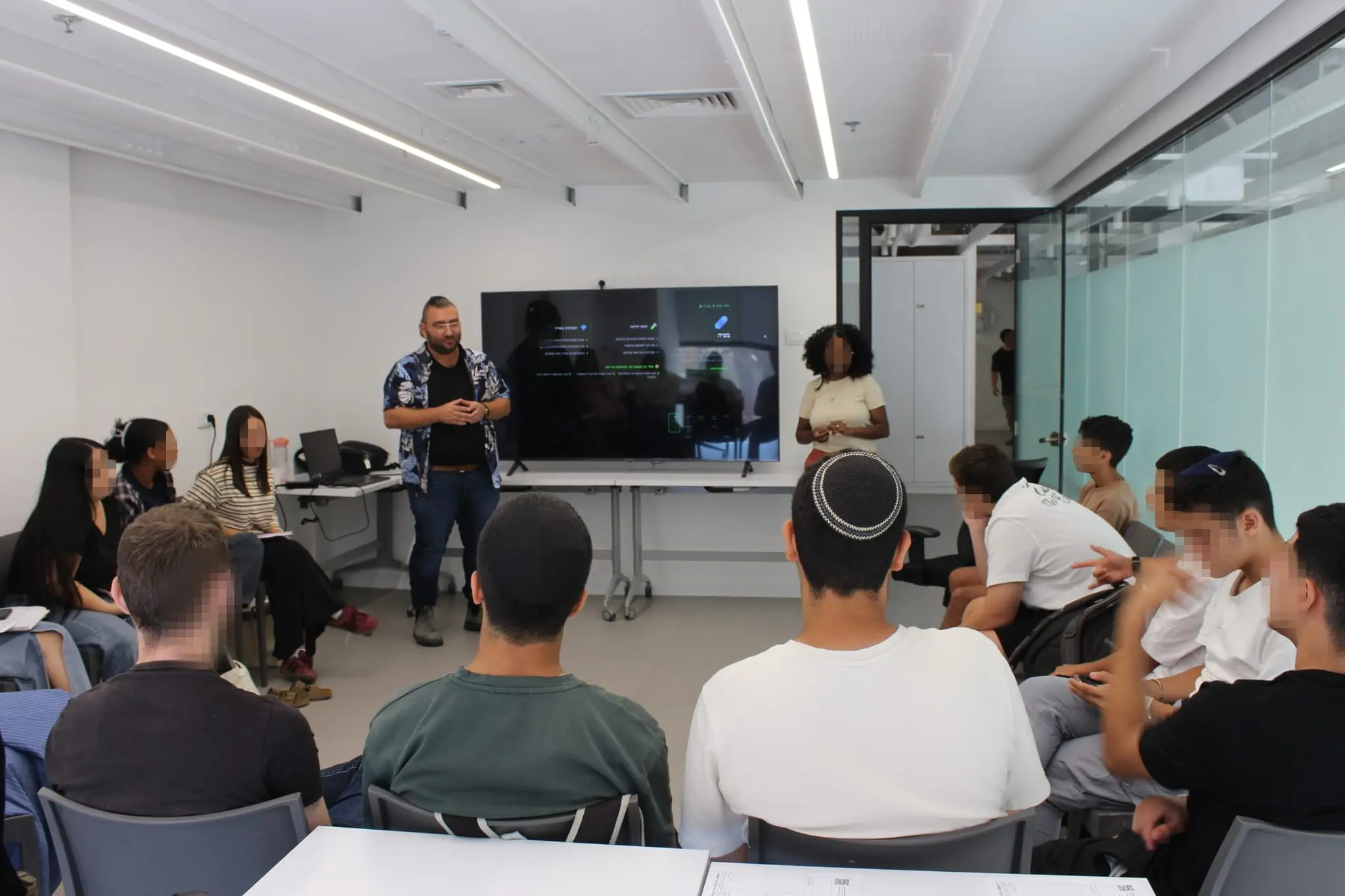
Teenovation, Meital centre Sderot

Entrepreneurs session, Sderot
I have worked with
- Google for Startups
- House of Business, Sderot Municipality
- Microsoft Reactor
- GameReady
- Eclipse Capital
- SderoTech
- IUCEL
- Resilience & Health Innovation Hub
- International Resilience Institute of Sderot


















- Google for Startups
- House of Business, Sderot Municipality
- Microsoft Reactor
- GameReady
- Eclipse Capital
- SderoTech
- IUCEL
- Resilience & Health Innovation Hub
- International Resilience Institute of Sderot
What Clients Say
From different fields, at different stages of business
Dan Manto
Eclipse Capital
Real Estate Investment and Finance, USA
Arty McLabin
GameReady
Game Development Education and Outsourcing, International

Anna
Beautician
After I finished a cosmetology course at a leading company, I was confused. I didn't know how to open a business, what to sell from home, or how to bring in clients. Since I reached out to Mobius, everything has changed. We built an organized plan with clear steps and no unnecessary risks. Today I see results, and I'm growing and developing every month.

Mark
Massage therapist, Gan Yavne
When I finished a massage course, I imagined a different world. I found out it's a hard field, and financial stability isn't easy to find. When I came to Mobius, something changed. We started an organized process and built a business plan. Without Mobius? I probably would have given up. Today I believe in myself and in my own path.
And the paperwork, for anyone who wants to see that too.

Certificate of appreciation, Sderot municipality

Certificate of honor, Teenovation 2026

Directors and officeholders course, SRI Campus
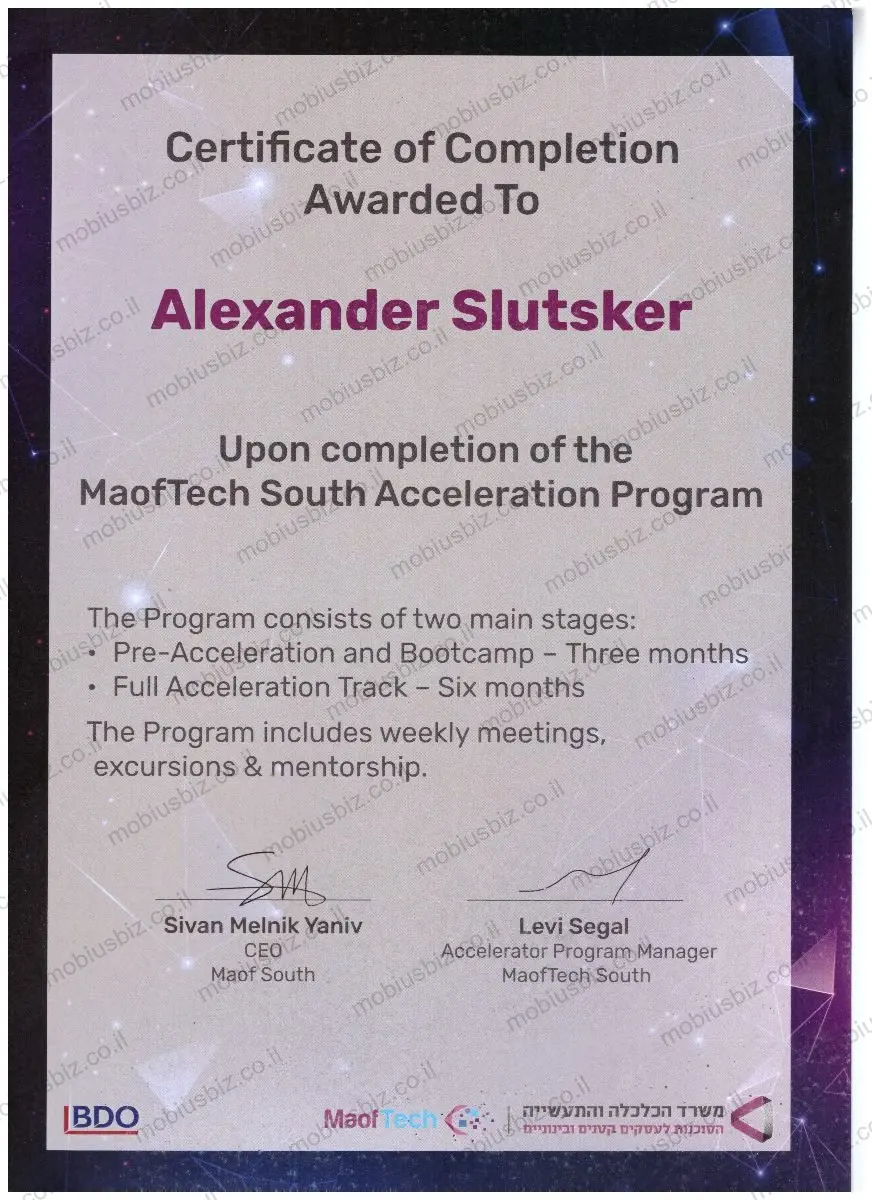
Acceleration program, MaofTech South

Business consultants course

Adaptive project management, INT college

Business, Marketing, Operations & Financial Consultant
Mobius
Alexander Slutsker
9+Years of experience in business consulting
I help entrepreneurs, self-employed people, small businesses and startups understand their own numbers, choose what to do first and grow from there.
Book a Free Call+972 055-248-6151. Better on WhatsApp: I am in meetings most of the day and answer as soon as I am free. Other ways to reach me
We can talk in English, Hebrew or Russian.