Why Investors Still Back High-Risk Startups
A founder-facing explanation of startup investment logic, portfolio risk, traction signals, and why investors look beyond the pitch deck.
Startup investors are not ignoring risk. Serious investors know that many young companies will not survive, many will return little, and a small number may create most of the upside.
That is why startup investing has to be discussed carefully. The U.S. Bureau of Labor Statistics (BLS) reported that 34.7 percent of American private-sector establishments born in March 2013 were still operating in March 2023. That data is not the same as a universal startup failure statistic, but it does show how hard long-term business survival can be. Investor.gov also warns that private placements (shares sold privately, not on a stock exchange) can involve early-stage companies, limited disclosure, illiquidity (shares that are hard to sell), restricted securities, and the possibility of total loss.
So the better question is not "why would anyone invest in a risky startup?" The better question is: under what logic can a small, high-risk private investment make sense inside a broader investment strategy?
For founders, understanding that logic is useful. It changes how you prepare for investors. You stop trying to prove that risk does not exist, and you start showing why the risk may be worth taking.
Investors are not ignoring risk
An experienced investor does not expect early-stage numbers to be perfect. They expect the founder to know what is proven, what is still uncertain, and what the next experiment or milestone will reduce.
When I prepare founders for investor conversations, I push them to avoid two weak positions:
- Overconfidence: "There is no real risk here."
- Vagueness: "We just need money to grow."
Both create doubt. A stronger answer sounds more like: "This assumption is still open. Here is what we have tested. Here is what the round will prove next."
Why a few winners can shape the portfolio
Startup investing often works as a spread of bets (each company is judged as one bet among many). An investor may expect several companies to fail, some to return modestly, and a few to produce outsized returns. That does not make every startup investable. It means each company must show why it could become one of the exceptional outcomes.
For founders, this matters because a small, local, slow-growth company may be a good business but a poor venture investment. A venture-style investor usually needs the possibility of scale, a large enough market, and a route to a meaningful exit (a sale or listing that turns the stake back into money). The founder should not confuse "this can be profitable" with "this fits the investor's return model."
This is also why early-stage fundraising must connect the amount raised to a milestone. A round that only funds activity does not show how the company becomes more valuable.
What investors evaluate beyond the idea
Investors may like the idea and still pass. The idea is only one part of the risk.
They often evaluate:
- Team quality, honesty, speed, and learning ability.
- Customer understanding and urgency of the problem.
- Market size, growth, and timing.
- Evidence of traction (real, repeatable proof customers want it), not only positive feedback.
- Acquisition channel, retention, and sales cycle.
- Unit economics (what you earn or lose on each customer), gross margin, and implementation cost.
- Competitive advantage and defensibility.
- Legal, regulatory, and cap table (who owns what) risks.
The pitch deck (the presentation you show investors) should make this easy to discuss, but the deck is not the business. Investors notice when the founder can answer from real customer conversations, numbers, and decisions.
Why diversification and sizing matter
Investor.gov's asset allocation and diversification guide explains that risk tolerance, time horizon, and spreading money across investments matter. Startup exposure is usually illiquid and high risk, so it should not be confused with holding public stocks or funds.
None of this is personal investment advice. It is the reason investors ask so many questions before committing capital. They are not only asking "could this company win?" They are also asking whether this risk fits with the rest of their investments, whether the potential upside is large enough, and whether the company gives them enough information to decide.
For a deeper comparison, read startups vs stocks: the real investing logic.
What good investors add beyond money
Money alone is not always the most valuable investor contribution. Good investors may help with hiring, follow-on fundraising, strategic introductions, governance, enterprise sales, market framing, and decision discipline.
But investor value has to be specific. A famous name is not automatically useful. A founder should understand what the investor can actually help with, how often they engage, and whether their incentives fit the company's stage.
This also connects to equity (a share of ownership). Giving up ownership is not just a percentage decision. It affects control, future rounds, rights, and the cap table. For the basics, see what equity is in business.
What this means for founders
Founders should not pitch as if risk is embarrassing. Risk is the reason the investor needs clarity.
Before a serious conversation, be ready to explain:
- What you know because customers did something real.
- What you still do not know.
- Which number matters most right now.
- Why this market can support the investor's return logic.
- What the next round of capital will prove.
- What could go wrong and how you will notice early.
Shaping that investor conversation is part of startup fundraising consulting. What each fundraising stage expects to see is also the subject of my lecture Fundraising Stages and Investor Expectations.
The founder who understands risk usually sounds more credible than the founder who tries to erase it. If you want to turn your startup story into a sharper investor conversation, talk it through with me.
The content on this blog is general information only and is not a recommendation to act. It is not business, legal, tax, or financial advice. Before making any decision, consult a qualified professional, such as an accountant, a lawyer, or a business advisor, about your specific situation.
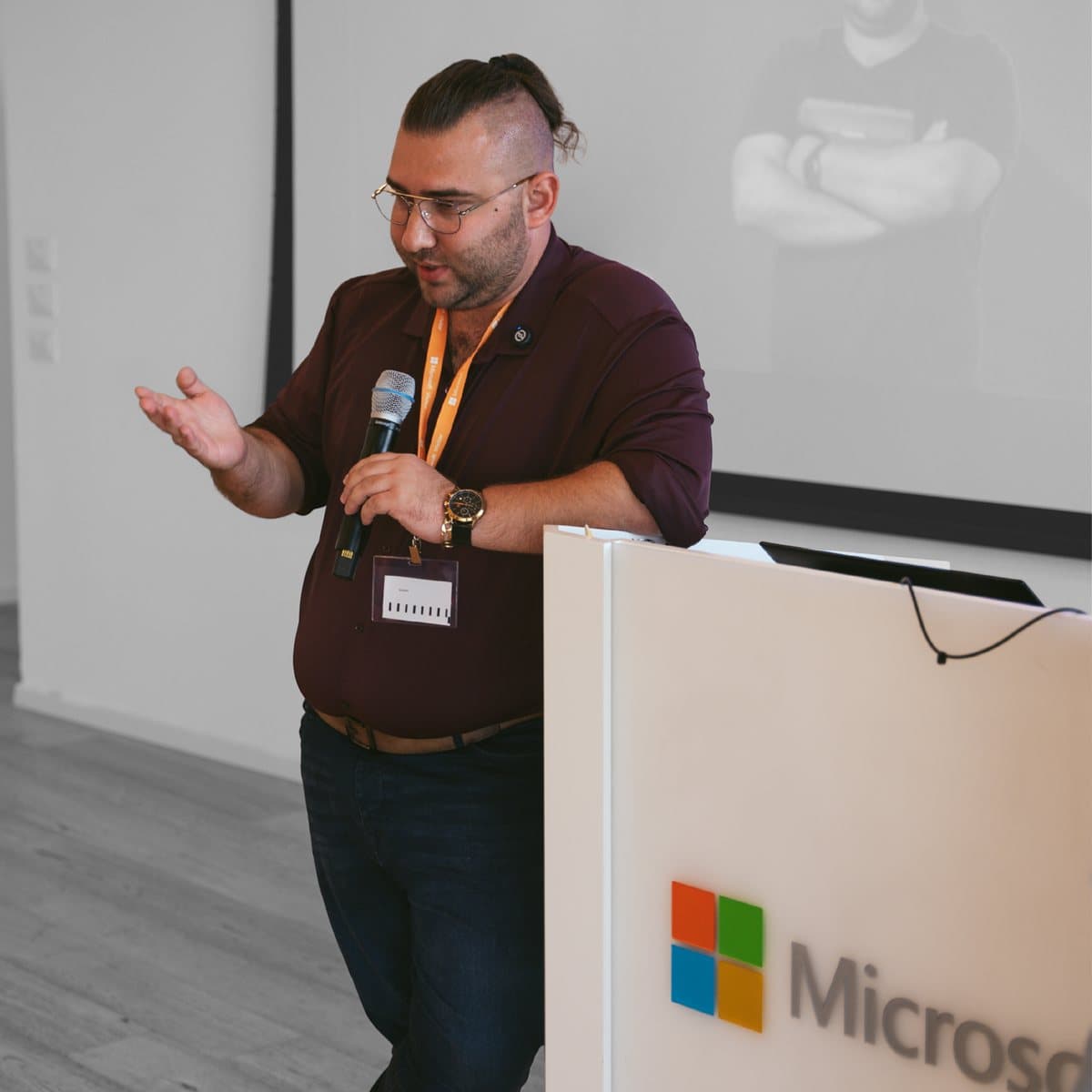
Speaking at Microsoft

Meeting with international teams, as part of work with a startup
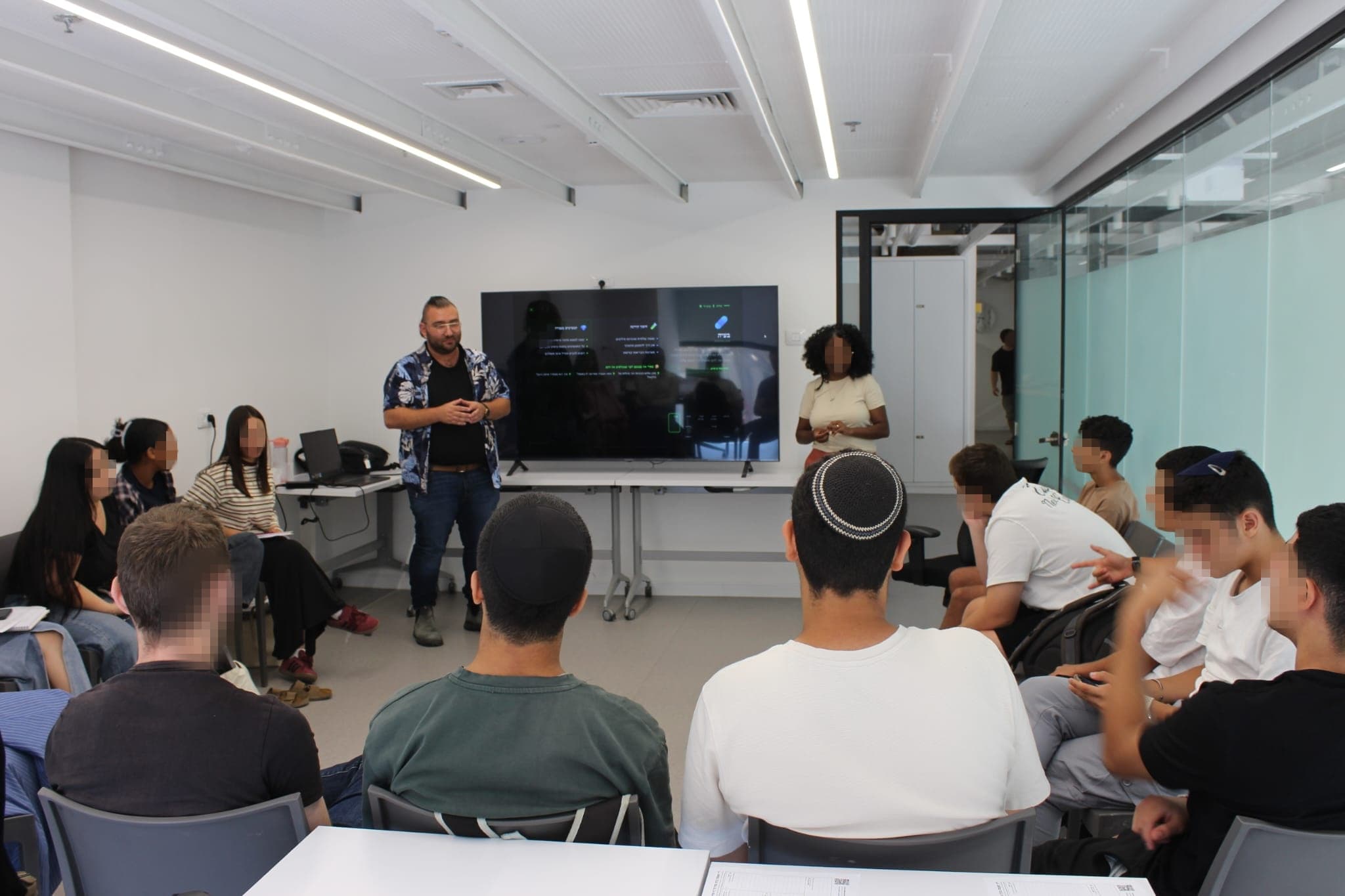
Teenovation, Meital centre Sderot
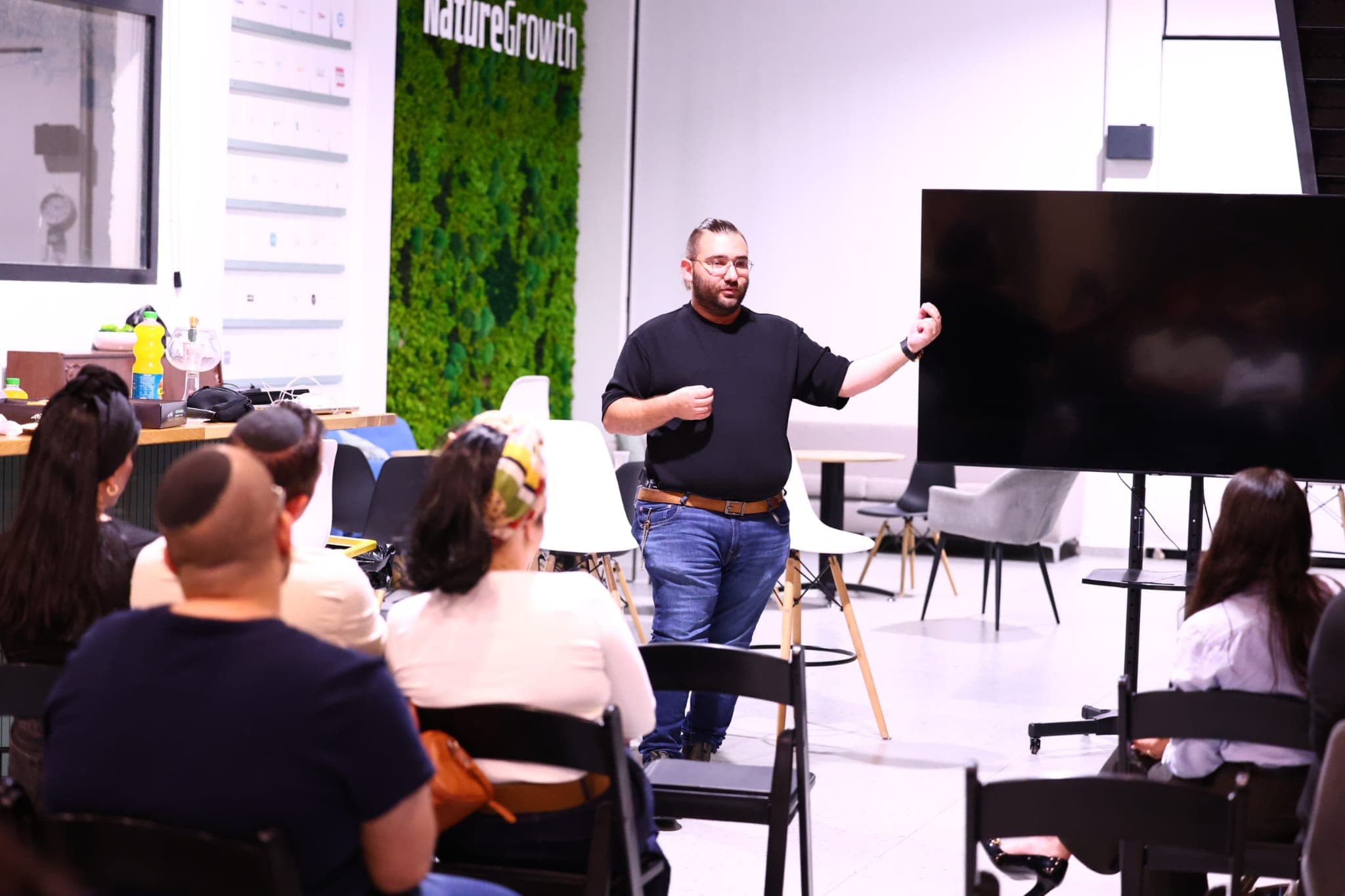
Entrepreneurs session, Sderot
I have worked with
- Google for Startups
- House of Business, Sderot Municipality
- Microsoft Reactor
- GameReady
- Eclipse Capital
- SderoTech
- IUCEL
- Resilience & Health Innovation Hub
- International Resilience Institute of Sderot















- Google for Startups
- House of Business, Sderot Municipality
- Microsoft Reactor
- GameReady
- Eclipse Capital
- SderoTech
- IUCEL
- Resilience & Health Innovation Hub
- International Resilience Institute of Sderot
What Clients Say
From different fields, at different stages of business
Dan Manto
Eclipse Capital
Real Estate Investment and Finance, USA
Arty McLabin
GameReady
Game Development Education and Outsourcing, International

Anna
Beautician
After I finished a cosmetology course at a leading company, I was confused. I didn't know how to open a business, what to sell from home, or how to bring in clients. Since I reached out to Mobius, everything has changed. We built an organized plan with clear steps and no unnecessary risks. Today I see results, and I'm growing and developing every month.

Mark
Massage therapist, Gan Yavne
When I finished a massage course, I imagined a different world. I found out it's a hard field, and financial stability isn't easy to find. When I came to Mobius, something changed. We started an organized process and built a business plan. Without Mobius? I probably would have given up. Today I believe in myself and in my own path.
And the paperwork, for anyone who wants to see that too.

Certificate of appreciation, Sderot municipality

Certificate of honor, Teenovation 2026

Directors and officeholders course, SRI Campus
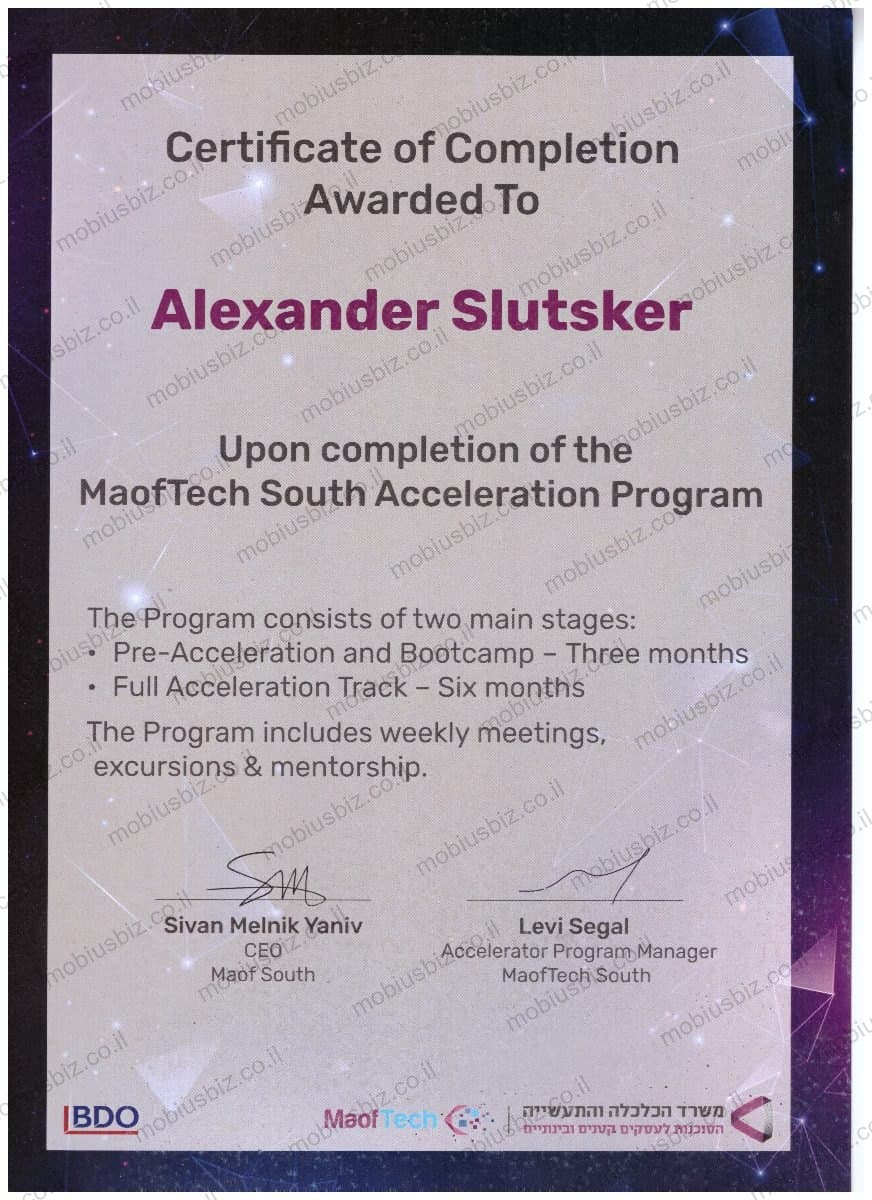
Acceleration program, MaofTech South
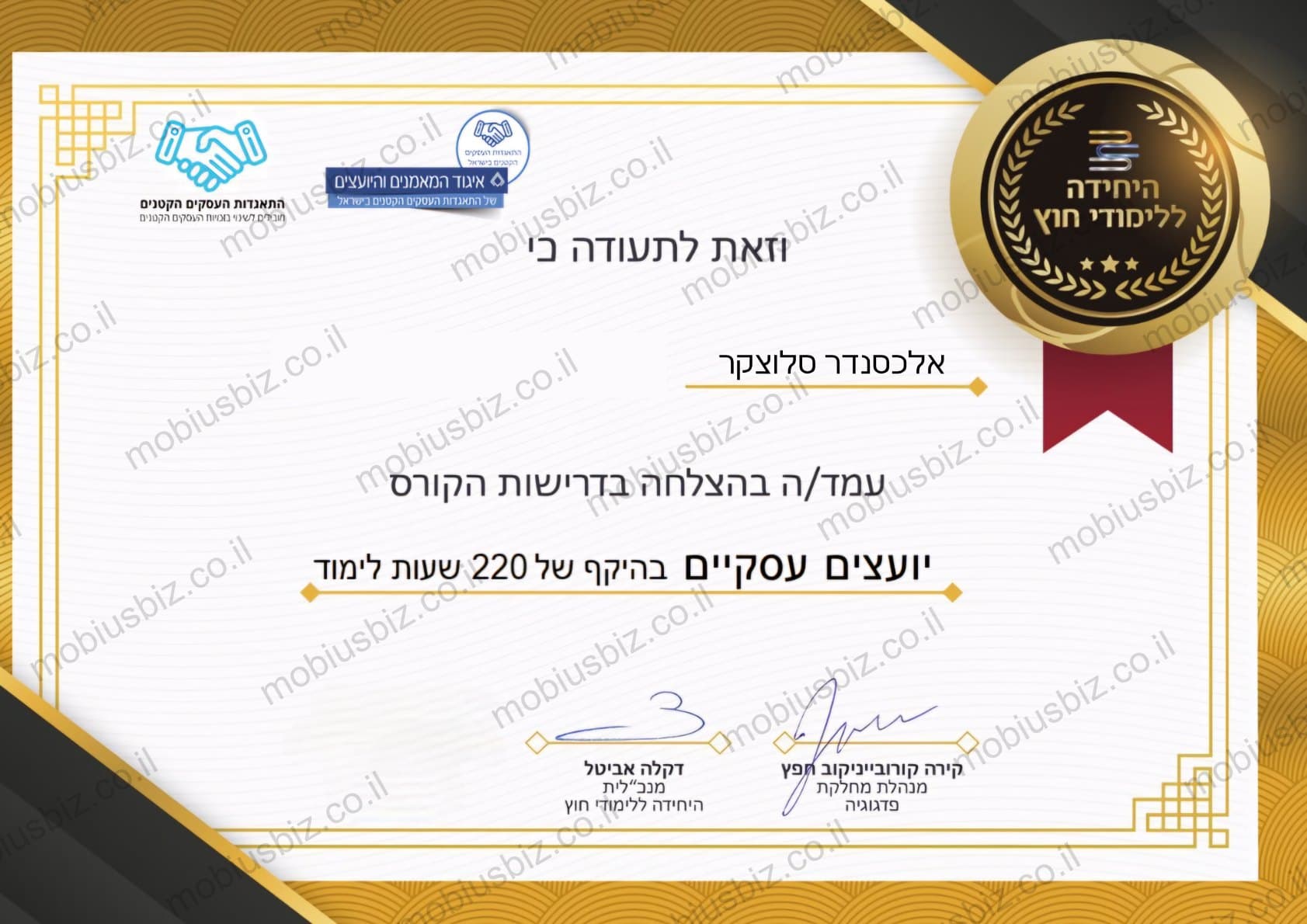
Business consultants course
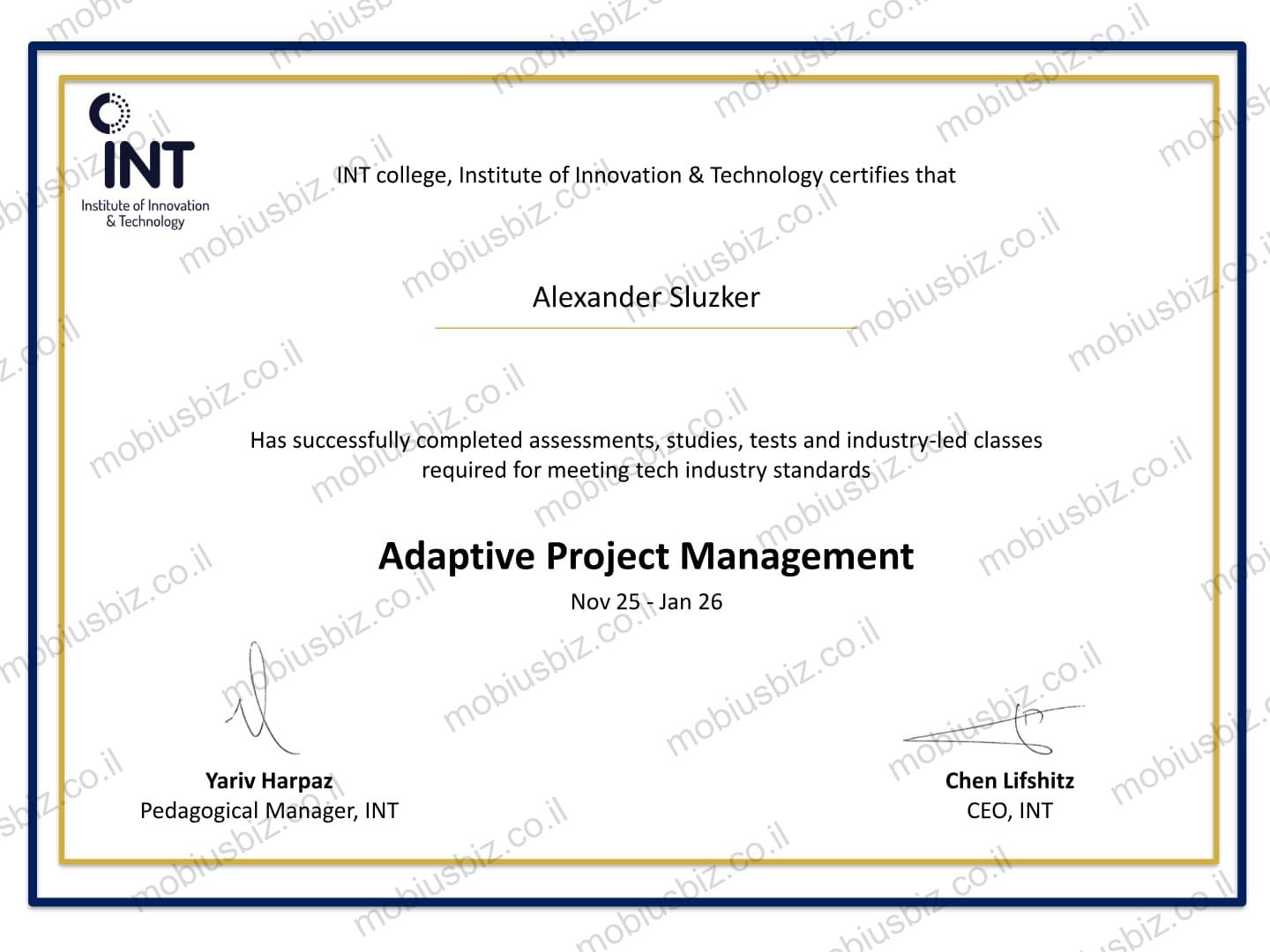
Adaptive project management, INT college

Business, Marketing, Operations & Financial Consultant
Mobius
Alexander Slutsker
9+Years of experience in business consulting
I help entrepreneurs, self-employed people, small businesses and startups understand their own numbers, choose what to do first and grow from there.
Book a Free Call+972 055-248-6151. Better on WhatsApp: I am in meetings most of the day and answer as soon as I am free. Other ways to reach me
We can talk in English, Hebrew or Russian.