What Is a Business Plan and When Do You Need One?
A plain-language explanation of what a business plan does, which format fits your stage, and how Israel-specific reality changes the plan.
Break-even Calculator
See how many units you need to sell before the business starts covering its fixed costs.
Break-even units
167
Break-even revenue
₪33,400
Contribution margin per unit
₪120
Contribution margin percent
60%
What this means
You need 167 units, or ₪33,400 in sales, to cover fixed costs. Each unit contributes ₪120, a contribution margin of 60%.
Want to pressure-test the business model behind the numbers?
Book a free call+972 055-248-6151. Other ways to reach me
This is a simplified, illustrative tool meant to give you a quick feel for the numbers. It is not professional advice. Real business decisions depend on many factors it does not account for, and all results are estimates only. Mobius Business Solutions accepts no responsibility for decisions or actions taken based on this tool.
A business plan is the logic of your business written down. It explains who the business serves, what it sells, how it makes money, what risks exist, and what must be true before the owner invests time, cash, reputation, and family stability.
That is why the plan is not only a document for a bank or investor. It is a decision tool. A good plan helps you decide whether to start, delay, change the model, raise money, open smaller, choose a different location, or drop the idea before the expensive part begins.
What job does a business plan do?
A business plan has three jobs.
First, it clarifies the model. Who is the customer? What problem are you solving? How do you reach them? Why will they pay?
Second, it tests the numbers. Where is the break-even point (where income covers all costs)? Can the business survive rent, salaries, marketing, supplier payments, taxes, permits, and delays before cash arrives?
Third, it gives the owner a roadmap. What happens first? What must be measured? What should change if the market does not respond?
The SBA guide says there is no single right way to write a plan. What matters is that the format meets your needs. That is exactly the point. The plan should fit the business, not the other way around.
Traditional plan or lean plan?
A traditional plan is detailed. It fits loans, banks, investors, complex launches, partners, or any business where the investment is hard to reverse.
A lean plan is shorter. It fits early tests, simple self-employed services, or ideas where you can start small, learn, and adjust before making fixed commitments.
This distinction matters. If you are testing a freelance service, a one-page plan and real conversations may be enough. If you are opening a bakery with one and a half to two million shekels of investment, you need a much deeper plan with quotes, permits, labor, food cost, location, traffic, marketing, and cash reserves.
What changes by business model?
Different businesses need different plans.
A local service business needs pricing, capacity, repeat work, referral sources, and local demand.
A shop, restaurant, or bakery needs location, foot traffic, supplier terms, permits, build-out cost, staffing, opening hours, and operating reserves.
An e-commerce business needs CAC (cost to win a customer), conversion rate (the share of visitors who buy), inventory, delivery, returns, and LTV (a customer's total value over time).
A startup needs validation, MVP (a simple first version to test), traction (real, repeatable proof customers want it), global market logic, funding milestones, and risk.
A manufacturer may already know the product deeply but still need a strategic plan to find new audiences, improve efficiency, add products, or enter markets where competitors have already educated the customers.
What is different in Israel?
Business planning in Israel needs local realism.
A plan may need to account for population density, purchasing power, audience behavior, religion, local culture, location, regulation, security instability, pandemics, and disruptions from war or closed days. In a good year, a business may still lose working time from instability. In a harder year, the disruption can be much larger.
That means the plan needs buffers. Not vague "be careful" language. Real buffers: cash reserve, realistic marketing spend, supplier alternatives, delayed revenue, and a survival plan if the first months are slower than expected.
For more on Israel-specific early testing, read how to validate your business idea before spending a single shekel.
Why owners misunderstand the plan
Many owners see a plan as a stack of A4 pages, Excel sheets, and formal sections. That misses the value.
The value is that a small planning investment can reveal a fatal issue before a large investment is made. A weak location, underestimated renovation, missing fire requirement, wrong labor assumption, or unrealistic marketing budget can destroy a business that looked exciting in conversation.
The plan is not there to slow you down. It is there to decide whether speed is safe.
When is a plan enough to act?
A plan is enough to act when the main assumptions have been tested and the downside case still leaves a path to survival.
You do not need certainty. You do need honesty. The plan should show the cash flow (money moving in and out): where the money comes from, when it leaves, when it returns, what breaks the model, and which first actions will produce evidence.
If you want the plan built with you from your own numbers, for your own decision, a bank or an investor, see building your business plan with me.
If you need the step-by-step structure, read how to build a business plan. If your plan needs an outside challenge, book a business plan strategy session or talk it through with me.
Do not write a business plan to prove your idea. Write it to test your idea before the market tests it with your money.
The content on this blog is general information only and is not a recommendation to act. It is not business, legal, tax, or financial advice. Before making any decision, consult a qualified professional, such as an accountant, a lawyer, or a business advisor, about your specific situation.
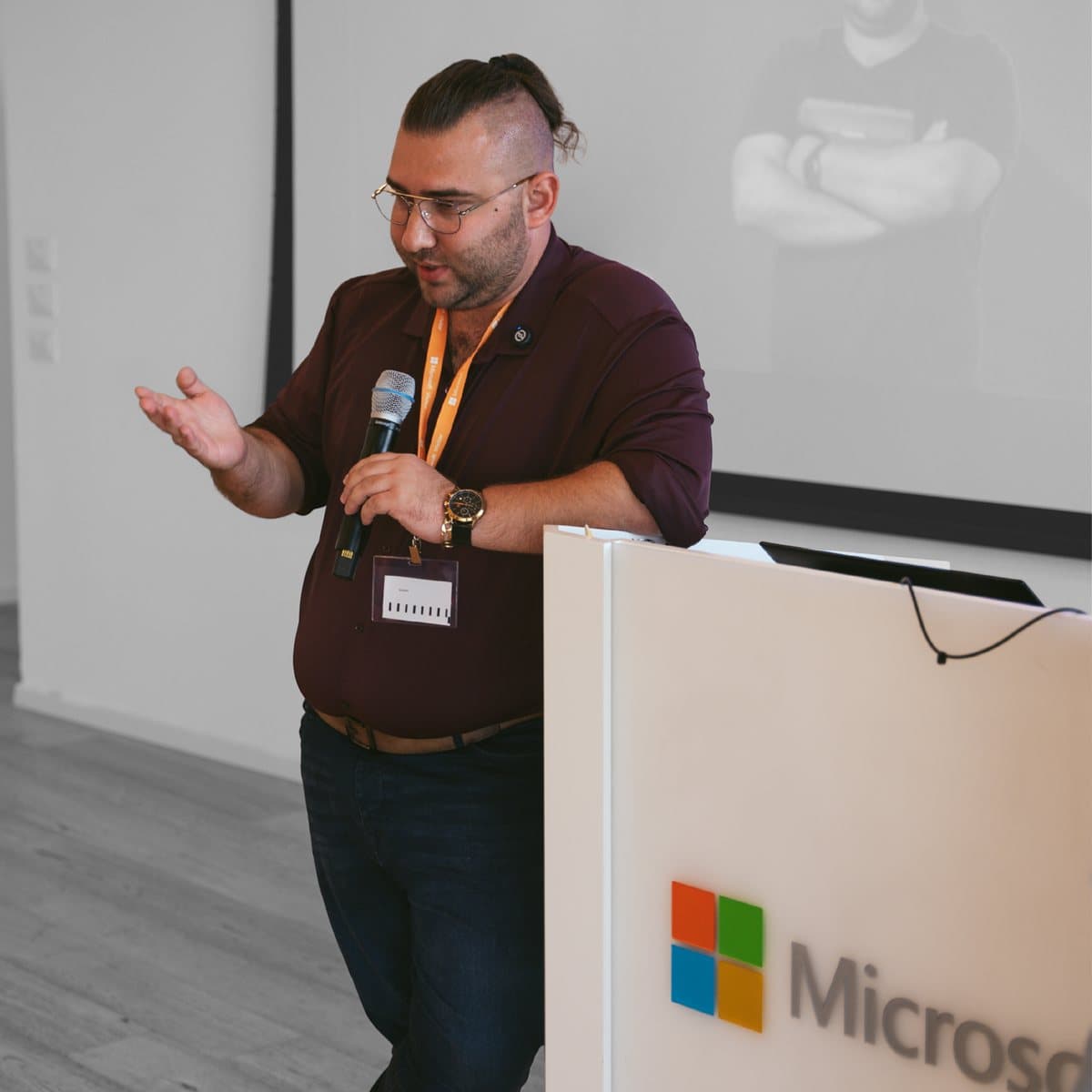
Speaking at Microsoft

Meeting with international teams, as part of work with a startup
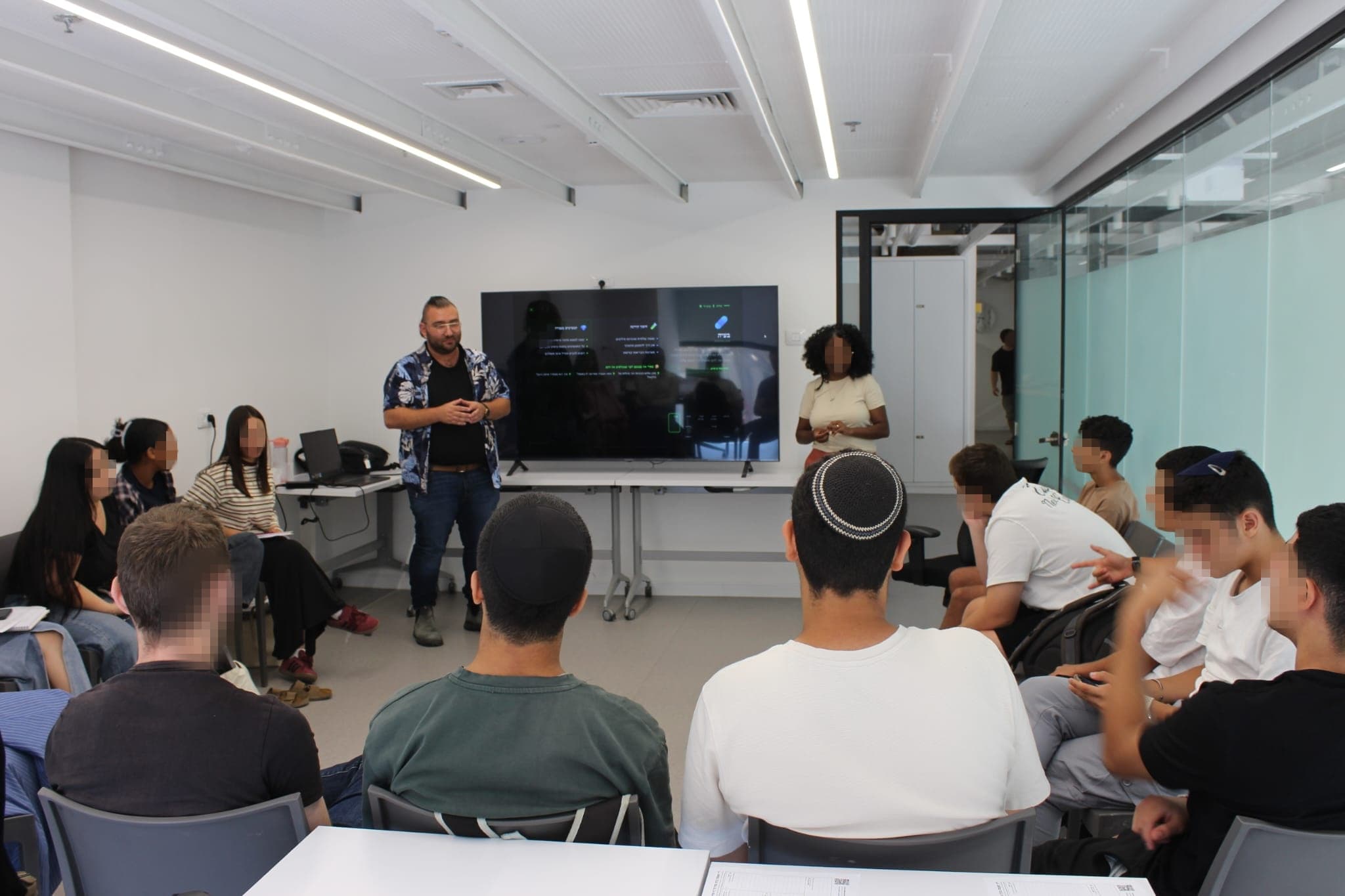
Teenovation, Meital centre Sderot
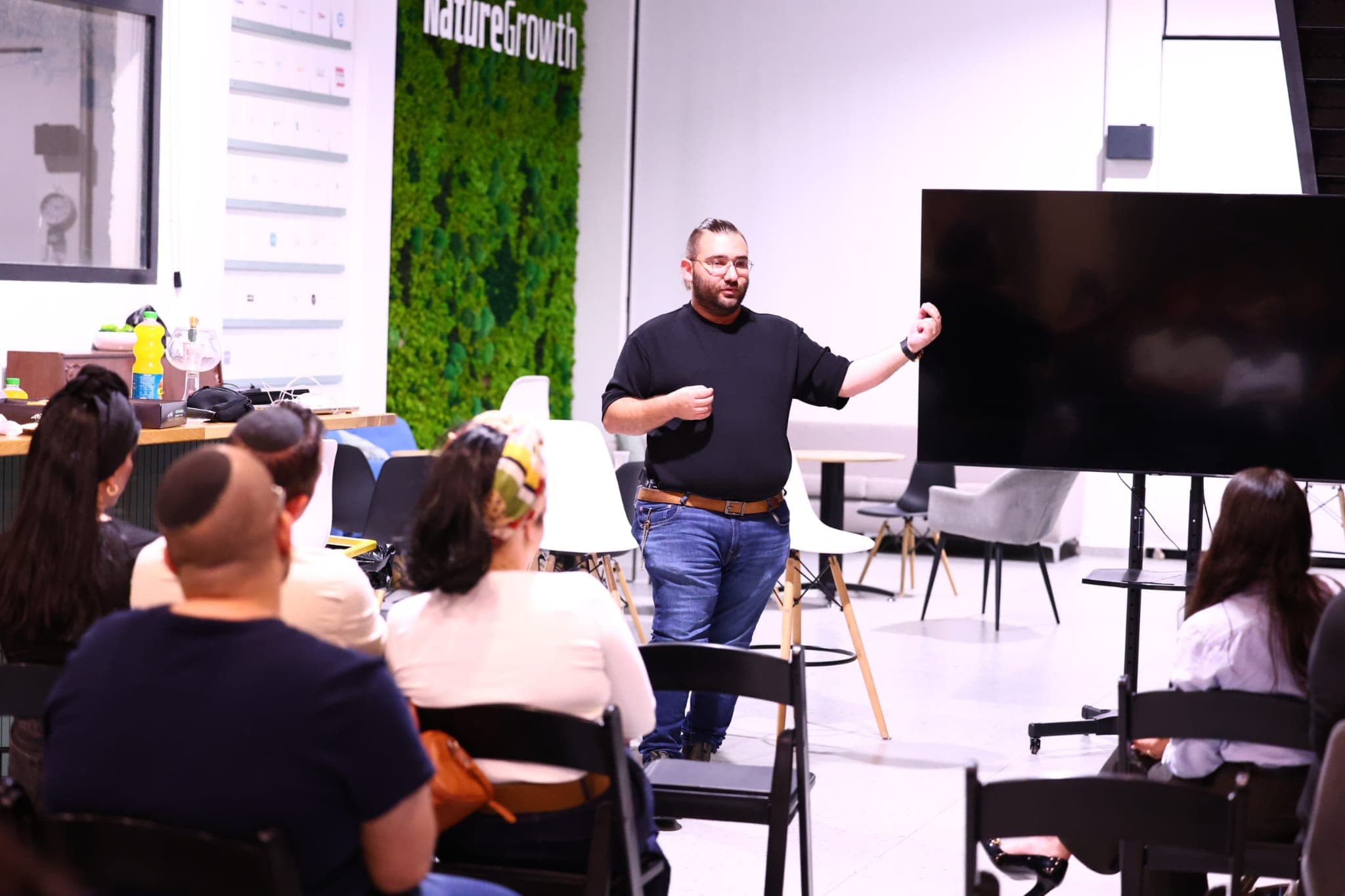
Entrepreneurs session, Sderot
I have worked with
- Google for Startups
- House of Business, Sderot Municipality
- Microsoft Reactor
- GameReady
- Eclipse Capital
- SderoTech
- IUCEL
- Resilience & Health Innovation Hub
- International Resilience Institute of Sderot















- Google for Startups
- House of Business, Sderot Municipality
- Microsoft Reactor
- GameReady
- Eclipse Capital
- SderoTech
- IUCEL
- Resilience & Health Innovation Hub
- International Resilience Institute of Sderot
What Clients Say
From different fields, at different stages of business
Dan Manto
Eclipse Capital
Real Estate Investment and Finance, USA
Arty McLabin
GameReady
Game Development Education and Outsourcing, International

Anna
Beautician
After I finished a cosmetology course at a leading company, I was confused. I didn't know how to open a business, what to sell from home, or how to bring in clients. Since I reached out to Mobius, everything has changed. We built an organized plan with clear steps and no unnecessary risks. Today I see results, and I'm growing and developing every month.

Mark
Massage therapist, Gan Yavne
When I finished a massage course, I imagined a different world. I found out it's a hard field, and financial stability isn't easy to find. When I came to Mobius, something changed. We started an organized process and built a business plan. Without Mobius? I probably would have given up. Today I believe in myself and in my own path.
And the paperwork, for anyone who wants to see that too.

Certificate of appreciation, Sderot municipality

Certificate of honor, Teenovation 2026

Directors and officeholders course, SRI Campus
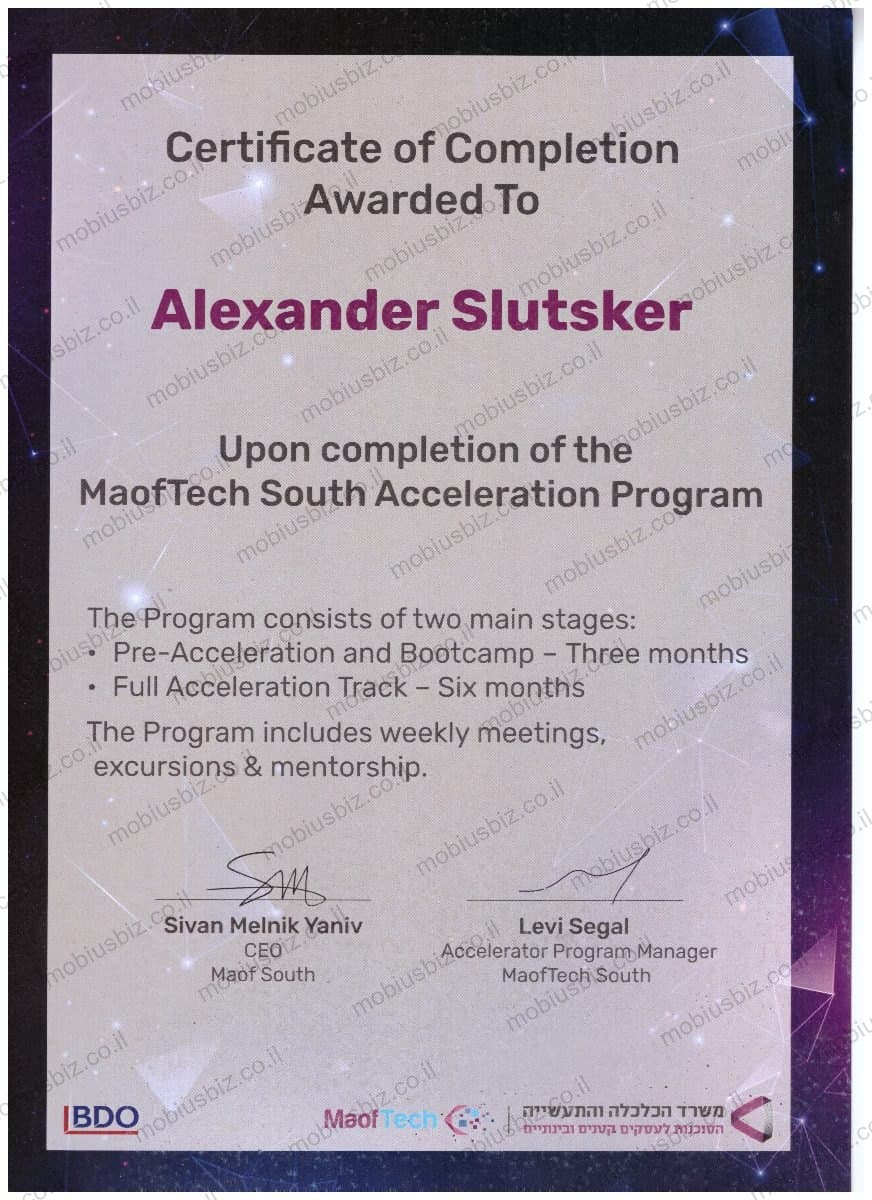
Acceleration program, MaofTech South
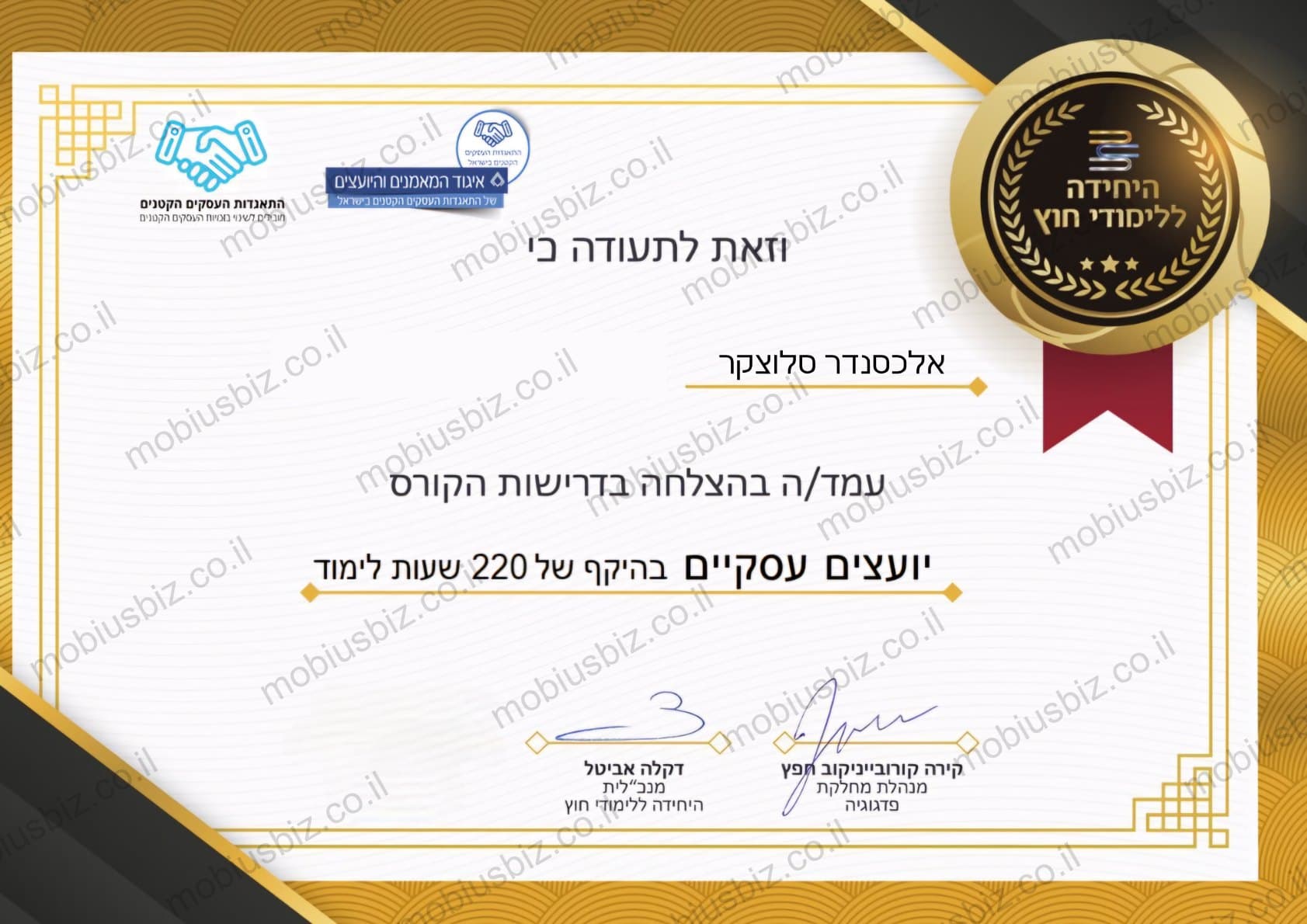
Business consultants course

Adaptive project management, INT college
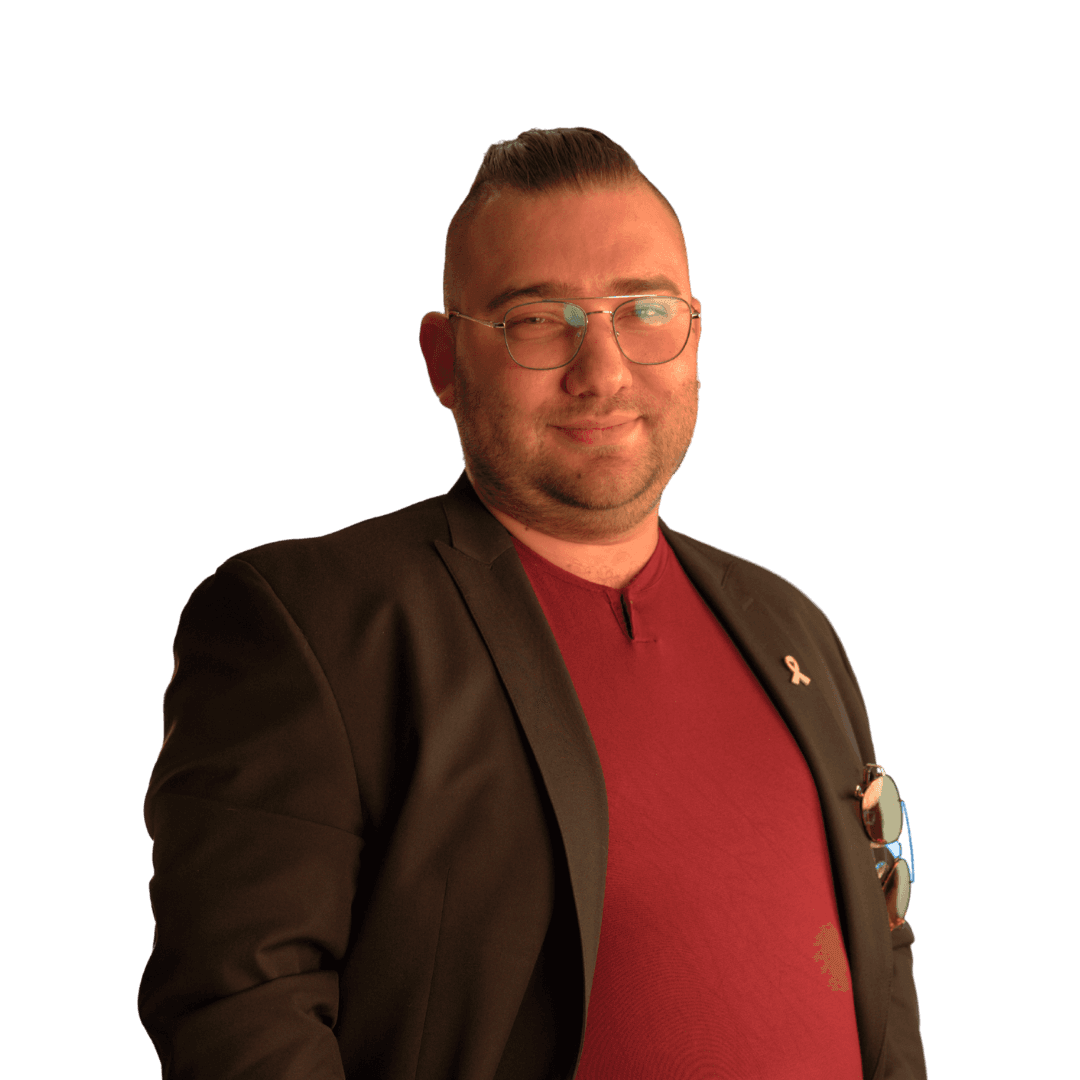
Business, Marketing, Operations & Financial Consultant
Mobius
Alexander Slutsker
9+Years of experience in business consulting
I help entrepreneurs, self-employed people, small businesses and startups understand their own numbers, choose what to do first and grow from there.
Book a Free Call+972 055-248-6151. Better on WhatsApp: I am in meetings most of the day and answer as soon as I am free. Other ways to reach me
We can talk in English, Hebrew or Russian.