First Financial Mistakes Israeli Owners Make
The early finance setup mistakes Israeli owners make with mixed money, VAT, owner draws, records, invoices, and tax reserves.
The first financial mistakes usually look small. A personal card used for one business purchase. VAT money treated as available cash. A price quoted without saying whether VAT is included. A withdrawal taken because the bank balance looks safe.
Each one feels manageable. Together they hide the truth from the owner.
Mistake 1: mixing personal and business money
Even when the legal structure is simple, using a dedicated business account and payment card gives the owner visibility. It lets you answer three separate questions:
- is the business profitable?
- is the owner withdrawing too much?
- is the timing of payments creating a cash shortage?
When everything is mixed, those questions blur into one anxious bank balance.
Mistake 2: treating VAT as business income
VAT is not operating revenue. It may arrive with the customer payment and sit in the account, but it belongs to the tax system.
Israel's VAT rate has been 18 percent since January 1, 2025, after the Knesset approved the increase from 17 percent. That makes pricing clarity essential. A business may think it charged NIS 1,000 plus VAT, while the customer understood NIS 1,000 as the final price. That difference can remove a large part of the intended margin (the profit left after costs).
Mistake 3: irregular owner withdrawals
A high bank balance can be misleading. It may include VAT, payroll, suppliers, tax payments, customer deposits, or annual costs not yet paid.
Often the real picture appears only when the P&L (income minus expenses), the bank account, and the credit-card statements are read together. The core business can turn out to be modestly profitable, while personal expenses, irregular owner withdrawals, and annual payments are hidden inside the bank movement. Once every transaction is classified, a business that looked like it was losing money may not need to close at all. It may need separate accounts, a fixed owner salary, and reserves.
Mistake 4: records that are too late
Annual reports are too late for management. Owners need a small monthly close: reconcile bank and cards, classify transactions, review receivables, reserve taxes, check owner withdrawals, and update the cash flow forecast.
In Israel, invoice workflows now matter even more. The Israel Tax Authority allocation-number system decides whether the buyer can deduct the input VAT (the VAT paid on business purchases) on qualifying transactions over the legal threshold. Since June 1, 2026, the threshold is generally NIS 5,000 before VAT. If your software and process do not support this, customers and suppliers can be affected.
Set up the basics before complexity
Before the first serious sale, set up a business account, payment card, invoicing process, VAT and tax reserve, monthly review, and clear price language. If you are not sure how much cash is really available, read cash flow versus profit. If you need the first management numbers, read five financial numbers small owners need.
Setting up these basics in the right order, while the business is still small, is where financial consulting for new businesses usually begins.
Tax, legal, payroll, and entity-structure decisions belong with your accountant, tax adviser, or lawyer. For the business system around those decisions, talk it through with me. What business owners who worked with me say is in the recommendations below this article.
The content on this blog is general information only and is not a recommendation to act. It is not business, legal, tax, or financial advice. Before making any decision, consult a qualified professional, such as an accountant, a lawyer, or a business advisor, about your specific situation.
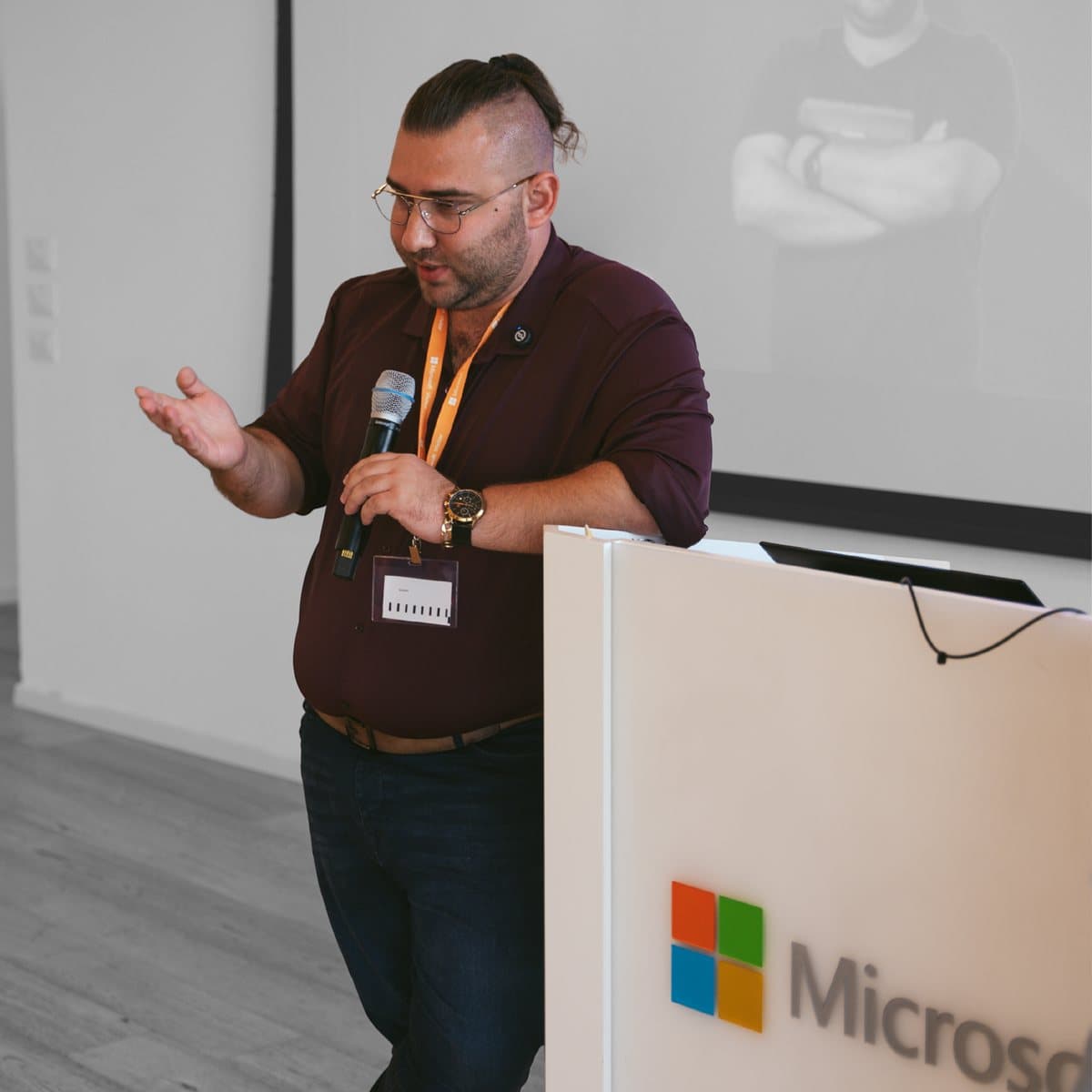
Speaking at Microsoft
Meeting with international teams, as part of work with a startup
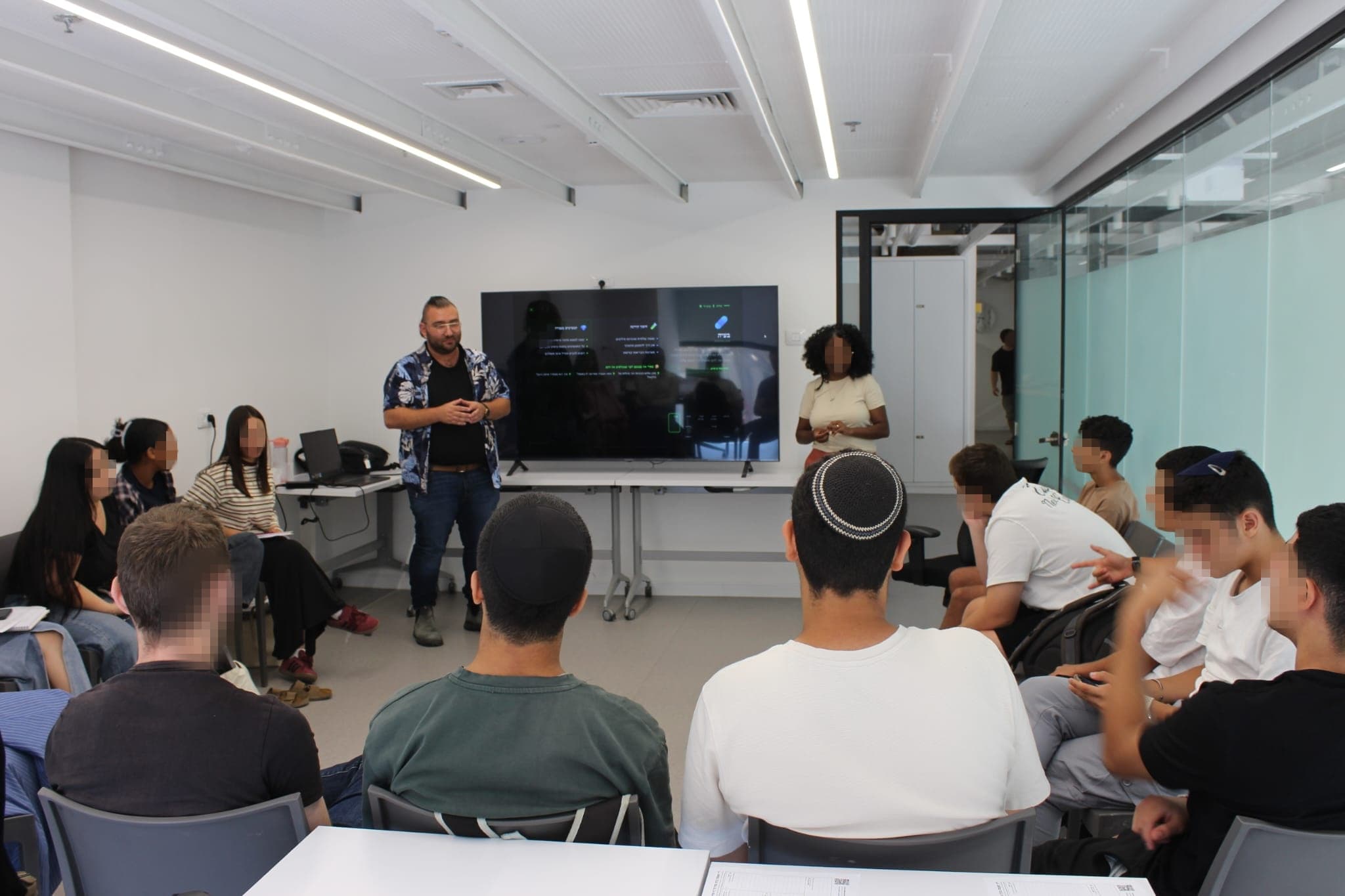
Teenovation, Meital centre Sderot
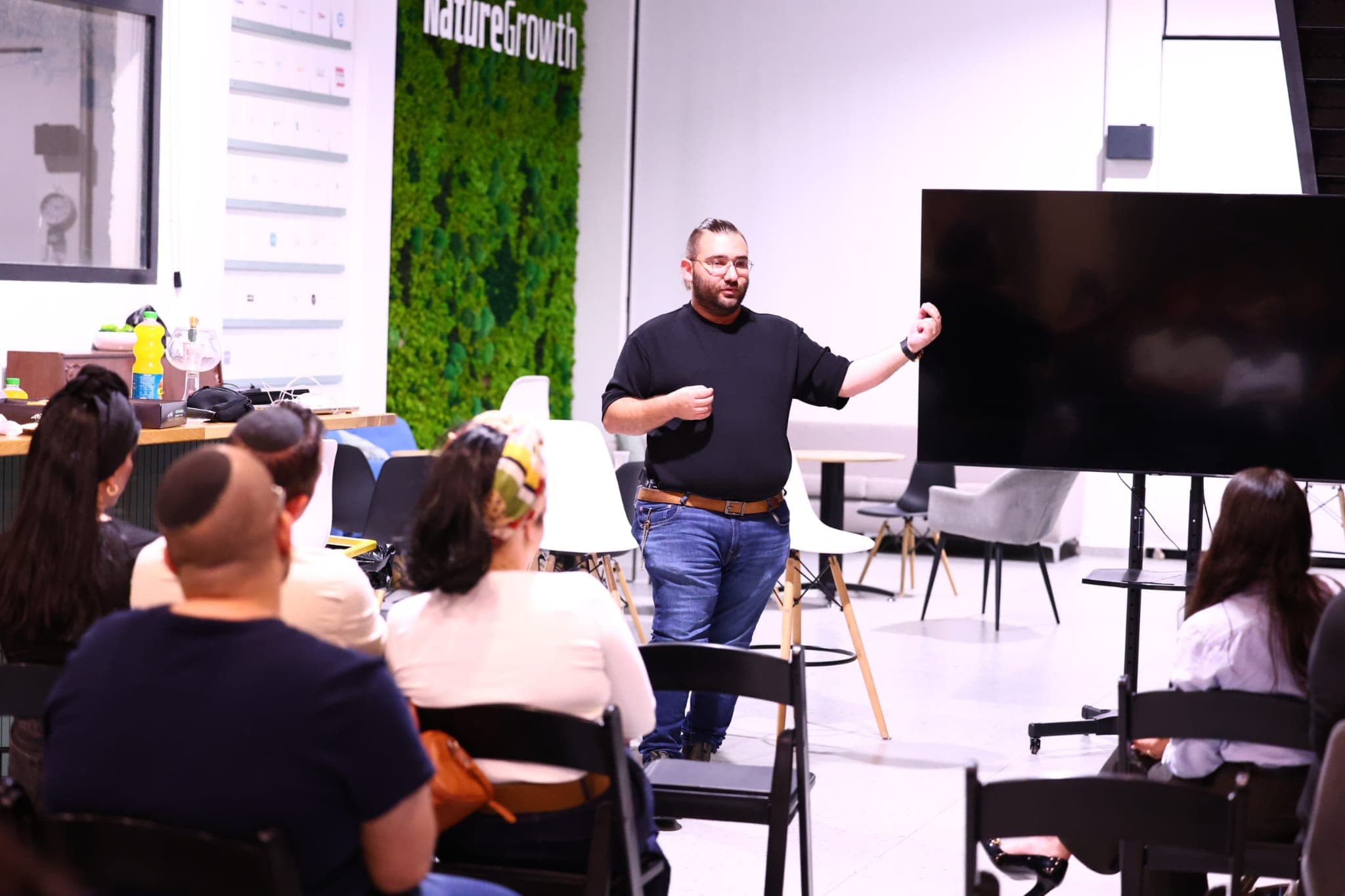
Entrepreneurs session, Sderot
I have worked with
- Google for Startups
- House of Business, Sderot Municipality
- Microsoft Reactor
- GameReady
- Eclipse Capital
- SderoTech
- IUCEL
- Resilience & Health Innovation Hub
- International Resilience Institute of Sderot














- Google for Startups
- House of Business, Sderot Municipality
- Microsoft Reactor
- GameReady
- Eclipse Capital
- SderoTech
- IUCEL
- Resilience & Health Innovation Hub
- International Resilience Institute of Sderot
What Clients Say
From different fields, at different stages of business
Dan Manto
Eclipse Capital
Real Estate Investment and Finance, USA
Arty McLabin
GameReady
Game Development Education and Outsourcing, International

Anna
Beautician
After I finished a cosmetology course at a leading company, I was confused. I didn't know how to open a business, what to sell from home, or how to bring in clients. Since I reached out to Mobius, everything has changed. We built an organized plan with clear steps and no unnecessary risks. Today I see results, and I'm growing and developing every month.

Mark
Massage therapist, Gan Yavne
When I finished a massage course, I imagined a different world. I found out it's a hard field, and financial stability isn't easy to find. When I came to Mobius, something changed. We started an organized process and built a business plan. Without Mobius? I probably would have given up. Today I believe in myself and in my own path.
And the paperwork, for anyone who wants to see that too.
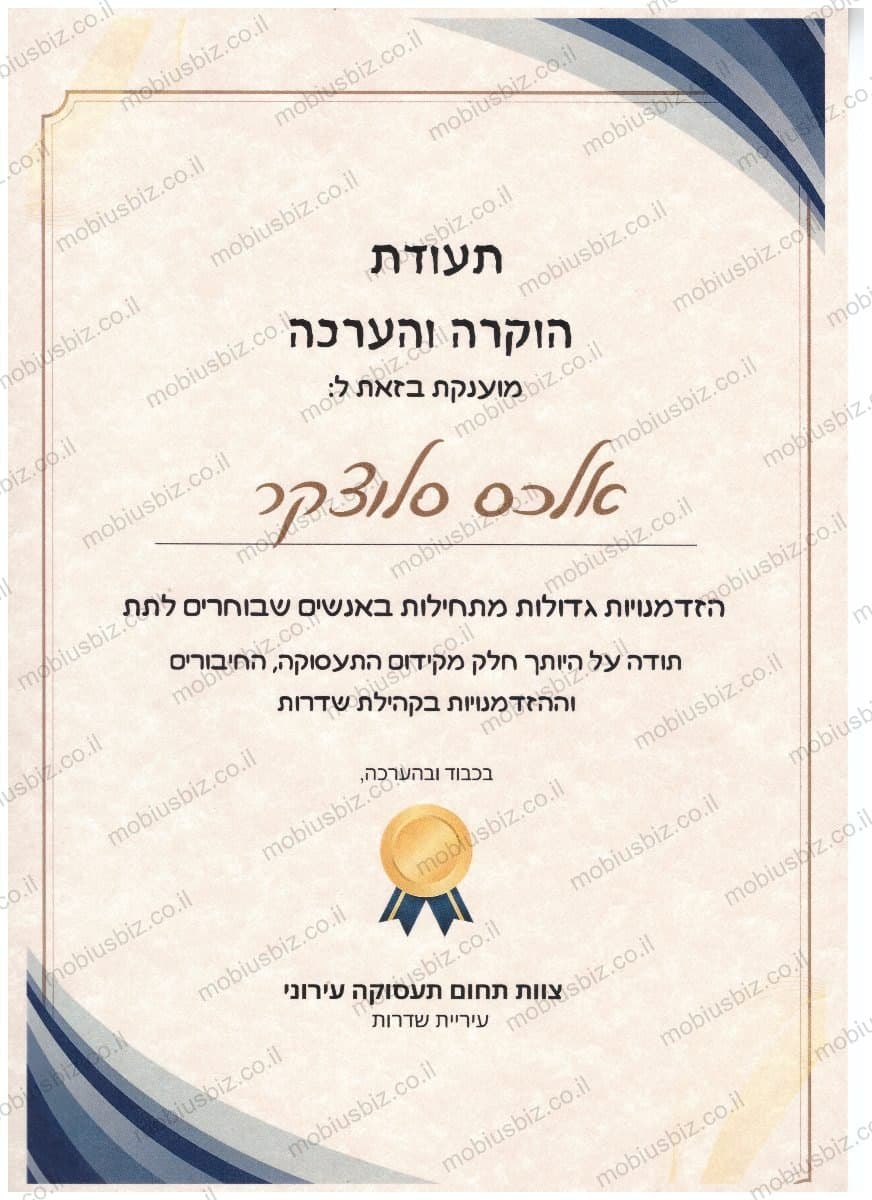
Certificate of appreciation, Sderot municipality

Certificate of honor, Teenovation 2026
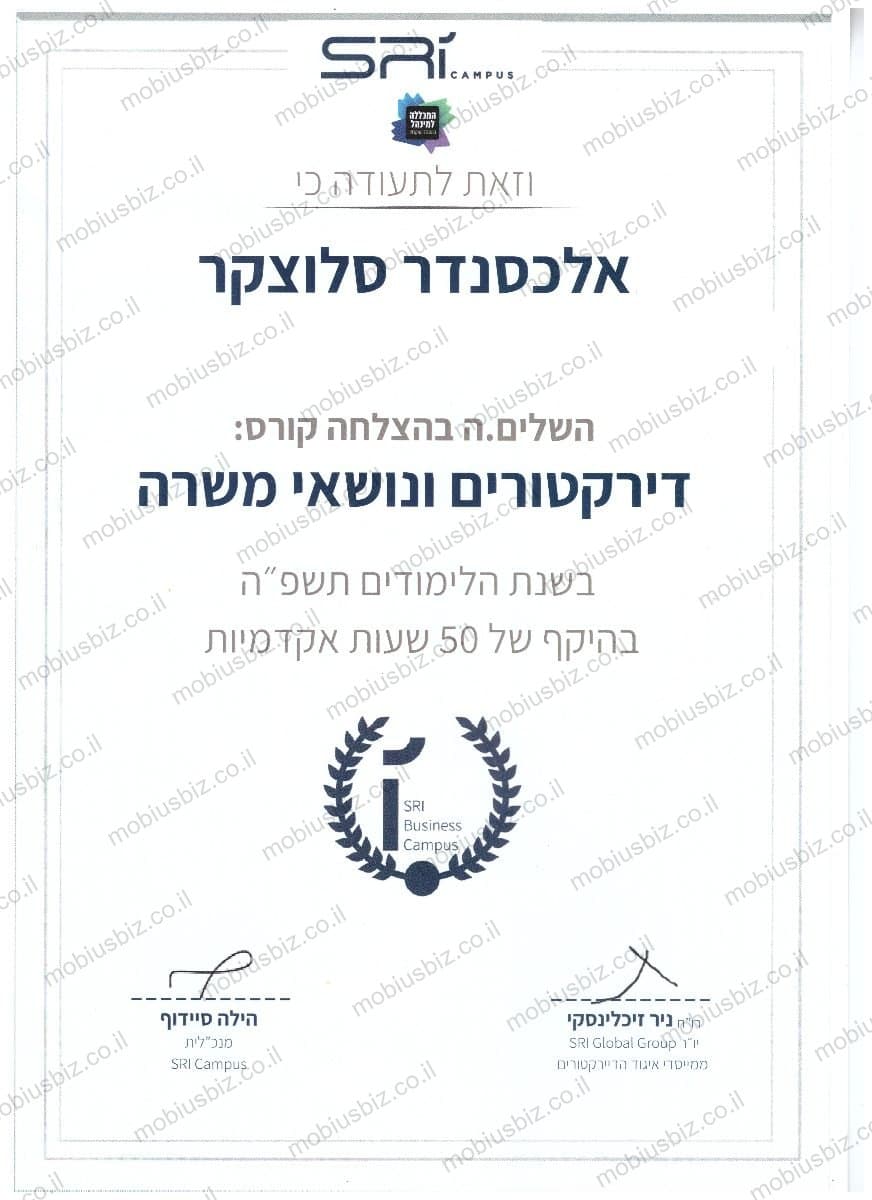
Directors and officeholders course, SRI Campus
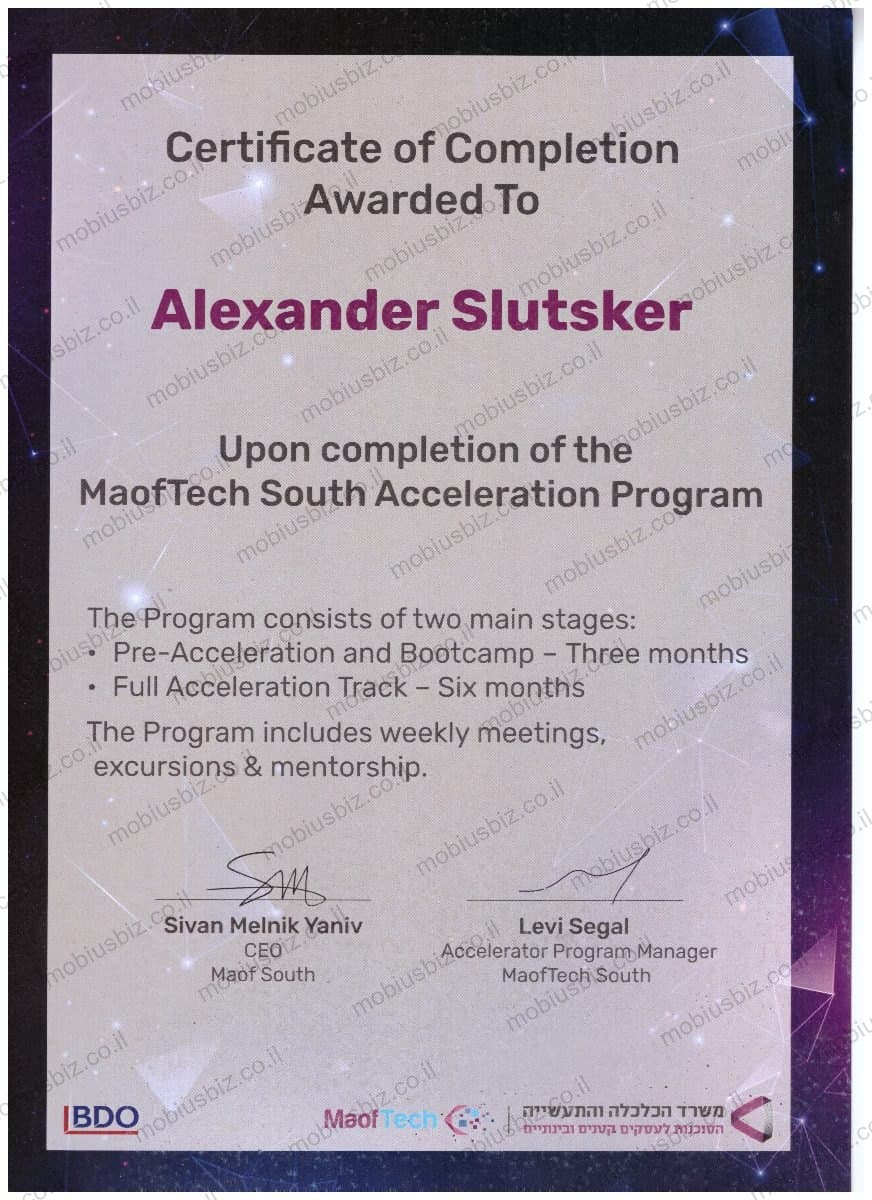
Acceleration program, MaofTech South
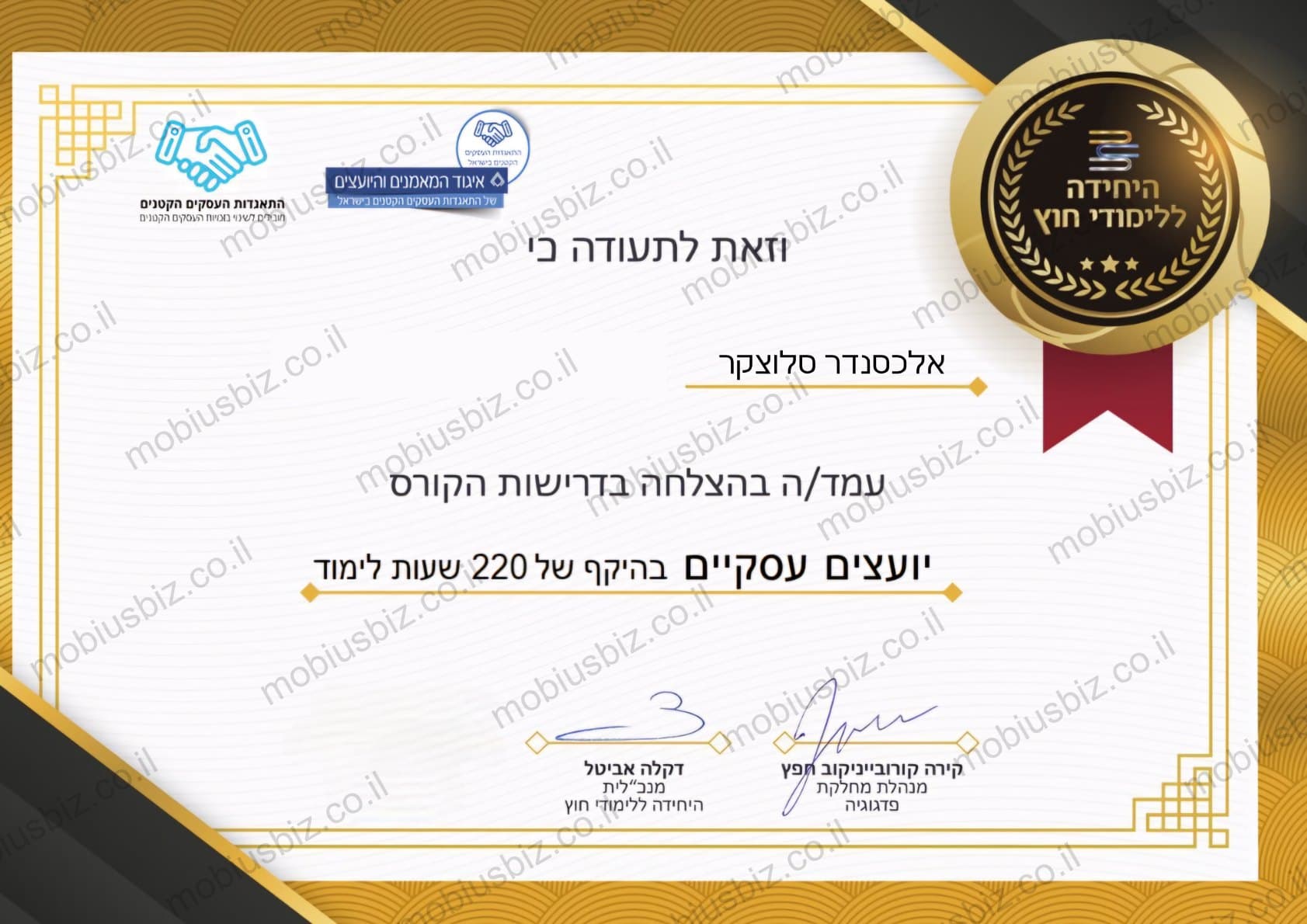
Business consultants course

Adaptive project management, INT college
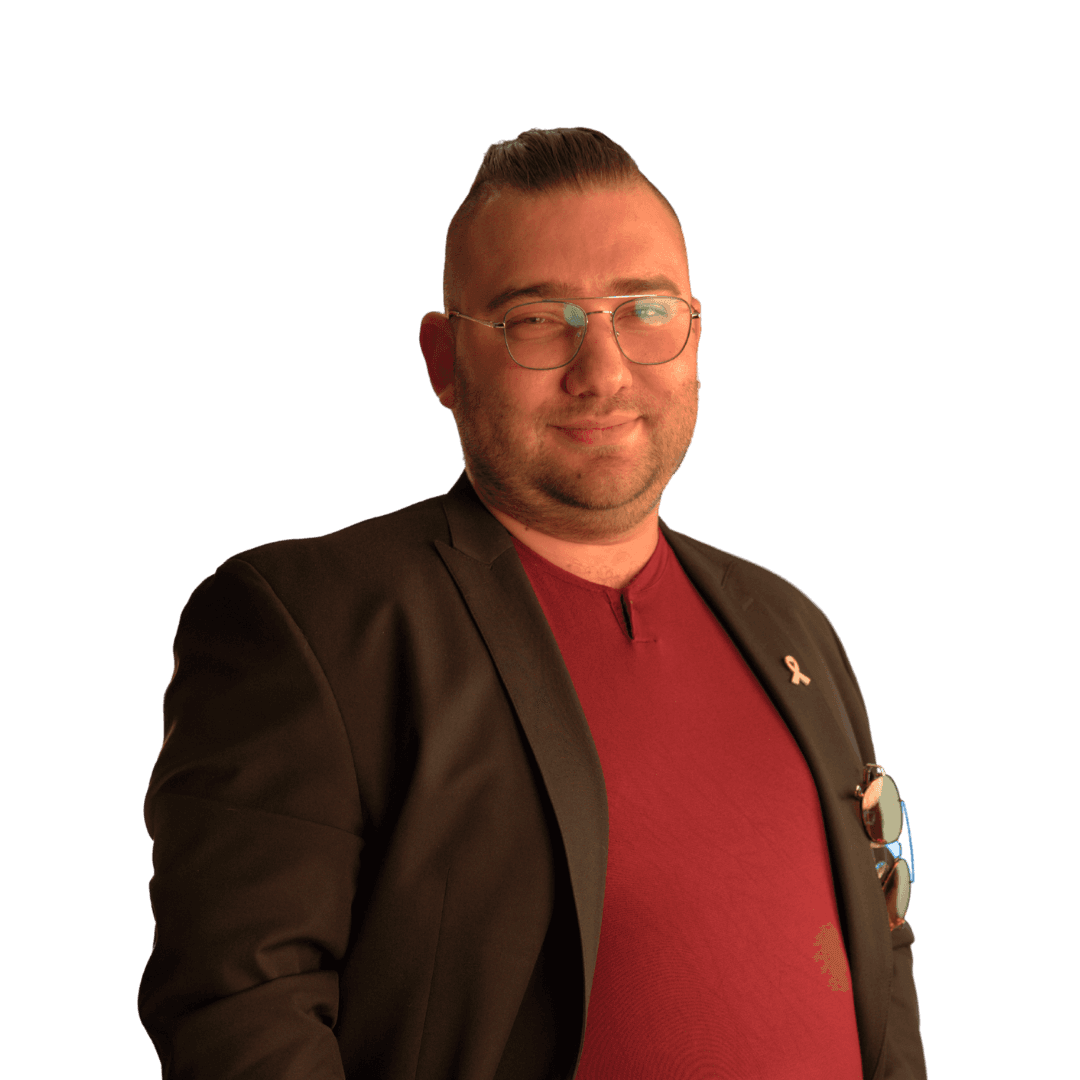
Business, Marketing, Operations & Financial Consultant
Mobius
Alexander Slutsker
9+Years of experience in business consulting
I help entrepreneurs, self-employed people, small businesses and startups understand their own numbers, choose what to do first and grow from there.
Book a Free Call+972 055-248-6151. Better on WhatsApp: I am in meetings most of the day and answer as soon as I am free. Other ways to reach me
We can talk in English, Hebrew or Russian.