Do You Actually Need a Co-Founder?
How to decide whether a co-founder adds real strategic value or creates ownership, decision, and execution risk.
A co-founder can multiply what a business is able to do, but only when the fit is real. The right partner adds skills, judgment, speed, accountability and resilience. The wrong structure can slow every important decision and make the business harder to fix than if you had started alone.
The question is not "Would it be nicer to have someone with me?" The useful question is: which bottleneck (the step that slows everything else) would this person remove, and what risk would I create by sharing ownership?
Here is how it can work. A technical founder tries to build the product, talk to customers, run operations and prepare for sales at the same time. A commercial co-founder joins, and the roles split clearly: one owns product and technology, the other owns customer interviews, sales, partnerships and fundraising. The gain is not only more hours in the week. Specialization improves the quality of decisions.
The opposite happens too. Two founders agree that every decision will be joint. It sounds fair at the start. As the team grows, every disagreement becomes a delay. The problem is not personality. There are no areas of responsibility and no way to reach a final decision.
A co-founder should remove a real constraint
A co-founder makes sense when the business needs a capability that is central to survival and cannot be hired cheaply, outsourced safely, or delayed.
Common examples include a commercial founder joining a technical founder, a product founder joining a sales-led founder, or an operator joining a visionary founder who struggles to turn ideas into reliable execution. Choosing a co-founder is a founding decision, not a networking exercise.
The strongest co-founder relationships usually have four ingredients:
- Complementary skills, not duplicated comfort zones
- Shared values around risk, money, work, customers, and ethics
- Direct communication under pressure
- Clear agreement on who decides what
If the second founder only echoes your opinions, you may feel safer, but the business does not become stronger.
When a co-founder creates more risk than help
Not every founder needs a co-founder. A bad partnership is worse than a temporary solo phase.
Red flags (clear reasons to walk away) appear early. The person avoids hard conversations, wants an equal equity (a share of ownership) split without discussing future contribution, cannot commit enough time, agrees with everything to keep the peace, or treats conflict as betrayal. Another warning sign is when the founder is searching for emotional certainty rather than a missing business capability.
Before sharing ownership, ask yourself:
- What decision am I afraid to make alone?
- Could a contractor, adviser, employee, or consultant solve this constraint for less risk?
- What happens if this person stops contributing after six months?
- Who has the final decision when we disagree?
- What would make either of us leave?
Those questions are uncomfortable because they are useful.
Test the working relationship before sharing ownership
Do not start with documents only. Start with work.
Run a real project together: customer interviews, a sales sprint, an MVP (a simple first version to test), a fundraising preparation sprint, or a delivery improvement project. Watch how the person handles ambiguity, deadlines, feedback, and customer reality.
The test should reveal behavior, not only talent. Some people are impressive in conversation but disappear when the work becomes repetitive. Others are less polished but extremely reliable when the business needs discipline.
If the company is still validating the market, read how to validate a startup idea before giving away ownership to solve a problem the market has not confirmed yet.
Discuss roles, decision rights, equity, and exit scenarios
A co-founder agreement is not only legal paperwork. It is part of the startup's foundation. Its real value is the hard conversations it forces, so go through the questions together before anyone drafts a document.
Discuss at least:
- Role ownership and expected contribution
- Decision rights by area
- Equity split and vesting (ownership earned over time)
- Salary expectations and personal runway (months of cash left)
- What happens if one founder leaves
- How to break a deadlock
- IP, confidentiality, and customer ownership
- How ownership changes if investors join, including dilution (a shrinking ownership percentage)
Review the agreement with a lawyer. The business conversation should come first, but the final document should not be improvised.
If you are unsure how ownership works, start with what equity means in business. If the co-founder question is really about building capacity, compare it with building your first team.
Starting solo can be the better decision
Starting solo is not failure. It can be the right move when the idea is still unclear, there is no traction (real, repeatable proof customers want it) yet, the missing work is temporary, or the available partner is not truly aligned.
The founder can still build support around the business: advisers, consultants, contractors, first customers, mentors, and later employees. A co-founder is not the only way to avoid being alone.
What matters is readiness. Luck in business is not something to wait for. It is what happens when readiness meets the right moment. A good co-founder adds to that readiness, but only if the partnership itself is built honestly.
Ownership, roles and the first hires are questions I work through with founders in startup business consulting.
If you want to test whether you need a co-founder, a first hire, or a different startup path, talk it through with me. The goal is to make the ownership decision before a mistake in it becomes expensive. What business owners who worked with me say is in the recommendations further down this page.
The content on this blog is general information only and is not a recommendation to act. It is not business, legal, tax, or financial advice. Before making any decision, consult a qualified professional, such as an accountant, a lawyer, or a business advisor, about your specific situation.
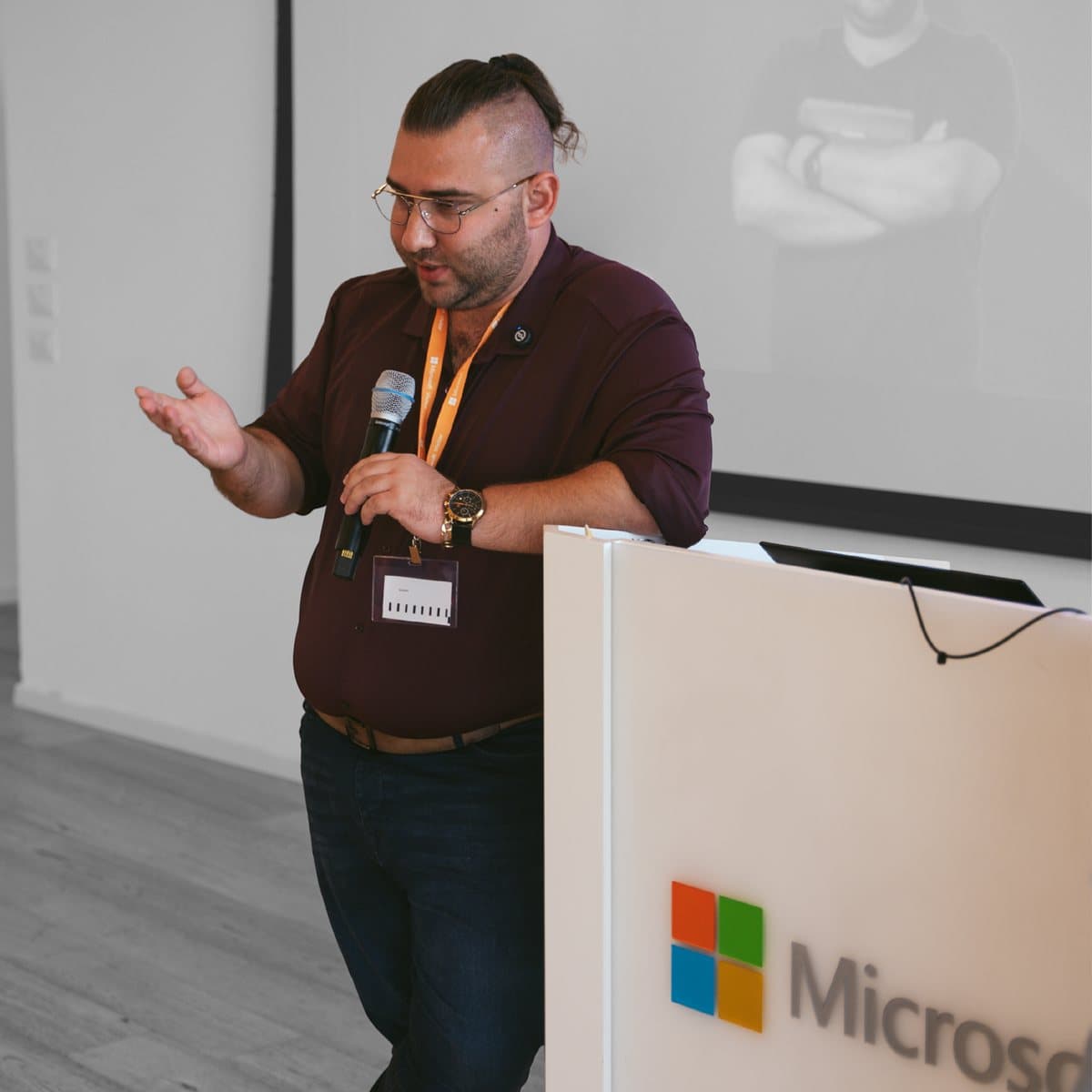
Speaking at Microsoft
Meeting with international teams, as part of work with a startup
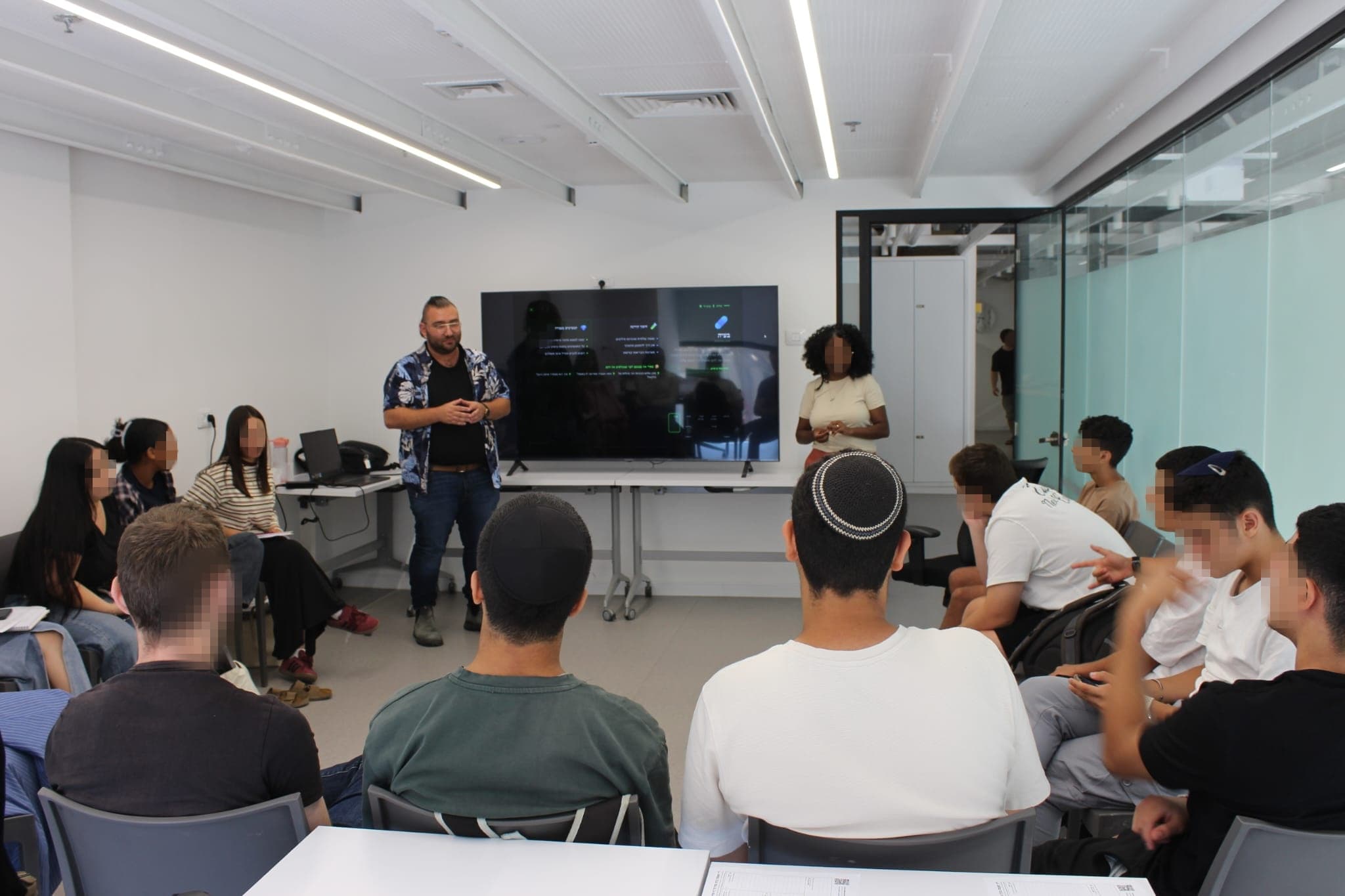
Teenovation, Meital centre Sderot
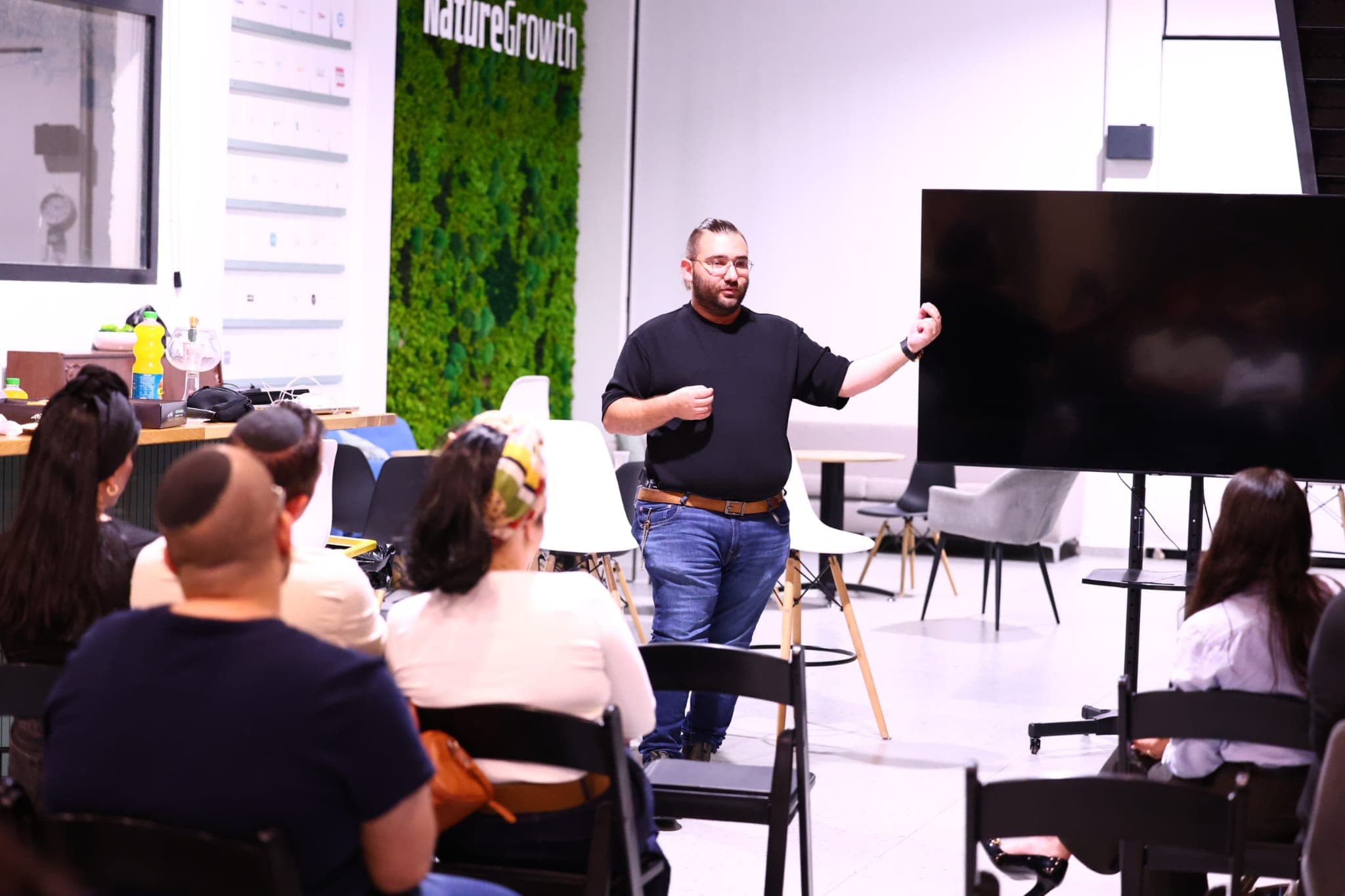
Entrepreneurs session, Sderot
I have worked with
- Google for Startups
- House of Business, Sderot Municipality
- Microsoft Reactor
- GameReady
- Eclipse Capital
- SderoTech
- IUCEL
- Resilience & Health Innovation Hub
- International Resilience Institute of Sderot














- Google for Startups
- House of Business, Sderot Municipality
- Microsoft Reactor
- GameReady
- Eclipse Capital
- SderoTech
- IUCEL
- Resilience & Health Innovation Hub
- International Resilience Institute of Sderot
What Clients Say
From different fields, at different stages of business
Dan Manto
Eclipse Capital
Real Estate Investment and Finance, USA
Arty McLabin
GameReady
Game Development Education and Outsourcing, International

Anna
Beautician
After I finished a cosmetology course at a leading company, I was confused. I didn't know how to open a business, what to sell from home, or how to bring in clients. Since I reached out to Mobius, everything has changed. We built an organized plan with clear steps and no unnecessary risks. Today I see results, and I'm growing and developing every month.

Mark
Massage therapist, Gan Yavne
When I finished a massage course, I imagined a different world. I found out it's a hard field, and financial stability isn't easy to find. When I came to Mobius, something changed. We started an organized process and built a business plan. Without Mobius? I probably would have given up. Today I believe in myself and in my own path.
And the paperwork, for anyone who wants to see that too.
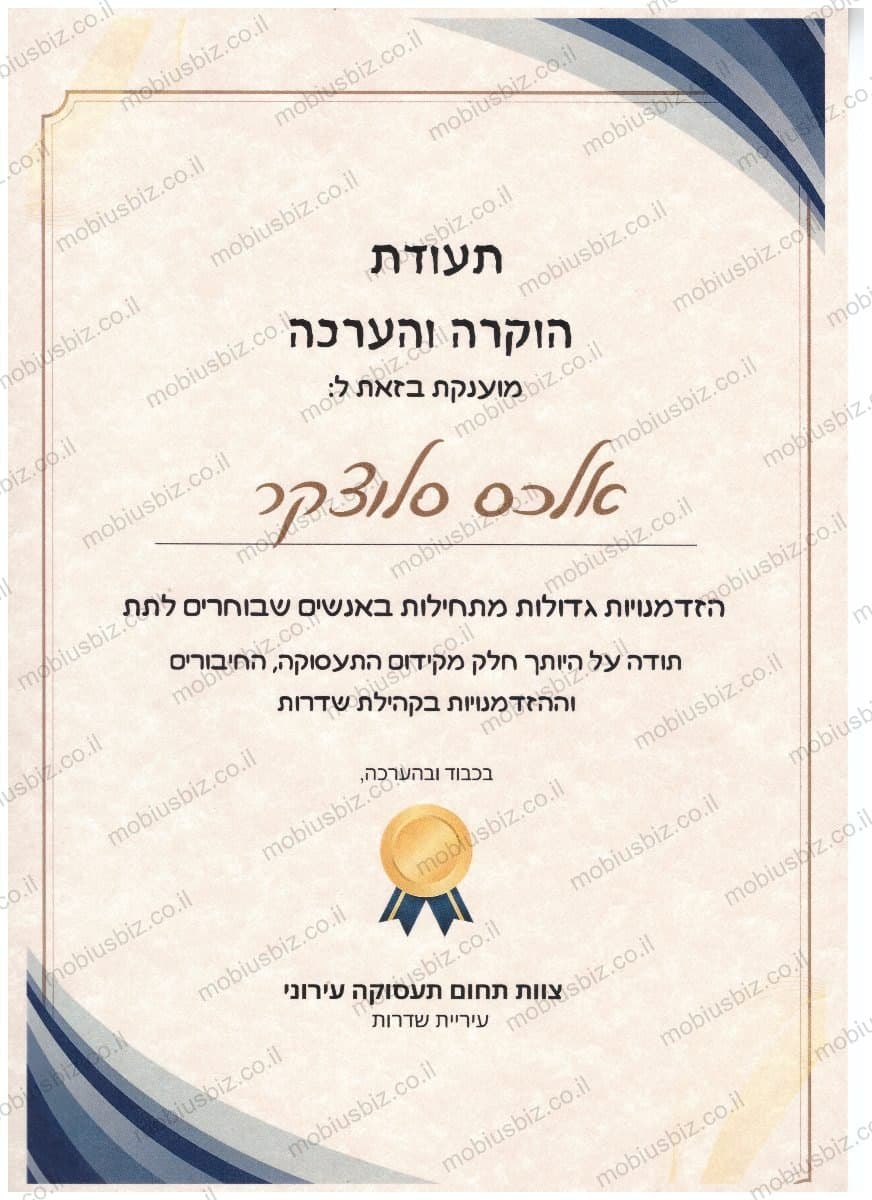
Certificate of appreciation, Sderot municipality

Certificate of honor, Teenovation 2026
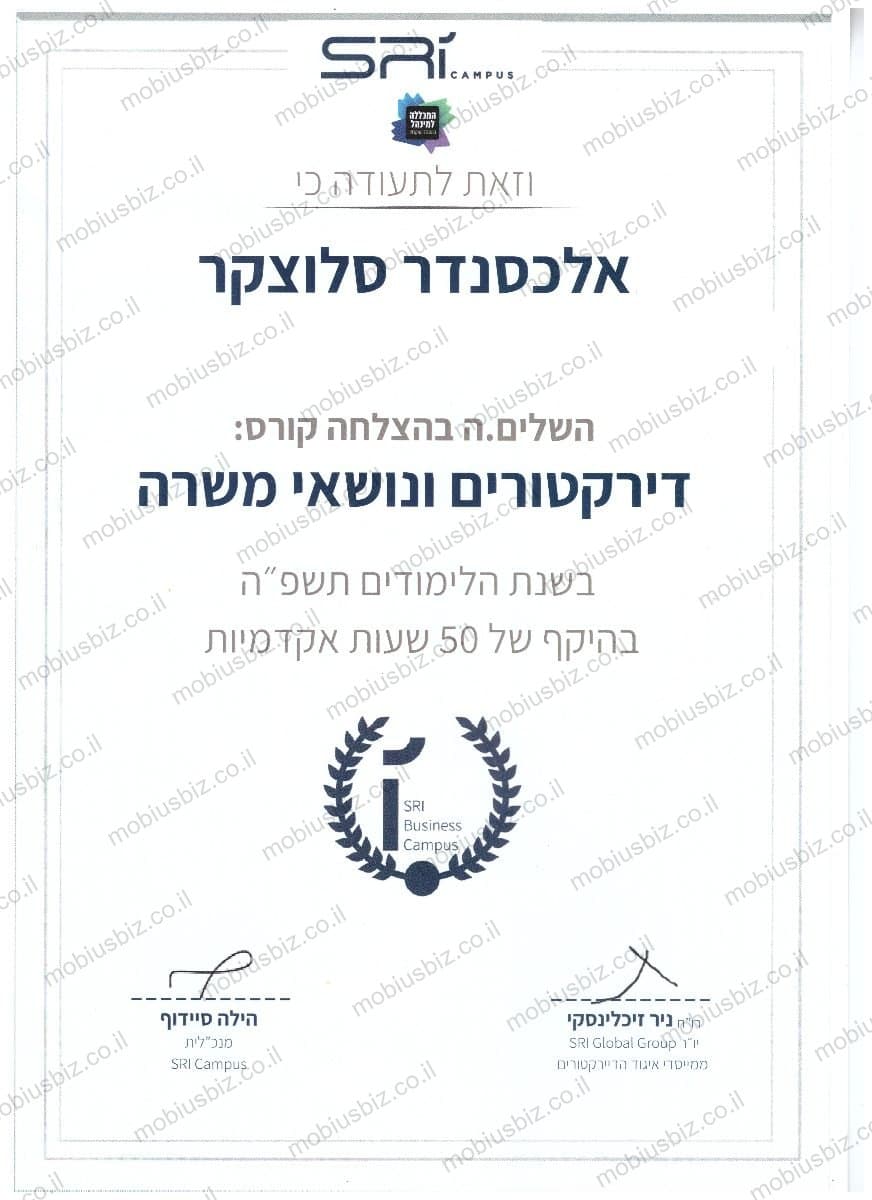
Directors and officeholders course, SRI Campus
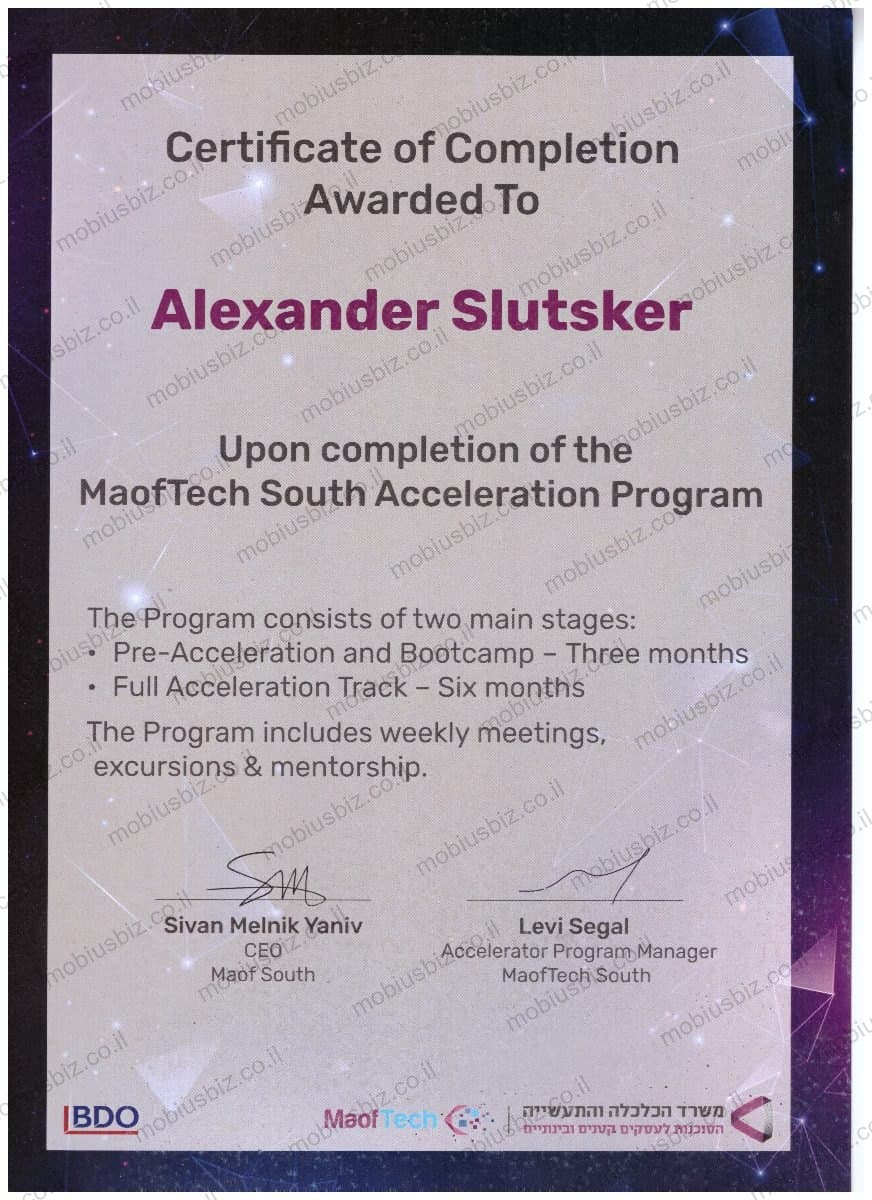
Acceleration program, MaofTech South
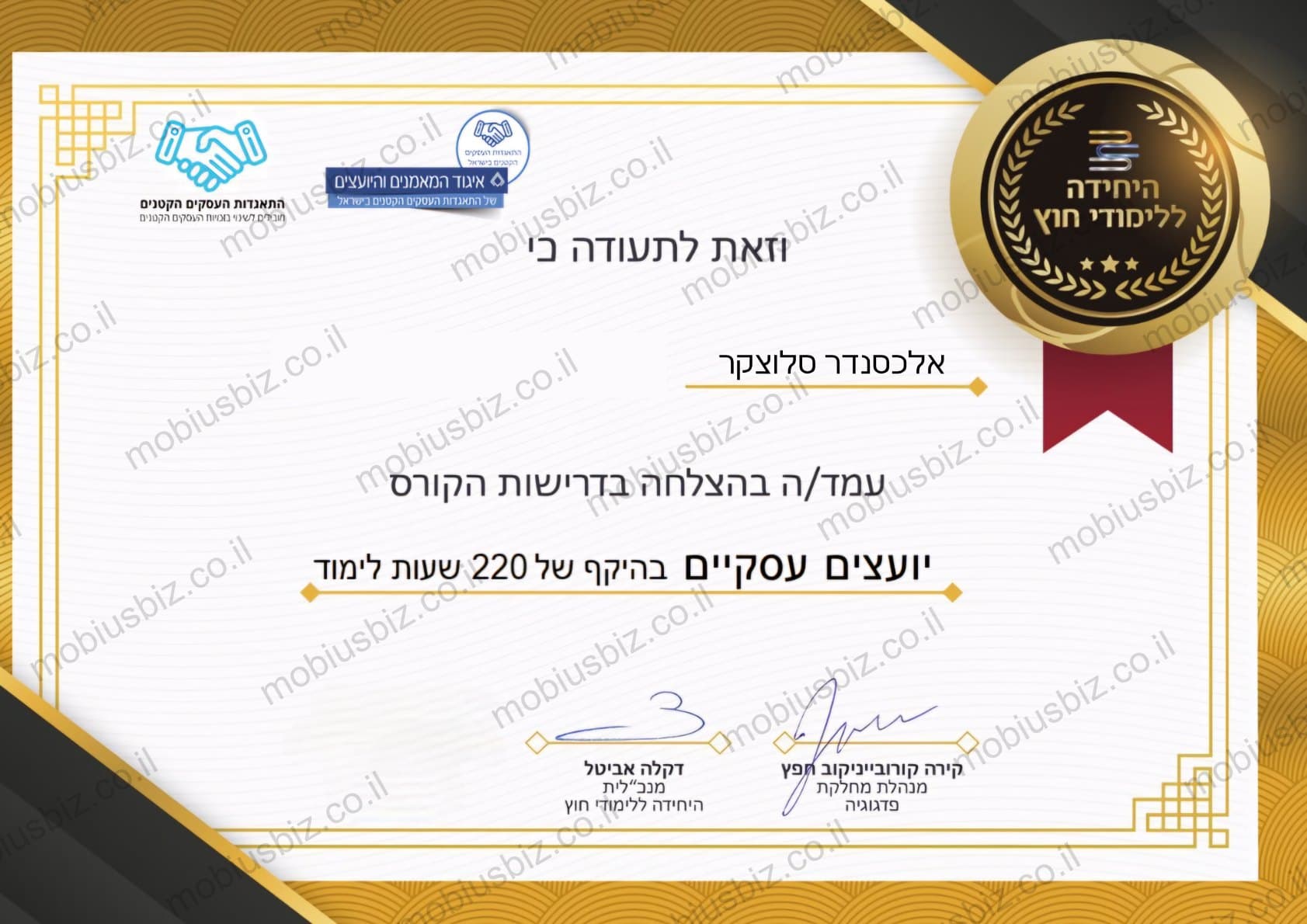
Business consultants course
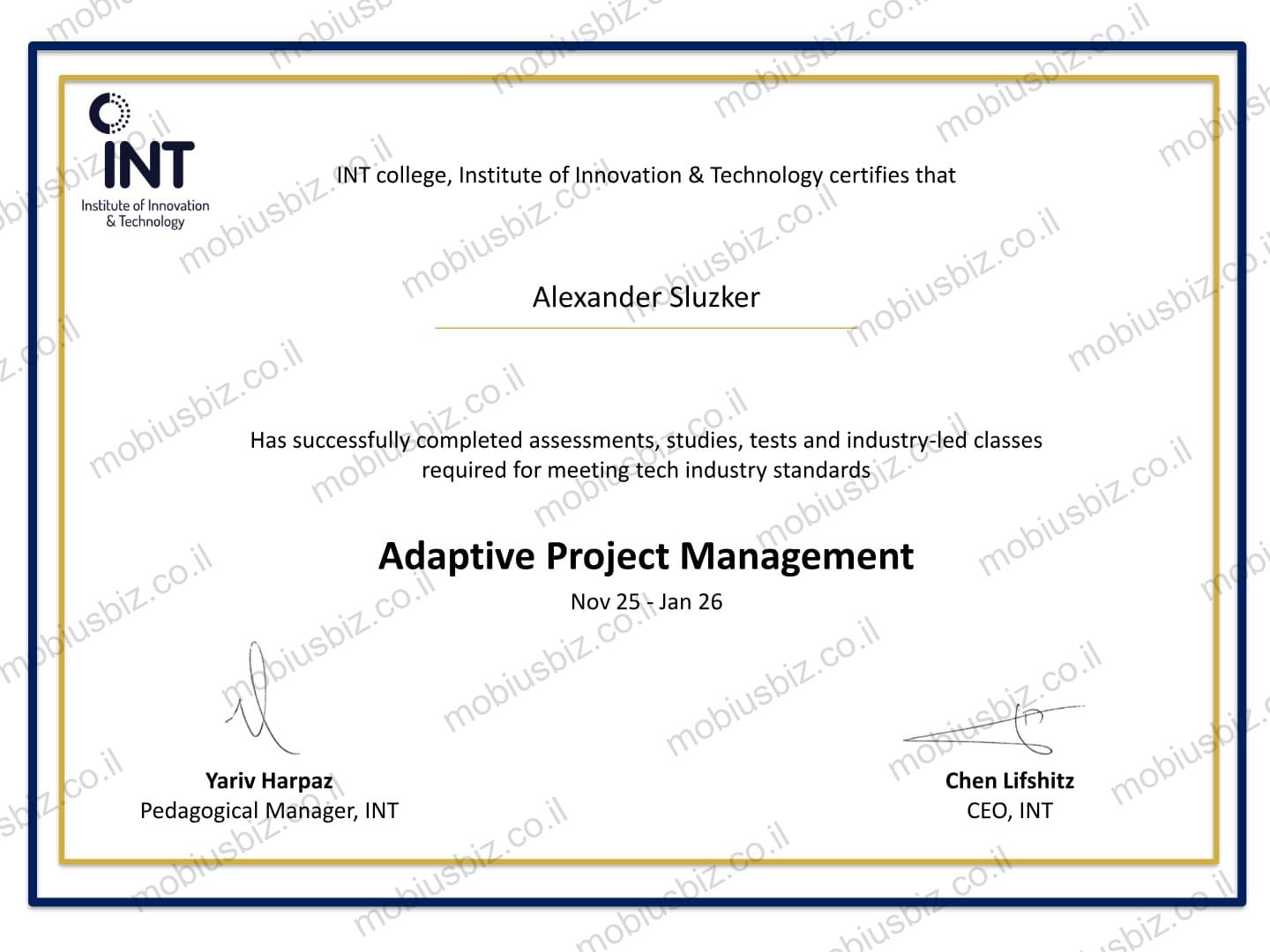
Adaptive project management, INT college
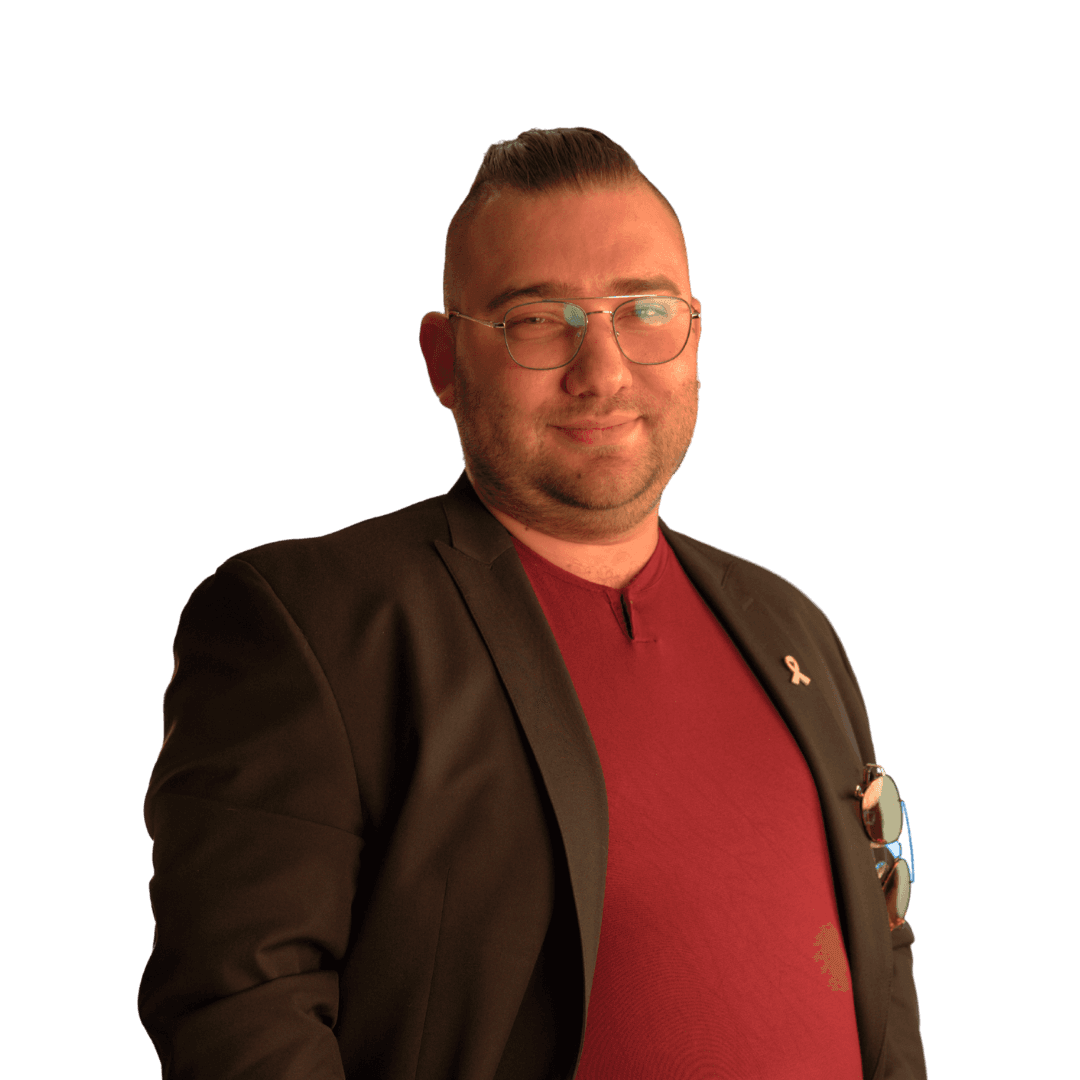
Business, Marketing, Operations & Financial Consultant
Mobius
Alexander Slutsker
9+Years of experience in business consulting
I help entrepreneurs, self-employed people, small businesses and startups understand their own numbers, choose what to do first and grow from there.
Book a Free Call+972 055-248-6151. Better on WhatsApp: I am in meetings most of the day and answer as soon as I am free. Other ways to reach me
We can talk in English, Hebrew or Russian.